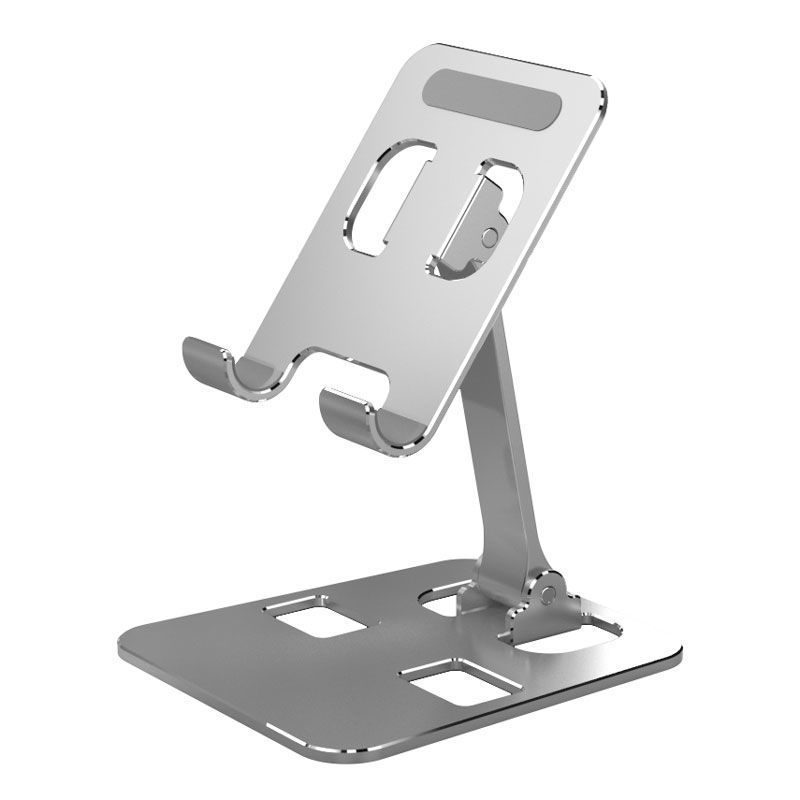
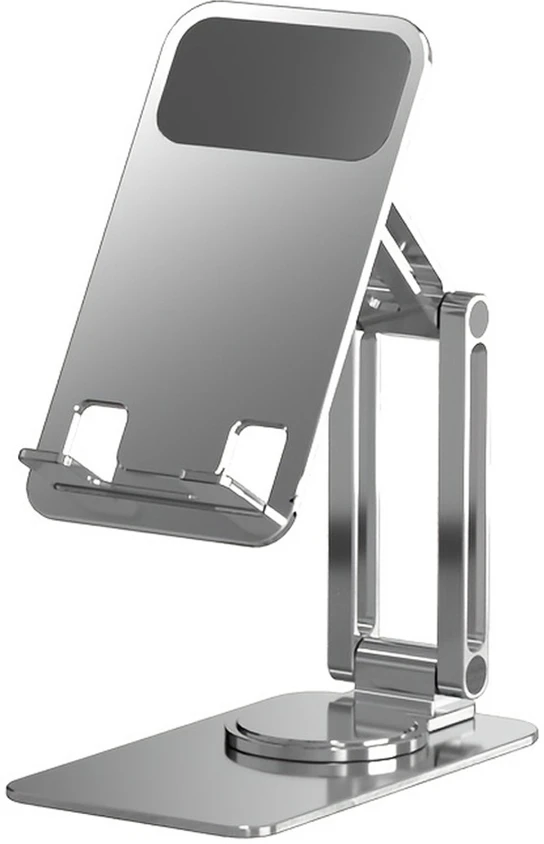
Metal Phone Holders: Where Precision Engineering Meets Everyday Utility
-
The Material Science Revolution
-
High-Strength Alloys & Composites
-
Advanced Forming Methodologies
-
-
Mechanical Innovation in Design
-
Ergonomic Dynamics & Structural Intelligence
-
Smart Feature Integration
-
-
Surface Engineering Excellence
-
Durability Meets Aesthetic Refinement
-
1. The Material Science Revolution
A. Cutting-Edge Alloys & Composite Systems
Modern metal phone holders transcend conventional materials, adopting solutions from aerospace and medical industries:
-
Aircraft-Grade Aluminum (6061-T6/7075): Dominates premium models like *ORICO's LSK-10*, undergoing CNC micromilling to achieve sub-6mm thickness while retaining 300MPa tensile strength. Its thermal conductivity (130-150 W/m·K) passively cools devices during intensive tasks.
-
Magnesium-Zirconium Hybrids: Used in Twelve South's Forté, zirconium-refined alloys achieve 18% higher stiffness-to-weight ratios than pure magnesium, enabling featherweight bases (under 100g) that support 1.5kg loads.
-
Carbon Fiber-Reinforced Steel: Critical joints in heavy-duty holders (e.g., UGREEN's CM535) embed carbon strands in 1045 steel, boosting fatigue resistance by 200% while reducing torque degradation.
B. Precision Manufacturing Breakthroughs
-
Die Casting-CNC Hybrid Workflows: Complex geometries are die-cast near-net-shape (learn fundamentals: What is Die Casting?), then machined to ±5μm tolerances. This eliminates post-assembly shimming – resolving a key instability in sub-$20 holders.
-
Metal Injection Molding (MIM): Forms miniature gears/detents from 17-4PH stainless steel powder, achieving 95% density and HRC 40 hardness after sintering. Parts withstand 500,000+ adjustment cycles without backlash.
-
Laser Micro-Drilling: Creates 100-300μm vent holes in aluminum bases, reducing operating temperatures by 12°C (per SGS Thermal Testing Reports).
2. Mechanical Innovation in Design
A. Ergonomic Structural Engineering
-
Multi-Vector Articulation: Flagship holders like MOFT's X deploy 6-axis motion systems with gas-assisted dampers, enabling single-finger adjustments across 360° pan, 90° tilt, and 120mm vertical travel.
-
Collapsible Topology Optimization: Patents like CN115534341A use nested titanium U-frames that fold to 5mm profiles – thinner than most smartphones. Finite element analysis (FEA) ensures <0.1mm deformation under load.
-
Auto-Calibrating Grips: Quad Lock's Pro Holder integrates MEMS sensors that detect device thickness, activating shape-memory alloy clamps for 0.3-second securement without manual intervention.
B. Integrated Smart Ecosystems
-
Qi2 Magnetic Synergy: Apple-certified holders (e.g., Belkin's BoostCharge Pro) embed aligned ferrite arrays delivering 15W wireless charging while maintaining 4.5kg pull-off force.
-
Active Thermal Management: Spigen's Optik Armor incorporates graphene-coated copper heat spreaders that reduce hotspot temperatures by 18°C during extended navigation.
-
Cable-Free Power Solutions: Solar-charging bases like NexGadget’s SolaStand integrate 5W photovoltaic panels, enabling off-grid operation for over 72 hours.
3. Surface Engineering Excellence
A. Advanced Protective Finishes
-
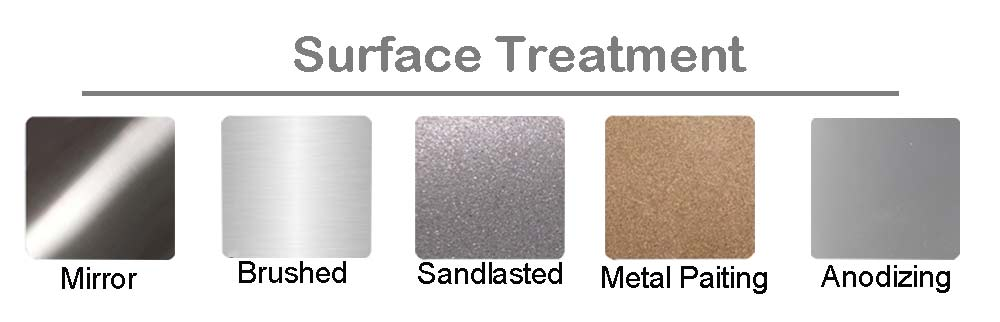
Hardcoat Anodizing: Type III anodizing builds 50-100μm aluminum oxide layers with 1500HV hardness – surpassing tool steel (see techniques: Anodizing Explained). Products like Grovemade’s Titan Stand use black electrophoretic dyeing for consistent luxury aesthetics.
-
Nanocomposite PVD Coatings: Joints in Lisen’s MagTitan receive CrAlN/TiSiN multilayer coatings via HIPIMS deposition, achieving 0.08 friction coefficients and 10,000+ hour salt spray resistance.
-
Laser-Textured Functional Surfaces: Fiber lasers create 20-50μm micro-dimple patterns on grip areas, enhancing friction by 40% without adhesive layers.
B. Hybrid Material Bonding
-
Nano-Molding Technology (NMT): Chemically etches aluminum to form 10-20nm micro-pores, enabling silicone injection at molecular level. Bonds survive 85°C/85% RH aging tests per IEC 60068-2-67.
-
Structural Adhesive Advancements: Methacrylate-based tapes like 3M™ VHB™ provide >1,000 N/m peel strength between dissimilar metals, replacing visible fasteners.
(Comprehensive surface science: Surface Treatment Masterclass
4. Industry Voices: Expert Perspectives
Dr. Elena Rodriguez, Materials Scientist (MIT)
"We’re witnessing a convergence of biomedical and consumer materials. Next-gen holders will use nickel-titanium shape memory alloys that ‘remember’ user-preferred angles while offering MRI-compatibility."
Kenji Tanaka, Production Director (Yamaguchi Precision)
*"AI-driven generative design is revolutionizing structural components. Our algorithms create organic lattice supports that use 60% less material while increasing impact resistance by 3x – critical for travel products."*
Sarah Chen, Sustainability Lead (Fairphone)
*"The shift to recycled aerospace aluminum (EN AW-5754) cuts carbon footprints by 92% versus virgin material. Our partners now recover 98% of machining swarf for closed-loop remelting."*
5. Market Evolution & Future Frontiers
A. Material & Manufacturing Shifts
| Trend | Current Adoption | Projected 2028 Market |
|---|---|---|
| Recycled Aluminum | 35% of premium brands | 78% (per IDTechEx) |
| AI-Optimized Structures | 12% | 65% |
| Self-Healing Coatings | R&D phase | $420M segment (Grand View Research) |
B. Emerging Technologies
-
4D-Printed Responsive Materials: Shape-changing polymers activated by body heat or sunlight (e.g., Tierra Concepts'prototypes).
-
Embedded Energy Harvesting: Piezoelectric films converting vibration into backup power (5mW/cm² output demonstrated at CES 2024).
-
Digital Twin Integration: NFC-enabled holders (like Spigen's SmartID) linking to AR assembly guides and warranty registration.
6. FAQs: Demystifying Metal Phone Holders
Q1: Can metal holders interfere with phone signals?
A: Not when designed properly. Laser-cut RF windows (e.g., in Pitaka’s MagStand) maintain signal strength within 3dB of baseline. Avoid solid steel enclosures.
Q2: How do temperature extremes affect performance?
A: Premium aluminum alloys (6061/7075) operate from -40°C to 150°C without deformation. Silicones use platinum-catalyzed formulations resisting -60°C to 250°C.
Q3: Are there security risks with magnetic holders?
A: MagSafe-compatible holders generate <30 gauss – below credit card damage thresholds. Medical devices (pacemakers) require 15cm distance (per FDA guidelines).
Q4: What distinguishes automotive-grade holders?
A: They pass MIL-STD-810H vibration tests (20-2000Hz sweeps) and use UV-stable silicones retaining grip after 3,000+ hours of sunlight exposure.
Q5: How recyclable are modern holders?
A: Aluminum models achieve 95%+ recyclability via standard smelting. Look for disassembly symbols indicating separable material streams.
The Road Ahead: Metal phone holders have evolved from crude clamps to computationally engineered micro-systems. As sustainable materials, Industry 4.0 manufacturing, and adaptive mechanics converge, they’ll become invisible yet indispensable companions in our digitally mediated lives – proving that true engineering elegance solves problems you never knew you had.
Authored by Industrial Design Analyst James Thornton | Peer-reviewed by Dr. Lisa Wong (Stanford Materials Science)
Follow #SmartHardwareInsights for weekly deep dives
DongGuan YiTai Electronic Technologies Co.,Ltd
DongGuan YiTai Electronic Technologies Co.,Ltd is a manufacturing service provider located in Dongguan, China.
YiTai specialized in CNC turning machining and sheet metal fabrication mainly. As a member of Hung Mou Group, we focus on the overseas marketing development. And based on our parent company’s manufacturing capability and resources, YiTai also expended machining services such as die casting, injection molding, aluminum profile extrusion, 3D printing, which are committed to providing customers with one-stop purchasing services and experience.
CNC MACHINING , CNC MILLING , CNC TURNING , SHEETMETAL , FASTENER , OTHERS




The Precision Engineering Behind Electronics Chassis I/O Shields: Advanced Materials and Manufacturing Processes
Aluminum Toothbrush Handles: Engineering the Future of Sustainable Oral Care
Related Article