Medical Equipment Instrument Panel Fabrication at ±0.1 mm

1. Introduction
Medical equipment instrument panels need to fit their assemblies cleanly, not just look good. Cutouts must align with controls and connectors, bends must hold their shape, and edges need to be smooth enough for safe handling and assembly.
For this project, we fabricated 316 stainless steel instrument panels to ±0.1 mm and delivered 10,000 pieces per month. We used optimized laser cutting, controlled bending, deburring, and in-process dimensional checks to keep the panels consistent from batch to batch.
This case looks at how these sheet metal processes support medical equipment panels with tight cutouts, repeatable forming, clean edges, and reliable production.
2. Project Overview
| Specification | Requirement |
|---|---|
| Part | Medical Equipment Instrument Panel |
| Material | 316 Stainless Steel |
| Process | Sheet Metal Fabrication |
| Key Operations | Laser Cutting + Bending |
| Tolerance | ±0.1 mm |
| Monthly Volume | 10,000 pcs |
| Key Requirements | Precise cutouts, clean edges, accurate forming |
| Assembly Purpose | Integration with medical equipment control systems |
The finished medical equipment sheet metal panel was designed to accommodate control-related components, mounting features, and other interface openings. Because these features directly affect assembly, the fabrication process needed to maintain consistent dimensions from the first batch to the final production run.
The project also required 316 stainless steel sheet metal fabrication, which added additional considerations for cutting, forming, handling, and surface quality.
3. The Manufacturing Challenges
3.1 Maintaining Accurate Cutouts for Control Components

Instrument panels typically include cutouts and mounting holes for buttons, displays, switches, connectors, and other control components. Even small dimensional deviations can misalign components or affect assembly fit.
For this project, the openings and mounting features had to be positioned accurately. The challenge was to produce precise cutouts in a sheet metal panel while keeping dimensions stable across production.
The laser cutting process had to deliver repeatable positioning and consistent cut geometry. Cutting parameters, material alignment, and part layout were controlled to support dimensional consistency.
The requirement went beyond openings that simply looked correct. The finished panel had to fit the customer's control-system assembly properly.
3.2 Achieving Clean Edges and Smooth Surface Quality
Stainless steel panels need additional attention after cutting. Laser-cut edges can include heat-affected areas or sharp edges that must be removed before handling or assembly.
For this project, edge quality was controlled through cutting, deburring, part handling, and final visual inspection. The aim was to leave clean edges without marking or damaging the panel surface.
This is particularly important for exposed stainless steel panels used in medical equipment control assemblies, where both appearance and assembly fit affect the finished product.
Where no surface-roughness value was specified in the customer's drawing or specification, production focused on clean edges, a consistent finish, and a surface suitable for handling and assembly.
3.3 Controlling Forming Accuracy at High Volume
Bending can introduce further dimensional variation. Material springback, bending sequence, tooling selection, and part positioning can all affect the final geometry.
At a monthly volume of 10,000 pieces, repeatability is essential. Small deviations across thousands of parts can lead to assembly inconsistencies.
To control this variation, we used a defined bending sequence and repeatable positioning method. This helped maintain the required formed dimensions while reducing variation between batches.
This approach supported high-volume medical sheet metal fabrication while maintaining ±0.1 mm dimensional control on critical features.
4. Our Sheet Metal Fabrication Solution
4.1 Optimizing the Laser Cutting Layout
Before production, the cutting layout was optimized according to the panel geometry, openings, and material dimensions.
A properly arranged laser cutting layout can improve material utilization while helping maintain consistent positioning of holes, openings, and external contours. It also reduces unnecessary handling and supports a more repeatable production process.
For complex panels containing multiple cutouts, maintaining a stable cutting reference is especially important. The layout was therefore developed with both material efficiency and dimensional consistency in mind.
This helped establish a reliable process for laser cutting medical equipment panels before the parts moved to the forming stage.
4.2 Defining the Bending Sequence
After laser cutting and edge processing, the panels moved to the bending operation.
The bending sequence was planned to reduce interference between existing features and forming tools while maintaining dimensional accuracy. Feature positioning, bend order, and part orientation were considered together rather than treating each bend as an isolated operation.
We optimized the bending sequence to maintain forming accuracy and support a reliable fit with the customer’s medical equipment control system.
This process was particularly important because the final geometry depended on the relationship between multiple formed features.
4.3 Controlling Edge Quality and Handling
After cutting, the panels underwent deburring and edge treatment to remove unwanted sharp edges and improve handling quality.
During production, appropriate handling procedures were also used to reduce the risk of surface damage during movement between operations. Panels were checked for visible edge defects and other issues before continuing to the next production stage.
The combination of controlled cutting, deburring, careful handling, and visual inspection helped maintain consistent edge quality throughout the batch.
5. Why 316 Stainless Steel Was Used

316 stainless steel provides a robust material option for sheet metal panels where corrosion resistance and durability are important considerations.
For this application, the material offered several practical advantages:
-
Suitable corrosion resistance for demanding equipment environments
-
Good durability for formed sheet metal components
-
A strong and stable material option for instrument panels
-
Compatibility with laser cutting and sheet metal bending processes
At the same time, stainless steel requires appropriate process control. Cutting parameters, heat input, bending conditions, and handling can all influence the final appearance and dimensional accuracy.
For 316 stainless steel sheet metal fabrication, maintaining consistent production conditions is therefore important, particularly when the part contains numerous cutouts and formed features.
6. Step-by-Step Manufacturing Process
6.1 Drawing and DFM Review
The process began with a review of the customer's drawings and part requirements.
Critical dimensions, cutouts, mounting features, material requirements, and formed geometry were examined to identify potential manufacturing issues before production.
6.2 316 Stainless Steel Sheet Preparation
The specified 316 stainless steel sheet was prepared according to the required material and part dimensions.
Material condition and thickness were verified before fabrication.
6.3 Laser Cutting Layout and Cutting
The cutting layout was optimized to support material utilization and consistent feature positioning.
The external profile, holes, openings, and other critical features were then produced through laser cutting.
6.4 Deburring and Edge Treatment
After laser cutting, the parts were processed to remove sharp edges and unwanted burrs.
This step helped improve handling and prepare the panels for forming and subsequent inspection.
6.5 Controlled Bending Sequence
The cut blanks were formed using a predefined bending sequence.
Part positioning and bend order were controlled to maintain dimensional consistency and reduce variation caused by forming operations.
6.6 In-Process Dimensional Checks
Critical dimensions were checked during production rather than waiting until the final inspection stage.
This allowed potential variation to be identified earlier and helped maintain process stability throughout the batch.
6.7 Final Inspection and Batch Release
Completed panels underwent final dimensional and visual inspection before batch release.
Critical cutouts, hole locations, formed dimensions, and other fit-related features were reviewed according to the project requirements.
7. Quality Control for ±0.1 mm Tolerance

For this project, ±0.1 mm dimensional control was required for critical features.
Quality control focused on the features that directly influenced assembly and component positioning, including:
-
Critical cutouts
-
Hole locations
-
Formed dimensions
-
Panel flatness
-
Other fit-related features
In-process inspection was used to identify dimensional variation before the parts reached final inspection.
Critical cutouts and formed features were checked throughout production to maintain the required ±0.1 mm dimensional control and reliable assembly fit.
It is important to note that achievable sheet metal tolerances depend on several factors, including material thickness, overall part size, feature geometry, bending configuration, and drawing requirements. Therefore, ±0.1 mm sheet metal fabrication should always be evaluated against the actual component design rather than treated as a universal tolerance for every sheet metal feature.
8. Production Results
| Metric | Result |
|---|---|
| Material | 316 Stainless Steel |
| Process | Laser Cutting + Bending |
| Tolerance | ±0.1 mm |
| Monthly Volume | 10,000 pcs |
| Main Improvements | Optimized cutting layout and bending sequence |
| Quality Outcome | Consistent cutouts, smooth edges, and accurate forming |
| Assembly Result | Reliable fit with control-system assemblies |
The optimized fabrication process supported production of 10,000 316 stainless steel instrument panels per month while maintaining accurate cutouts, clean edges, and consistent formed geometry.
The key improvement was not based on a single operation. Instead, production stability came from coordinating the laser cutting layout, edge treatment, bending sequence, dimensional inspection, and part handling into a repeatable manufacturing workflow.
This approach is especially valuable for projects that require both prototype-level dimensional attention and stable repeat production.
9. What This Means for Your Medical Equipment Project
The project demonstrates several practical advantages of a controlled sheet metal manufacturing process for medical equipment applications.
First, accurate control-panel cutouts help support better component positioning and assembly consistency.
Second, controlled bending helps maintain the intended panel geometry across production batches.
Third, consistent deburring and handling support clean edge quality and reduce avoidable defects.
Finally, an optimized process can provide stable production at higher quantities without sacrificing attention to critical dimensional features.
For companies sourcing medical equipment sheet metal panel components, the most important consideration is not only whether a supplier can cut and bend the material, but whether the supplier can develop a repeatable process around the specific part geometry and production volume.
A properly structured medical equipment instrument panel fabrication process can therefore help address both engineering requirements and production requirements within the same workflow.
10. FAQ
Q: What tolerance can you hold for medical equipment sheet metal panels?
A: This project required ±0.1 mm control for critical dimensions. Achievable tolerance depends on material thickness, panel size, cutout geometry, bending configuration, and the specific formed features defined by the drawing.
Q: Can you laser cut and bend 316 stainless steel panels?
A: Yes. This project combined laser cutting and bending to produce 316 stainless steel instrument panels. The cutting and forming parameters were controlled according to the material and part geometry.
Q: How do you keep cutouts accurate during sheet metal fabrication?
A: We optimize the laser cutting layout, control the bending sequence, use repeatable part positioning methods, and check critical dimensions during production.
For a sheet metal instrument panel with precise cutouts, the relationship between laser-cut features and formed geometry also needs to be considered during process planning.
Q: Can you produce 10,000 instrument panels per month?
A: This project was produced at 10,000 pieces per month. Actual production capacity depends on the panel design, material thickness, finishing requirements, inspection requirements, and order schedule.
For larger programs, high-volume medical sheet metal fabrication also requires stable process planning and repeatable inspection procedures.
Q: How do you ensure clean edges on stainless steel panels?
A: Edge quality is controlled through the cutting process, deburring, careful handling, and final visual inspection.
The specific edge-treatment method depends on the drawing requirements and the intended use of the panel.
Q: Can you produce laser cut and bent medical equipment panels?
A: Yes. Laser cut and bent medical equipment panels can be manufactured by combining precision laser cutting with controlled forming operations. The process should be reviewed according to material, thickness, bend geometry, cutout locations, and required tolerance.
Q: What files do you need for a quotation?
A: Please provide 2D drawings, 3D CAD files where available, material and thickness requirements, finishing specifications, quantity, and delivery expectations.
Additional information about critical dimensions and assembly requirements can also help make the DFM review more efficient.
11. Conclusion
A medical equipment instrument panel may appear to be a relatively straightforward sheet metal component, but production quality depends on the interaction between cutout accuracy, edge quality, forming control, material behavior, inspection, and production consistency.
In this case, medical equipment instrument panel fabrication was completed using 316 stainless steel, laser cutting, controlled bending, deburring, and in-process inspection. The process achieved ±0.1 mm control for critical dimensions while supporting a monthly volume of 10,000 pieces.
The result was a panel with consistent cutouts, clean edges, accurate forming, and reliable fit with the customer's control-system assemblies.
For your next medical equipment project, the right fabrication strategy should be based on the actual drawing, material, geometry, tolerance, and production volume rather than a one-size-fits-all process.
Need a precision stainless steel instrument panel for your equipment assembly? Send us your drawings for a DFM review and quotation.
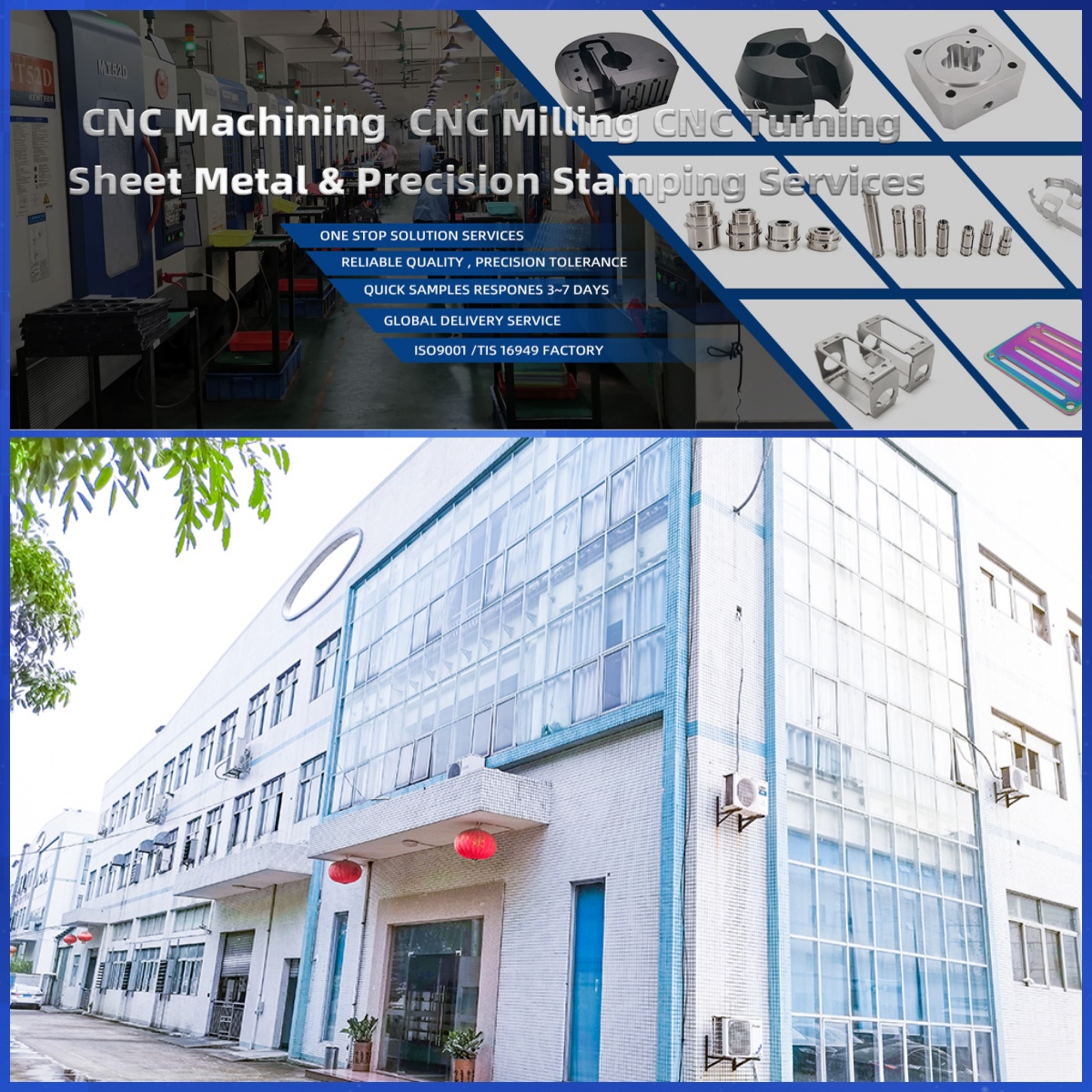
DongGuan YiTai Electronic Technologies Co.,Ltd
DongGuan YiTai Electronic Technologies Co.,Ltd is a manufacturing service provider located in Dongguan, China.
YiTai specialized in CNC turning machining and sheet metal fabrication mainly. As a member of Hung Mou Group, we focus on the overseas marketing development. And based on our parent company’s manufacturing capability and resources, YiTai also expended machining services such as die casting, injection molding, aluminum profile extrusion, 3D printing, which are committed to providing customers with one-stop purchasing services and experience.
CNC MACHINING , CNC MILLING , CNC TURNING , SHEETMETAL , FASTENER , OTHERS




What Kitchen Parts Are Commonly CNC Machined?
CNC Machining a Surgical Instrument Component at ±0.01 mm
Related Article