What Kitchen Parts Are Commonly CNC Machined?
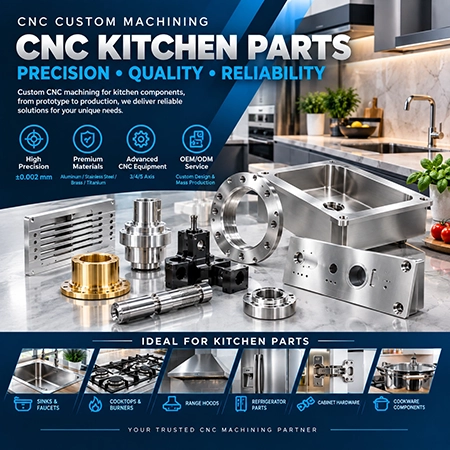
This guide covers the 12 kitchen components most often produced by CNC machining, the materials that are safe for food contact, the compliance documents buyers should ask for, and the point where die casting or stamping becomes the cheaper route. It is written for brand owners, product designers, and sourcing teams choosing a process before they commit to tooling.
- Why the Kitchen Industry Relies on CNC Machining
- 12 Kitchen Parts Commonly Made by CNC Machining
- What Materials Are Used (And Which Are Food-Safe)
- Food Safety and Compliance: What Buyers Should Ask For
- Which Machining Process for Which Part?
- Surface Finishes for Kitchen Parts
- CNC vs Die Casting vs Stamping
- How to Source CNC Kitchen Parts
- Frequently Asked Questions
1. Why the Kitchen Industry Relies on CNC Machining
Four reasons keep pulling kitchen projects toward machining, and they explain why CNC machined kitchen parts appear at every price point from crowdfunded gadgets to established cookware brands.
- No mold for small and mid-size batches. A cabinet knob range with six finishes and three sizes does not justify a mold per variant, and machining starts at one piece.
- Stable tolerances. Threads, sealing faces, and mating features have to fit the mating component, not just the drawing.
- Surface and feel. Brushed or anodized metal reads as premium in the hand, without the porosity concerns of castings.
- Fast design iteration. Seasonal color updates and post-launch revisions punish long tooling lead times. Changing a program takes hours; changing a die does not.
That last point is the hinge for everything that follows. Machining and casting are different stages of the same product life rather than competitors, and the section on CNC versus die casting explains where the handover usually happens.
2. 12 Kitchen Parts Commonly Made by CNC Machining
If you are asking what kitchen parts are made by CNC machining, the answer usually starts here. These 12 components account for most of the machining work in a kitchen product line, and the table maps each one to its usual material and process.
| Part | Typical material | Process | Why CNC |
|---|---|---|---|
| Pot and pan handles | 304 stainless, aluminum | Turning + milling | Ergonomic form, mounting fit |
| Lid knobs | 304 stainless, brass, POM | Turning | Low volume per variant, premium finish |
| Induction disc bases | Aluminum, copper composite | Turning | Flatness, bond surface control |
| Espresso portafilter bodies | 304 / 316 stainless | Turning + milling | Thread accuracy, food-contact bore |
| Tamper bases | 304 stainless, brass | Turning | Flatness, weight, concentric fit |
| Grinder burr carriers | Aluminum, stainless | Turning + milling | Concentricity keeps the burr gap even |
| Blender coupling gears | POM, PEEK, aluminum | Milling + turning | Custom spline below molding volume |
| Meat grinder augers and plates | 304 stainless | Turning + milling | Turned part with spiral and holes |
| Mixer shafts | 304 stainless | Turning | Straightness, bearing seat fit |
| Cabinet knobs and pulls | Brass, stainless, aluminum | Turning | Small batches, many finishes |
| Faucet bodies | Lead-free brass | Milling + turning | Internal waterway, water compliance |
| Sensor and camera housings | Aluminum 6061, POM | Milling | Optical alignment, sealed fits |
2.1 Cookware Hardware
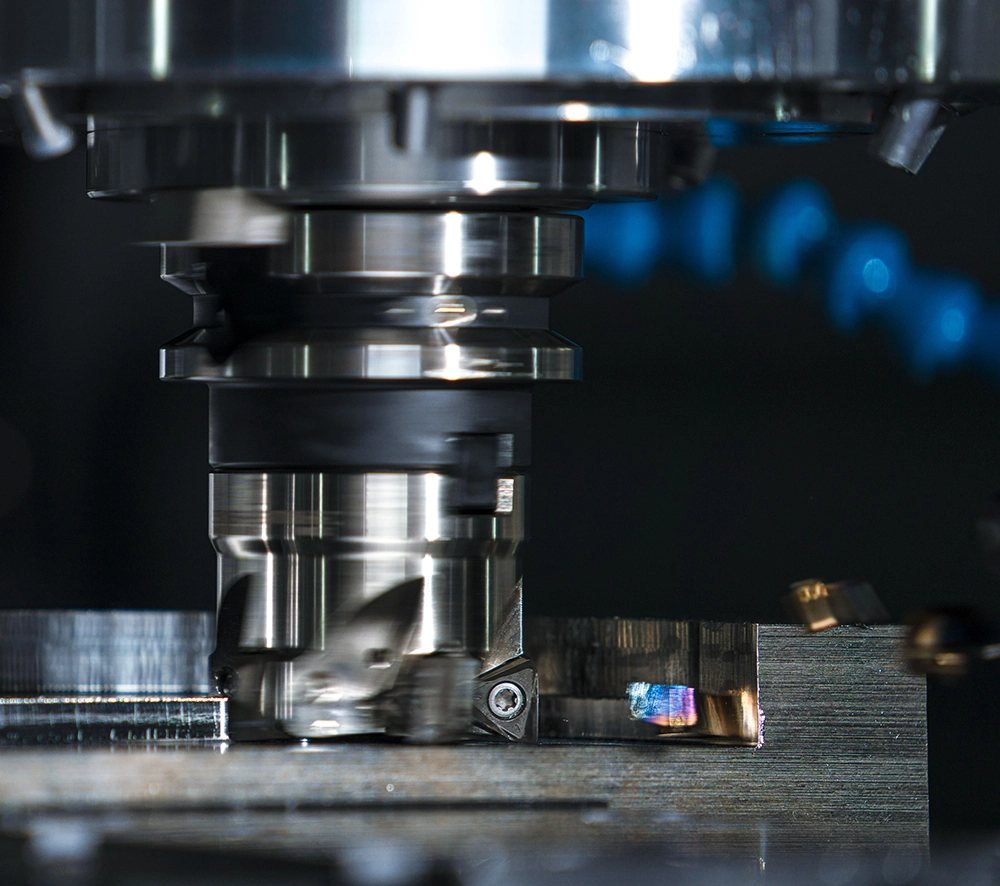
Pot and pan handles, handle brackets, lid knobs, and induction disc bases make up the metal hardware around a cookware set. Handles combine turning and milling because the grip is turned while the mounting interface is milled flat. Lid knobs are simple turned parts, which is why they suit machining: a brand may offer eight knob designs, each selling in modest numbers.
Induction disc bases are less obvious. The disc has to sit flat against the pan bottom and bond uniformly, so flatness matters more than external diameter. A machined face gives a predictable bond surface without the draft angles a casting introduces.
2.2 Coffee and Beverage Equipment
Espresso portafilter bodies, group head components, tamper bases, steam wand tips, and grinder burr carriers are the densest cluster of machined parts in any kitchen category. Coffee equipment sits in the coffee machine parts CNC machining bracket because nearly every functional part is turned or milled metal.
A portafilter body shows why. The basket thread has to engage cleanly, the bore contacts the coffee, and the spout has to align with the cup. That mix of thread accuracy and food-contact surface is hard to reach by any other route at low to mid volume. Tamper bases add a flat, concentric face that compresses the puck evenly, which is a pure tolerance question.
2.3 Small Appliances
Blender coupling gears, food processor hubs, mixer shafts, and meat grinder augers and plates sit inside the appliance and never appear in product photos. They still decide whether the appliance works, so kitchen appliance parts machining here is judged on function rather than appearance.
The meat grinder auger is the most instructive part in this group: a turned stainless component with a spiral flight, a splined drive end, and a close fit against the cutting plate. Both run against each other without galling, and both contact food directly.
2.4 Cabinet Hardware and Fittings
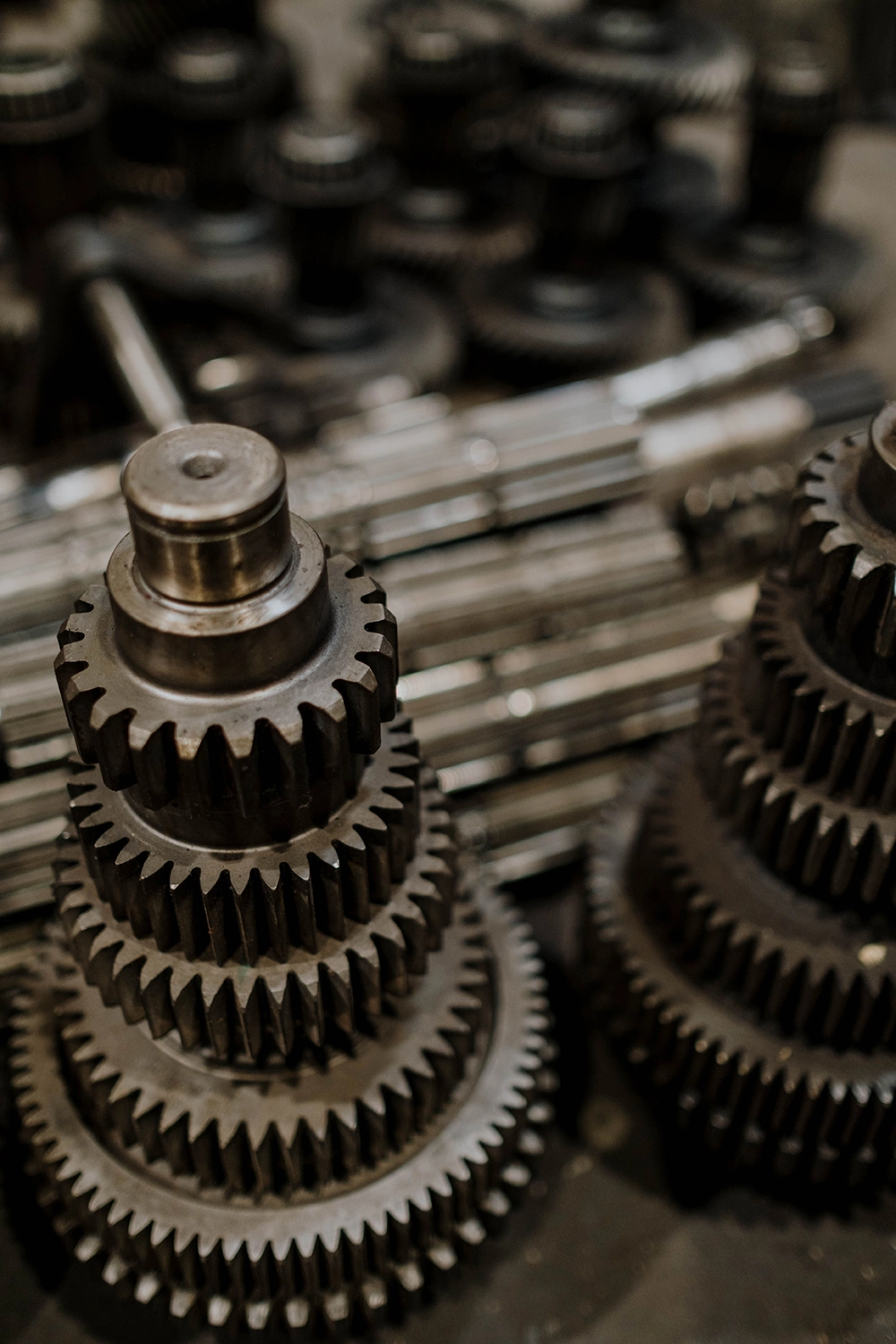
Knobs, pulls, standoffs, spacers, and shelf pins are the parts customers actually touch, and they carry the finish quality of the whole kitchen. The cabinet knob manufacturing process shows why machining fits: one knob shape in four finishes and three lengths is twelve SKUs, and none of them justifies its own mold.
We machine custom cabinet knobs from brass, stainless steel, and aluminum for exactly that reason. The same turning capacity covers custom kitchen hardware manufacturing for spacers, shelf pins, and pulls in one order.
2.5 Faucets, Water and Waste
Faucet bodies, valve cartridge components, aerators, and sink strainers all handle drinking water, which adds a compliance layer on top of the mechanical requirements. A faucet body is usually milled and turned because the internal waterway is a machined passage rather than a cast cavity.
Valve cartridge components are smaller and often run on Swiss-type machines.
2.6 Smart Kitchen Devices
Sensor housings, camera housings, display bezels, and mounting brackets bring a different constraint: the part has to protect electronics and align optics. A camera housing needs its lens axis square to the mounting face, and a display bezel has to look perfect on the visible surface while holding a sealed fit behind it.
The same machining approach we use for machine vision camera housings applies to smart appliance camera and sensor modules.
3. What Materials Are Used (And Which Are Food-Safe)
Material choice is driven by three things at once: the service environment, the manufacturing route, and the compliance document the customer needs. For stainless steel kitchen parts the question is usually 304 versus 316, while aluminum, brass, copper, and polymers cover other applications. The table pairs every material with its usual kitchen role and the food-contact point buyers should verify.
| Material | Typical kitchen use | Food-contact and compliance note |
|---|---|---|
| 304 stainless steel | General hardware, handles, augers, plates | Cost-effective; food-contact grades widely available |
| 316 stainless steel | Acidic or salty contact, welded assemblies | Molybdenum improves chloride and acid resistance |
| 6061 / 7075 aluminum | Handles, housings, bases | Light and machinable; the anodic layer is not a food-contact barrier |
| Lead-free brass | Faucet bodies, valves, fittings | Commonly specified to NSF/ANSI 61; lead addressed separately |
| Copper | Cookware bodies, induction layers | Chosen for thermal conductivity; acidic food reactivity matters |
| POM, PEEK | Gears, bushings, couplings | Available in food-contact grades; confirm the grade and datasheet |
| Titanium | Premium cookware, knife components | Light, strong, corrosion resistant; higher cost |
On the question of the best material for kitchen handles, 304 stainless covers most designs, aluminum helps where weight matters, and 316 is reserved for acidic or salty contact. Read the last column as a prompt, not a guarantee. A grade listed as suitable for food contact in general does not mean the heat, supplier, and thickness you are buying carries the same declaration. That is what material certificates are for, and the compliance section below covers what to request.
Food-grade CNC machining is not a shop certification. It describes a combination of a material grade that meets a food-contact standard and a finishing route that leaves the part clean and cleanable. Write the requirement as "machined from materials compliant with 21 CFR 177" or "machined from NSF/ANSI 61 listed brass" rather than claiming a process certificate the machining supplier cannot issue.
4. Food Safety and Compliance: What Buyers Should Ask For
This is where kitchen projects lose time, because the compliance question often arrives after the drawing is final. Asking earlier changes the material, the finishing route, and sometimes the geometry.
The standards that come up most often:
- FDA 21 CFR 177 - the United States framework for indirect food additives, meaning the material itself is acceptable for food contact under the listed conditions.
- NSF/ANSI 61 - drinking water system components, the usual reference for faucets and water-path parts. Lead content in wetted components is addressed through a related drinking water standard, so ask which one your customer requires.
- LFGB and EU 1935/2004 - the European framework for food-contact materials. Metals fall under the framework regulation and the national measures that implement it, so the test scope depends on the market.
The standards cover the material. The machining route decides whether the finished part lives up to them.
- Passivation removes free iron and restores the passive layer after machining.
- Electropolishing smooths the surface microscopically, which helps where food residue could cling to a rough machined texture.
- Deburring removes the raised edge left by cutting. On a food-contact part a burr is a hygiene trap and a handling hazard.
- Cleaning removes cutting fluid residue from bores, threads, and blind holes before packing. This is part of a food-contact production route, not an optional extra.
"Surface roughness is the specification people leave off the drawing most often, and it is the one that decides whether a food-contact part cleans properly. A machined pocket at a rough finish holds residue in the tool marks. We usually ask the customer what the part will be cleaned with and how, then agree on an Ra target and the finishing route from there. It is a five-minute conversation that saves a rejected batch."
- Materials and process review, DongGuan YiTai
5. Which Machining Process for Which Part?
Kitchen parts split fairly cleanly across four machining routes. Matching the part to the route is the fastest way to a sensible quote.
| Process | Best for | Typical kitchen parts |
|---|---|---|
| CNC turning | Rotational parts, single main axis | Knobs, tamper bases, augers, valve cartridge components, spacers |
| CNC milling | Housings, panels, brackets, flat bases | Sensor and camera housings, display bezels, mounting brackets, disc bases |
| Swiss machining | Small parts, several features, tight tolerance | Small fittings, micro valve parts, connector bodies |
| Turn-mill | Parts needing both, finished in one setup | Portafilter bodies, faucet components, handle assemblies |
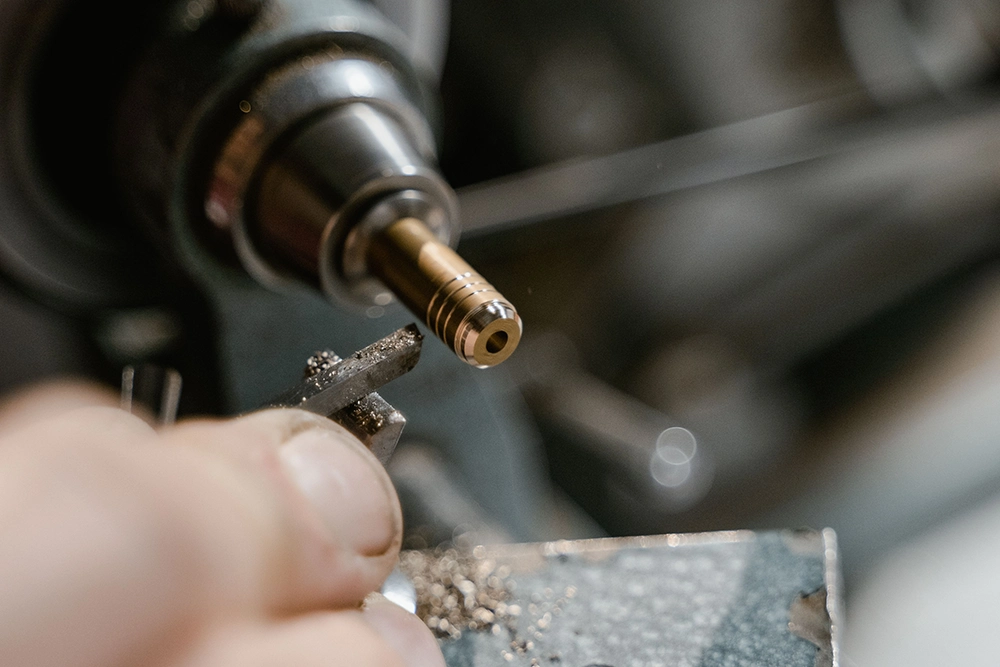
The trade-off is between setups and accuracy. Every extra setup adds another datum and another chance for accumulated error, which is why a part with a concentric bore and a cross-drilled hole is better finished on a turn-mill machine. Our CNC turning parts capability covers the rotational work in this list, and turn-mill work is quoted from the same drawings.
6. Surface Finishes for Kitchen Parts
Finish is where function and appearance meet. Each option is paired with the case it suits and the point to check for food contact.
- Anodizing - aluminum handles, housings, and bases. It gives color and wear resistance through a hard oxide layer. Check whether that layer suits the specific food-contact application, because it is a surface treatment rather than a solid barrier.
- Polishing - mirror or brushed stainless hardware. Brushed finishes hide handling marks better than mirror, which shows them immediately. A finer polish also cleans more easily.
- Passivation - stainless parts after machining, and effectively standard for food-contact stainless.
- Electropolishing - hygienic parts where residue retention matters, and small parts with internal passages.
- PVD coating - decorative hard finishes on handles and fittings. Confirm the coating's suitability for the contact condition before specifying it on a food-facing surface.
7. CNC vs Die Casting vs Stamping
This is the decision most sourcing teams are actually facing. The answer changes with volume, not with preference.
| Factor | CNC machining | Die casting | Stamping |
|---|---|---|---|
| Tooling cost | Low, program only | High, die required | Medium to high, press tooling |
| Minimum order quantity | One piece upward | High, to amortize the die | High, usually |
| Tolerance | Controlled on machined features | Draft angles and shrinkage to manage | Tied to material thickness |
| Surface quality | Machined, then polished or brushed | Porosity and parting lines possible | Edge quality and burrs to control |
| Design change | Edit the program | Cut a new die | Modify the tool |
| Best fit | Prototypes, mid-volume, complex parts | High-volume, defined geometry | High-volume sheet metal parts |
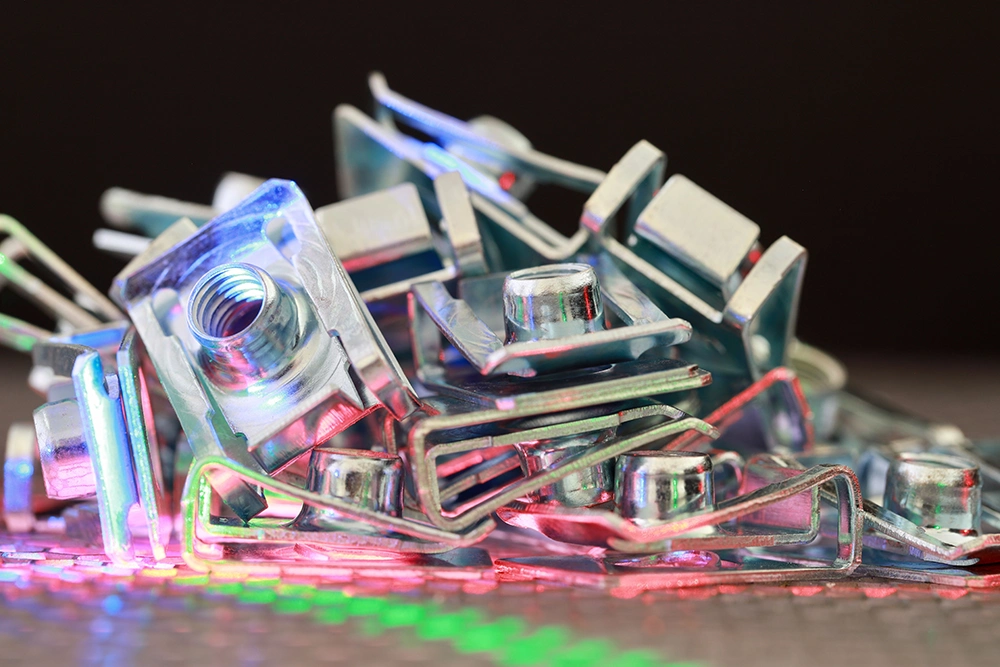
So when does CNC vs die casting kitchen parts stop being a real question? When the design is frozen and the annual volume is high enough that the die cost divides into a few cents per part. Before that point, machining is usually both faster and cheaper once the true cost of a premature die is counted.
A common pattern is a machined prototype run to validate the design and support launch, then a transfer to casting or stamping at mature volume, with machining kept for the variants that never reach the threshold. That split is worth planning at the drawing stage.
8. How to Source CNC Kitchen Parts
Sourcing CNC machined kitchen parts comes down to a four-point checklist that keeps a project from stalling between quotation and delivery.
- Drawings and tolerances. Send a 3D model for geometry and a 2D drawing for tolerances, material, finish, and inspection. A model alone cannot express a tolerance or a surface finish.
- Material certificate and compliance documents. State the standard up front, whether that is 21 CFR 177, NSF/ANSI 61, LFGB, or a customer specification, so the material is ordered against the right grade.
- Sample validation. Approve a sample against the drawing before committing to volume, so tolerance and finish assumptions get corrected cheaply.
- Production consistency. Agree what the inspection report covers and how often it is issued, so first article approval carries to the last shipment.
Conclusion
CNC machined kitchen parts cover more of a product line than most teams expect, from visible components like knobs, handles, and faucet bodies to internal drive parts like augers, coupling gears, and mixer shafts. Machining earns that position because it needs no mold, holds the interfaces that decide whether parts fit, and delivers the finish quality customers judge in the hand.
The route that fits a part depends on three questions: what the part contacts, how many you need, and how likely the design is to change. Answer those before tooling is discussed and the material, process, and finish usually follow.
Upload your drawing for a DFM review
We will recommend the material, process, and food-safe finish for your kitchen part, and confirm the tolerances that are realistic for the geometry before you place an order.
Get a Free QuotePrefer to discuss the drawing first? Send it through the inquiry page and we will reply with a process recommendation and the compliance documents your customer is likely to request.
9. Frequently Asked Questions
Q: What kitchen parts are commonly made by CNC machining?
A: Common examples include pot and pan handles, lid knobs, induction disc bases, espresso portafilter bodies, tamper bases, grinder burr carriers, blender coupling gears, meat grinder augers and plates, mixer shafts, cabinet knobs and pulls, faucet bodies, and sensor or camera housings for smart kitchen devices.
Q: Is CNC machining food safe? Which materials are FDA-compliant?
A: CNC machining itself is a subtractive process, so food safety depends on the material grade and the finishing route rather than the machining method. Parts intended for food contact are typically machined from grades that meet FDA 21 CFR 177, with passivation or electropolishing to remove contamination and a surface roughness suitable for cleaning. Compliance is declared for the material grade, not as a certification of the machining shop.
Q: Which is better for kitchen parts, 304 or 316 stainless steel?
A: 304 stainless steel covers most general kitchen parts and is the more economical choice. 316 stainless steel contains molybdenum, which improves resistance to chlorides and acids, so it is often specified for saltwater exposure, acidic food contact, or parts that are welded and then used in a corrosive environment. Neither grade is universally better, because the service environment decides.
Q: Can CNC machining replace die casting for kitchen products?
A: For prototypes, low and medium volumes, and evolving designs, yes. CNC machining needs no mold, so it delivers parts faster and absorbs design changes without cutting new tooling. Once the design is frozen and annual volume is high, die casting or stamping usually brings the unit cost down, and the two routes are often combined rather than swapped.
Q: What tolerances and surface finishes can you hold on kitchen components?
A: Achievable tolerance depends on the feature, the material, and the process. Turning and milling can hold tight tolerances on machined features, but thin walls, long unsupported sections, and soft polymers move more. Surface finishes range from as-machined to mirror polish, brushed, anodized, passivated, electropolished, or PVD coated. Confirm the figures against the drawing and the material before quoting.
Q: What file formats do you need to quote a kitchen part?
A: STEP and IGES handle 3D geometry well for machining, while 2D PDF drawings carry the tolerances, surface finish, material, and inspection requirements that a 3D model cannot express. Providing both gives the clearest picture. Native CAD files are useful for design review but are not required to quote.
Brass Threaded Insert Kit: Sizes, Uses, and Selection
Medical Equipment Instrument Panel Fabrication at ±0.1 mm
Related Article