The Complete Guide to CNC Machining Workflow: From Blueprint to Finished Product

-
Digital Blueprinting: Mastering 3D Modeling for Manufacturability
-
Strategic Planning: Process Design and Toolpath Optimization
-
Finishing Touches: Post-Processing for Function and Aesthetics
1. Defining Success: The Critical Role of Requirement Analysis
Each product must undergo requirements analysis prior to production to clarify specifications regarding functionality, materials, precision, and surface treatment requirements.Precision CNC part begins with a crystal-clear understanding of functional needs, material properties, tolerances, and surface specifications. Aerospace components like aircraft skins demand ultra-thin yet rigid profiles (often 0.2–2mm thickness) requiring specialized handling to prevent deformation. Medical implants, conversely, prioritize biocompatible materials (e.g., Ti-6Al-4V titanium alloy) and mirror finishes (Ra ≤ 0.2μm) to minimize tissue irritation.
Dr. Elena Rodriguez, Manufacturing Lead at JetPrecision Tech, notes: "Over 30% of machining failures trace back to ambiguous requirements. Quantifying every parameter – like specifying ±0.01mm instead of ‘high precision’ – prevents costly respins."
2. Digital Blueprinting: Mastering 3D Modeling for Manufacturability

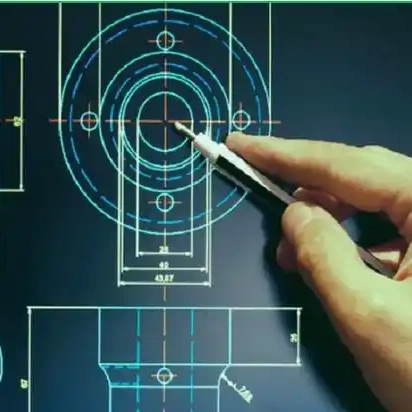
Using CAD software (SolidWorks, PowerSHAPE), engineers translate requirements into manufacturable 3D models. Key considerations include:
-
Geometric complexity: Undercuts or thin walls may require multi-axis machining or custom fixtures
-
Material constraints: Hardened steels need slower feeds than aluminum
-
Feature accessibility: Internal channels might necessitate EDM instead of milling
For organic shapes like turbine blades, hybrid modeling combines NURBS surfaces (for smooth contours) and mesh geometry (for intricate details). Tip: Embed tolerance annotations directly into the CAD file to guide downstream processes.
3. Strategic Planning: Process Design and Toolpath Optimization

Before the product is formally processed,Process planning bridges design and physical production. Critical tasks include:
3.1 Operation Sequencing
-
Roughing: Remove bulk material with high-feed tools (e.g., 3mm depth of cut in aluminum)
-
Semi-finishing: Achieve near-net shape, leaving 0.1–0.3mm stock
-
Finishing: Attain final dimensions and surface finish
3.2 Tooling Selection
| Operation | Tool Type | Material |
|---|---|---|
| Roughing | Corner radius end mill | Carbide with TiAlN coating |
| Finishing | Ball end mill | Micrograin carbide |
| Micro-features | 0.5mm engraving tool | Diamond-coated carbide |
Case Study: For aircraft skin mirror milling, engineers use dual synchronized 5-axis heads to counter workpiece deflection dynamically.
Chen Wei, Senior Process Engineer at AeroDynamic Solutions: "Balancing tool rigidity and cutting forces is non-negotiable for thin-wall parts. We simulate stress vectors before selecting tools."
Deepen your tooling knowledge: 22 Essential Knowledge about CNC Engraving Machine Processing (Part 1)
4. Virtual Machining: CAM Programming and Simulation
CAM software (Mastercam, PowerMILL) converts CAD models into machine instructions (G-code). Critical phases:
4.1 Toolpath Generation
-
Adaptive clearing: Efficiently removes material while minimizing tool load
-
Contour parallel paths: For uniform surface finishes on curved geometries
-
Drilling cycles: Optimized pecking to prevent chip clogging
4.2 Collision Avoidance
Leverage kinematic simulation to detect toolholder/workpiece crashes, especially in 5-axis setups. Note: ISO-standardized CLDATA records (per GB/T 11292-200839) ensure post-processor compatibility across machines.
Run virtual trials to check for:
-
Overcuts/undercuts in cavities
-
Tool deflection errors
-
Unnecessary air cuts wasting time
Advanced tip: Use AI-driven path optimization to reduce cycle times by 15–25%.
5. Execution Excellence: CNC Machining Stages Demystified
5.1 Workholding and Setup
-
Custom jigs: Essential for irregularly shaped parts (e.g., turbine blades)
-
Modular fixtures: Enable quick changeovers for high-mix production
5.2 Machining Stages
-
Roughing: High Material Removal Rate (MRR) with feeds up to 2,500 mm/min (aluminum)
-
Semi-finishing: Intermediate accuracy (±0.1mm), Ra 3.2μm
-
Finishing: Tight tolerances (±0.025mm), Ra 0.8μm or better
For rotating parts, see: What's CNC Turning Processing?
5.3 Real-Time Monitoring
-
Vibration sensors: Detect chatter compromising surface quality
-
Thermal compensation: Counteract heat-induced dimensional drift
6. Finishing Touches: Post-Processing for Function and Aesthetics

Post-processing enhances performance and appearance:
-
Deburring: Remove sharp edges via vibratory tumbling or hand finishing
-
Polishing: Achieve Ra ≤ 0.1μm for sealing surfaces or optics
-
Anodizing: Create corrosion-resistant layers on aluminum (e.g., Type III for 60μm hardness)
-
Painting/Powder coating: Add color or chemical protection
Specialized process: For MACOR machinable glass ceramics, non-contact polishing preserves electrical insulation properties.
7. Validation: Precision Measurement and Quality Assurance

Final inspection verifies compliance:
-
Dimensional checks: CMM (Coordinate Measuring Machine) scanning for GD&T compliance
-
Surface analysis: Profilometers measuring Ra, Rz roughness parameters
-
Functional testing: Pressure/load tests for assemblies
Quality Benchmark: Aerospace components often require 100% feature inspection with automated reports traceable to serial numbers.
8. CNC Workflow FAQ: Expert Answers to Common Challenges
Q1: What primarily determines achievable machining accuracy?
A: Accuracy hinges on machine rigidity (e.g., epoxy-granite beds dampen vibrations), thermal stability (coolant/chassis controls), and encoder resolution (0.1μm scales). Budget 30% higher costs for ±0.005mm vs. ±0.03mm tolerances.
Q2: How to reduce CNC cycle times without sacrificing quality?
A: Implement high-efficiency toolpaths (trochoidal milling) and optimized cutting parameters (higher RPM with reduced DOC). Case: Switching from conventional to adaptive roughing cut a jet engine bracket's machining time by 40%.
Q3: Which materials pose the biggest machining challenges?
A: Hardened steels (require slow speeds), thermoplastics (prone to melting), and composites (abrasive wear). MACOR ceramic, while machinable, demands specialized tool geometries to prevent edge chipping.
Q4: When is 5-axis CNC essential over 3-axis?
A: Use 5-axis for:
-
Simultaneous contouring (impellers, blisks)
-
Reduced setups for complex parts
-
Avoiding tool interference in deep cavities
Learn advanced strategies: 22 Essential Knowledge about CNC Engraving Machine Processing (Part 2)
Q5: Why invest in post-processors for CAM systems?
A: Custom post-processors translate generic G-code into machine-specific syntax (e.g., Heidenhain vs. Fanuc). Standardization per GB/T 11292-2008 prevents motion errors during arcs or synchronized moves.
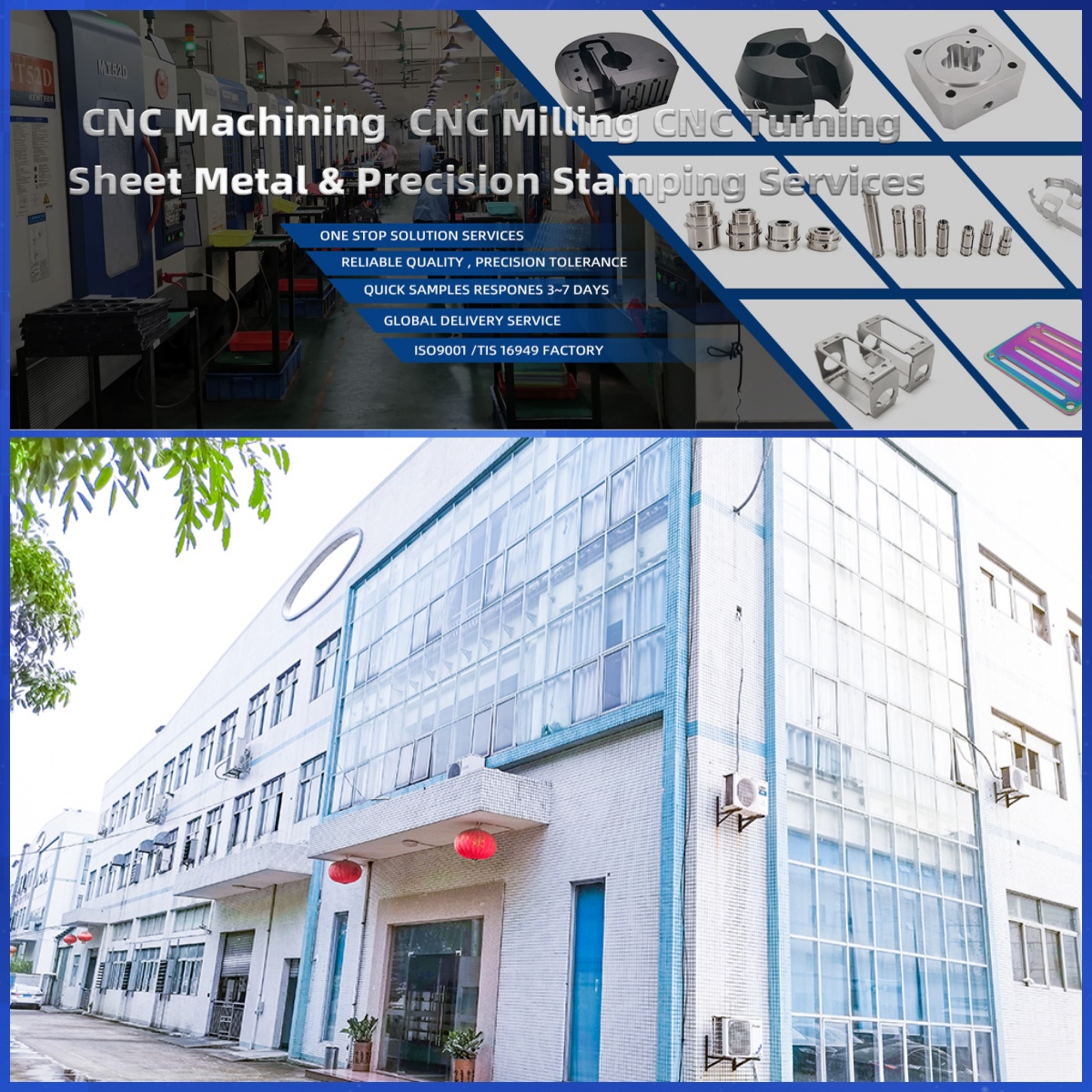
DongGuan YiTai Electronic Technologies Co.,Ltd
DongGuan YiTai Electronic Technologies Co.,Ltd is a manufacturing service provider located in Dongguan, China.
YiTai specialized in CNC turning machining and sheet metal fabrication mainly. As a member of Hung Mou Group, we focus on the overseas marketing development. And based on our parent company’s manufacturing capability and resources, YiTai also expended machining services such as die casting, injection molding, aluminum profile extrusion, 3D printing, which are committed to providing customers with one-stop purchasing services and experience.
CNC MACHINING , CNC MILLING , CNC TURNING , SHEETMETAL , FASTENER , OTHERS




Why is Material Galvanized?
The Precision Revolution: How 3D CMM Inspection Transforms Metalworking Manufacturing
Related Article