
22 Essential Knowledge about CNC Engraving Machine Processing (Part 2)
author: YITECH
2024-12-03
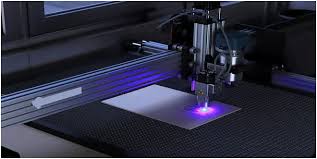
Our state-of-the-art CNC engraving technology ensures precise and high-quality results for all of your engraving needs...
Today, let's continue learning the 12 knowledge points of 22 Essential Knowledge about CNC Engraving Machine Processing:

11. What is the formula for tool life?

11. What is the formula for tool life?
Tool life mainly refers to the tool life in steel material processing. The empirical formula is: (T is tool life, CT is life parameter, VC is cutting speed, f is feed per revolution, P is cutting depth). Among them, cutting speed affects tool life the most. In addition, radial runout of tool, grinding quality of tool, tool material and coating, and cooling liquid will also affect the durability of tool.
12. How to protect the engraving machine during the machining process?
12. How to protect the engraving machine during the machining process?
1) Protect the tool setting instrument and avoid excessive erosion by oil.
2) Pay attention to the control of flying chips, which can cause great harm to the machine tool. Flying chips can cause short circuits when they fly into the electrical cabinet, and reduce the life of the lead screw and guide rail when they fly into the guide rail, so the main parts of the machine tool should be sealed during machining.
3) When moving the lighting, do not pull the lamp head, which can easily damage the lamp head.
4) Do not approach the cutting area during observation to avoid eye injury from flying chips. When the spindle motor is rotating, any operation on the workbench surface is prohibited.
5) When switching the machine tool door, do not open or close it abruptly. The impact vibration during the door-opening process in precision machining can cause tool marks on the machined surface.
6) Give the spindle speed before starting the machining, otherwise, if the spindle is slow to start, the motor will suffocate before reaching the desired speed, and the user must compensate for this.
7) Prohibiting placing any tools or workpieces on the crossbeam of the machine tool. 8) It is strictly forbidden to place magnetic tools such as magnetic suction cups and dial indicator holders on the electrical cabinet; otherwise, the display screen will be damaged.
13. When a new tool is being machined, what parameters need to be adjusted if there is a backspin phenomenon, and machining is labor-intensive?
13. When a new tool is being machined, what parameters need to be adjusted if there is a backspin phenomenon, and machining is labor-intensive?
The reason why machining is labor-intensive is that the spindle power and torque cannot bear the current cutting amount. The reasonable solution is: redesign the tool path, reduce the cutting depth, slot depth, and edge trimming. If the overall machining time is less than 30 minutes, the cutting speed can be adjusted to improve the cutting state.
14. What is the function of cutting fluid?
14. What is the function of cutting fluid?
Pay attention to adding coolant when processing metal. The role of the cooling system is to take away the cutting heat and flying chips, and play a lubricating role in processing. The cutting fluid takes away the cutting heat, reduces the heat transmitted to the tool and motor, and improves their service life. Taking away the flying chips avoids repeated cutting. Lubrication can reduce cutting force and make machining more stable. When processing purple copper, using oil-based cutting fluid can improve surface quality.
15. What stages of tool wear are included?
15. What stages of tool wear are included?
Tool wear has three stages: initial wear, normal wear, and rapid wear. In the initial wear stage, the main reason for tool wear is that the tool temperature is low, and it has not reached the optimum cutting temperature. At this time, the main wear of the tool is abrasive wear, which has a greater impact on the tool, so it is easier to cause tool breakage. This stage is a very dangerous stage, and if not handled properly, it can directly lead to the tool breaking down. When the tool passes the initial wear period, the cutting temperature of the tool reaches a certain value, the main wear is diffusion wear, and its role is mainly to cause local shedding. Therefore, wear is relatively small and slow. When the wear reaches a certain level, the tool becomes ineffective, and it enters the stage of rapid wear.
16. Why does the tool need to be run-in, how to run it in?
16. Why does the tool need to be run-in, how to run it in?
As mentioned earlier, in the initial wear stage, the tool is prone to breakage, and to prevent this, we must run the tool in gradually until the cutting temperature of the tool gradually rises to a reasonable temperature. Experimental verification shows that the tool life can be increased by more than 2 times after running in with the same machining parameters. The method of running in is to reduce the feed speed by half while maintaining a reasonable spindle speed, and the machining time is about 5-10 minutes. When processing soft materials, use the minimum value, and when processing hard metals, use the maximum value.
17. How to judge severe tool wear?
17. How to judge severe tool wear?
The method of judging severe tool wear is to:
1) listen to the machining sound, whether there is a harsh sound;
2) listen to the spindle sound, whether there is obvious backspin phenomenon;
3) feel the vibration increase during machining, whether there is obvious vibration of the machine tool spindle;
4) observe the machining effect and whether the machined bottom surface is smooth or not (if it is like this at the beginning, it means the cutting depth is too deep).
18. When should the tool be replaced?
18. When should the tool be replaced?
The tool should be replaced at around 2/3 of the limit of tool life. For example, if the tool is seriously worn after 60 minutes of use, the tool should be replaced at the beginning of the 40th minute during the next machining process, and it is recommended to develop the habit of regular tool replacement.

19. Can the tool be continued to be used after severe wear?
19. Can the tool be continued to be used after severe wear?
After tool wear becomes severe, the cutting force can increase up to three times. The cutting force has a great influence on the service life of the spindle motor. The service life and stress of the spindle motor are inversely proportional to the third power. For example, if the cutting force is increased by three times and the machining continues for 10 minutes, it is equivalent to the spindle motor operating normally for 10*33=270 minutes.
20. How to determine the tool extension length during rough machining?
20. How to determine the tool extension length during rough machining?
The shorter the tool extension length, the better. However, in actual processing, if it is too short, the tool length needs to be adjusted frequently, which greatly affects the processing efficiency. So, how to control the tool extension length in actual processing? The principle is: the tool bar with a diameter of φ3 can extend 5mm for normal machining, the tool bar with a diameter of φ4 can extend 7mm for normal machining, and the tool bar with a diameter of φ6 can extend 10mm for normal machining. Try to go below these values when changing the tool. If the length of the tool when changing the tool needs to be greater than the above value, try to control the depth of the machining when the tool wears. This is a bit difficult to grasp and requires more training.
21. What should be done when the tool suddenly breaks during machining?
21. What should be done when the tool suddenly breaks during machining?
1) Stop machining and check the current sequence number.
2) Check whether there is a tool body at the point of breakage, and remove it if there is.
3) Analyze the cause of the broken tool, which is the most important step. Why did the tool break? We must analyze it from the various factors that affect machining. The cause of tool breakage is that the tool suddenly experiences an increase in force. This can be due to issues with the tool path, excessive tool vibration, hard blocks in the material, or incorrect spindle motor speed.
4) Analyze and replace the tool for machining. If the path is not changed, machining should be started at the original sequence number, and the feed rate should be reduced due to the significant hardening of the broken tool, and tool run-in needs to be performed.
22. What should be done when rough machining conditions are poor, and how to adjust the machining parameters?
22. What should be done when rough machining conditions are poor, and how to adjust the machining parameters?
If the tool life cannot be guaranteed even at a reasonable spindle speed, when adjusting the parameters, adjust the cutting depth first, then adjust the feed rate, and adjust the lateral feed last. (Note: There are also limitations to adjusting the cutting depth. If the cutting depth is too small, this can lead to too many layers, and although the theoretical cutting efficiency is high, the actual processing efficiency is too low. At this time, a smaller tool should be used for processing, which will increase the processing efficiency. Generally, the minimum cutting depth cannot be less than 0.1mm.)
Tube Laser Cutting
22 Essential Knowledge about CNC Engraving Machine Processing (Part 1)
Related Article

Choosing between 316 and 316L? 316L resists weld decay better, 316 holds strength at higher heat. Both food-grade, both marine-grade. Quick, no-fluff breakdown.
316 vs 316L Stainless Steel for CNC Machining
What is stamping and when do you use it? A plain guide to sheet metal stamping, dies, and progressive tools, plus the parts it makes faster than machining.
What Is Stamping in Metal Manufacturing?

