Metal Spinning: How the Process Works and When to Use It
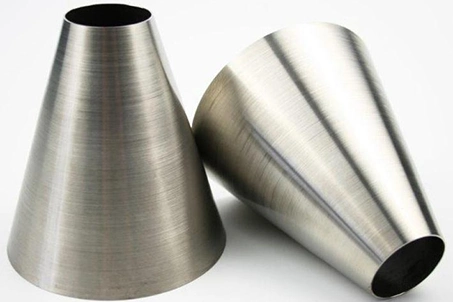
This guide covers the forming sequence and three process families, along with materials, applications, design limits, inspection, cost factors, and the information a supplier needs to prepare a quote.
1. What Is Metal Spinning?
How the process runs
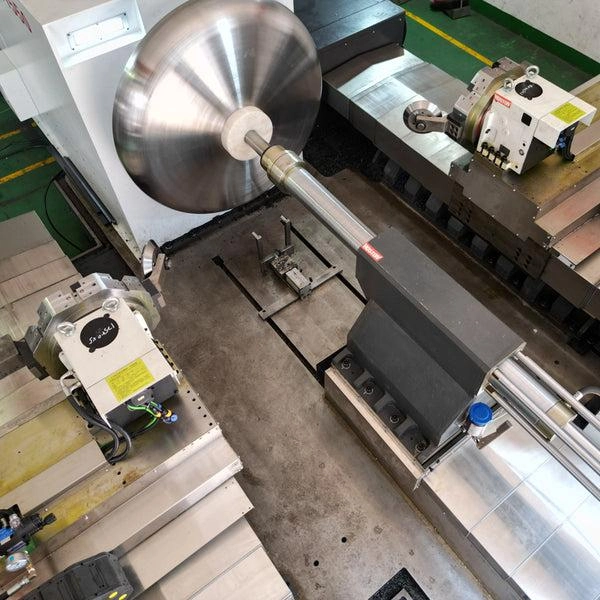
Metal spinning starts with a circular sheet-metal blank. After deburring, the blank is clamped between a mandrel and tailstock pad and rotated. A roller presses the metal onto the mandrel, moving from the centre outward in one or more passes. The excess edge is trimmed to match the finished profile.
Because the roller deforms a small area at a time, the forming force is relatively low for the part's diameter. The roller path affects the risk of wrinkling or splitting, as well as the finished wall thickness.
Metal spinning vs. CNC turning
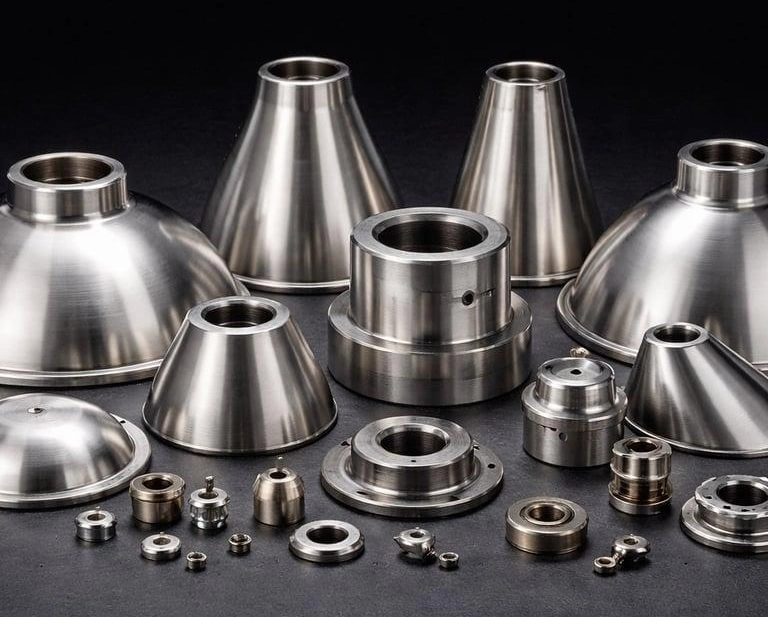
Both processes rotate the workpiece, but they shape it differently. CNC turning cuts material away, producing chips. Spinning presses sheet metal onto a mandrel. Features such as bores, threads, flats, and cross holes usually need to be machined afterwards.
The starting stock differs too: spinning uses a circular blank, while turning generally starts with bar or plate. Neither process is automatically cheaper. The drawing determines which one fits the part.
Which parts are suitable?
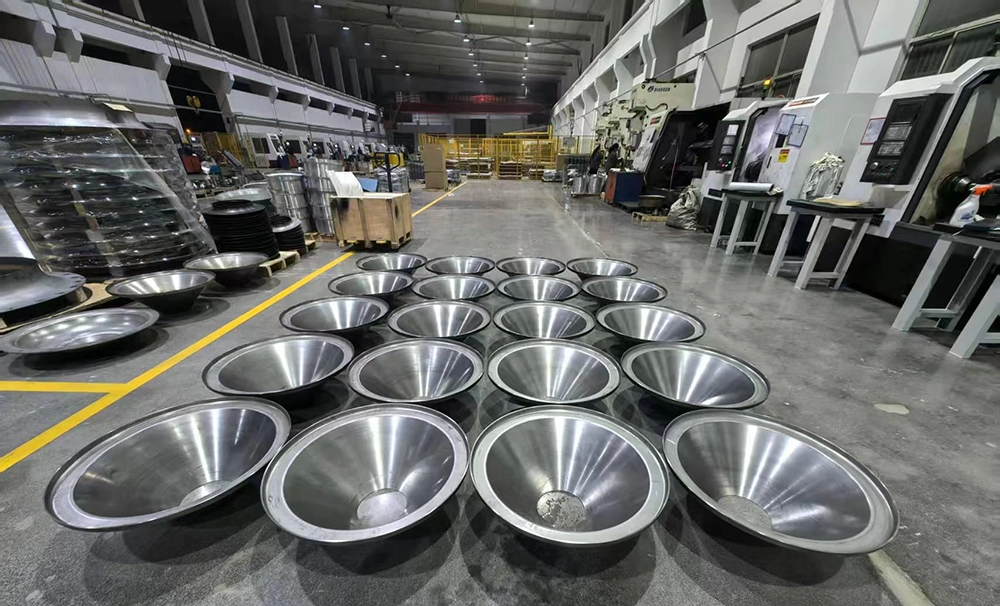
Metal spinning can produce cones, cylinders, hemispheres, dished ends, covers, housings, reflectors, and flared or necked forms. Feasibility depends on the diameter, depth-to-diameter ratio, wall thickness, material ductility, and the capacity of the machine and mandrel. Undercuts may require a split mandrel.
2. Process Types
These three process families use similar equipment but differ in how they shape the wall. Terminology varies between shops, so specify the operation rather than relying on the name: one shop may call a process power spinning, while another calls it shear forming. Shops offering several routes may list them under custom metal spinning services.
Conventional spinning
In conventional spinning, the blank is formed over a mandrel in one or more passes, and the wall remains close to its starting thickness. The blank area and finished surface area are roughly comparable, which helps preserve the wall thickness. Wrinkling ahead of the roller and splitting at tight radii are common risks to manage.
A review of the mechanics of metal spinning surveys conventional, shear, and tube spinning, including how wall thickness changes in each process.
Shear spinning
Shear spinning intentionally reduces the wall thickness. A cone will be thinner than the original blank, with the final thickness related to the wall angle. Forming loads are higher, so the drawing should specify wall thickness as a controlled feature.
Flow forming
In flow forming, a hollow blank, disc, or tube is mounted on a mandrel. Rollers move material axially and reduce the wall thickness in a controlled way. The process is commonly used for cylindrical parts. A review of spinning, shear forming and flow forming processes discusses the processes separately. The drawing should make clear whether spinning or flow forming is required.
Cold and hot spinning
Whether to heat the workpiece depends on the alloy, thickness, deformation per pass, springback, and surface requirements. A torch or induction coil can reduce forming force for less ductile grades, but heating can also cause scale, distortion, and handling risks. More ductile grades may be spun without heat.
Manual and CNC spinning
Manual spinning uses hand tools to guide the metal against the mandrel. It is often used for one-off or repair parts, large diameters, and craft work. CNC spinning follows a programmed roller path, making passes repeatable and allowing process parameters to be recorded. Teach-in systems record and replay an experienced spinner's movements. Multi-roller setups vary by machine, so confirm the configuration with the supplier.
Mandrels and special setups
The mandrel defines the part's inside form. A one-piece mandrel is simple, but it can trap undercuts. Split or collapsible mandrels can be used when the part needs to be released from the form. Mandrel-free methods may suit parts with less demanding form and finish requirements. Special setups also have limits, so confirm feasibility with the supplier.
3. Materials
Most metals used in spinning are ductile. The right choice depends on the grade, temper, thickness, and part geometry, as well as whether the supplier can form the part without defects.
Aluminum and aluminum alloys
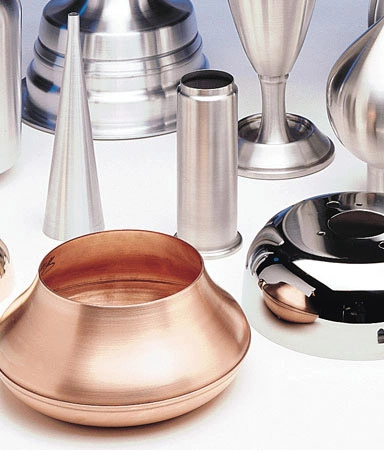
Commercially pure and low-alloy grades are generally easy to form and are used for housings, covers, and reflectors. High-strength, heat-treatable grades are less forgiving at tight radii or in thicker sections. Confirm the temper and forming sequence with the supplier before finalizing the design.
Copper and brass
Copper and brass are ductile and can produce a fine surface, making them suitable for both decorative and functional parts. They work-harden during forming, so deep shapes may require annealing between passes. Tool marks can also show on polished surfaces.
Stainless and carbon steel
Stainless steel work-hardens during spinning, which can mean higher forming forces, more springback, additional passes, and faster tool wear. Grade selection affects both corrosion resistance and formability. Carbon steel is generally economical and forms readily, but needs a coating or plating when corrosion protection is required.
Titanium and high-temperature alloys
These materials are used for specific applications and may require specialized equipment, process development, and temperature control. Material costs and qualification requirements can also be significant. Confirm that the supplier can run the specified grade and process before treating it as a standard capability.
4. Applications
Metal spinning is suited to parts with a round, hollow shape and an open end.
Lighting and reflectors
Lamp shades, reflectors, and housings are common applications. For visible parts, profile and surface finish are key requirements. Specify wall thickness and its tolerance on the drawing as well.
Cookware and consumer products
Pans, pots, bowls, kettles, and hollow decorative items can be spun when the geometry, material, and finish are suitable. Wall thickness affects how the product feels and performs, so include it in the drawing requirements.
Automotive and industrial parts
Housings, shields, covers, and some wheel-related parts can be made by spinning. Specify the required process: spun and flow-formed parts can have different wall thicknesses, so the drawing and inspection plan should identify the process and relevant checks.
Pressure-related and aerospace parts
Nose cones, duct sections, and engine components are among the parts made by spinning, a process with a long history in these industries. Such applications may require material certification, process qualification, and non-destructive testing. A round shape alone does not make a part pressure-rated or flight-qualified.
5. Advantages and Limitations
Potential advantages
- Tooling is often simpler than a draw die for the same part, which can make spinning practical at low or medium volumes.
- Because deformation is concentrated near the roller, forming forces are relatively low.
- The part can be made as one seamless piece, with no weld to inspect or finish.
- Initial parts can be produced without first building a dedicated draw die.
The actual cost and lead time depend on the geometry, material, setup, and quantity, so request a quote for the specific part.
Limitations to consider
- The process is best suited to rotationally symmetric parts. Holes, flats, and bosses are usually added in secondary operations.
- Wrinkling and cracking depend on the material, geometry, and forming sequence.
- Springback needs to be accounted for, particularly with high-strength grades.
- Wall thickness can vary; in shear forming, thinning is intentional.
- Trimming creates scrap, and thin walls can be difficult to hold and measure.
The supplier's experience with the forming sequence and roller path can matter more than machine size alone.
When another process may be a better fit
Consider another process if the part is not rotationally symmetric, needs features such as holes or flats formed in the same operation, or requires a machined bore. Deep drawing can suit high-volume formed parts, CNC machining services can produce parts defined by machined features, and MIM can suit small, complex components.
6. Comparison with Other Processes
| Process | Typical geometry | Tooling / setup | Selection points |
|---|---|---|---|
| Metal spinning | Hollow, rotationally symmetric parts | Mandrel plus forming setup | Geometry, volume, material, forming route |
| Deep drawing / stamping | Formed parts, often higher volume; geometry set by die design | Dedicated tooling; investment can be significant | Volume, part design, tooling amortisation |
| CNC turning | Rotational parts made by material removal | Cutting tools and workholding | Tolerances, stock removal, stock form, quantity |
| MIM | Small, complex metal components | MIM tooling plus debinding and sintering | Part size, geometry, material, volume |
7. Quality Control for Spun Parts
Critical Dimensions and Geometry
Start from the drawing: outside diameter, height, profile, runout to a stated datum, wall thickness, flange flatness. Wall thickness needs its own callout for shear or flow forming, and again when the part is machined after forming.
Surface Finish and Material Condition
Forming marks, roller chatter, and orange peel are process signatures; the drawing should say whether they are acceptable. On polished or anodised work a scratch is a scrap cause. Record the certificate, the hardness, and any anneal used between passes.
Inspection Evidence
Match the method to the requirement. A micrometer or ultrasonic gauge answers wall thickness, a CMM or profile scan answers contour, and runout needs a rotating fixture on the stated datum.
| Critical feature | Drawing requirement | Inspection method / equipment | Actual result | Sample / batch / date |
|---|---|---|---|---|
| [e.g., outside diameter] | [drawing callout] | [verified method] | [recorded result] | [scope] |
| [e.g., wall thickness] | [drawing callout] | [verified method] | [recorded result] | [scope] |
Name only equipment the facility actually uses, and record only results that exist. A brochure method is not a method that ran on your parts.
8. What Affects Cost
Material, Blank Size, and Thickness
The blank is larger than the part, so part of what you buy becomes trim. Alloy, condition, finished thickness, and blank diameter drive material cost and forming difficulty. A grade that must be ordered as a full sheet costs more than one already on the rack.
Geometry, Mandrel, and Process Development
Depth, contour, and pass count decide machine time. The mandrel is tooling, and its cost follows the shape. New profiles carry programming and trial work before a good part exists.
Quantity, Finishing, Inspection, and Delivery
Setup spread across the order changes unit cost. Polishing, coating, secondary machining, inspection reports, packaging for thin walls, and a compressed schedule each add. No unit price is quoted, because it depends on the part.
9. RFQ Checklist
A complete package removes the assumptions a supplier prices as risk.
- 2D drawing with revision, units, dimensions, and tolerances
- 3D CAD model, if available
- Material grade, temper or condition, and thickness
- Blank or finished geometry, and critical wall-thickness requirements
- Surface finish and any secondary operations
- Quantity, annual demand, and target schedule
- Application and operating environment
- Inspection, certification, or reporting requirements
- Packaging and shipping destination
Capabilities to Confirm
Ask in writing for supported materials, part envelope, geometries handled, forming routes, quantities, secondary operations, inspection methods, and documentation. Anything without a record stays unconfirmed and is marked [confirm with engineering].
Then request a metal spinning quote with the critical characteristics marked, since a supplier can only plan to what the package states.
10. Frequently Asked Questions
Q: How does metal spinning work?
A: A round blank is clamped against a mandrel, the spindle turns, and a roller or lever tool pushes the metal onto the mandrel surface in one pass or several passes. Material is moved rather than cut, then the edge is trimmed and the part is finished.
Q: What parts can be made by metal spinning?
A: Hollow, rotationally symmetric parts: cones, cylinders, hemispheres, dished ends, covers, housings, and reflectors. Feasibility depends on diameter, depth, wall thickness, material ductility, and the size of the mandrel and machine available.
Q: What is the difference between metal spinning and flow forming?
A: Conventional spinning keeps the wall close to the starting thickness. Flow forming displaces material axially along a mandrel and reduces wall thickness in a controlled way, usually on cylindrical parts. The two are related rotary processes, not interchangeable names.
Q: Which materials can be metal spun?
A: Most ductile metals can be formed, including aluminum, copper, brass, carbon steel, and stainless steel. Titanium and high-temperature alloys are application-specific and usually need process development. Grade, temper, and thickness decide what is practical.
Q: Is metal spinning suitable for small production runs?
A: It can be, because the tooling is simpler than a draw die for the same part. Whether it is economical depends on the mandrel cost, the number of forming passes, the material, and the finishing required, so it has to be quoted per part.
Q: What information is needed for a metal spinning quote?
A: A 2D drawing with revision and tolerances, a 3D model if available, material grade and temper, thickness, blank or finished geometry, wall thickness requirements, finish, quantity, schedule, inspection needs, and the operating environment.
Conclusion
The process fits when the part is hollow, round, and needed in a quantity that does not justify a draw die. It stops fitting when the geometry leaves the axis, or when the tolerance needs metal that was never there. Between those points, the deciding details are wall thickness, material condition, forming route, and how the result is measured.
That is also the shortest way to judge a supplier: which route they would use, which wall thickness they can hold, and how they would prove it.
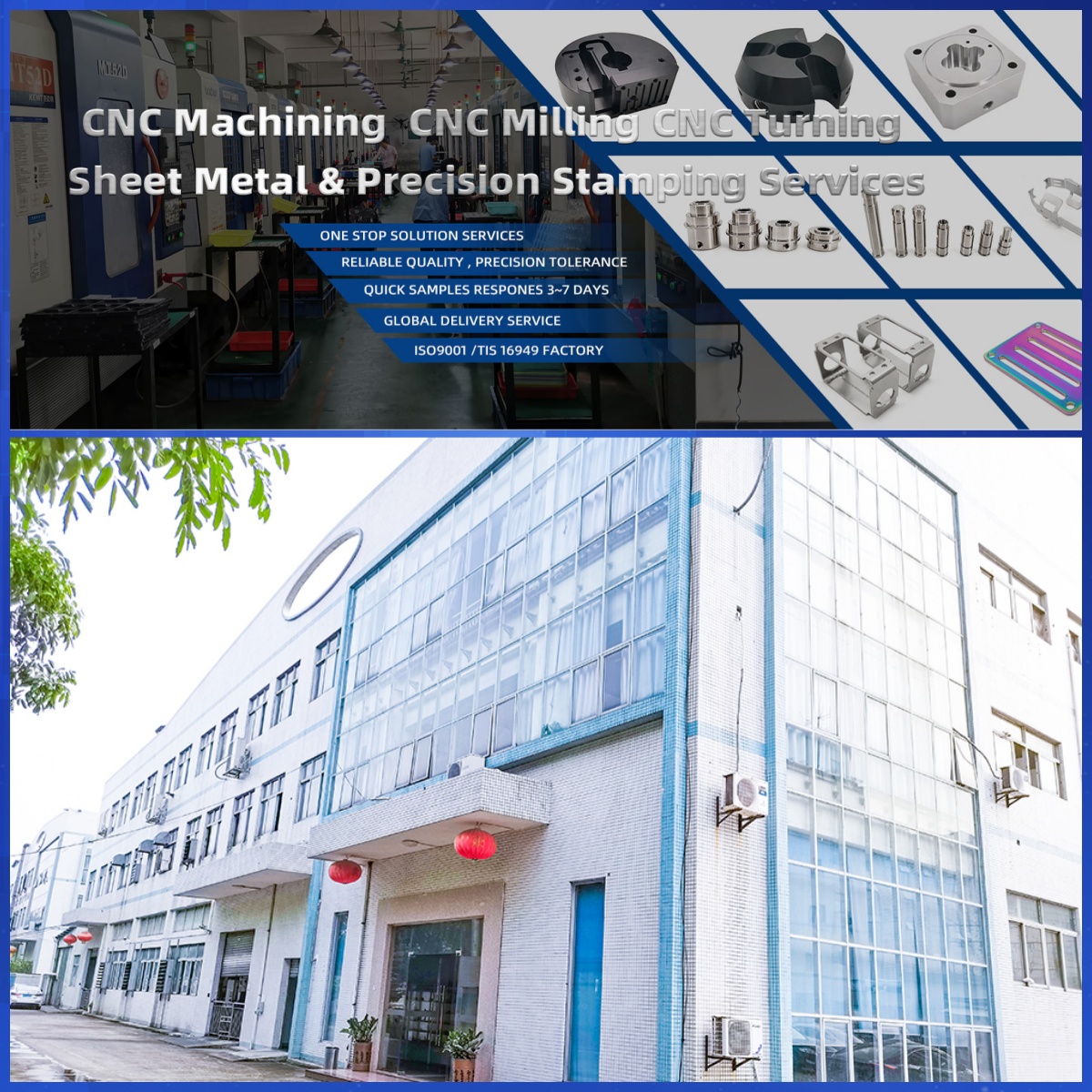
DongGuan YiTai Electronic Technologies Co.,Ltd
DongGuan YiTai Electronic Technologies Co.,Ltd is a manufacturing service provider located in Dongguan, China.
YiTai specialized in CNC turning machining and sheet metal fabrication mainly. As a member of Hung Mou Group, we focus on the overseas marketing development. And based on our parent company’s manufacturing capability and resources, YiTai also expended machining services such as die casting, injection molding, aluminum profile extrusion, 3D printing, which are committed to providing customers with one-stop purchasing services and experience.
CNC MACHINING , CNC MILLING , CNC TURNING , SHEETMETAL , FASTENER , OTHERS




Precision Metal Fabrication: From Drawing Review to Inspection
Related Article