Gang Tool vs Turret CNC Turning: How to Choose
The comparison gets confusing because it is usually framed as a contest. On a real shop floor it is a match between a tool layout and a set of operations. The question of gang tool CNC turning vs turret CNC turning answers itself once the drawing and the operation list are on the table.
1. What Is Gang Tool CNC Turning?
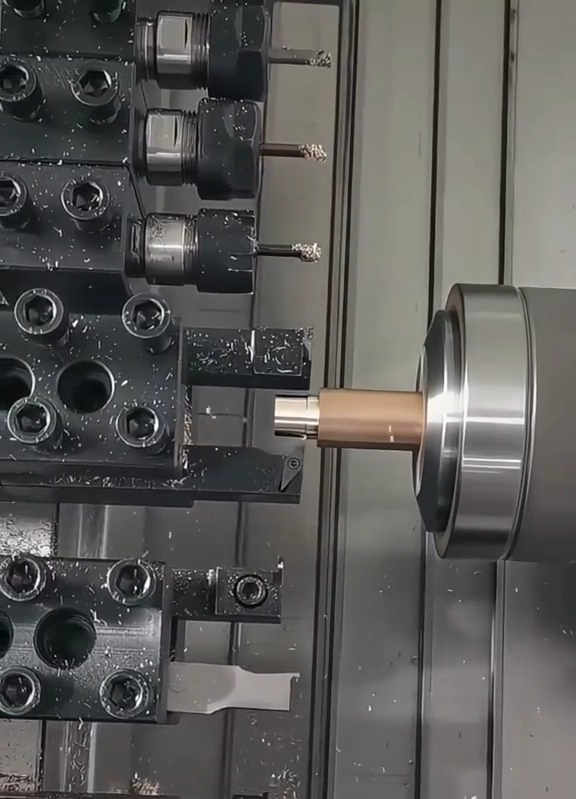
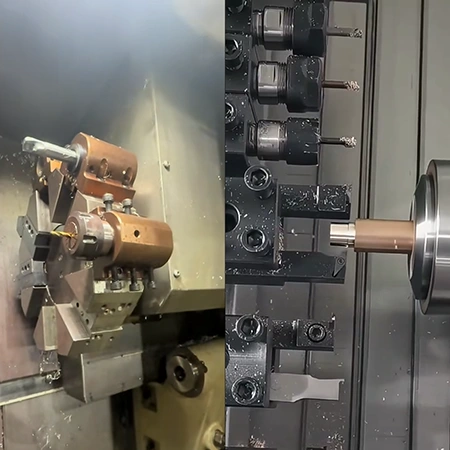
A gang tool lathe carries its tools on a plate or slide, arranged in a line rather than on a rotating body. Nothing indexes to change tools. The machine moves the X and Z axes so the next tool in the row arrives at the cutting position.
For anyone asking what is a gang tool CNC lathe, the defining point is that tool selection comes from slide movement, not rotation. The layout suits turned parts with a stable, fairly simple operation sequence.
Tool count is not a fixed number: Capacity depends on the tooling plate space, holder size, X axis travel, tool protrusion, and clearance between neighbouring tools. Two machines of the same nominal size can accept very different layouts.
2. What Is Turret CNC Turning?
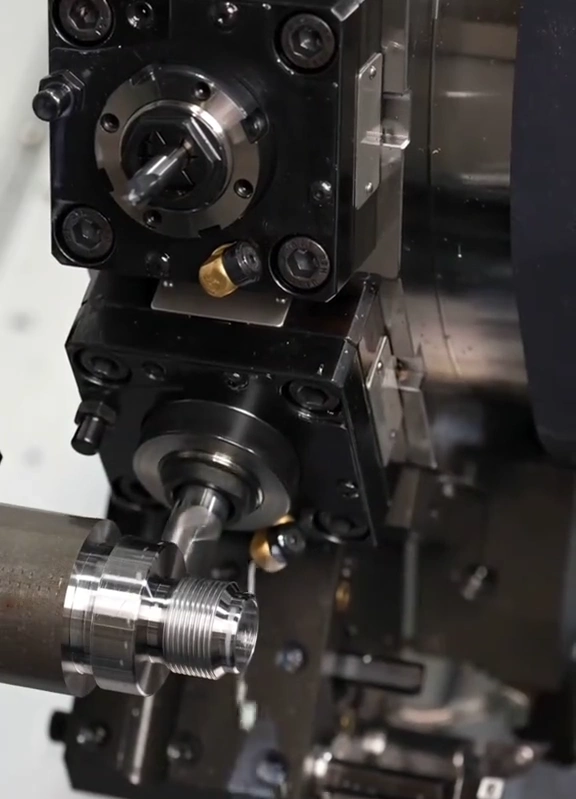
A turret CNC lathe mounts its tools on a turret, each in a separate station. To change tools, the turret rotates and indexes the required station into position, then the machine axes move the tool into the work.
This layout suits parts that need a wider range of tools or several separate turning operations. Station count, turret type, and available functions vary between models.
3. Gang Tool vs. Turret CNC Turning: Key Differences
The table below sets out gang tool CNC turning vs turret CNC turning on the points that usually decide a project. The difference between gang tooling vs turret tooling is how tools are held and selected, not a ranking of quality.
| Factor | Gang Tool CNC Turning | Turret CNC Turning |
|---|---|---|
| Tool arrangement | Tools mounted in a linear row | Tools mounted in indexed turret stations |
| Tool selection | Slide motion positions the required tool | Turret indexes the selected station |
| Tool capacity | Limited by tooling plate space, travel, and clearance | Depends on turret station count and holder configuration |
| Typical part fit | Often considered for compact parts with a stable tool sequence | Often considered for parts requiring more tools or varied operations |
| Powered tooling | Depends on the specific machine and setup | Available on machines equipped with live tooling |
| Setup planning | Tool spacing, offsets, and interference are important | Station assignment, offsets, and turret clearance are important |
| Best selection basis | Actual cycle, workholding, and part family | Required operations, tool access, and machine configuration |
Tool change actions and tool counts follow the specific machine, not the layout category. Zero tool change time, a fixed station count, and a fixed speed difference are not shared properties of every machine in either group.
4. How Tool Changes Work on Each Machine
Tool Selection on a Gang Tool Lathe
- The active tool retracts clear of the workpiece.
- The X and Z axes move to the position of the next tool in the row.
- The new tool enters the cutting position and the next operation begins.
A gang tool layout has to account for travel distance, tool interference, the order of the tools, and the position of the cutoff tool.
Tool Selection on a Turret Lathe
- The tool retracts from the workpiece and clears the work area.
- The turret rotates and indexes to the target station.
- The machine axes position the tool and the next operation runs.
How does a turret CNC lathe change tools is answered by the machine's own documentation, because indexing behaviour differs between models. Actual changeover time should come from the machine data sheet or a measurement on the machine. A figure seen in a video is not an industry value.
5. Which Parts Are a Good Fit for Gang Tool Turning?
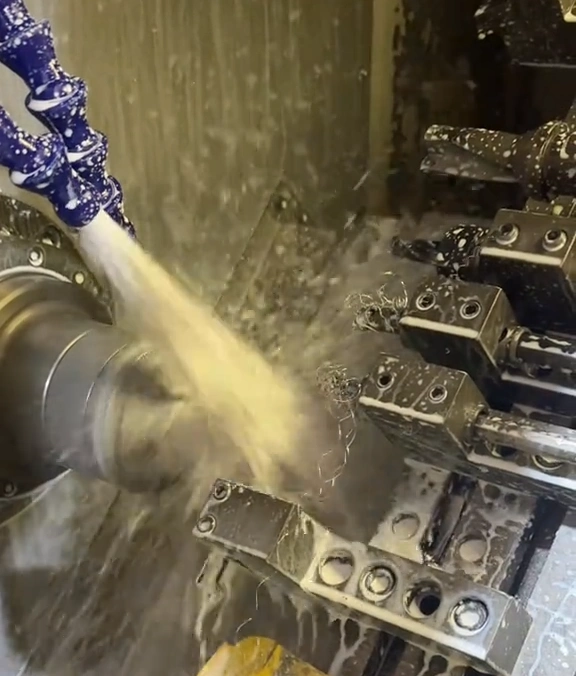
A gang tool lathe for small parts is a common pairing. High-volume CNC turning work is where the layout is considered most often, because a stable tool sequence means the setup rarely has to change. Typical candidates:
- Short, compact turned parts
- Small-diameter hardware components
- Parts with a repeatable sequence of turning, drilling, and cutoff operations
- High-volume jobs where the tooling layout stays stable
- Parts where a simple, compact setup meets the required geometry
Suitability also depends on bar feeding, workholding, chip clearance, and tool space. Shops running this at volume build the process around precision CNC turning services rather than treating the lathe as a standalone decision.
6. When Is Turret CNC Turning a Better Fit?
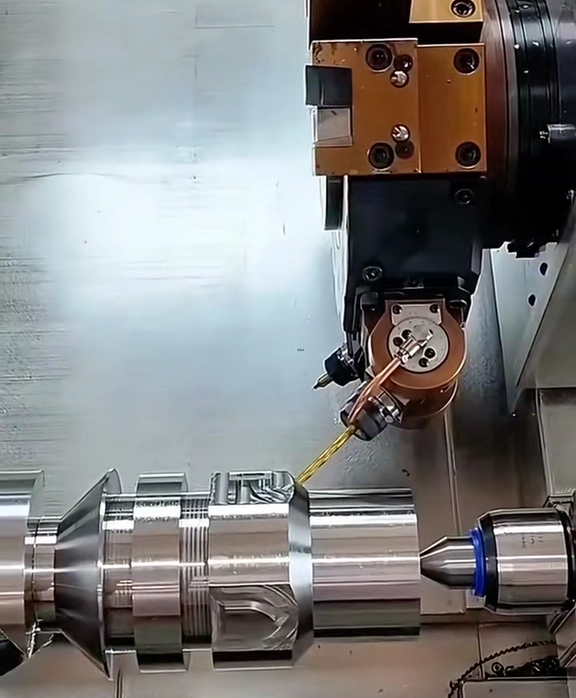
A turret machine is the more likely starting point when the operation list grows:
- Parts that need a larger or more varied tool set
- Complex CNC turned parts with several separate turning operations
- Jobs that need live tools for milling, cross-drilling, or tapping, where the machine is equipped for those operations
- Parts that benefit from supported workholding or additional machine functions
- Part families whose operation sequence changes between jobs
A turret lathe with live tooling can carry out milling and drilling in the same setup, but only when the machine has the live tools, the required axes, and the spindle functions. Live tooling is normally listed as a separate machine option, not a standard feature. If the part also needs milling, review the CNC milling and turning capabilities available for the job.
7. Comparing Cycle Time, Rigidity, and Accuracy
Each point below is a condition to check, not a verdict.
Cycle Time
A gang tool layout can reduce indexing actions, but the slide still travels and retracts, and those moves count. A turret adds indexing and positioning, but how operations are grouped and how the machine is designed change what that actually costs. Compare complete part cycles using measured data, not a single tool change time.
Rigidity
Tool overhang, holder mounting, machine structure, and cutting load all affect rigidity. A gang tool layout is not automatically more rigid in every situation. For heavy cutting, the answer should come from a trial and the machine's own parameters, not from the layout name.
Accuracy and Repeatability
Structure alone does not decide the accuracy of a finished part. Machine condition, workholding, tooling, thermal stability, cutting parameters, and how the part is measured all influence the result. The practical test is whether the machine holds the critical dimensions on the drawing.
8. Tool Layout and Setup Tips
Planning a Gang Tool Layout
- Arrange tool positions in the order the operations run.
- Check that neighbouring tools do not interfere.
- Check clearance between the cutoff tool and the chuck, collet, or workpiece.
- Cut unnecessary X and Z travel out of the sequence.
- Record tool positions and offsets so the layout can be repeated.
Planning a Turret Tool Layout
- Assign stations in the order the operations run.
- Check tool overhang, turret rotation space, and workpiece interference.
- Put frequently used operations on sensible stations to avoid extra travel.
- With right-hand, left-hand, or boring tools, confirm the setup against part orientation, the holder, and the machine documentation.
9. A Hybrid Option: Gang Tooling and Turret Configurations
Some machines and production plans combine a gang tooling layout with turret functions to gain both tool count and machining options. Whether that works depends on the model, the available travel, whether live tooling is fitted, the workholding, and the part size.
Not a general solution: A hybrid arrangement is not a standard answer for every job. It should be assessed against the actual machine model and the operations that machine can complete.
10. How to Choose the Right CNC Turning Setup
- List every operation the drawing requires.
- Identify whether milling, cross-drilling, tapping, or backside work is needed.
- Confirm part dimensions, material, workholding, and bar-feeding needs.
- Compare tool count, tool access, clearance, and setup time on the actual machine.
- Review batch size, changeover frequency, the inspection plan, and the target cycle time.
- Run a sample or production trial when cycle time or capability is critical.
This is what CNC turning machine selection looks like in practice: a list of questions answered against a specific machine, not a decision made from a comparison table. The same six steps apply to gang tool CNC turning vs turret CNC turning, and to a choice between two models of the same type.
"The question arrives framed as which layout is better. The useful version is which layout can complete these operations, in this order, on this part, at this volume. Once the drawing and the operation list are in, the answer is usually clear within a day."
— Engineering review team, DongGuan YiTai
11. CNC Turning for Custom Metal Parts
To assess a job, send the drawing or 3D model, material, critical tolerances, required operations, batch size, and delivery requirement. For complex work, a process review can confirm whether turning needs pairing with milling, drilling, tapping, or secondary operations.
Machine choice follows the operations and the delivery requirement. A stable, compact part family may be enough for a gang tool route. A longer operation list or a sequence that changes between jobs points to a turret machine. Suppliers who produce custom turned metal parts across both layouts can match the route to the job instead of forcing custom turned parts onto one machine.
12. Frequently Asked Questions
Q: What is the difference between gang tool and turret CNC turning?
A: Gang tooling mounts tools in a row and uses slide movement to position each tool. A turret rotates to index different tool stations into position.
Q: Is a gang tool lathe always faster?
A: No. It may reduce indexing actions on suitable jobs, but total cycle time depends on tool travel, cutting time, workholding, and the machine's control sequence.
Q: How many tools can a gang tool lathe hold?
A: It depends on the machine's tooling plate, axis travel, holder size, tool reach, and clearance. Check the model specifications and the actual tool layout.
Q: Can a turret CNC lathe perform milling or tapping?
A: Some turret lathes can perform these operations when equipped with live tooling and the necessary axes and spindle functions.
Q: Which setup is better for small, high-volume parts?
A: Gang tooling is often considered for compact parts with a stable, relatively simple tool sequence. Confirm suitability using the part drawing, cycle plan, and production trial.
Q: What information is needed to evaluate a CNC turning project?
A: Provide the drawing or 3D model, material, critical tolerances, required operations, quantity, annual demand, and delivery requirements.
Conclusion
The choice between gang tool CNC turning vs turret CNC turning comes down to the operations a part needs, the tool set those operations require, and the machine configuration that can deliver them. Gang tooling suits compact parts with a stable sequence; turret turning suits wider tool lists and more varied operation sets. Neither is better in general, and neither can be assessed without the drawing.
Work through the operation list first, confirm what the actual machine can do, and prove the cycle on a sample when the numbers matter. If you want that assessment done against your part, request a CNC turning DFM review and include the operation list.
Have a Turned Part to Manufacture?
Send us your drawing, material, quantity, and required operations for a CNC turning process review. If you are still weighing gang tool CNC turning vs turret CNC turning, include the operation list and we will confirm the layout as part of the review.
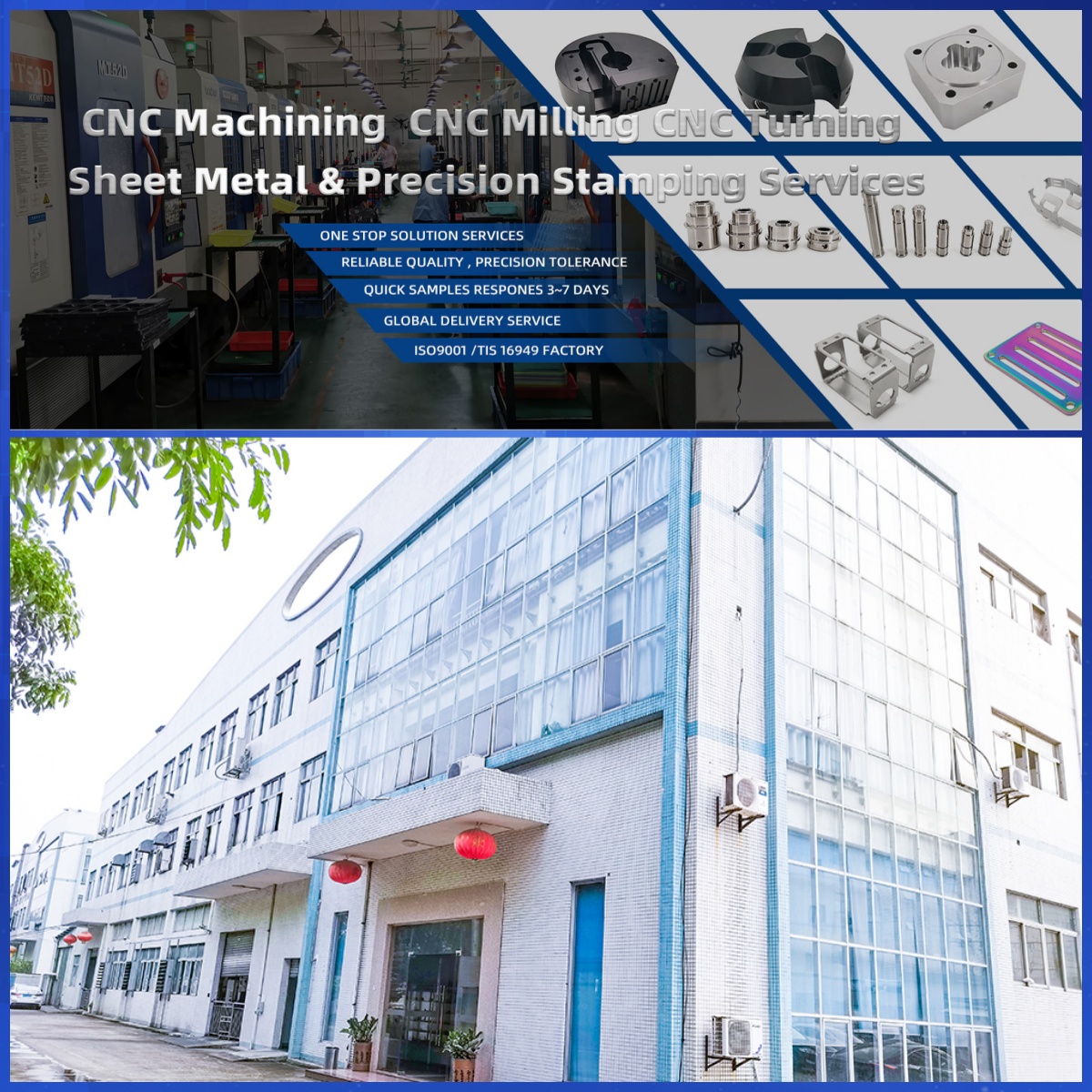
DongGuan YiTai Electronic Technologies Co.,Ltd
DongGuan YiTai Electronic Technologies Co.,Ltd is a manufacturing service provider located in Dongguan, China.
YiTai specialized in CNC turning machining and sheet metal fabrication mainly. As a member of Hung Mou Group, we focus on the overseas marketing development. And based on our parent company’s manufacturing capability and resources, YiTai also expended machining services such as die casting, injection molding, aluminum profile extrusion, 3D printing, which are committed to providing customers with one-stop purchasing services and experience.
CNC MACHINING , CNC MILLING , CNC TURNING , SHEETMETAL , FASTENER , OTHERS




Metal Injection Molding vs. Plastic Injection Molding: How to Choose
Color Gradient Anodizing: Process, Design, and Cost Guide
Related Article