5 Key Design (DFM) Strategies to Lower Your Teflon CNC Machining Costs

1. Understanding Teflon CNC Machining Costs
Before we fix the design, we need to know where the money goes. Four things drive the cost.
| Cost Driver | Why It Matters for Teflon |
|---|---|
| Material Cost | Teflon is not cheap. Wasted material adds up fast. |
| Machining Time | Teflon needs slower speeds. Thin walls take extra passes. |
| Tool Wear | Teflon is soft. But it can cause built-up edge. Tools need sharp edges. |
| Scrap Rate | Teflon bends and warps. If the part moves during cutting, it becomes scrap. |
Good design lowers all four. Let us see how.
2. Strategy 1: Design Wall Thickness Correctly
Teflon is not stiff. It bends. It moves. This is the biggest challenge in machining it.

The Low Rigidity Problem
When a wall is too thin, the cutting tool pushes it away. The wall bends. The cut is not clean. The size goes out of spec. The machinist must slow down. Or the part becomes scrap.
Minimum Wall Thickness Guide
We follow this rule. For unsupported walls, keep the thickness at least 3mm. For larger parts, go thicker. If you need a thin wall, add ribs. Ribs give support without adding much weight.
Design tip: If a wall is 1mm thick, we need extra setups. We use backing material. This adds time. It adds cost. A 3mm wall cuts fast and straight.
3. Strategy 2: Set Tolerances the Smart Way
Many designers put tight tolerances on every dimension. But not every dimension needs it. Tight tolerances cost money.

3D CMM
Functional vs Non-Functional Tolerances
Ask one question. Does this dimension affect how the part works?
-
Functional: The part fits into a metal housing. This needs a tight tolerance.
-
Non-Functional: A cosmetic edge or a non-contact surface. This can be loose.
How Teflon Moves with Heat
Teflon expands more than metal. It also changes size with moisture. A part that is perfect at 20°C may be different at 60°C. This means very tight tolerances are hard to hold.
Recommended Tolerance Range
We use ISO 2768-m as a starting point for Teflon parts.
-
For most dimensions: ±0.1mm to ±0.2mm
-
For critical fits: ±0.05mm (with careful process control)
-
Below ±0.03mm is hard. It adds cost. It needs slow cutting and climate control.
4. Strategy 3: Simplify Geometry Features
Complex shapes take more time. They also need special tools.

Avoid Deep Holes and Tiny Diameters
A deep hole is hard. The tool must go in and out. Chips get stuck. For Teflon, the hole can close up after drilling.
-
Rule: Keep hole depth to diameter ratio 5:1 or less.
-
Example: A 2mm hole should be no deeper than 10mm.
Use Rounded Corners
Sharp inside corners need small tools. Small tools break. They also take many passes. A radius in the corner lets us use a larger tool. The cut is faster. The tool lasts longer.
-
Design tip: Use at least R1mm or R1.5mm on internal corners.
5. Strategy 4: Optimize Threads and Assembly Design
Teflon is slippery. It does not hold threads well.
Do Not Tap Teflon Directly
A tapped hole in Teflon will strip. The screw will pull out. This is not reliable.
-
Better way: Use metal thread inserts. We press them in after machining.
-
Another way: Design a through hole and use a nut on the other side.
Press Fits Need Care
Teflon moves over time. This is called creep. A press fit that is tight today may loosen later.
-
Design tip: For press fits, use a metal bushing. Or design a mechanical lock like a groove or a shoulder.
6. Strategy 5: Choose the Right Raw Material Form
Teflon comes in different shapes. The shape you pick changes how much material we waste.
| Raw Material Form | Best For | Material Waste |
|---|---|---|
| Rod (Bar Stock) | Round parts, bushings, small batches | Low waste if part is round |
| Plate (Sheet) | Flat parts, large discs, square shapes | Low waste for flat parts |
| Custom Molded Blank | High volume, complex shapes | Lowest waste, but tooling cost upfront |
Example: A round flange 80mm in diameter is cheaper from a 80mm rod. If we cut it from a 100mm plate, we waste 36% of the material.
At the start of the project, we look at the shape. We tell you the cheapest raw material form. This saves money before the first cut.
7. Expert Insight: Why DFM Matters for Teflon
“Metal parts are forgiving. You can push the tool hard. Teflon is different. It moves. It gets hot. It can grab the tool. A good DFM review catches problems early. I remember a part with a 1.2mm wall. The designer wanted a ±0.02mm tolerance. We could not hold that. The part bent. We talked to the client. We changed the wall to 3mm. We opened the tolerance to ±0.1mm. The part worked. The cost went down by 35%. That is the power of DFM.”
— Senior Applications Engineer, DongGuan YiTai Electronic Technologies
8. Partner with Us for a DFM Review
At ‘DongGuan YiTai Electronic Technologies’ , we machine Teflon every week. We know what works. We know what does not.
Send us your drawing early. We do a free DFM review. We check wall thickness, tolerances, holes, and threads. We tell you how to make it cheaper. We tell you how to make it faster. No guesswork. Just real shop floor advice.
9. Frequently Asked Questions (FAQ)
Q: Can I use standard metal cutting tools for Teflon?
A: Yes, but with sharp edges. Teflon is soft. Dull tools push the material instead of cutting it. This causes burrs and bad surface finish. We use sharp carbide tools with polished flutes. This gives a clean cut.
Q: Why is Teflon more expensive to machine than aluminum?
A: Two reasons. First, Teflon needs slower speeds and careful fixturing. It moves under pressure. Second, scrap rate is higher if the design is not optimized. A good DFM review reduces scrap. This closes the cost gap.
Q: Can I weld or glue Teflon parts together?
A: Teflon is hard to bond. Glue does not stick well. Welding is possible with special processes. But it is costly. For assembly, we recommend mechanical joining. Use screws with inserts. Use snap fits with metal clips.
Q: What is the best way to hold tight tolerances on Teflon?
A: Two steps. First, design the part with generous tolerances where possible. Second, machine the part in a climate-controlled shop. Teflon changes size with temperature. We keep the shop at 20°C. We let the material rest before final cuts.
Q: How early should I send my design for a DFM review?
A: Send it as soon as you have a 3D model. You do not need a full drawing. We can look at the features and give feedback early. This saves time. It saves changes later.
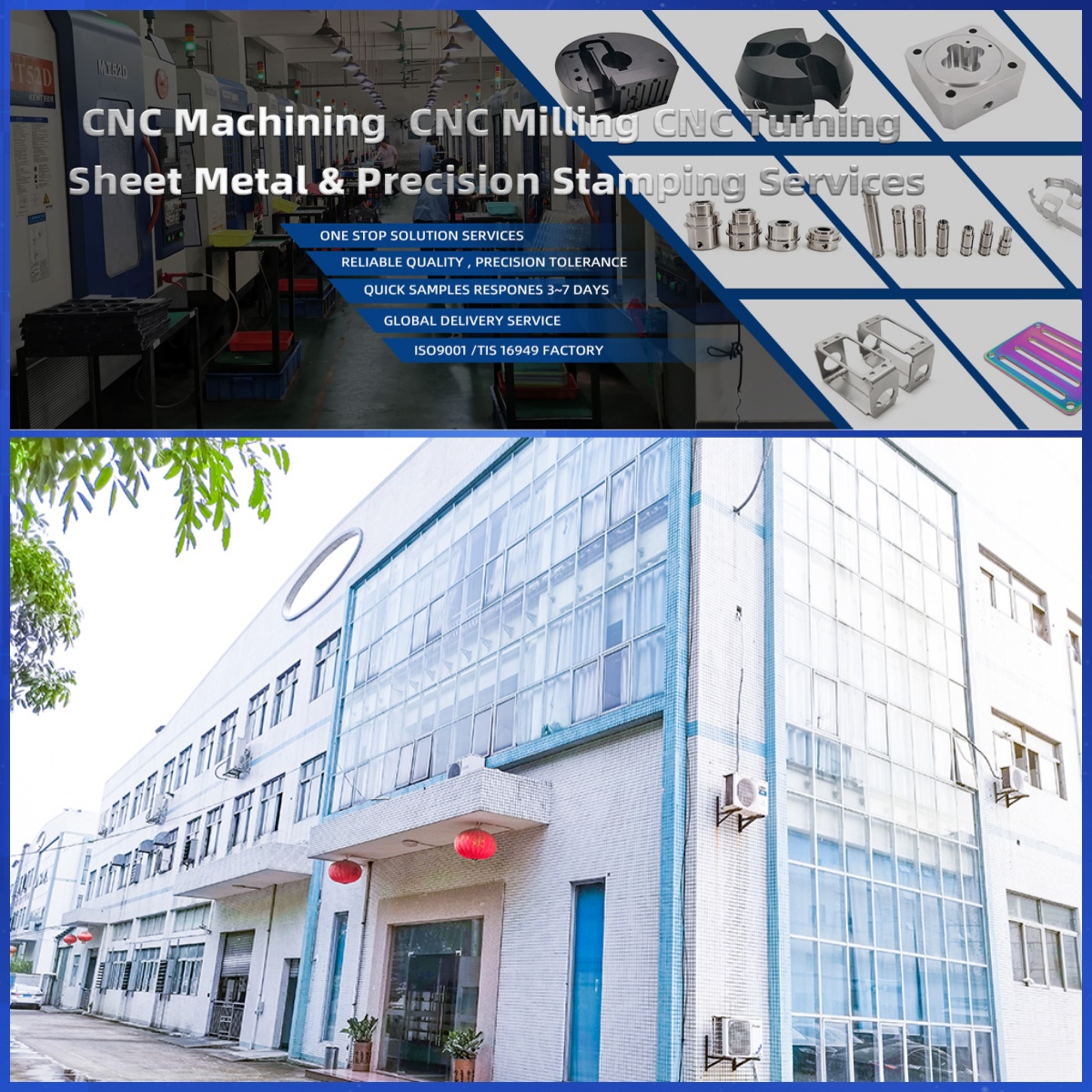
DongGuan YiTai Electronic Technologies Co.,Ltd
DongGuan YiTai Electronic Technologies Co.,Ltd is a manufacturing service provider located in Dongguan, China.
YiTai specialized in CNC turning machining and sheet metal fabrication mainly. As a member of Hung Mou Group, we focus on the overseas marketing development. And based on our parent company’s manufacturing capability and resources, YiTai also expended machining services such as die casting, injection molding, aluminum profile extrusion, 3D printing, which are committed to providing customers with one-stop purchasing services and experience.
CNC MACHINING , CNC MILLING , CNC TURNING , SHEETMETAL , FASTENER , OTHERS




Top 10 Strongest Metals in the World: A Complete Guide to Strength, Properties, and CNC Machining Applications
Aluminum vs Cast Aluminum in CNC Machining: A Full Guide on Definitions, Properties, and Key Differences
Related Article