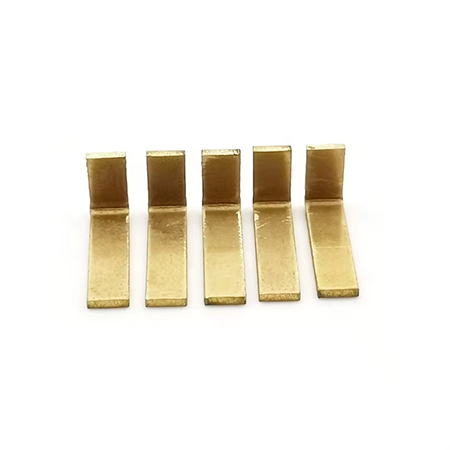
5-Axis CNC Machining for Complex Precision Aluminum Alloy Small Parts – Overcoming Thin Walls and Tight Tolerances

Table of Contents
- Order Details
- Main Processing Challenges
- Why 5-Axis Beats 3-Axis for This Job
- Targeted Machining Solutions
- Final Steps and Inspection
- FAQ
1. Order Details
The client ordered 10 pieces only. Each part was small but had a complex structure. We used aluminum alloy material. It is light and suits precision work well.
Delivery deadline: 3 days. This low budget required smart planning to keep quality high without waste.
2. Main Processing Challenges
The parts were very small. Their structure was complex. Tolerances were strict. We controlled precision to about 0.01 mm (one "si" – a tight tolerance in machining).

Big problems included:
- Thin walls at the bottom and many places.
- A waist groove in the middle.
- Easy deformation during clamping. Thin walls bend from light force.
- High demands on clamping and operation to prevent scrap.
These issues made the job hard for standard methods.
3. Why 5-Axis Beats 3-Axis for This Job
We chose 5-axis CNC over 3-axis. The difference is clear.
On 3-axis, the machine moves only in X, Y, Z directions. For this part, it needed six clamping setups. Each setup takes time and risks error or deformation.
On 5-axis, the machine adds two rotation axes. It moves the tool or part in more directions. For this job, we needed only two clamping setups.
It cut down on clamping steps and reduced deformation risks for these thin-walled tiny parts. For more details on machine types, check our related article: 3-Axis to 12-Axis: CNC Milling Machine Capabilities Compared. We
also follow strict processes. See What is SOP in Precision CNC Machining? for an explanation of SOP (Standard Operating Procedure) and how it ensures consistent results.

Benefits:
- Fewer setups cut time.
- Less handling reduces deformation risk.
- Better access to all sides improves quality.
Here is a comparison table:
Table 1: 3-Axis vs 5-Axis for Thin-Walled Small Parts
| Feature | 3-Axis CNC | 5-Axis CNC | Benefit for This Job |
|---|---|---|---|
| Number of Setups Needed | 6 | 2 | Saves time, less error |
| Deformation Risk | High (multiple clamps) | Low (fewer clamps) | Protects thin walls |
| Machining Efficiency | Lower | Higher | Meets 3-day deadline |
| Precision Consistency | Good but setup-dependent | Excellent | Holds 0.01 mm tolerance |
| Cost for Small Batch | Higher due to labor | Better value | Fits low quote |
John Chen, our Lead CNC Programmer with 12 years in precision machining, says: "For small thin-wall parts like these, 5-axis is not a luxury. It is necessary. It cuts setups and keeps accuracy stable."
4. Targeted Machining Solutions
We solved the challenges with specific steps.
Custom Fixtures to Prevent Deformation
We made custom fixtures. Each fixture matched the part one-to-one. We used card slots to hold hole positions. This stopped shaking. We added small press plates to clamp the sides tight. This approach avoided deformation from the start.

Small Tools for High Precision
The parts were too small for big tools. We used small tools all the way. We ran them at slow speeds. For short leg areas, we picked even smaller tools. This gave fine cuts and avoided errors that affect assembly later.
Checks at Every Step to Avoid Rework
We checked sizes and features after each machining step. This caught issues early. It prevented parts that do not assemble. No rework meant we stayed on schedule.
These steps followed our SOP for precision small parts. They ensured zero defects in the batch.
5. Final Steps and Inspection

After machining all 10 parts, we moved them to the inspection room. Technicians used professional tools to check dimensions, surfaces, and features.
All parts passed inspection. We then packed and shipped them. This met the 3-day delivery fully.
6. FAQ
Q1: What does SOP mean in precision CNC machining?
A: SOP stands for Standard Operating Procedure. It is a set of written steps to do tasks correctly, safely, and with consistent quality.
Q2: Why use 5-axis instead of 3-axis for small thin-wall parts?
A: 5-axis needs fewer setups (2 vs 6 here). It reduces deformation risk and improves precision on complex features.
Q3: How tight was the tolerance in this job?
A: We controlled it to about 0.01 mm. This is very strict for small aluminum parts.
Q4: Can 5-axis handle low-cost small batches?
A: Yes. Fewer setups save time and labor. This fits tight budgets like our 100 yuan quote.
Q5: What tools help prevent deformation?
A: Custom fixtures with card slots and press plates hold parts securely without bending thin walls.
Q6: How do you ensure on-time delivery for 3-day jobs?
A: We plan setups well, use checks at each step, and follow SOP to avoid rework and delays.
DongGuan YiTai Electronic Technologies Co.,Ltd
DongGuan YiTai Electronic Technologies Co.,Ltd is a manufacturing service provider located in Dongguan, China.
YiTai specialized in CNC turning machining and sheet metal fabrication mainly. As a member of Hung Mou Group, we focus on the overseas marketing development. And based on our parent company’s manufacturing capability and resources, YiTai also expended machining services such as die casting, injection molding, aluminum profile extrusion, 3D printing, which are committed to providing customers with one-stop purchasing services and experience.
CNC MACHINING , CNC MILLING , CNC TURNING , SHEETMETAL , FASTENER , OTHERS




1008 vs 1018 Steel: Which Low-Carbon Alloy Is Right for Your Project?
Sheet Metal Processing Steps: From Steel Plate to Finished Product
Related Article