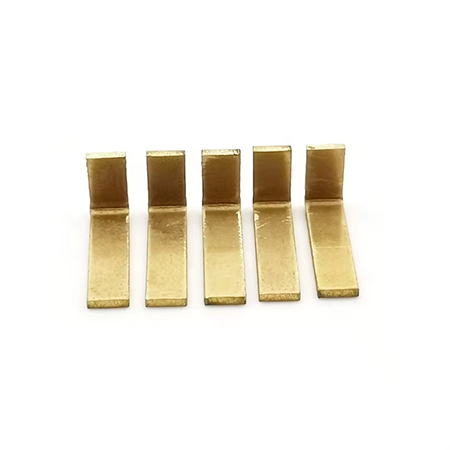
Nuts vs Bolts: Key Differences

- What Are Nuts and Bolts?
- Key Differences Between Nuts and Bolts
- Nuts vs. Bolts: Detailed Comparison Table
- How Nuts and Bolts Work Together
- Common Types of Nuts (Including Brass & Rivet Nuts)
- Expert Opinion on Nuts and Bolts
- FAQ About Nuts and Bolts
1. What Are Nuts and Bolts?
Nuts and bolts are fasteners—tools used to join two or more components together. They are typically used in combination, but each serves a distinct function.
What is a bolt?
A bolt is generally a long, cylindrical metal piece consisting of two main parts:
-
Head (at one end): Commonly hexagonal, though round or flat designs are also available. The head prevents the bolt from passing completely through the components being joined.
-
External threads (along the shaft): These are spiral grooves running along the body of the bolt. The threads allow the bolt to engage with a nut.
Bolts are usually made from materials such as steel, brass, or stainless steel, and come in various lengths and diameters (referred to as "sizes") to suit different applications.
What is a nut?
A nut is typically a small, hexagonal metal block with one key feature:
-
Internal threads (inside the nut): These spiral grooves match the external threads of a bolt. When the nut is twisted onto the bolt, the threads interlock securely.
Nuts can be made from steel, brass, plastic, or other materials, and their size must correspond to that of the bolt—for example, an M8 bolt requires an M8 nut.
2. Key Differences Between Nuts and Bolts
Nuts and bolts need to be used in combination, but they differ significantly in four aspects:
Thread Type
Bolts have external threads (spiral grooves on the outside), while nuts have internal threads (spiral grooves on the inside). This is the most obvious difference—the threads on a bolt protrude outward, whereas the threads in a nut are recessed inside.
Core Function
Bolts act as the "connecting rod," passing through holes in the components to be joined. Nuts serve as the "lock," screwing onto the bolt to clamp the parts together securely.
Installation Method
During installation, the bolt is first passed through the holes in the components, and then the nut is screwed onto its threads. For tightening, you can either hold the bolt head (with a wrench) and turn the nut, or hold the nut and turn the bolt head.
Without a nut (or a threaded hole), a bolt cannot complete the installation. Similarly, without a bolt (or another threaded fastener), a nut cannot be used.
Ability to Function Independently
Neither can work alone: a bolt without a nut will simply fall out of the components it passes through, and a nut without a bolt has nothing to grip onto—making it impossible to fasten anything.
3. Nuts vs. Bolts: Detailed Comparison Table
| Feature | Nuts | Bolts |
|---|---|---|
| Thread Type | Internal (inside the nut) | External (on the bolt's body) |
| Main Structure | Small, often hexagonal; hollow center | Long, cylindrical; has a head at one end |
| Core Function | Locks parts in place; creates clamping force | Passes through parts; provides a thread for the nut |
| Installation Tool | Wrench (to turn the nut) | Wrench or screwdriver (to turn the head) |
| Common Materials | Steel, brass, stainless steel, plastic | Steel, brass, stainless steel, titanium |
| Can Be Used Alone? | No | No |
| Size Matching | Must match bolt size (e.g., M6 nut for M6 bolt) | Must match nut size or threaded hole size |
| Typical Applications | Securing bolts in furniture, cars, machinery | Joining wood, metal, or plastic parts in buildings, appliances |
4. How Nuts and Bolts Work Together
- Drill holes through the parts you want to join. The holes must be slightly smaller than the bolt's unthreaded part (so the bolt fits tightly).
- Push the bolt through the holes. The bolt's head should sit against one side of the parts.
- Twist the nut onto the bolt's threaded end (the end sticking out of the parts).
- Tighten the nut with a wrench. As you turn the nut, it moves along the bolt's threads. This pulls the bolt's head and the nut closer together.
- The tightness creates clamping force. This force presses the parts against each other—so they don't move apart.
5. Common Types of Nuts (Including Brass & Rivet Nuts)
1. Brass Nuts (From What are the categories of brass nuts according to their use?)
- Decorative Brass Nuts: Shiny and corrosion-resistant. Used for furniture, light fixtures, or decorative hardware. They add a classic look.
- Plumbing Brass Nuts: Designed for water pipes (like sink or shower connections). They resist rust from water better than steel nuts.
- Electrical Brass Nuts: Used in electrical boxes or wire connections. Brass conducts electricity a little—so these nuts keep electrical parts secure without causing shorts.
2. Rivet Nuts (From Rivet Nuts)
3. Other Common Nut Types
- Hex Nuts: The most common type. Hexagonal shape makes them easy to grip with a wrench.
- Lock Nuts: Have a special design (like a nylon ring inside) to stop them from coming loose. Used in cars or machinery that vibrate a lot.
- Wing Nuts: Have two “wings” (flat parts) so you can twist them by hand (no wrench needed). Used for parts you need to remove often (like a toolbox lid).
6. Expert Opinion on Nuts and Bolts
7. FAQ About Nuts and Bolts
Q1: Can a nut be used without a bolt?
Q2: What's the difference between a bolt and a screw?
Q3: Why use brass nuts instead of steel nuts?
Q4: What are rivet nuts used for?
Q5: How do I choose the right size nut for a bolt?
Q6: What happens if I over-tighten a nut and bolt?
Q7: Are brass nuts compatible with steel bolts?
Q8: Can I reuse nuts and bolts?
DongGuan YiTai Electronic Technologies Co.,Ltd
DongGuan YiTai Electronic Technologies Co.,Ltd is a manufacturing service provider located in Dongguan, China.
YiTai specialized in CNC turning machining and sheet metal fabrication mainly. As a member of Hung Mou Group, we focus on the overseas marketing development. And based on our parent company’s manufacturing capability and resources, YiTai also expended machining services such as die casting, injection molding, aluminum profile extrusion, 3D printing, which are committed to providing customers with one-stop purchasing services and experience.
CNC MACHINING , CNC MILLING , CNC TURNING , SHEETMETAL , FASTENER , OTHERS




Does Silver Rust? Key Facts About Silver Corrosion
Is Nylon Plastic Safe? Key Facts and Uses
Related Article