Melting Point of Titanium: Key Facts and Applications
author: YITECH
2025-09-27
Table of Contents
1. What Is the Melting Point of Titanium?

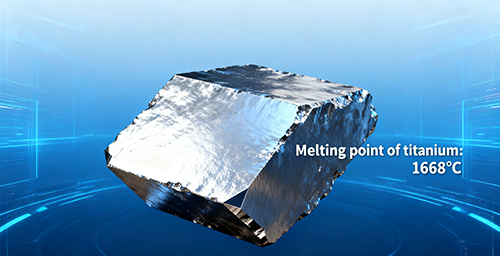
The melting point of a material is the temperature where it turns from a solid to a liquid. For pure titanium, this temperature is a fixed 1,668°C (3,034°F). This is much higher than many common metals—for example, aluminum melts at 660°C, and copper melts at 1,085°C.
But pure titanium is rarely used in real-world products. Most titanium is made into alloys (mixes of titanium and other metals). The most popular titanium alloy is TC4 (Ti-6Al-4V)—we talked about this alloy in detail in Titanium CNC Machining: Precision, Strength, and Applications. TC4 has a slightly lower melting point than pure titanium, ranging from 1,540°C to 1,600°C (2,800°F to 2,912°F).
This difference in melting point matters for manufacturing. When making pure titanium parts, factories need to heat it to 1,668°C or higher. For TC4, they can use lower temperatures, which saves energy and reduces wear on equipment.
2. Factors That Change Titanium's Melting Point
Two main factors affect titanium's melting point: purity level and alloy elements. A third minor factor is pressure, but it has little impact in most industrial settings.
Purity Level
Pure titanium (with 99.9% or more titanium) has a strict melting point of 1,668°C. If there are impurities (small amounts of other materials) in the titanium, the melting point drops. Common impurities include oxygen, nitrogen, and iron:
- Oxygen: Even 0.1% oxygen in titanium can lower its melting point by about 20°C.
- Nitrogen: 0.1% nitrogen can reduce the melting point by 30°C.
- Iron: 1% iron can drop the melting point by 50°C or more.
Impurities also make titanium weaker. So, for high-performance parts (like aerospace components), factories use high-purity titanium to keep the melting point stable and maintain strength.
Alloy Elements
Adding other metals to titanium creates alloys. These elements change both the melting point and the alloy's overall properties. Here are common alloy elements and their effects:
- Aluminum (Al): Lowers the melting point but increases strength. TC4 has 6% aluminum, which is why its melting point is lower than pure titanium.
- Vanadium (V): Slightly raises the melting point and makes the alloy more flexible. TC4's 4% vanadium helps balance strength and machinability.
- Iron (Fe): Lowers the melting point a lot and makes the alloy cheaper. It's used in low-cost titanium alloys for non-critical parts.
- Zirconium (Zr): Raises the melting point and improves corrosion resistance. It's used in titanium alloys for high-heat applications like nuclear reactors.
3. Titanium vs. Other Metals: Melting Point & Key Properties
To understand why titanium is unique, let's compare its melting point and other key properties with common metals. This table includes metals used in similar industries (like aerospace and manufacturing):
|
Metal Type
|
Melting Point (°C)
|
Density (g/cm³)
|
Tensile Strength (MPa)
|
Corrosion Resistance
|
Max Use Temperature (°C)
|
|
Pure Titanium
|
1,668
|
4.51
|
240–370
|
Excellent
|
600
|
|
TC4 Alloy
|
1,540–1,600
|
4.43
|
860–960
|
Excellent
|
400
|
|
Carbon Steel
|
1,370–1,510
|
7.85
|
400–800
|
Poor (needs coating)
|
450
|
|
Aluminum 6061
|
650–660
|
2.7
|
276
|
Good
|
150
|
|
Copper (Pure)
|
1,085
|
8.96
|
220
|
Good
|
200
|
|
Nickel (Pure)
|
1,455
|
8.91
|
345
|
Excellent
|
600
|
|
Magnesium Alloy
|
595–650
|
1.8
|
240–300
|
Fair (needs coating)
|
120
|
From the table, you can see:
- Titanium has a higher melting point than steel, aluminum, copper, and magnesium.
- TC4 is stronger than pure titanium and most steels, but it has a lower melting point than pure titanium.
- Titanium is much lighter than steel, copper, and nickel (lower density), which is why it's used in weight-sensitive parts.
4. Why Titanium's Melting Point Matters for Industries (Linked to CNC Machining)
Titanium's high melting point is not just a number—it directly affects how it's used in industries. Many of these uses tie back to what we discussed in Titanium CNC Machining.
Aerospace Industry
Jet engines and airplane turbine blades face extreme heat. The combustion chamber of a jet engine can reach 1,000°C or higher. Titanium's melting point (1,668°C for pure Ti) means these parts won't melt or soften. TC4 is often used for turbine blades because its 1,540–1,600°C melting point is still way above the engine's operating temperature. As we noted in Titanium CNC Machining, these parts need precise shaping—CNC machines can create the complex curves of turbine blades while keeping the metal's strength intact.
Medical Industry
Titanium is used for implants like hip joints, knee replacements, and dental screws. These implants must handle body heat (37°C) and survive for decades. But they also need to withstand high temperatures during sterilization—autoclaves (sterilizers) use 121°C. Titanium's high melting point ensures the implants don't warp or break during sterilization. Unlike other metals (like aluminum, which softens at 150°C), titanium stays stable.
Industrial Manufacturing
Chemical plants use titanium pipes and valves to carry hot, corrosive liquids (like sulfuric acid). These liquids can reach 200–300°C. Titanium's melting point means the pipes won't melt, and its corrosion resistance prevents leaks. For example, a titanium valve in a chemical reactor can last 20+ years, while a steel valve would rust and fail in 5 years.
Titanium's high melting point makes CNC machining challenging. When cutting titanium with CNC tools, the friction generates a lot of heat—sometimes up to 800°C. If the heat isn't controlled, it can damage the tool or the part. As we explained in Titanium CNC Machining, factories use two key solutions:
- Special Tools: Carbide or cubic boron nitride (CBN) tools, which can handle high heat without wearing out.
- Coolants: Oil-based or water-based coolants that flow over the tool and workpiece to reduce heat.
Without these measures, the tool would melt or break before finishing the part. TC4 is easier to machine than pure titanium because its lower melting point means less heat is generated.
5. Expert Opinion on Titanium's Melting Point
Dr. Michael Chen is a materials engineer with 20 years of experience in titanium manufacturing. He says: “Titanium's melting point is its superpower. For industries that need parts to survive high heat and stay light, there's no better material. We often recommend TC4 over pure titanium because its melting point is lower—this makes manufacturing cheaper and easier, as we talked about in Titanium CNC Machining. But pure titanium is still used for parts that need maximum heat resistance, like rocket nozzles (which face temperatures over 1,200°C).
He adds: “A common mistake is ignoring how impurities affect melting point. We once had a client use low-purity titanium for a jet engine part. The impurities lowered the melting point by 100°C, and the part softened during testing. It's crucial to use high-purity titanium or well-controlled alloys like TC4 for critical applications.”
6. FAQ About Titanium's Melting Point
Q1: Is titanium's melting point the same as its boiling point?
A: No. The boiling point is the temperature where liquid turns to gas. Titanium's boiling point is 3,287°C—much higher than its melting point (1,668°C). Most industries don't need to boil titanium, so the melting point is more important.
Q2: Does titanium's melting point affect its corrosion resistance?
A: Indirectly. Both the melting point and corrosion resistance come from titanium's strong atomic bonds. These bonds make it hard to melt and hard for chemicals to break down the metal's surface. So, metals with high melting points (like titanium) often have good corrosion resistance.
Q3: How do manufacturers measure titanium's melting point?
A: They use a tool called a differential scanning calorimeter (DSC). A small piece of titanium is heated slowly. The DSC tracks when the metal starts to melt (the melting point) by measuring energy changes. This method is accurate to within ±1°C.
Q4: Can you weld titanium without reaching its melting point?
A: No. Welding requires melting the edges of two titanium parts so they fuse together. For pure titanium, welders heat the metal to 1,668°C. For TC4, they heat it to 1,540–1,600°C. Welders use argon gas to protect the molten titanium from impurities (which would lower its melting point and strength).
Q5: Why is TC4's melting point a range (1,540–1,600°C) instead of a fixed number?
A: TC4 is an alloy with 6% aluminum and 4% vanadium. The exact amount of these elements can vary slightly (e.g., 5.8% aluminum instead of 6%). This small variation changes the melting point a little. Factories control the alloy mix to keep the melting point within the 1,540–1,600°C range.
Q6: How does titanium's melting point compare to other high-heat metals like tungsten?
A: Tungsten has a much higher melting point (3,422°C) than titanium. But tungsten is very heavy (density 19.3 g/cm³, vs. titanium’s 4.51 g/cm³). So, tungsten is used for parts where weight doesn't matter (like light bulb filaments), while titanium is used for weight-sensitive, high-heat parts (like airplane engines).
Q7: Does heating titanium close to its melting point weaken it?
A: Yes. If titanium is heated to 800–1,000°C (below its melting point), it becomes softer and weaker. This is why CNC machinists use coolants—they keep the titanium's temperature below 500°C to maintain its strength during cutting, as we mentioned in Titanium CNC Machining.
Q8: Can you lower titanium's melting point to make it easier to machine?
A: Yes, by adding alloy elements like iron or aluminum. But this also weakens the titanium. For most applications (like aerospace), the loss of strength isn't worth the easier machining. TC4 is a balance—it has a lower melting point than pure titanium but still keeps enough strength for critical parts.
DongGuan YiTai Electronic Technologies Co.,Ltd
DongGuan YiTai Electronic Technologies Co.,Ltd is a manufacturing service provider located in Dongguan, China.
YiTai specialized in CNC turning machining and sheet metal fabrication mainly. As a member of Hung Mou Group, we focus on the overseas marketing development. And based on our parent company’s manufacturing capability and resources, YiTai also expended machining services such as die casting, injection molding, aluminum profile extrusion, 3D printing, which are committed to providing customers with one-stop purchasing services and experience.
CNC MACHINING , CNC MILLING , CNC TURNING , SHEETMETAL , FASTENER , OTHERS

Is Nylon Plastic?
What is PU?
Related Article
Choosing between 316 and 316L? 316L resists weld decay better, 316 holds strength at higher heat. Both food-grade, both marine-grade. Quick, no-fluff breakdown.
316 vs 316L Stainless Steel for CNC Machining
What is stamping and when do you use it? A plain guide to sheet metal stamping, dies, and progressive tools, plus the parts it makes faster than machining.
What Is Stamping in Metal Manufacturing?