Complete Guide to PVC CNC Machining: Material Types, Process Characteristics, and Precision Part Applications
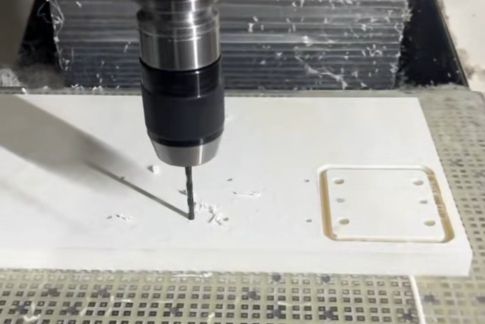
This guide covers the ins and outs of machining PVC. We'll break down the material types, demonstrate the best CNC processes, and list the industries that rely on PVC parts every day.
1. What is PVC? – One of the Most Cost-Effective Engineering Plastics
PVC stands for polyvinyl chloride. It is the third most produced plastic in the world. Only polyethylene and polypropylene are made in larger amounts. This high volume keeps the price low.
Core Advantages of PVC
PVC has five main strengths.
-
Chemical resistance: It stands up to acids, alkalis, and salt solutions. Good for chemical equipment.
-
Electrical insulation: It does not conduct electricity. Safe for electronic housings.
-
Flame resistance (UL94 V-0): It stops burning when the flame goes away. Many plastics burn. PVC does not.
-
Low moisture absorption: It does not soak up water. The size stays stable in wet places.
-
Light weight: PVC is half the weight of aluminum. Easy to handle.

Limitations of PVC
PVC is not perfect. It has two weak points.
-
Poor heat stability: The max working temperature is about 60°C (140°F) . Above that, it softens and deforms.
-
Brittleness at low temperatures: Below 0°C (32°F), PVC becomes hard and can crack on impact.
For hot or freezing environments, other plastics like PTFE or PEEK are better.
2. PVC Grades for CNC Machining
Not all PVC is the same. You need to pick the right grade for your part.
Rigid PVC (uPVC / Unplasticized PVC)
This is the most common grade for CNC machining. It has no plasticizers. It is hard, stiff, and dimensionally stable. It cuts cleanly. It holds tight tolerances.
-
Best for: Structural parts, housings, valve bodies, fittings.
-
Color: Gray, white, or beige.
Flexible PVC (Plasticized PVC)
This grade has added plasticizers. It is soft. It bends. It feels like rubber. But it is harder to machine because it is gummy. It can leave burrs.
-
Best for: Seals, gaskets, tubing, wire jackets.
-
Note: For complex machined parts, rigid PVC is better.
CPVC (Chlorinated PVC)
CPVC is PVC with extra chlorine. It can handle higher temperatures. The max working temperature is 95°C (203°F) . It also resists chemicals better.
-
Best for: Hot water pipes, chemical fluid handling, industrial parts.
-
Cost: More expensive than standard PVC.
The table below compares the three grades.
| Property | Rigid PVC (uPVC) | Flexible PVC | CPVC |
|---|---|---|---|
| Hardness | High (Shore D 75–85) | Low (Shore A 50–90) | High |
| Max temp | 60°C | 50°C | 95°C |
| Machinability | Excellent | Poor (gummy) | Good |
| Typical use | Structural parts | Seals, tubing | Hot water systems |
3. CNC Machining Processes for PVC
PVC machines like a soft metal. It cuts easily. But it has low melting point. Heat is the enemy.

CNC Milling
Milling is the most common process for PVC parts. You can make flat plates, pockets, and complex 3D shapes.
-
Tools: Use sharp carbide end mills with 2 or 3 flutes. Single-flute tools also work well.
-
Speeds: 15,000–24,000 RPM. Feed rate 1,500–3,000 mm/min.
-
Coolant: Use compressed air to blow chips away. No liquid coolant needed. Liquid can make PVC swell.
-
Good for: Electronic enclosures, medical device housings, brackets.
CNC Turning
Turning makes round parts like pipes, bushings, and connectors.
-
Tools: Sharp HSS or carbide inserts with high positive rake.
-
Speeds: 1,000–2,500 RPM for diameters under 50mm.
-
Chip control: PVC makes long stringy chips. Use a chip breaker or stop the cut often to clear chips.
Drilling
Drilling PVC is easy. But the chips can melt and stick.
-
Tools: Standard twist drills with sharp edges. Use a drill with a 118° point angle.
-
Peck drilling: Pull the drill out every 2–3mm to clear chips.
-
Speed: 2,000–4,000 RPM for small holes (under 6mm).
4. Typical Applications of Precision PVC Parts
PVC is cheap and reliable. Many industries use it.
Chemical and Water Treatment
PVC resists corrosion. It does not rust like metal. Common parts include.
-
Valve bodies and stems
-
Pipe fittings and flanges
-
Pump housings
-
Tank covers and inspection ports
Medical Industry
Medical devices need clean, non-toxic materials. Medical-grade PVC is safe.
-
Device enclosures
-
IV component housings
-
Diagnostic equipment parts
-
Tube fittings
Electronics and Electrical
PVC is a good insulator. It is also self-extinguishing.
-
Electrical junction boxes
-
Insulator plates and spacers
-
Connector housings
-
Switch panels
Construction and Industrial
PVC is strong and cheap. It replaces wood and metal in some applications.
-
Window frame components
-
Cable trays and conduits
-
Industrial machine guards
-
Prototype parts for fixtures
5. Expert Insight: Sharp Tools and Chip Evacuation
“The biggest mistake people make when machining PVC is using dull tools. Dull tools rub. Rubbing makes heat. PVC melts at a low temperature. Once it melts, it sticks to the tool. Then the tool clogs. The part burns. The surface looks bad. We use sharp carbide tools. We take shallow cuts. And we blow air on the cut to clear chips. That is the secret to clean PVC parts.”
— CNC Lead Programmer, DongGuan YiTai Electronic Technologies
One-Stop Service: Precision PVC CNC Machining
At 'DongGuan YiTai Electronic Technologies' , we machine rigid PVC, CPVC, and other engineering plastics. We use CNC mills and lathes with sharp tooling and high-speed spindles. We make parts for chemical, medical, and electronics clients.
We also offer post-processing. We can deburr, tap holes, and add surface finishes. All in one place.
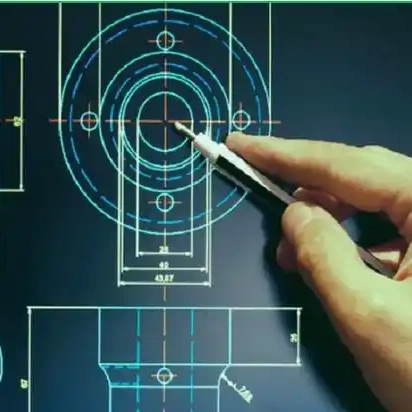
Send us your drawing. Tell us the PVC grade. We will give you a quote and DFM feedback. We ship prototypes in 7 days.
6. Frequently Asked Questions (FAQ)
Q: What is the difference between PVC and CPVC for machining?
A: CPVC handles higher temperatures (95°C vs 60°C). It is also a bit harder. For most room-temperature parts, standard rigid PVC is fine. For hot water or chemical systems, use CPVC.
Q: Can I machine flexible PVC on a CNC mill?
A: You can, but it is hard. Flexible PVC is gummy. It leaves burrs. The surface finish is poor. For most machined parts, rigid PVC is much better. Use flexible PVC for molded or extruded parts like tubing.
Q: Do I need coolant when machining PVC?
A: No. PVC does not need liquid coolant. Use compressed air to blow chips away. Liquid coolant can get into the plastic and cause swelling. Air keeps the cut cool and the chips clear.
Q: Is PVC safe for food contact or medical use?
A: Some grades are. Look for medical-grade or food-grade PVC. These grades have no toxic additives. Standard industrial PVC may contain lead stabilizers. Always check the material certification.
Q: What is the best way to get a smooth finish on PVC?
A: Use a sharp, polished carbide tool with a high rake angle. Take a shallow final pass (0.2–0.5mm). Run the spindle at high RPM (18,000+). Blow air on the cut. This gives a glossy, smooth finish.
Q: Does DongGuan YiTai Electronic Technologies machine CPVC?
A: Yes. We machine rigid PVC and CPVC on our CNC mills and lathes. We also stock common PVC sheet and rod sizes for fast turnaround. Send us your drawing for a quote.
DongGuan YiTai Electronic Technologies Co.,Ltd
DongGuan YiTai Electronic Technologies Co.,Ltd is a manufacturing service provider located in Dongguan, China.
YiTai specialized in CNC turning machining and sheet metal fabrication mainly. As a member of Hung Mou Group, we focus on the overseas marketing development. And based on our parent company’s manufacturing capability and resources, YiTai also expended machining services such as die casting, injection molding, aluminum profile extrusion, 3D printing, which are committed to providing customers with one-stop purchasing services and experience.
CNC MACHINING , CNC MILLING , CNC TURNING , SHEETMETAL , FASTENER , OTHERS




Incoming vs In-Process vs Final Inspection: A Complete Quality Control Strategy for CNC Machining
When to Use a CNC Mill vs a CNC Router: Material, Accuracy, and Cost Trade-offs
Related Article