Mastering Chassis Case Fabrication: Sheet Metal vs. CNC Machining

-
Sheet Metal Fabrication: The Backbone of Enclosure Production
2.1 Core Processes: Cutting, Forming, Joining
2.2 Why Sheet Metal Dominates Chassis Manufacturing -
CNC Machining: Precision Where It Counts
3.1 CNC's Role in Chassis Components
3.2 Advantages for Demanding Applications
1. Introduction: The Heart of Electronics Packaging
The humble chassis case is far more than just a box. It's the critical protective shell for sensitive electronics (servers, PCs, industrial controllers, medical devices), providing structural integrity, thermal management, EMI shielding, and aesthetic appeal. Choosing the right fabrication method – primarily Sheet Metal Fabrication or CNC Machining – is paramount to achieving performance, cost, and quality goals. This guide explores these vital processes and their optimal applications.
2. Sheet Metal Fabrication: The Backbone of Enclosure Production
Sheet metal processing remains the dominant, cost-effective solution for high-volume chassis production, leveraging thin metal sheets (steel, aluminum, stainless steel).
2.1 Core Processes: Cutting, Forming, Joining
-
Cutting/Blanking:
-
Laser Cutting: Highly precise, versatile for complex contours. (Learn more in our blog: What Is Laser Cutting?).
-
CNC Punching: Efficient for high-volume standard holes/shapes. (For stamping details, see: The Widely Use of Sheet Metal Stamping).
-
Shearing: Straight cuts.
-
-
Forming:
-
Bending: The cornerstone, using CNC press brakes for accurate angles.
-
Stamping: Creates features like louvers, ribs, dimples.
-
-
Joining:
-
Welding: Strong, permanent bonds (MIG, TIG, spot).
-
Riveting: Reliable mechanical fastening (nuts, studs, blind rivets).
-
Fastening: Screws/bolts for assembly/disassembly.
-
2.2 Why Sheet Metal Dominates Chassis Manufacturing
-
High Volume Cost Efficiency: Low material cost & rapid automated processes drive down per-unit costs significantly for large batches.
-
Material Utilization: Efficient nesting minimizes waste.
-
Lightweight Strength: Thin gauges with strategic bends/features offer excellent strength-to-weight ratios.
-
Scalability & Standardization: Ideal for standard sizes (e.g., 19" racks) and modular designs.
-
EMI Shielding: Continuous metal surfaces provide inherent shielding, enhanced by seams/gaskets.
3. CNC Machining: Precision Where It Counts
CNC (Computer Numerical Control) machining carves parts from solid blocks (billets) of metal (aluminum, steel alloys, brass) or plastic using precise cutting tools.
3.1 CNC's Role in Chassis Components
While less common for full large enclosures due to cost, CNC excels for:
-
High-Precision Mounting Plates & Brackets: Requiring tight tolerances for component alignment.
-
Complex Front/Rear Panels: With intricate port cutouts, ventilation patterns, or integrated features.
-
Custom Heat Sinks & Cooling Solutions: Integrated directly into the chassis structure.
-
Low-Volume/Prototype Enclosures: Where tooling costs for sheet metal are prohibitive.
-
Critical Structural Elements: Needing maximum strength from solid material. (Explore suitable parts: What types or structures of parts are CNC suitable for machining?).
3.2 Advantages for Demanding Applications
-
Unmatched Precision & Tolerances: Achieves micron-level accuracy critical for interfaces.
-
Design Freedom & Complexity: Creates intricate 3D shapes, internal features, deep cavities impossible with sheet metal.
-
Exceptional Surface Finish: Delivers ready-to-use aesthetic surfaces or perfect substrates for anodizing.
-
Material Integrity: Solid blocks offer potentially higher strength/density than thin sheet sections.
-
Rapid Prototyping: Quick design iteration without dedicated tooling.
4. The Winning Combination: Integrating Sheet Metal & CNC
Sophisticated chassis often leverage both technologies synergistically:
-
Sheet Metal Main Structure: Forms the primary box, panels, and frame cost-effectively.
-
CNC Critical Components: Provides high-precision mounting plates, intricate faceplates, custom connectors, or complex internal brackets.
-
CNC Finishing: Adds precision-machined features (threaded holes, datum surfaces) to sheet metal parts after forming.
Example: A server chassis might use sheet steel for the main body and covers, while employing CNC-machined aluminum for the motherboard tray and front bezel with complex airflow channels.
5. Choosing the Right Process: Key Decision Factors
Selecting between Sheet Metal and CNC hinges on:
| Factor | Favors Sheet Metal | Favors CNC Machining |
|---|---|---|
| Volume | High Volume | Low Volume / Prototyping |
| Complexity | Moderate (2.5D shapes) | High Complexity / 3D |
| Precision | Good (Typ. ±0.1-0.5mm) | Excellent (Often ±0.025mm) |
| Cost (Per Unit) | Lower (High Volume) | Higher (Lower Volume OK) |
| Material Waste | Lower (Nesting) | Higher (Subtractive) |
| Lead Time (Setup) | Moderate (Tooling/Prog) | Shorter (No Complex Tooling) |
| Material Thickness | Thin Gauge Sheet | Thick Plates / Solid Blocks |
| Strength Needs | Good (Designed) | Potentially Higher (Solid) |
| Aesthetics | Good (Post-processing) | Excellent (As-machined/Finished) |
6. Expert Insight: The Future of Chassis Manufacturing
"The trend isn't about Sheet Metal or CNC, it's about intelligent integration," states Dr. Anya Sharma, Manufacturing Technology Lead at TechFrame Innovations. "We're seeing more hybrid approaches: complex sheet metal parts with CNC-machined critical interfaces for perfect alignment. Automation, especially in robotic bending and welding, is making sheet metal even more competitive. For ultra-high-end or thermally demanding applications, CNC monolithic structures – where the chassis is one solid, machined piece – eliminate joints and boost thermal performance, despite the cost. Generative design tools are also pushing CNC to create lighter, stronger, more organic chassis forms previously unmanufacturable."
7. Chassis Case Fabrication FAQ
-
Q1: Which material is best for chassis cases?
-
A: Depends! Steel (SECC, SGCC) offers strength and low cost. Aluminum (5052, 6061) is lighter, corrosion-resistant, and better for heat dissipation, often used in CNC. Stainless Steel provides superior corrosion resistance. Material choice impacts the optimal fabrication process.
-
-
Q2: Can CNC machining be cost-effective for chassis?
-
A: Primarily for low-to-medium volumes, prototypes, or when the design's complexity, precision, or performance requirements (e.g., superior heat dissipation from a solid block) justify the higher per-unit cost compared to sheet metal for large batches. Hybrid designs optimize cost.
-
-
Q3: What surface finishes are common?
-
A: Sheet Metal: Powder coating (most common), painting, plating (zinc, nickel), anodizing (aluminum), brushing. CNC Machining: Anodizing (especially Type II/III for aluminum), painting, powder coating, bead blasting, polishing, leaving as-machined ("machined finish").
-
-
Q4: How important is EMI shielding? How is it achieved?
-
A: Critical for most electronics! Sheet metal provides inherent shielding. Effectiveness relies on continuous conductive paths. Gaps are managed using EMI gaskets, conductive tape, finger stock, or cover seams with many fasteners. CNC machined enclosures, especially monolithic ones, offer potentially superior shielding due to fewer seams.
-
-
Q5: What file formats do manufacturers need?
-
A: Sheet Metal: 2D DXF/DWG for flat patterns are essential, plus 3D STEP/IGES for context. Include bend deductions/allowances. CNC Machining: 3D CAD models (STEP, IGES, SLDPRT, X_T) are mandatory. Clear, dimensioned 2D drawings specifying critical tolerances, finishes, and materials are highly recommended.
-
8. Conclusion: Selecting the Optimal Approach
There's no single "best" way to manufacture a chassis case. Sheet metal fabrication reigns supreme for cost-effective, high-volume production of structurally sound enclosures. CNC machining delivers unparalleled precision and complexity for critical components, low-volume runs, or prototypes where design freedom is paramount. The most sophisticated and optimized solutions often emerge from strategically combining both processes, leveraging the unique strengths of each to create chassis that meet exacting performance, aesthetic, and budgetary requirements. Carefully evaluate your project's volume, complexity, precision needs, material, and budget to guide this crucial decision.
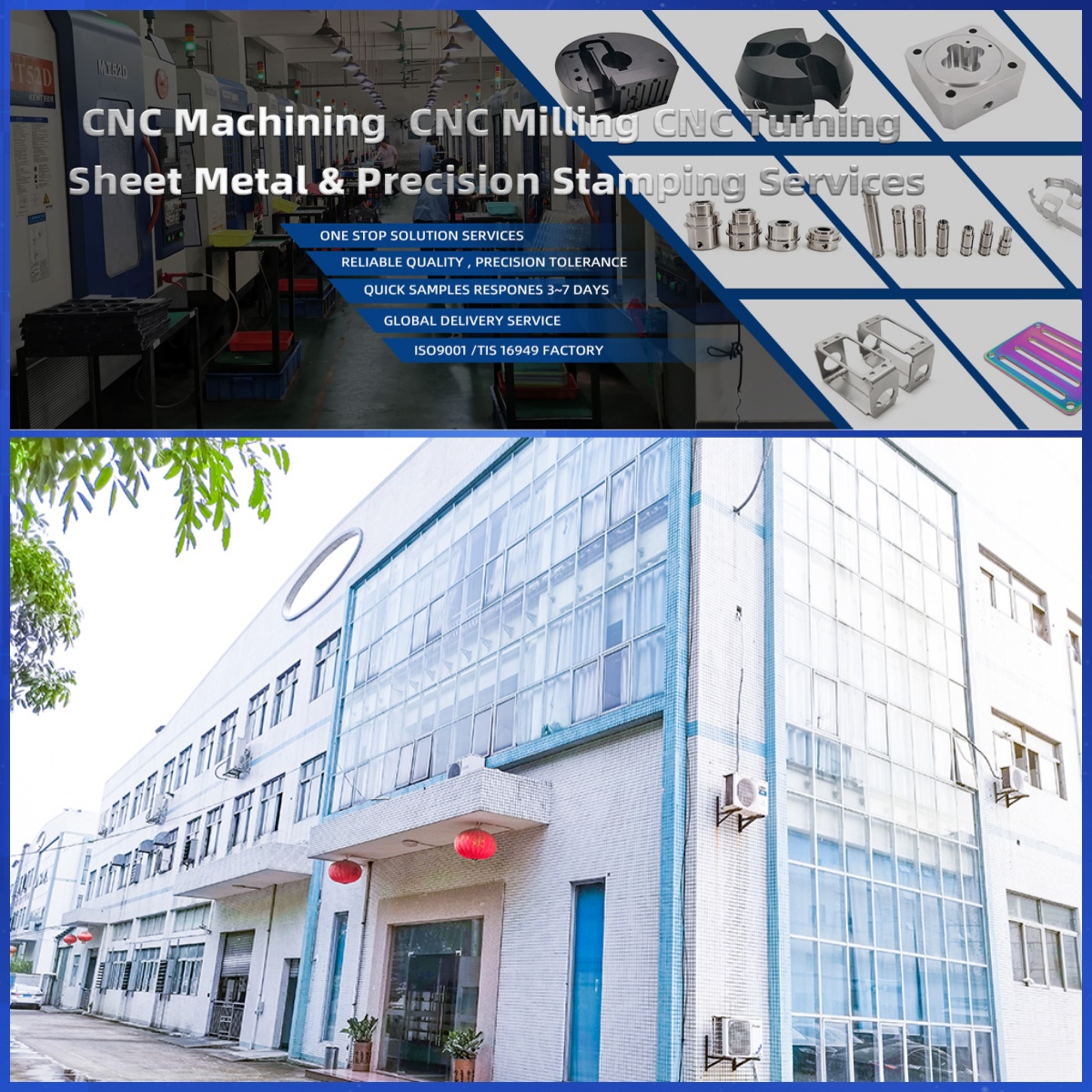
DongGuan YiTai Electronic Technologies Co.,Ltd
DongGuan YiTai Electronic Technologies Co.,Ltd is a manufacturing service provider located in Dongguan, China.
YiTai specialized in CNC turning machining and sheet metal fabrication mainly. As a member of Hung Mou Group, we focus on the overseas marketing development. And based on our parent company’s manufacturing capability and resources, YiTai also expended machining services such as die casting, injection molding, aluminum profile extrusion, 3D printing, which are committed to providing customers with one-stop purchasing services and experience.
CNC MACHINING , CNC MILLING , CNC TURNING , SHEETMETAL , FASTENER , OTHERS




Heat Sink Fabrication
Brass Nut Threaded Inserts: The Ultimate Guide to Durable Fastening Solutions
Related Article