
Powder Coating VS Paint
author: YITECH
2024-12-07
Upgrade the appearance of your household items with our premium-quality aluminum spray paint.
In the home decoration materials market, many people confuse baking paint and spray paint. Baking paint is a type of coating with a wide range of applications. Let's have the editor from Yitai introduce baking paint and the difference between baking paint and spray paint.
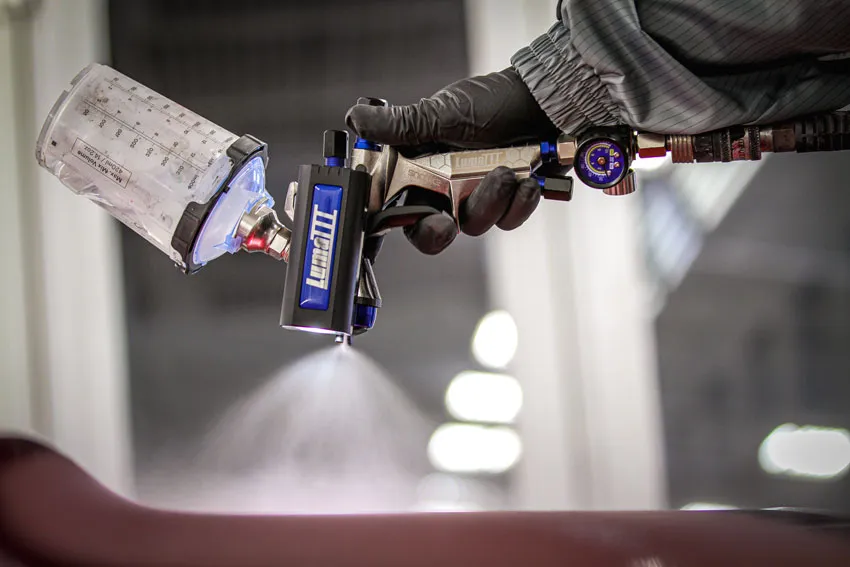
What is baking paint
Baking paint is actually a type of paint coating. In current applications, baking paint is divided into two categories: low-temperature baking paint and high-temperature baking paint, with high-temperature baking paint being widely used.
Classification of baking paint:
Baking paint is divided into two categories, one is low-temperature baking paint with a curing temperature of 140°-180°, and the other is called high-temperature baking paint, with a curing temperature of 280°-400°.
Features of baking paint:
1. Non-stickiness: Almost all substances do not adhere to PTFE film. Even a thin film can show excellent non-stick performance.
2. Heat resistance: PTFE film has excellent heat resistance and low-temperature resistance. It can withstand temperatures up to 300℃ for a short time and can be used continuously between 240℃-260℃, with significant heat stability. It can work at freezing temperature without becoming brittle and will not melt at high temperature.
3. Sliding property: PTFE film has a low coefficient of friction. The friction coefficient changes under load sliding, but the value is only between 0.05-0.15.
4. Moisture resistance: The surface of the PTFE film does not stick to water and oil, and it is not easy to stick to the solution during production operation. If there is a small amount of dirt, it can be wiped off easily. It saves time and improves work efficiency with short downtime.
5. Wear resistance: Under high loads, it has excellent wear resistance. Under certain loads, it has both wear resistance and non-stick properties.
6. Corrosion resistance: PTFE is hardly affected by chemical corrosion and can protect parts from any kind of chemical corrosion.
What is the difference between baking paint and spray paint
1. Process.
Baking paint: Three coats of primer and four coats of topcoat are sprayed on the substrate, and each coat of paint is sent into a dust-free and temperature-controlled baking room for baking.
Spray paint: Sand the substrate, then spray paint on top and air dry naturally.
2. Paint film.
Method: Touch the four edges of the baking paint door panel with your hand and see if they are smooth.
Baking paint: The edges are smooth and the color is the same, indicating a uniform paint film and full color.
Spray paint: The edges are rough and the color is lighter than the door panel, indicating an uneven paint film and incomplete color.
3. Texture.
Method: In comparison with the light, look at the surface of the baking paint door panel to see if there is an orange peel phenomenon.
Baking paint: The surface of the door panel is smooth without any texture or orange peel phenomenon.
Spray paint: The surface of the door panel has texture, is not smooth, and has an orange peel phenomenon.
4. Surface.
Method: Touch the surface of the baking paint door panel with your hand to see if there are any dust particles or bubbles.
Baking paint: The surface of the door panel is flat and smooth.
Spray paint: There are particles on the surface of the door panel, it is not smooth, and there is an unusual sensation when touching it.
5. Wear resistance.
Method: Hit it with a hard object.
Baking paint: There are no abnormalities, and the paint film is undamaged.
Spray paint: There are cracks, serious paint film peeling, and white skin falling off.
What is baking paint
Baking paint is actually a type of paint coating. In current applications, baking paint is divided into two categories: low-temperature baking paint and high-temperature baking paint, with high-temperature baking paint being widely used.
Classification of baking paint:
Baking paint is divided into two categories, one is low-temperature baking paint with a curing temperature of 140°-180°, and the other is called high-temperature baking paint, with a curing temperature of 280°-400°.
Features of baking paint:
1. Non-stickiness: Almost all substances do not adhere to PTFE film. Even a thin film can show excellent non-stick performance.
2. Heat resistance: PTFE film has excellent heat resistance and low-temperature resistance. It can withstand temperatures up to 300℃ for a short time and can be used continuously between 240℃-260℃, with significant heat stability. It can work at freezing temperature without becoming brittle and will not melt at high temperature.
3. Sliding property: PTFE film has a low coefficient of friction. The friction coefficient changes under load sliding, but the value is only between 0.05-0.15.
4. Moisture resistance: The surface of the PTFE film does not stick to water and oil, and it is not easy to stick to the solution during production operation. If there is a small amount of dirt, it can be wiped off easily. It saves time and improves work efficiency with short downtime.
5. Wear resistance: Under high loads, it has excellent wear resistance. Under certain loads, it has both wear resistance and non-stick properties.
6. Corrosion resistance: PTFE is hardly affected by chemical corrosion and can protect parts from any kind of chemical corrosion.
What is the difference between baking paint and spray paint
1. Process.
Baking paint: Three coats of primer and four coats of topcoat are sprayed on the substrate, and each coat of paint is sent into a dust-free and temperature-controlled baking room for baking.
Spray paint: Sand the substrate, then spray paint on top and air dry naturally.
2. Paint film.
Method: Touch the four edges of the baking paint door panel with your hand and see if they are smooth.
Baking paint: The edges are smooth and the color is the same, indicating a uniform paint film and full color.
Spray paint: The edges are rough and the color is lighter than the door panel, indicating an uneven paint film and incomplete color.
3. Texture.
Method: In comparison with the light, look at the surface of the baking paint door panel to see if there is an orange peel phenomenon.
Baking paint: The surface of the door panel is smooth without any texture or orange peel phenomenon.
Spray paint: The surface of the door panel has texture, is not smooth, and has an orange peel phenomenon.
4. Surface.
Method: Touch the surface of the baking paint door panel with your hand to see if there are any dust particles or bubbles.
Baking paint: The surface of the door panel is flat and smooth.
Spray paint: There are particles on the surface of the door panel, it is not smooth, and there is an unusual sensation when touching it.
5. Wear resistance.
Method: Hit it with a hard object.
Baking paint: There are no abnormalities, and the paint film is undamaged.
Spray paint: There are cracks, serious paint film peeling, and white skin falling off.
Material Article - Baking Paint Board
5 Axis Machining - Something you may looking for (Part 3)
Related Article

Choosing between 316 and 316L? 316L resists weld decay better, 316 holds strength at higher heat. Both food-grade, both marine-grade. Quick, no-fluff breakdown.
316 vs 316L Stainless Steel for CNC Machining
What is stamping and when do you use it? A plain guide to sheet metal stamping, dies, and progressive tools, plus the parts it makes faster than machining.
What Is Stamping in Metal Manufacturing?

