Will AI Replace CNC Machining? What Changes—and What Won't

1. The Short Answer: AI Will Transform CNC Machining, Not Replace It
People ask whether AI will replace CNC machining at nearly every factory meeting. The short answer is no. CNC machining is a physical process, not just a programming task. Metal meets the cutting tool inside the machine. Chips form, heat builds, tools wear, and material properties vary. An algorithm can help manage these variables, but it cannot remove them.
AI is useful for data-heavy and repeatable decisions. It can analyze part geometry, suggest machining strategies, and flag patterns quickly. Skilled machinists are still needed for engineering judgment, machine setup, troubleshooting, and final quality decisions. The future of CNC machining is likely to combine AI-assisted workflows with hands-on shop-floor expertise.
2. Where AI Is Already Helping CNC Manufacturing
AI is not a distant idea in machining. It is already working in three practical areas.
AI-Assisted CNC Programming and Toolpath Optimization
AI can already help CNC programmers with many routine tasks. It can analyze part geometry, suggest machining strategies, and optimize feeds, speeds, and toolpaths for repeatable work. For standard features such as holes, pockets, threads, and flats, AI-assisted programming can noticeably reduce programming time. This is where AI CNC programming is already making a practical difference.
The output still needs to be reviewed by an experienced programmer. Our CNC milling and turning capabilities use a range of software tools, including AI-assisted systems, but every program is checked by a programmer before it is sent to a machine.

Production Scheduling and Machine Monitoring
AI can support both production planning and shop-floor monitoring. It can prioritize jobs, analyze machine utilization, and highlight bottlenecks in a busy shop. By tracking machine data, it can also flag patterns associated with possible downtime, such as worn tools, unusual vibration, or longer-than-expected cycle times.
These signals are early warnings, not a guarantee that downtime will be prevented. AI can help identify potential problems, but it cannot eliminate downtime. Acting on a warning, whether by changing a tool or adjusting the process, still requires someone who understands both the machine and the part.
AI for Quality Control and Inspection
Quality control is one of the more practical applications for AI. It can analyze inspection data, track dimensional trends, and support vision-based surface checks when appropriate. If a bore diameter begins moving toward a tolerance limit across a batch, AI for CNC quality control can flag the potential process drift for review, often before manual sampling reveals a clear pattern.
That is AI-assisted manufacturing in practice: the system raises the alert, and a person decides how to respond.
3. Why Skilled Machinists Remain Essential
Every AI capability above has a common dependency: someone who understands what the data means. Here is why that person is not going away.
AI Cannot Fully Understand Engineering Intent
A drawing shows the required dimensions, but it does not always explain why they matter. A hole tolerance may be driven by a press fit, a seal, or the assembly sequence. A surface-finish requirement may relate to friction, appearance, or a customer’s functional needs. Experienced engineers and machinists bring this context to each decision, from identifying critical features and setting realistic tolerances to understanding how the part will be used. AI can process the data, but people interpret the intent behind it.
Real Machining Conditions Require Human Judgment
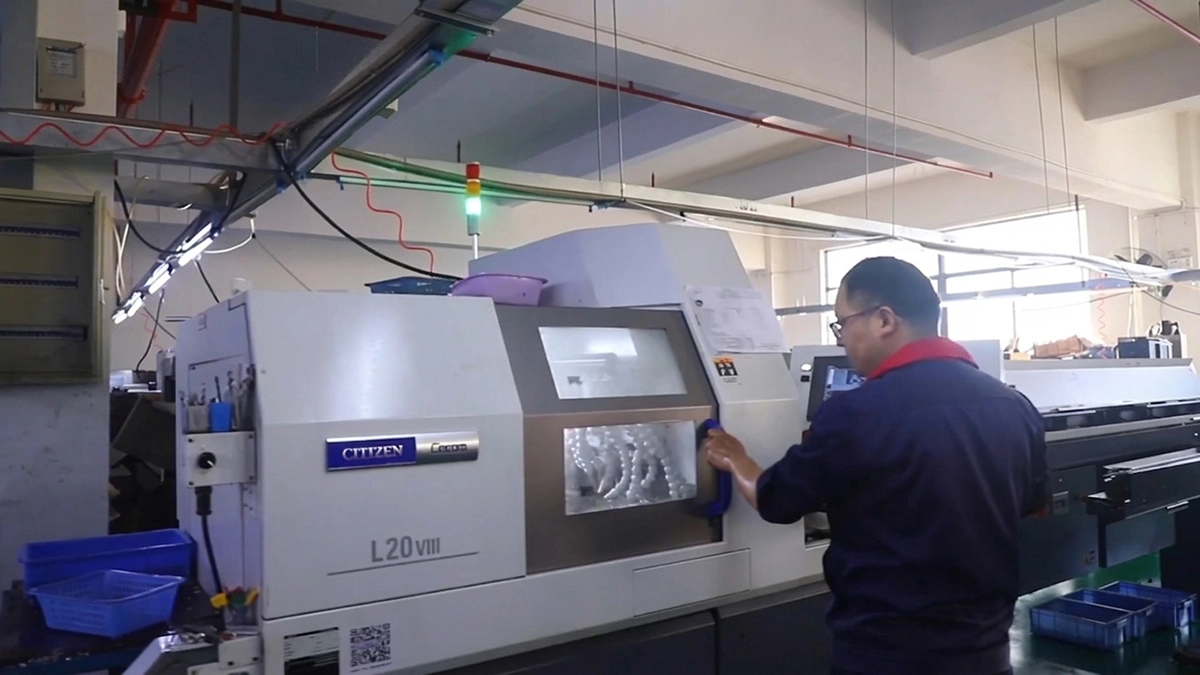
Machining takes place in changing conditions. Material variation, tool wear, workholding problems, vibration, chatter, unexpected setup issues, and surface-finish tradeoffs can all appear on the shop floor. When a machinist sees a part chattering, they may reduce the depth of cut, change the toolpath direction, or adjust how the part is held. These decisions come from practical experience and are difficult to encode in an algorithm.
"AI can tell you the toolpath looks efficient. It cannot feel that the part is starting to chatter and know that the fix is a shallower cut and a different approach angle. That sense comes from running machines — and it is not going to be automated away."
— Senior Process Engineer, DongGuan YiTai Electronic Technologies
Humans Remain Accountable for Quality and Safety
AI can provide suggestions and warnings. But the final process approval, first-article sign-off, quality release, and customer communication still rest with experienced people. When a part ships, someone is responsible for it. That accountability cannot be delegated to a model — and buyers expect to talk to a person who stands behind the result. This is why a strong design for manufacturability review starts with engineering judgment, not just software output.
4. AI vs. Human Expertise in CNC Machining
The clearest way to see the division of work is side by side.
| Manufacturing Task | AI Contribution | Human Role |
|---|---|---|
| CAM programming | Suggest strategies and optimize repeatable paths | Confirm manufacturability and cutting strategy |
| Machine monitoring | Detect patterns and anomalies | Diagnose root causes and make corrective decisions |
| Inspection data | Identify variation trends | Confirm quality requirements and disposition parts |
| Fixture planning | Assist with design ideas | Validate clamping, access, rigidity, and safety |
| Production planning | Improve scheduling visibility | Balance customer priorities, risk, and capacity |
Notice the pattern. AI handles the analysis. People handle the decisions. Every row ends with a human judgment — because that is where responsibility lives.
5. How AI Will Change CNC Jobs
AI will not eliminate machinist jobs, but it will change what those jobs look like. The work shifts from repetitive tasks toward higher-value ones.
- Operators will increasingly use data and connected production systems — checking monitoring dashboards, responding to alerts, and confirming process conditions
- Programmers may spend less time on repetitive programming and more on process optimization and exception handling
- Quality teams may use AI-assisted data analysis to spot trends earlier and focus their time on disposition and root-cause work
- Training will shift toward digital manufacturing, automation, and process control — on top of the core machining skills that never go away
This is CNC automation in its realistic form: not a workforce replacement, but a skills upgrade. The future CNC machinist skills list gets longer, not shorter.
6. The Future: Human-in-the-Loop CNC Manufacturing
The most effective manufacturing model is not AI versus machinists. It is AI-assisted machining guided by experienced engineers, programmers, operators, and quality teams.
- AI handles repetitive analysis — programming suggestions, monitoring, trend detection
- Skilled teams make contextual manufacturing decisions — setup, process, quality, and customer communication
- Connected data improves traceability and process learning — every batch teaches the next one
- Customer requirements remain the foundation of production decisions — no model replaces a spec sheet and a conversation
This is what human-in-the-loop manufacturing means in practice. The loop stays closed by people, and that is exactly why it works. AI-assisted CNC machining is the future — but the "assisted" part is doing a lot of work in that sentence.

7. What This Means for Buyers of CNC Parts
If you are sourcing CNC machined parts, the AI conversation changes what you should look for in a supplier. Do not pick a shop just because it mentions AI. Confirm that it has the fundamentals, and that it uses automation without losing engineering oversight.
- Strong DFM capability — can they review your drawing and flag manufacturability issues before production?
- Experienced programmers and machinists — do people with real floor experience run the process?
- Reliable inspection processes — is quality checked in-process, not just at the end?
- Stable production controls — do they hold tolerances across volume, batch after batch?
- Clear communication on quality requirements — do they confirm specs before cutting?
- Automation with oversight — do they use AI-assisted tools without letting them run unsupervised?
Send us your drawings to request a DFM review — you will see exactly how we combine tools with engineering judgment on your part.
8. Conclusion: AI Is a Tool, Not a Replacement for CNC Expertise
Will AI replace CNC machining? The answer, in short, is no. AI will continue to improve CNC programming, production planning, machine monitoring, and quality analysis. But CNC machining involves materials, machines, fixtures, tolerances, and real-world decisions that still require human expertise. The future of CNC machining belongs to manufacturers that combine AI tools with experienced engineering and machining teams. That combination — not AI alone — is what delivers parts that are right, on time, and on spec.
9. FAQ
Q: Will AI replace CNC machinists?
A: AI is more likely to support machinists than fully replace them. Skilled machinists remain essential for setup, process decisions, troubleshooting, and quality control.
Q: Can AI create CNC programs?
A: AI can help generate or optimize programming suggestions, but experienced programmers still need to validate tooling, workholding, machining strategy, and part requirements.
Q: How does AI improve CNC quality control?
A: AI can analyze inspection data, identify dimensional trends, and flag potential process variation for review by quality and production teams.
Q: What CNC tasks are easiest to automate with AI?
A: Repeatable tasks such as programming assistance, machine monitoring, scheduling analysis, and inspection-data review are among the most suitable applications.
Q: Will CNC machining become fully automated?
A: Some high-volume and standardized processes may become more automated, but complex parts, changing customer requirements, setup decisions, and quality accountability still require human involvement.
Q: Looking for a CNC Machining Partner That Combines Technology with Expertise?
A: Send us your drawings for a DFM review. See how we combine advanced tools with hands-on engineering on your part.
DongGuan YiTai Electronic Technologies Co.,Ltd
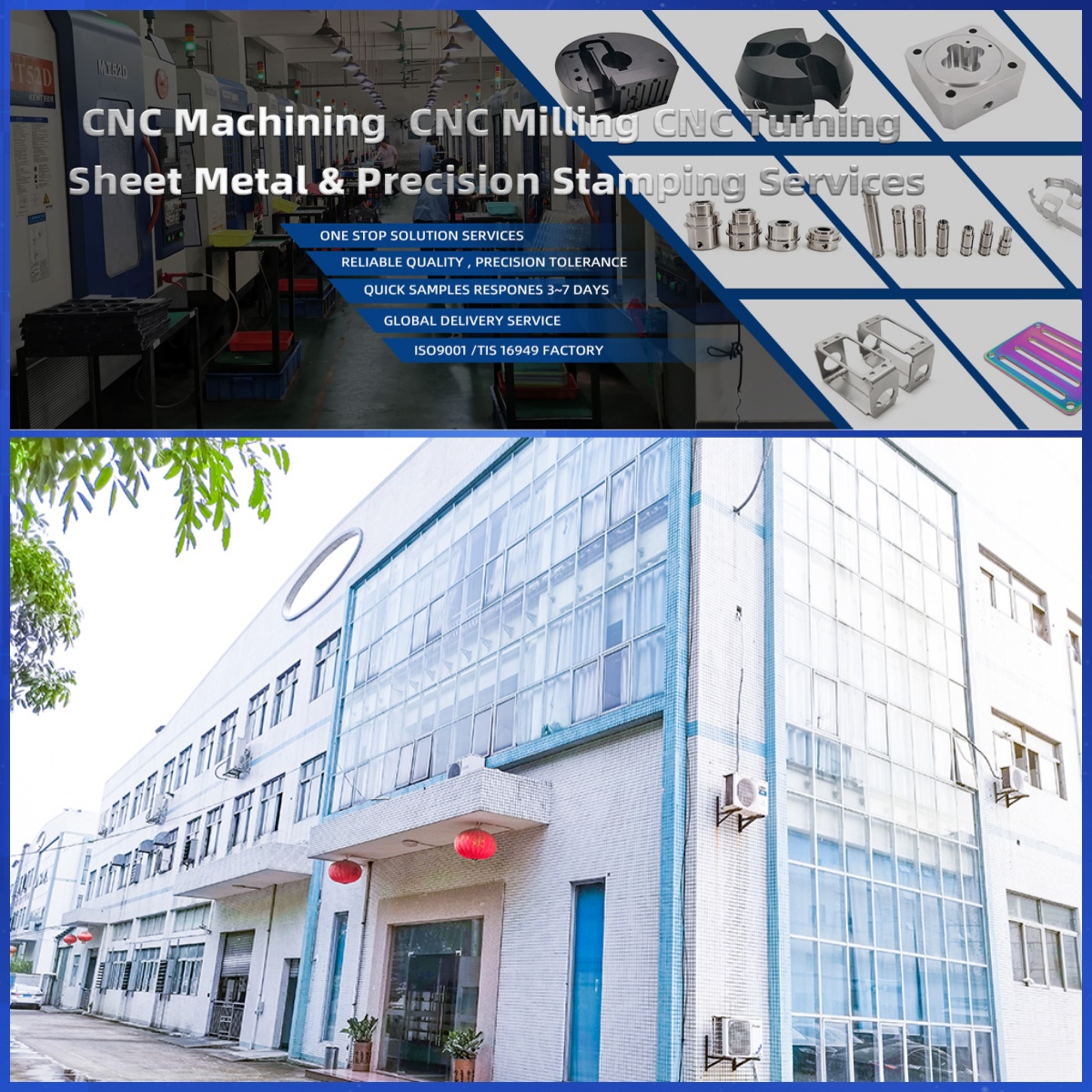
DongGuan YiTai Electronic Technologies Co.,Ltd is a manufacturing service provider located in Dongguan, China.
YiTai specialized in CNC turning machining and sheet metal fabrication mainly. As a member of Hung Mou Group, we focus on the overseas marketing development. And based on our parent company’s manufacturing capability and resources, YiTai also expended machining services such as die casting, injection molding, aluminum profile extrusion, 3D printing, which are committed to providing customers with one-stop purchasing services and experience.
CNC MACHINING , CNC MILLING , CNC TURNING , SHEETMETAL , FASTENER , OTHERS




The Dry Mirror Finishing Process and Its Applications in Custom Hardware Manufacturing
DFM Analysis: How Design for Manufacturability Cuts Cost, Reduces Defects, and Speeds Up Production
Related Article