Drilling vs Reaming vs Boring: A Complete Guide to Three Hole-Making Processes in CNC Machining

require perfect alignment over long distances. Different holes demand different machining processes.
This guide covers drilling, reaming, and boring. You will learn how each one works, when to use them, and ultimately, how to choose the right process for your specific part.
1. Drilling – The First Step in Hole-Making
Drilling is the most common way to make a hole. A twist drill spins and cuts into solid metal. It removes material and creates a hole.
Process Characteristics
-
How it works: The drill bit has two cutting edges. It pushes into the metal. Chips come up through the flutes.
-
Speed: Very fast. A drill can make a hole in seconds.
-
Accuracy: Low to medium. Typical tolerance is IT10 to IT13 (about ±0.05mm to ±0.2mm).
-
Surface finish: Rough. You can see spiral marks from the drill.
When to Use Drilling
Drilling is the right choice when.
-
The hole only needs to pass a screw or bolt.
-
The hole will get a second operation (reaming or tapping) later.
-
You need many holes fast. Cost per hole is very low.
Example: A bolt hole in a bracket. A clearance hole for a wire. A starter hole for tapping.
2. Reaming – Precision Finishing for High-Accuracy Holes
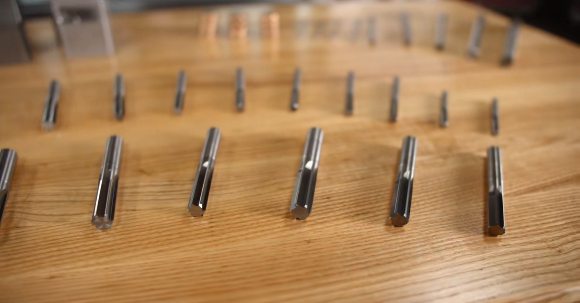
Reaming is a finishing process. You drill a hole first. Then you run a reamer through it. The reamer has many flutes (usually 6 to 8). It cuts only a small amount of material – typically 0.1mm to 0.3mm from the hole wall.
Process Characteristics
-
How it works: The reamer follows the existing hole. It smooths the wall. It brings the size to a precise diameter.
-
Accuracy: High. Typical tolerance is IT7 to IT8 (about ±0.01mm to ±0.02mm).
-
Surface finish: Very smooth. Ra 0.4–0.8µm. Good for bearings and seals.
-
Position correction: None. A reamer follows the existing hole. If the drilled hole is crooked, the reamed hole will also be crooked.
When to Use Reaming
Reaming is the right choice when.
-
The hole needs a tight fit (H7, H8 tolerance).
-
The hole is already in the right position (from drilling or boring).
-
You need a smooth surface for a pin, dowel, or bearing.
Example: A dowel pin hole in a jig. A bearing bore in a housing. A cylinder bore for a piston pin.
3. Boring – Correcting Position and Making Large Holes
Boring is a single-point cutting process. A boring bar holds a single cutting insert. The bar spins or the part spins. The tool cuts the inside of an existing hole.

Process Characteristics
-
How it works: A single cutting edge removes material. You can adjust the tool diameter to get exact size.
-
Accuracy: High. Typical tolerance is IT6 to IT8 (from ±0.005mm to ±0.02mm).
-
Surface finish: Good. Ra 0.4–1.6µm. Not as smooth as reaming but good.
-
Position correction: Yes. Because it is a single-point tool, you can align it to the correct position. It can straighten a crooked hole.
When to Use Boring
Boring is the right choice when.
-
The drilled hole is off position. You need to correct it.
-
The hole is too large for a standard reamer (over 30mm diameter).
-
You need a non-standard size (like 22.5mm) and you do not want a special reamer.
-
You have several holes that must line up (like gearbox housing holes).
Example: An engine cylinder bore. A gearbox housing with two aligned bearing holes. A large hydraulic fitting bore.
4. Key Comparison Table
| Feature | Drilling | Reaming | Boring |
|---|---|---|---|
| Typical tolerance (IT grade) | IT10–IT13 | IT7–IT8 | IT6–IT8 |
| Surface finish (Ra) | 1.6–6.3 µm | 0.4–0.8 µm | 0.4–1.6 µm |
| Can correct position? | No (starts new hole) | No (follows existing) | Yes |
| Minimum hole size | 0.5mm | 1mm | 6mm (tool dependent) |
| Maximum hole size | 100mm+ (with large drills) | 50mm (standard reamers) | 500mm+ (with large boring bars) |
| Tool cost | Low | Medium | Medium to high |
| Cycle time per hole | Very fast | Fast | Slow |
| Best for | Rough holes, clearance holes | Precise diameter, smooth finish | Correcting position, large holes |
5. Decision Framework – How to Choose
Ask three questions about your hole.
Question 1: Does the hole need a tight fit (bearing, dowel pin)?
-
No → Just drill it. Done.
-
Yes → Go to Question 2.
Question 2: Is the pre-drilled hole already in the correct position?
-
Yes (position is ±0.1mm or better) → Ream it. Fast and smooth.
-
No (the hole may be crooked or off position) → Bore it. You can correct the position.
Question 3: Is the hole diameter larger than 30mm or a non-standard size?
-
Yes → Bore it. Reamers for large holes are expensive. Boring is flexible.
-
No → Reaming is fine.
The flowchart below summarizes the choice.
Start
 │
 ▼
Is tight tolerance (H7/H8) needed?
 │
 ├─ No ──► Drill only. Done.
 │
 └─ Yes
      │
      ▼
  Is the existing hole position accurate?
      │
      ├─ Yes ──► Ream. Fast and cheap.
      │
      └─ No ──► Bore. Corrects position.
6. Expert Insight: Reaming Does Not Fix a Crooked Hole
“I see this mistake all the time. A young machinist drills a hole that is crooked. Then he runs a reamer through it. He thinks the reamer will straighten it. It will not. The reamer follows the crooked path. The hole stays crooked. The part fails assembly. If your drill walks off position, use a boring bar to fix it. The single-point tool cuts a new, straight hole. Reaming is for size, not for position.”
— CNC Lead Programmer, DongGuan YiTai Electronic Technologies
We Help You Pick the Best Hole-Making Process
At ‘DongGuan YiTai Electronic Technologies’ , we drill, ream, and bore holes every day. We know which process saves you time and money. For a simple bolt hole, we drill. For a precision dowel pin hole, we drill then ream. For a large gearbox bore with tight alignment, we mill then bore.
Send us your drawing. Tell us how the hole will be used (bolt, bearing, pin). We will recommend the most economical process. We will give you a quote with the hole-making steps included.
7. Frequently Asked Questions (FAQ)
Q: What is the main difference between reaming and boring?
A: Reaming uses a multi-flute tool. It follows the existing hole. It gives a very smooth finish and precise size. But it cannot change the hole position. Boring uses a single-point tool. It can correct position and straighten crooked holes. Boring is slower but more flexible.
Q: Can I ream a hole that was cast or drilled years ago?
A: Yes, if the hole is clean and not too hard. But the reamer will follow the existing hole center. If the old hole is crooked, the reamed hole will also be crooked. For critical alignment, bore it instead.
Q: What is the typical reaming allowance (how much stock before reaming)?
A: For holes under 20mm diameter, leave 0.15–0.25mm per side. For larger holes, leave 0.25–0.5mm. If you leave too little, the reamer does not cut well. If you leave too much, the reamer can break or chatter.
Q: What is the best way to get a straight hole deep in a part?
A: Use a boring bar. Start with a drilled hole. Then bore from both ends if possible. Use a long, rigid boring bar. For very deep holes (depth > 10x diameter), consider gun drilling or EDM instead.
Q: Can a CNC mill bore a hole?
A: Yes. Most CNC mills can bore holes. You need a boring head (a tool that lets you adjust diameter). The machine spins the boring head. The head has one cutting insert. The machine feeds it into the hole. This works well for larger holes (over 12mm).
Q: Does DongGuan YiTai Electronic Technologies offer reaming and boring services?
A: Yes. We drill, ream, and bore on both CNC mills and lathes. We hold H7 tolerances on reamed holes and H6 on bored holes. We also have custom reamers for odd sizes. Send us your part drawing. We will include the right process.
DongGuan YiTai Electronic Technologies Co.,Ltd
DongGuan YiTai Electronic Technologies Co.,Ltd is a manufacturing service provider located in Dongguan, China.
YiTai specialized in CNC turning machining and sheet metal fabrication mainly. As a member of Hung Mou Group, we focus on the overseas marketing development. And based on our parent company’s manufacturing capability and resources, YiTai also expended machining services such as die casting, injection molding, aluminum profile extrusion, 3D printing, which are committed to providing customers with one-stop purchasing services and experience.
CNC MACHINING , CNC MILLING , CNC TURNING , SHEETMETAL , FASTENER , OTHERS




The Complete Guide to Custom Medical CNC Machining: Materials, Precision, and Industry Standards Explained
CNC Machining in Drone Manufacturing: How to Make High-Precision, Lightweight Parts
Related Article