What Is Polishing? A Complete Guide to Surface Finishing for CNC Machined Parts
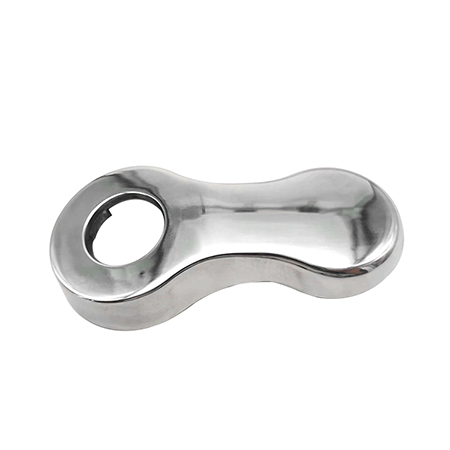
Polishing makes the surface smooth and shiny. It removes tiny scratches. It lowers the roughness. This guide explains what polishing is. It shows the main types. It also tells you where polishing fits in the CNC machining process.
1. Definition and Core Purpose of Polishing
Polishing is a finishing process. It removes a thin layer of material from the surface. It uses abrasives (small hard particles) and mechanical action. The abrasives rub against the part. They cut off the high spots. The surface becomes flat and smooth.
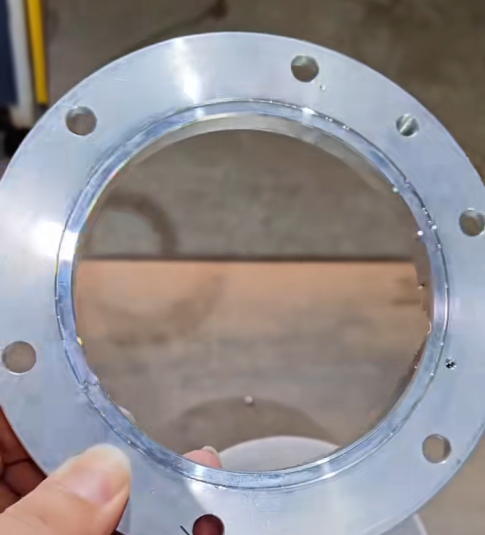

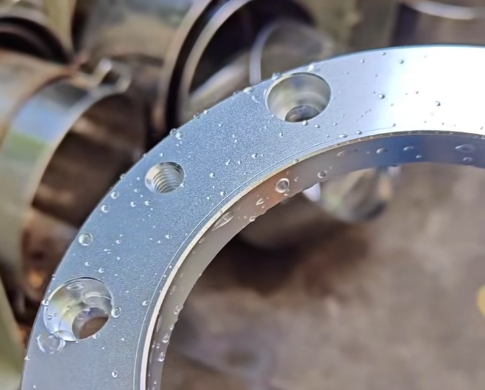
Before and after polishing comparison
Four Main Purposes of Polishing
People polish parts for four reasons.
-
Better appearance: A polished part looks bright and clean. It reflects light like a mirror. This is good for consumer products and visible parts.
-
Lower friction: A smooth surface has less drag. Parts slide easier. This helps bearings, seals, and sliding mechanisms.
-
Higher corrosion resistance: A rough surface traps moisture and dirt. These cause rust. A smooth surface has no hiding spots. It resists corrosion better.
-
Easy cleaning and sterilization: Medical and food parts must be clean. A polished surface has no pores or crevices. Bacteria cannot hide. You can wipe it clean easily.
2. Main Types of Polishing Processes
There are four common polishing methods. Each one works best for different parts.
Mechanical Polishing
This is the most common method. You use a rotating wheel, a belt sander, or a hand tool. The tool has a soft surface (cloth, felt, or paper). You apply polishing compound (a paste with fine abrasive particles). The tool spins against the part.
-
Best for: Most metal parts. Steel, aluminum, brass, stainless steel.
-
Surface result: From matte to mirror finish.
-
Limitation: Hard to reach deep corners or complex shapes.
Chemical Polishing
The part goes into a chemical bath. The acid dissolves the surface evenly. The high spots dissolve faster. The surface gets smoother.
-
Best for: Complex shapes. Parts with internal passages. Thin walls that could bend under mechanical force.
-
Surface result: Bright but not fully mirror-like.
-
Limitation: Chemicals must be handled safely. Not good for all metals.
Electropolishing
This is an electrochemical process. The part is the anode (positive electrode). It goes into an electrolyte bath. Electric current removes metal from the high spots. The low spots get less current. The surface becomes smooth and shiny.
-
Best for: Stainless steel, aluminum, titanium. Medical and food industry parts.
-
Surface result: Very bright. Mirror finish possible.
-
Advantage: Removes a burr-free layer. Improves corrosion resistance.
Ultrasonic Polishing
A tool vibrates at high frequency (20–40 kHz). The vibration moves abrasive slurry against the part. This removes material in small, precise areas.
-
Best for: Mold cavities. Small, detailed areas. Hard materials like tool steel.
-
Surface result: Very smooth. Good for local polishing.
-
Limitation: Slow for large surfaces.
The table below compares the four methods.
| Process | Best For | Surface Finish (Ra) | Speed | Cost |
|---|---|---|---|---|
| Mechanical | Flat or curved surfaces | 0.05–1.6 µm | Fast | Low |
| Chemical | Complex shapes | 0.2–0.8 µm | Medium | Medium |
| Electropolishing | Stainless steel, medical parts | 0.05–0.4 µm | Medium | Medium–High |
| Ultrasonic | Small detailed areas, molds | 0.1–0.4 µm | Slow | High |
3. Where Polishing Fits in the CNC Machining Workflow
Polishing is not the first step. It is near the end. The typical order is:
-
Rough CNC machining – Remove bulk material. Leave 0.5–1mm stock.
-
Semi-finish machining – Bring part close to final size. Leave 0.1–0.2mm for finishing.
-
Finish machining – Cut to final dimensions. Get a good baseline surface (Ra 1.6–3.2 µm).
-
Heat treatment (if needed) – Harden the part.
-
Polishing – Smooth the surface to the required Ra.
-
Cleaning and inspection – Remove polishing residue. Check the final finish.
Polishing Requirements Before You Start
A CNC machined part must meet basic quality before polishing.
-
No deep tool marks: Polishing removes only 0.01–0.05mm of material. Deep scratches stay.
-
No burrs: Loose burrs will break off during polishing. They can scratch the surface.
-
Clean surface: No oil, chips, or dirt.
If the CNC finish is too rough, you must do a pre-polish step with coarser abrasives first.
4. Surface Finish Levels Achievable with Polishing
Surface finish is measured in Ra (roughness average) . This is the average height of the peaks and valleys in microns (µm). A lower number is smoother.
| Ra (µm) | Appearance | Typical Use |
|---|---|---|
| 1.6 – 3.2 | Matte, visible tool marks | Hidden parts, as-machined |
| 0.4 – 0.8 | Satin, slight reflection | Machine parts, bearings |
| 0.1 – 0.2 | Semi-bright, clear reflection | Decorative parts, shafts |
| 0.05 – 0.1 | Bright, near mirror | Medical instruments, molds |
| 0.02 – 0.05 | Mirror finish | Optical parts, high-end tools |
Polishing can also be measured in gloss units (GU) . A gloss meter measures how much light reflects. 100 GU is a perfect mirror. But Ra is the standard in engineering.
5. Expert Insight: Polishing Does Not Fix Deep Scratches
“A client once sent us a part with deep cutter marks. He asked us to polish it to a mirror finish. We told him no. Polishing removes only a few microns. Those cuts were 0.1mm deep. We would have to grind for hours. The part would lose its shape. The lesson is: good CNC machining comes first. Polish is the last 1% of the work. It cannot fix a bad surface from the start.”
— Surface Finishing Supervisor, DongGuan YiTai Electronic Technologies
One-Stop Service: CNC Machining + Precision Polishing
At 'DongGuan YiTai Electronic Technologies' , we do both. We machine your part to a clean baseline finish. Then we polish it to the required Ra. We offer mechanical polishing and electropolishing. We work with aluminum, steel, stainless, brass, and titanium.
Send us your drawing. Tell us the target Ra or appearance (matte, satin, mirror). We will recommend the right polishing method. We will give you a quote for machining and finishing together.
6. Frequently Asked Questions (FAQ)
Q: What is the difference between polishing and buffing?
A: Polishing removes material to make the surface smooth. It uses fine abrasives. Buffing does not remove material. It uses a soft wheel and a wax-like compound to make the surface shiny. Buffing comes after polishing.
Q: Can you polish any metal?
A: Yes. But some metals are easier. Aluminum, brass, and stainless steel polish well. Titanium is harder but can be polished. Cast iron is porous and does not get a mirror finish.
Q: Does polishing remove rust?
A: It removes light surface rust. For heavy rust, you need grinding first. Also, polishing removes the protective oxide layer on stainless steel. After polishing, the oxide layer grows back naturally.
Q: How much material does polishing remove?
A: Mechanical polishing removes 0.01–0.05mm. Electropolishing removes 0.02–0.08mm. For tight tolerance parts, account for this in the machining step.
Q: Is electropolishing better than mechanical polishing?
A: It depends. Electropolishing is better for complex shapes, internal passages, and parts that need very high corrosion resistance (medical, food). Mechanical polishing is faster and cheaper for flat or curved external surfaces.
Q: Does DongGuan YiTai Electronic Technologies offer electropolishing?
A: Yes. We have an in-house electropolishing line for stainless steel parts. We also offer mechanical polishing for aluminum, brass, and other metals. Send us your part for a free finishing recommendation.
DongGuan YiTai Electronic Technologies Co.,Ltd
DongGuan YiTai Electronic Technologies Co.,Ltd is a manufacturing service provider located in Dongguan, China.
YiTai specialized in CNC turning machining and sheet metal fabrication mainly. As a member of Hung Mou Group, we focus on the overseas marketing development. And based on our parent company’s manufacturing capability and resources, YiTai also expended machining services such as die casting, injection molding, aluminum profile extrusion, 3D printing, which are committed to providing customers with one-stop purchasing services and experience.
CNC MACHINING , CNC MILLING , CNC TURNING , SHEETMETAL , FASTENER , OTHERS




Why Does Copper Corrode? A Complete Analysis of Corrosion Types and Mechanisms for CNC Machined Copper Parts
Complete Guide to Brass Precision Turned Components: Material Advantages, CNC Machining Processes, and Typical Applications
Related Article