Top 10 Strongest Metals in the World: A Complete Guide to Strength, Properties, and CNC Machining Applications

Engineers ask it. Designers ask it. But the answer is not simple. Strength comes in different forms. Some metals resist pulling. Some resist heat. Some resist wear.
1. How to Define “Strongest Metal” – Understanding Strength Metrics
Before we rank metals, we need to know what strength means. There are three main ways to measure it.

-
Hardness: How well the metal resists scratching and indentation.
-
Toughness: How well the metal absorbs energy without breaking.
2. Rank 10 to 6: High-Strength Metal Family
These metals are very strong. They are used in demanding applications.

10. Maraging Steel
This steel gets its strength from aging, not carbon. It has good toughness and high strength. It does not warp much during heat treatment. This makes it good for tooling and aerospace parts.
-
Tensile Strength: 1,700 to 2,400 MPa
-
Common Use: Rocket motor casings, injection molds
9. Inconel
Inconel is a nickel-based superalloy. Its main strength is holding strength at high heat. It does not creep or oxidize at high temperatures.
-
Tensile Strength: 1,000 to 1,600 MPa
-
Common Use: Jet engines, turbine blades, exhaust systems
8. Titanium Alloy
Titanium is not the strongest metal by itself. But its strength-to-weight ratio is the best. It is as strong as steel but half the weight.
-
Tensile Strength: 900 to 1,200 MPa (Grade 5 Ti-6Al-4V)
-
Common Use: Aircraft frames, medical implants, bicycle frames
7. Tungsten
Tungsten has the highest melting point of all metals. It stays strong at very high heat. It is also very dense.
-
Tensile Strength: 1,500 to 2,000 MPa
-
Common Use: Electrical contacts, heating elements, counterweights
6. Tool Steel
Tool steel is made for hardness and wear resistance. It holds a sharp edge. It is used to make tools that cut other metals.
-
Tensile Strength: 800 to 2,200 MPa (depending on grade)
-
Common Use: Cutting tools, dies, punches
3. Rank 5 to 1: Top-Tier Strength Metals
These are the strongest metals. They are used in the most demanding jobs.

5. Beryllium Copper
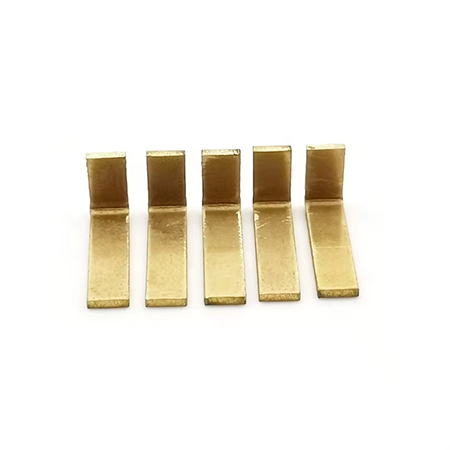
This alloy combines high strength with good electrical conductivity. It is also non-sparking. This makes it safe for oil and gas tools.
-
Tensile Strength: 1,200 to 1,500 MPa (after heat treatment)
-
Common Use: Electrical connectors, oilfield tools, molds
4. Hastelloy
Hastelloy is a nickel alloy family. Its strength comes from resisting extreme environments. It handles acids, chlorides, and high heat.
-
Tensile Strength: 800 to 1,300 MPa
-
Common Use: Chemical processing, pollution control, nuclear reactors
3. High-Strength Steel
This is a broad group of steels. They get strength from carbon and alloying elements. They are strong and cost-effective for large structures.
-
Tensile Strength: 1,200 to 2,000 MPa (for advanced high-strength steel)
-
Common Use: Car frames, bridges, construction equipment
2. Titanium Aluminide
This is an intermetallic compound. It is used in aerospace engines. It stays strong at very high heat. It is lighter than nickel alloys.
-
Tensile Strength: 800 to 1,100 MPa (at high temperatures)
-
Common Use: Turbine blades, jet engine components
1. Tungsten Carbide
This is not a pure metal. It is a ceramic-metal composite. It has the highest hardness among common engineering materials. It is very wear-resistant.
-
Hardness: 1,500 to 2,500 HV (Vickers hardness)
-
Common Use: Cutting tools, drill bits, wear parts
4. CNC Machining Challenges with Strong Metals
Strong metals are hard to cut. They need special machines, tools, and skills.

Work Hardening
Some metals get harder when you cut them. Inconel and stainless steel do this. If the tool rubs instead of cuts, the surface hardens. The next cut becomes even harder. The solution is to take a deep enough cut. Stay under the hardened layer.
Tool Selection
Standard carbide tools do not last on strong metals. We use tools with special coatings.
-
TiAlN (Titanium Aluminum Nitride): Good for high heat. Works on Inconel and tool steel.
-
AlTiN (Aluminum Titanium Nitride): Better for high-speed cutting.
Cutting Parameters
Strong metals need the right speeds and feeds.
-
Slow spindle speed: Keeps heat down.
-
Consistent feed rate: Prevents rubbing.
-
High-pressure coolant: Washes chips away and cools the cut.
5. Comparison Table: Top 5 Strongest Metals by Key Metrics
| Metal | Tensile Strength (MPa) | Hardness | Key Feature | Machinability |
|---|---|---|---|---|
| Tungsten Carbide | 1,500–2,000 | Extremely High | Hardest material | Grinding only |
| Maraging Steel | 1,700–2,400 | High | Good toughness | Moderate |
| Inconel | 1,000–1,600 | Medium-High | High-temperature strength | Difficult |
| Titanium Alloy | 900–1,200 | Medium | Best strength-to-weight | Moderate |
| Tool Steel | 800–2,200 | High | Wear resistance | Moderate |
6. Expert Insight: Machining Hard Metals the Right Way
“Strong metals test your machines. Inconel is a good example. If your setup is not rigid, the part will chatter. The tool will wear out fast. We use heavy-duty machines with short tool overhang. We also use high-pressure coolant. It breaks the chips and cools the cut. A good machinist knows when to push and when to back off. With the right approach, even the hardest metals can be machined to tight tolerances.”
— Senior CNC Programmer, DongGuan YiTai Electronic Technologies
7. Frequently Asked Questions (FAQ)
Q: What is the hardest metal in the world?
A: Tungsten carbide is the hardest among common engineering materials. It is used for cutting tools and wear parts. Pure tungsten metal is also very hard but not as hard as tungsten carbide.
Q: Which metal has the highest strength-to-weight ratio?
A: Titanium alloy (Grade 5 Ti-6Al-4V) has the best strength-to-weight ratio. It is as strong as some steels but 40% lighter. This makes it the top choice for aerospace and high-performance automotive parts.
Q: Can you CNC machine Inconel?
A: Yes, but it takes the right setup. Inconel work hardens. The machine must be rigid. The tools must have the right coating. High-pressure coolant is important. With these in place, Inconel machines well.
Q: Why is tungsten carbide so hard to machine?
A: Tungsten carbide is harder than most cutting tools. You cannot machine it with standard carbide tools. It is shaped by grinding with diamond wheels. For CNC machining, we use electrical discharge machining (EDM) or specialized grinding.
Q: Which strong metal is easiest to machine?
A: Maraging steel is easier to machine than Inconel or tool steel. It does not work harden as much. It also keeps its shape well after heat treatment. For prototypes, maraging steel is a good choice when high strength is needed.
Q: Does DongGuan YiTai Electronic Technologies machine these strong metals?
A: Yes. We have experience with Inconel, titanium, tool steel, and other high-strength alloys. We use rigid CNC lathes and machining centers. We also have the right tooling and coolant systems to handle difficult materials. Send us your drawing. We will give you a quote and DFM feedback.
DongGuan YiTai Electronic Technologies Co.,Ltd
DongGuan YiTai Electronic Technologies Co.,Ltd is a manufacturing service provider located in Dongguan, China.
YiTai specialized in CNC turning machining and sheet metal fabrication mainly. As a member of Hung Mou Group, we focus on the overseas marketing development. And based on our parent company’s manufacturing capability and resources, YiTai also expended machining services such as die casting, injection molding, aluminum profile extrusion, 3D printing, which are committed to providing customers with one-stop purchasing services and experience.
CNC MACHINING , CNC MILLING , CNC TURNING , SHEETMETAL , FASTENER , OTHERS




What is Galvanizing? A Complete Guide to Corrosion Protection for CNC Machined Steel Parts
5 Key Design (DFM) Strategies to Lower Your Teflon CNC Machining Costs
Related Article