Thread Rolling Services: The Complete Guide to Stronger, Faster, and More Cost-Effective Threads
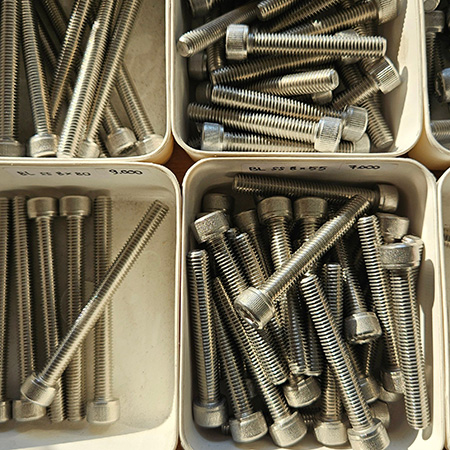
1. What Is Thread Rolling and How Does It Work?
Thread rolling is a cold-forming process. It creates threads by pressing a cylindrical blank between two or three dies that have the thread profile engraved on them. The dies squeeze and displace the metal — they do not cut it. The metal flows into the thread shape.
This is the key difference. Cutting removes material. Rolling moves material. The result is a thread that is stronger, smoother, and more accurate than a cut thread. And it is produced faster — often in less than one second per part.
1.1 The Thread Rolling Process: Cold Forming, Not Cutting
Here is how thread rolling works, step by step:
1.2 Thread Rolling vs. Thread Cutting vs. Tapping: A Comparison
There are three ways to make a thread. Each has a different effect on strength, speed, and cost:
| Factor | Thread Rolling | Thread Cutting (Single-Point) | Tapping / Die Threading |
|---|---|---|---|
| How it works | Cold forms metal — no removal | Cuts with single-point tool on lathe | Cuts with multi-flute tap or die |
| Material removal | None — metal is displaced | Yes — chips are produced | Yes — chips are produced |
| Grain structure | Grains follow thread profile | Grains are cut — weak root | Grains are cut — weak root |
| Tensile strength | 10–20% stronger | Baseline | Baseline |
| Fatigue life | 50–500% better | Baseline | Baseline |
| Surface finish (Ra) | 0.2–0.8 μm (burnished) | 0.8–3.2 μm | 0.8–1.6 μm |
| Thread accuracy | Class 4H–6H achievable | Class 6H typical | Class 6H typical |
| Production speed | 0.5–3 seconds per part | 30–120 seconds per part | 5–30 seconds per part |
| Tool life (parts per tool) | 50,000–500,000 | 500–5,000 | 1,000–10,000 |
| Material hardness limit | Up to 40 HRC (best below 30) | Any hardness | Up to 35 HRC |
| Best for | High-volume, high-strength | Low volume, large threads, hard materials | Internal threads, small batches |
2. Why Thread Rolling Produces Stronger Threads
2.1 Grain Flow and Work Hardening: The Metallurgical Advantage
When you cut a thread, you sever the metal grains at the thread root. The root becomes a stress concentrator — a sharp notch where cracks start. This is why cut threads fail in fatigue. The crack begins at the root, grows slowly, and then the part breaks suddenly.
When you roll a thread, the metal grains are not cut. They are pushed and reshaped. The grains flow around the thread profile, following the curve of the root. This creates three advantages:
- No severed grains at the root. The root — the most stressed point — has continuous grain flow. No notch. No stress concentrator.
- Work hardening at the surface. The rolling pressure compresses and hardens the surface layer. The thread surface becomes 10–30% harder than the base material. This resists wear and fatigue.
- Compressive residual stress. Rolling leaves the thread surface in compression. This is the opposite of cutting, which leaves the surface in tension. Compressive stress closes micro-cracks and stops them from growing. This is why rolled threads last so much longer in cyclic loading.

2.2 Fatigue Life: Thread Rolling vs. Cut Threads
The numbers tell the story. Here is how rolled threads compare to cut threads in fatigue testing (based on SAE J1061 standard tests on M10 × 1.5 grade 10.9 bolts):
| Property | Rolled Thread | Cut Thread | Improvement |
|---|---|---|---|
| Fatigue life (cycles to failure) | 500,000–2,000,000 | 100,000–300,000 | 5–7x longer |
| Fatigue limit (MPa) | 120–180 | 60–100 | 2x higher |
| Surface hardness increase | +15–30 HV | 0 (no change) | Work hardened |
| Surface residual stress | Compressive (-200 to -400 MPa) | Tensile (+50 to +150 MPa) | Compressive is better |
| Tensile strength | +10–20% | Baseline | Stronger |
| Surface roughness at root | Ra 0.4 μm | Ra 1.6 μm | Smoother |
"If a threaded fastener sees cyclic loading — vibration, pressure pulsation, thermal cycling — it must be rolled. Cutting is acceptable for static loads. But for anything that cycles, rolled threads are not optional. They are mandatory. The fatigue data is not even close."
— Dr. Werner Schneider, Fastener Technology Research, University of Stuttgart
3. Applications and Material Compatibility
3.1 Where Thread Rolling Is Used
| Industry | Typical Threaded Parts | Why Rolling Is Required |
|---|---|---|
| Automotive | Engine head bolts, wheel studs, connecting rod bolts | Fatigue life — vibration loads |
| Aerospace | Airframe bolts, engine mounting bolts, landing gear pins | Fatigue life + weight reduction |
| Oil & Gas | Drill pipe threads, casing connections, valve stems | High pressure + corrosion |
| Construction | Anchor bolts, structural bolts, rebar couplers | High strength + cost at volume |
| Electronics | Standoffs, threaded inserts, sensor housings | High volume + small size |
| Medical | Bone screws, implant connections, instrument threads | Precision + biocompatible finish |
| General Industrial | Shafts, spindles, lead screws, adjusting screws | Wear resistance + accuracy |

3.2 Material Limits and Best Candidates
Thread rolling works by cold-forming. The material must be ductile enough to flow without cracking. Here is how common materials perform:
| Material | Rollability | Max Hardness | Notes |
|---|---|---|---|
| Low carbon steel (1018, 1022) | Excellent | 20 HRC | The standard material for rolled threads |
| Medium carbon steel (1045) | Good | 28 HRC | Needs annealing before rolling if hardened |
| Alloy steel (4140, 4340) | Good (annealed) | 30 HRC | Roll before heat treatment for best results |
| Stainless 303 | Excellent | 25 HRC | Free-machining grade — rolls very well |
| Stainless 304 / 316 | Fair | 22 HRC | Work hardens fast — needs higher force |
| Aluminum (6061, 2024) | Excellent | 15 HRC | Soft — rolls easily, but threads are weaker |
| Brass / Copper | Excellent | 10 HRC | Very soft — low rolling force needed |
| Titanium Ti-6Al-4V | Difficult | 32 HRC | Springback is high — needs special dies |
| Hardened steel (40+ HRC) | Not recommended | — | Will crack — use thread cutting instead |
Rule of thumb: If the material is below 35 HRC and has at least 15% elongation in tensile testing, it can be thread rolled. Above 35 HRC, the material will crack instead of flow. For hardened parts, roll the thread before heat treatment, then harden. The rolled grain structure survives heat treatment intact.
4. CNC Machining and Thread Rolling Capabilities at DongGuan YiTai

CNC Machining + Thread Rolling = One-Stop Threaded Part Production
At DongGuan YiTai Electronic Technologies, we combine CNC turning, CNC milling, and thread rolling in one facility. Your threaded part goes from raw bar stock to finished, rolled-thread component without leaving our shop. No outsourcing. No quality gaps. No extra shipping.
Our thread rolling and CNC capabilities:
- Flat-die thread rolling machine: M2 to M20 external threads, lengths up to 150 mm
- Cylindrical-die thread rolling: For longer threads and larger diameters (up to M36)
- Thread range: M2 to M36, UNC/UNF, metric coarse/fine, BSW, BSP, custom profiles
- Thread accuracy: Class 4H–6H (4H for precision, 6H for general use)
- CNC turning centers: Blank preparation, Ø1–65 mm bar, ±0.01 mm tolerance
- 3-axis and 4-axis CNC milling centers: For flats, slots, cross-holes on threaded parts
- Swiss-type CNC lathes: For small, long, precision threaded shafts (Ø1–20 mm)
- Materials: Steel (1018, 1045, 4140), stainless (303, 304, 316), aluminum, brass, titanium
- Surface treatment: Zinc plating, black oxide, passivation, anodizing, phosphate
- Inspection: Thread ring/plug gauges, CMM (Zeiss), surface roughness tester, optical comparator
- Batch size: 100 pieces (prototype) to 500,000 pieces (production)
- Lead time: 7–10 days (prototype), 2–3 weeks (production)
What makes us different:
- We do CNC machining and thread rolling in-house — we control the blank diameter, the rolling parameters, and the final inspection.
- We can combine rolling with CNC milling and turning — a part with a rolled thread, milled flat, and turned shoulder is done in one facility.
- We provide thread inspection reports (gauge fit, pitch diameter, surface finish) with every batch.
- We select the right rolling method (flat-die vs. cylindrical) based on your part geometry and volume.
Need Thread Rolling Services? Get a Quote in 24 Hours.
Send us your drawing with thread spec (size, class, length). We will review it, recommend the best process, and send a quote within 24 hours. CNC machining + thread rolling under one roof.
Request Your Thread Rolling Quote5. Frequently Asked Questions
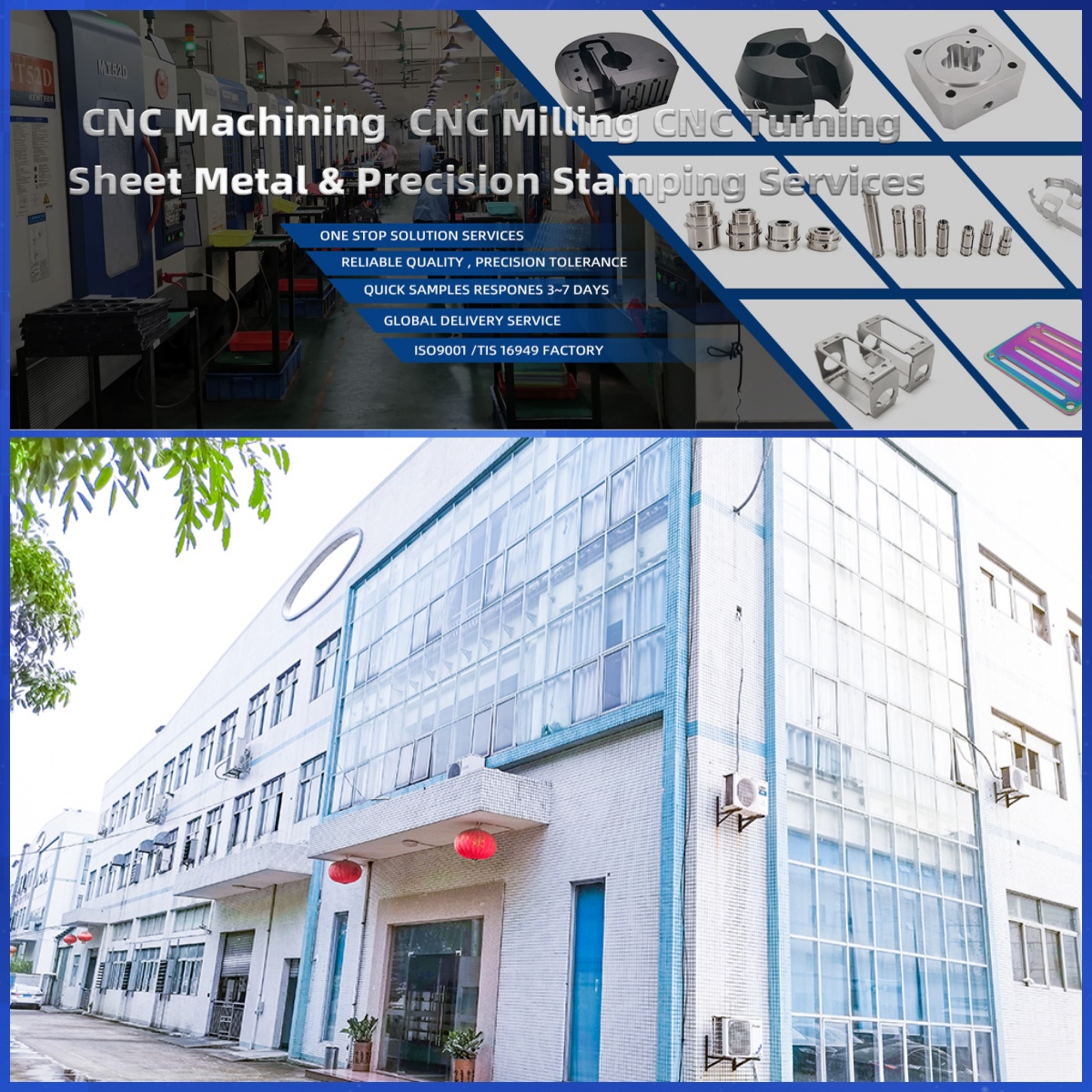
DongGuan YiTai Electronic Technologies Co.,Ltd
DongGuan YiTai Electronic Technologies Co.,Ltd is a manufacturing service provider located in Dongguan, China.
YiTai specialized in CNC turning machining and sheet metal fabrication mainly. As a member of Hung Mou Group, we focus on the overseas marketing development. And based on our parent company’s manufacturing capability and resources, YiTai also expended machining services such as die casting, injection molding, aluminum profile extrusion, 3D printing, which are committed to providing customers with one-stop purchasing services and experience.
CNC MACHINING , CNC MILLING , CNC TURNING , SHEETMETAL , FASTENER , OTHERS




Sheet Metal Deep Drawing: A Complete Guide to the Process, Materials, and Capabilities
Swiss Turning vs Traditional CNC Turning: Which Process Is Right for Your Precision Parts?
Related Article