
Nickel Plating-1
author: YITECH
2024-12-10
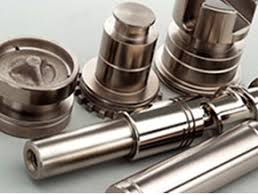
The nickel plate provides excellent corrosion resistance, wear resistance, and aesthetic appeal to enhance the durability and appearance of various products across industries.
Introduction:
Nickel plating is a method of depositing a layer of nickel on the surface of metals or certain non-metals, in order to improve their corrosion resistance, hardness, aesthetics, and other properties. The nickel plating process can be divided into two main categories, electroplating and chemical plating.
01 Electroplating:
Electroplating is a method of depositing a layer of nickel on the surface of metals through electrochemical reactions. The general process is as follows:
Pre-treatment - cleaning, degreasing, rust removal, etc., to ensure the firm adhesion of the coating and the substrate;
Solution preparation - the electrolyte consists of nickel salt (primary salt), conductive salt, pH buffer, wetting agent, etc.;
Electroplating operation - the plated part is used as the cathode, pure nickel plate is used as the anode, placed in the electrolyte, and direct current is passed to reduce and deposit nickel ions on the cathode surface, forming a nickel coating. Depending on the requirements, brighteners can be added to obtain a bright nickel coating, or no brighteners can be added to obtain a matte nickel coating.
Post-treatment - quality inspection of the coating, such as measuring the thickness and corrosion resistance of the coating, and necessary cleaning and drying.
The advantages of electroplating include a uniform and dense coating, good corrosion resistance, wear resistance, and glossiness. Additionally, the electroplating process is mature, equipment is simple, and operation is convenient, making it widely used in the manufacturing industry of machines, instruments, meters, medical devices, household appliances, and other products.
02 Chemical Plating:
The advantages of electroplating include a uniform and dense coating, good corrosion resistance, wear resistance, and glossiness. Additionally, the electroplating process is mature, equipment is simple, and operation is convenient, making it widely used in the manufacturing industry of machines, instruments, meters, medical devices, household appliances, and other products.
02 Chemical Plating:
Chemical plating, also known as electroless plating or autocatalytic plating, is the process of reducing nickel ions in a water-based solution under certain conditions and depositing them onto a solid substrate surface. The general process is as follows:
Pre-treatment - similar to electroplating, cleaning, degreasing, rust removal, etc.;
Solution preparation - the chemical nickel plating solution contains nickel ions and reducing agents;
Chemical plating - place the plated part into the solution and deposit the nickel ions on the substrate surface under certain temperature and pH conditions to form the nickel coating.
Post-treatment - similar to electroplating, quality inspection and post-treatment of the coating.
The advantages of chemical plating include a good coating uniformity, high hardness, excellent wear resistance, and corrosion resistance. It does not require direct current or complex electroplating equipment, making it widely used in some special fields such as aerospace and electronics.
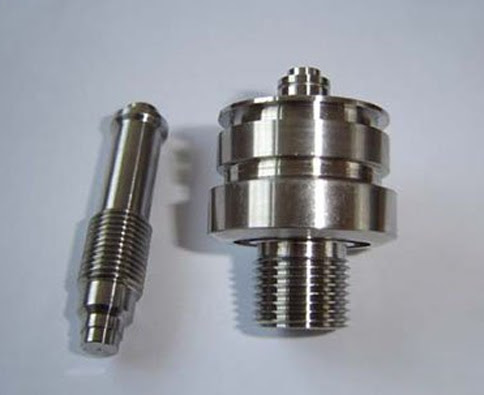
03 Types of nickel plating solutions:
The advantages of chemical plating include a good coating uniformity, high hardness, excellent wear resistance, and corrosion resistance. It does not require direct current or complex electroplating equipment, making it widely used in some special fields such as aerospace and electronics.
03 Types of nickel plating solutions:
The types of nickel plating solutions mainly include sulfate, chloride, aminosulfonate, citrate, fluoborate, etc. Among them, the sulfate-type (low chloride) Watt nickel plating solution is the most commonly used in industry. Different types of nickel plating solutions are suitable for different nickel plating needs and process conditions.
04 Applications of nickel plating:
The nickel plating process is widely used in various industries, such as electronics, automotive, machinery, chemical industry, aerospace, etc. In electronic products, nickel plating can increase the conductivity and corrosion resistance of equipment, while in the automotive industry, it can improve the corrosion resistance and mechanical performance of automotive components. In the machinery industry, nickel plating can enhance the surface hardness and wear resistance of mechanical parts. In the chemical and aerospace industries, nickel plating also plays an important role.
05 Advantages and disadvantages:
05-1 Advantages:
Increased corrosion resistance: the nickel plating layer can significantly improve the corrosion resistance of the base material, effectively resist the corrosive effects of the atmosphere, alkali, and some acids, thus extending the service life of the material.
Improved conductivity: the material surface after nickel plating has better conductivity characteristics, which can reduce resistance, shorten the circuit path, and improve the performance of electronic components.
Enhanced aesthetics: the nickel plating layer has a smooth, shiny surface with wear resistance, which can maintain its appearance for a long time, adding aesthetics to the products.
Improved wear resistance: the nickel plating layer has high hardness, which can enhance the wear resistance of the surface, enabling it to maintain good performance under harsh conditions.
Flexible process: nickel plating can be applied to the surfaces of various materials, such as steel, aluminum alloys, copper alloys, etc., and the coating thickness and properties can be adjusted according to specific needs.
Wide range of applications: nickel plating technology is widely used in various industries, such as electronics, automobiles, aerospace, household appliances, and other fields, to meet the demands of different domains.
05-2 Disadvantages:
Limited welding performance: the surface after nickel plating is difficult to be welded processed because the different thermal expansion coefficients between the coating and the substrate may produce cracking or peeling during welding.
Reduced heat resistance: the nickel plating layer may lose stability in high-temperature environments, resulting in performance degradation. In addition, fire flashes should be avoided during operation.
Risk of current leakage: due to the possible differences in membrane thickness after nickel plating, current leakage may occur, affecting the safety and stability of subsequent operations.
Environmental pollution issues: the chemicals used in the nickel plating process may cause pollution to the environment and have toxicity. Therefore, strict protective measures need to be taken to reduce harm to the environment and humans.
Complexity of the process: the electroplating process is influenced by multiple factors, such as the cleanliness of the metal-ceramic surface, the purity of the plating solution, the different locations of the plating fixtures and plating tanks, and so on, which may cause unstable coating quality. In addition, for parts with complex shapes or small deep holes and blind holes, electroplating is difficult to obtain a uniform coating.
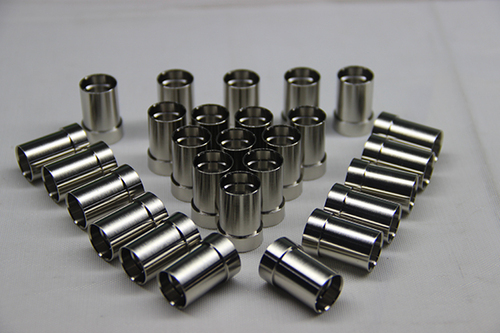
06 Chemical composition of nickel plating:
6-1 Electroplating is carried out in an electrolyte composed of multiple chemical substances, including nickel salt (primary salt), conductive salt, pH buffer, wetting agent, and so on.
6-1.1 There are various types of electroplating solutions, including sulfate, chloride, aminosulfonate, citrate, fluoborate, and so on, among which the sulfate-type (low chloride) Watt nickel plating solution is the most widely used in industry.
07 Shortcomings and improvements in the nickel plating process:
Despite the many advantages of the nickel plating process, there are also some shortcomings, such as uneven coating thickness and easy peeling of the coating. The future direction of development is to improve the composition of the plating solution, shorten the process cycle, and enhance the stability and quality of the coating to meet the higher requirements of different domains for material performance. At the same time, with the increasing awareness of environmental protection, the nickel plating process also needs to pay more attention to environmental protection and sustainable development.
Contact us for your need.
Chrome plating-2
Lost wax casting
Related Article

Choosing between 316 and 316L? 316L resists weld decay better, 316 holds strength at higher heat. Both food-grade, both marine-grade. Quick, no-fluff breakdown.
316 vs 316L Stainless Steel for CNC Machining
What is stamping and when do you use it? A plain guide to sheet metal stamping, dies, and progressive tools, plus the parts it makes faster than machining.
What Is Stamping in Metal Manufacturing?

