【 Knowledge 】 Corrosion resistance of stainless steel

SUS304 stainless steel is a commonly used material in the production of kitchenware, water tanks, and architectural structures due to its high strength, excellent durability, and resistance to corrosion and staining.
1. Types and definitions of corrosion
In many industrial applications, stainless steel can provide satisfactory corrosion resistance. According to the experience of use, in addition to mechanical failure, the corrosion of stainless steel is mainly manifested in: a serious form of corrosion of stainless steel is local corrosion (that is, stress corrosion cracking, point corrosion, intergranular corrosion, corrosion fatigue and crevice corrosion). The failure cases caused by these local corrosion accounts for almost half of the failure cases. In fact, many failure accidents can be avoided by reasonable material selection.
Stress corrosion cracking (SCC) : A general term that refers to the mutual failure of an alloy subjected to stress in a corrosive environment due to the expansion of the grain. Stress corrosion cracking has brittle fracture morphology, but it can also occur in materials with high toughness. The necessary conditions for the occurrence of stress corrosion cracking are the presence of tensile stress (whether residual stress or applied stress, or both) and a specific corrosive medium. The formation and expansion of the pattern are roughly perpendicular to the direction of tensile stress. The stress value that causes stress corrosion cracking is much smaller than the stress value required for the material to fracture in the absence of a corrosive medium. At the microscopic level, cracks passing through the grain are called transgranular cracks, and cracks spreading along the grain boundary are called intergranular cracks, and when the stress corrosion cracking extends to one depth (where the stress on the section of the material under load reaches its fracture stress in the air), the material is broken according to the normal crack (in ductile materials, usually through the polymerization of microscopic defects). Thus, the section of a part that fails due to stress corrosion cracking will contain characteristic areas of stress corrosion cracking and "dimple" areas associated with polymerization of microdefects.
Spot corrosion: A form of local corrosion that causes corrosion.
Intergranular corrosion: The intergranular boundaries are the boundaries of disorganized intergranular misalignments with different crystallographic orientations, and therefore, they are favorable zones for the precipitation of various solute elements or metal compounds (such as carbides and δ-Fe) in steel. Therefore, it is not surprising that in some corrosive media, the grain boundary may be corroded first. This type of corrosion is called intergranular corrosion, and most metals and alloys may exhibit intergranular corrosion in specific corrosive media.
Crevice corrosion: A form of localized corrosion that may occur in a stagnant solution in a crevice or within a shielded surface. Such gaps may be formed at metal-metal or metal-non-metal joints, for example, in contact with rivets, bolts, gaskets, seats, loose surface sediment, and Marine life.
Overall corrosion: is a term used to describe corrosion that occurs in a relatively uniform manner over the entire surface of an alloy. When comprehensive corrosion occurs, the material will gradually thin due to corrosion, and even the material corrosion failure. Stainless steel may exhibit complete corrosion in strong acids and alkalis. Failure due to full-scale corrosion is not a concern because such corrosion can usually be predicted by simple immersion tests or by looking at the corrosion literature.
2. Corrosion resistance of various stainless steel
304 is a versatile stainless steel, which is widely used in the production of equipment and parts requiring good comprehensive properties (corrosion resistance and formability).
301 stainless steel shows obvious work hardening phenomenon during deformation, and is used in various occasions requiring higher strength.
302 stainless steel is essentially a variant of 304 stainless steel with higher carbon content, which can be obtained with higher strength through cold rolling.
302B is a kind of stainless steel with high silicon content, which has high resistance to high temperature oxidation.
303 and 303Se are free-cutting stainless steels containing sulfur and selenium, respectively, for applications where the main requirements are free cutting and surface and high light hao. 303Se stainless steel is also used to make parts that require hot upsetting, because under these conditions, this stainless steel has good hot workability.
304L is a variant of 304 stainless steel with a lower carbon content and is used in applications where welding is required. The lower carbon content minimizes the carbides precipitated in the heat-affected zone near the weld, which can lead to intergranular corrosion (welding erosion) in stainless steel in some environments.
304N is a nitrogen-containing stainless steel, and nitrogen is added to improve the strength of the steel.
305 and 384 stainless steels contain high nickel, and their work hardening rate is low, which is suitable for various occasions with high requirements for cold formability.
308 stainless steel is used to make welding rods.
The nickel and chromium content of 309, 310, 314 and 330 stainless steels is relatively high, in order to improve the oxidation resistance and creep strength of the steel at high temperatures. The 30S5 and 310S are variants of 309 and 310 stainless steel, the difference is that the carbon content is lower, in order to minimize the carbide precipitated near the weld. 330 stainless steel has particularly high carburization resistance and thermal shock resistance.
316 and 317 stainless steels contain molybdenum, so the resistance to point corrosion in Marine and chemical industry environments is much better than 304 stainless steels. Among them, type 316 stainless steel consists of variants including low-carbon stainless steel 316L, nitrogenous high-strength stainless steel 316N and free-cutting stainless steel 316F with high sulfur content.
321, 347 and 348 are titanium, niobium plus tantalum, niobium stabilized stainless steel, suitable for use at high temperature welding components. 348 is a stainless steel suitable for the nuclear power industry, which has a certain limit on the amount of tantalum and drill.
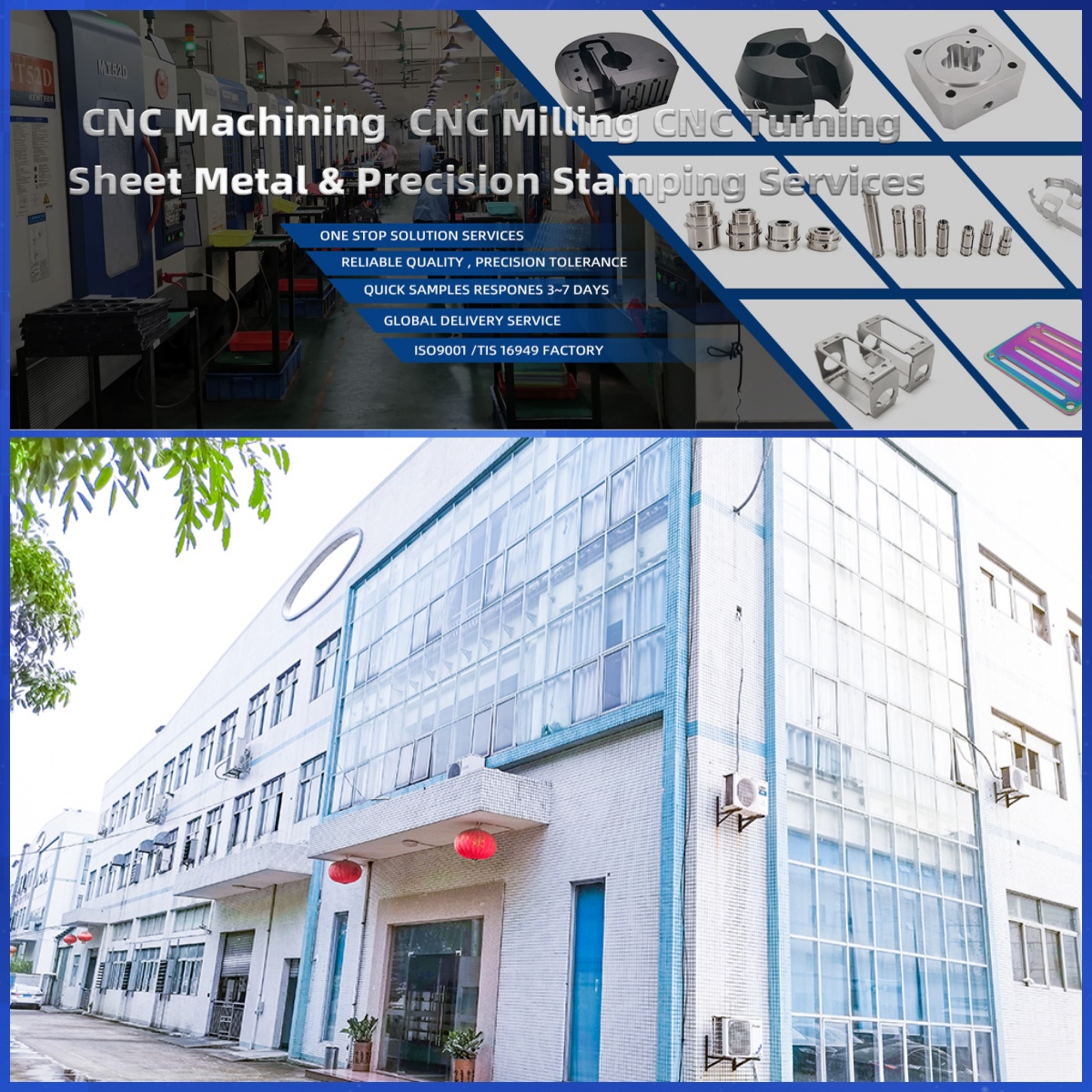
DongGuan YiTai Electronic Technologies Co.,Ltd
DongGuan YiTai Electronic Technologies Co.,Ltd is a manufacturing service provider located in Dongguan, China.
YiTai specialized in CNC turning machining and sheet metal fabrication mainly. As a member of Hung Mou Group, we focus on the overseas marketing development. And based on our parent company’s manufacturing capability and resources, YiTai also expended machining services such as die casting, injection molding, aluminum profile extrusion, 3D printing, which are committed to providing customers with one-stop purchasing services and experience.
CNC MACHINING , CNC MILLING , CNC TURNING , SHEETMETAL , FASTENER , OTHERS




Post-welding Heat Treatment Tips (FAQ)
Stainless steel types, grades and product forms Stainless steel types, grades and product forms
Related Article