The Precision Engineering Behind Electronics Chassis I/O Shields: Advanced Materials and Manufacturing Processes

-
Material Science: Engineering the Perfect Shield
2.1 Cold-Rolled Steel (SPCC)
2.2 Electrolytic Zinc-Coated Steel (SECC)
2.3 Aluminum Alloys
2.4 Specialty Materials -
Precision Manufacturing Workflow
3.1 Progressive Die Stamping
3.2 Laser Micro-Processing
3.3 Forming & Bending Mechanics
3.4 EMC Shielding Integration
3.5 Surface Engineering
1. Introduction: The Critical Interface Guardian

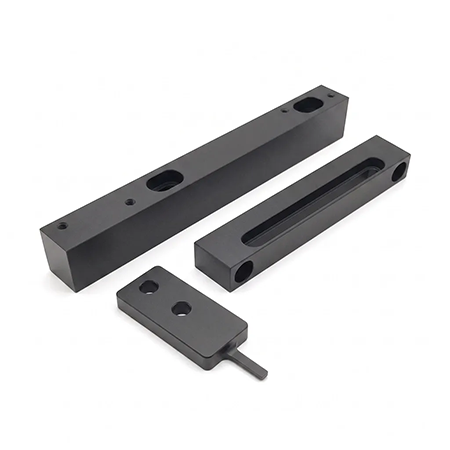
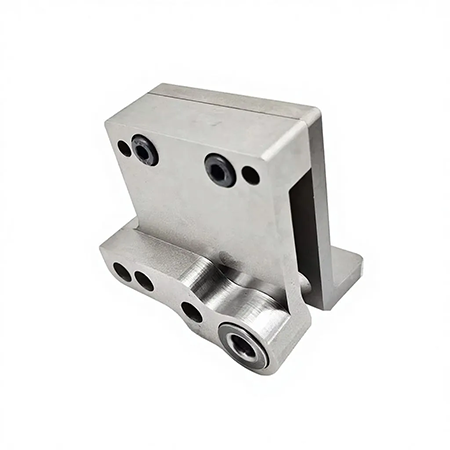
Electronics chassis I/O shields—those precisely engineered metal plates securing the rear interfaces of computers, servers, and network equipment—represent a remarkable fusion of electromagnetic shielding, thermal management, and mechanical protection. As data speeds accelerate beyond 112 Gbps (PCIe 7.0) and device densities increase, these unassuming components face unprecedented technical demands:
-
EMI suppression requirements exceeding 90 dB at 10 GHz
-
Corrosion resistance for harsh environments (marine/industrial)
-
Tolerance thresholds below ±0.03 mm for next-gen connectors
-
Thermal dissipation capabilities >15 W/in²
This deep dive examines the advanced materials and manufacturing technologies enabling modern I/O shields to meet these challenges.
2. Material Science: Engineering the Perfect Shield
2.1 Cold-Rolled Steel (SPCC/SPHC)
-
Applications: Budget consumer electronics, industrial control cabinets
-
Key Properties:
Parameter Specification Thickness Range 0.6–1.2 mm Tensile Strength 270–330 MPa Hardness (HRB) 45–60 Conductivity 10–15% IACS 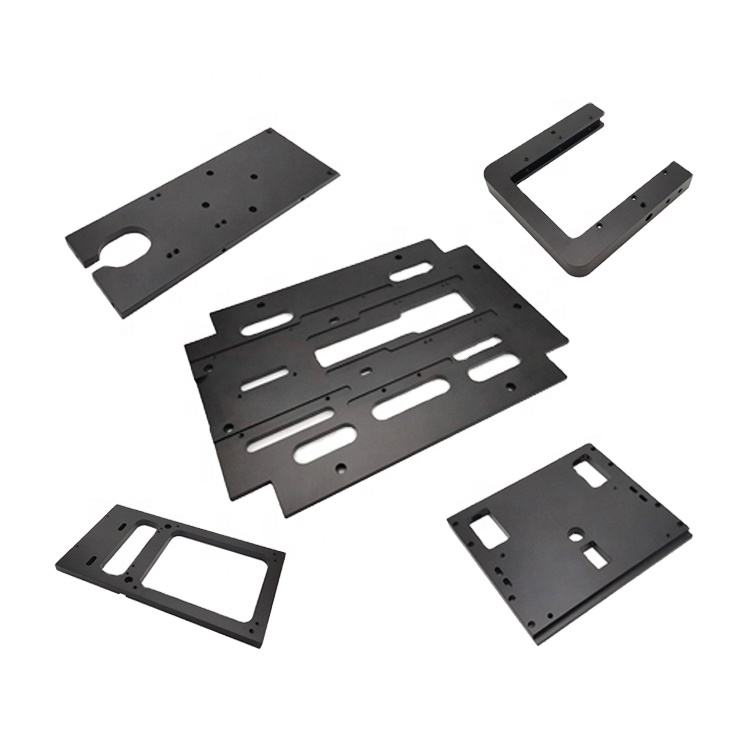
-
Cost Efficiency: $0.15–$0.30 per unit at 500k+ volumes
-
Limitations: Requires coating for corrosion protection; limited EMI performance
2.2 Electrolytic Zinc-Coated Steel (SECC/SGCC)
-
Performance Advantages:
-
Corrosion Resistance: 72–240 hr salt spray protection (ASTM B117)
-
EMI Shielding: 30–60 dB attenuation (30 MHz–6 GHz) via Faraday cage effect
-
Formability: Minimum bending radius = 0.8× thickness
-
2.3 Aluminum Alloys (5052/6061)
-
Technical Superiority:
-
Weight Reduction: Density 2.68 g/cm³ vs steel’s 7.85 g/cm³
-
Thermal Management: Thermal conductivity 138 W/m·K (3× steel)
-
EMI Enhancement: Anodizing creates dielectric layer → Requires conductive fillers
-
-
Advanced Treatments:
-
Hard Anodizing: 50+ μm Type III coating, Rc 50+ hardness
-
Plasma Electrolytic Oxidation: 100+ μm ceramic layer with 500+ VBD
-
2.4 Specialty Materials
| Material | Key Advantage | Application Example |
|---|---|---|
| Phosphor Bronze | Spring resilience (100k+ cycles) | EMI contact fingers |
| SUS316L Stainless | Chloride resistance (5000 hr SST) | Marine electronics |
| Metal Matrix Composites | Near-zero CTE (5 ppm/°C) | High-precision test equipment |
3. Precision Manufacturing Workflow
3.1 Progressive Die Stamping
High-volume production employs 11–16 station progressive dies with critical features:
-
Tooling: Carbide inserts with PVD coatings (AlCrN/TiSiN)
-
Precision Controls:
-
Guide post accuracy: ±0.003 mm/m
-
Stripper pressure: 15–20% of punch force
-
-
Output: 2,500 units/hr with ±0.04 mm positional tolerance
Discover stamping fundamentals in our guide: About Precision Stamping
3.2 Laser Micro-Processing
Fiber laser systems (1070–1080 nm) enable micron-level accuracy:
-
Cutting Parameters:
Material Power Speed Assist Gas 0.6 mm SPCC 500 W 8 m/min N₂ (99.99%) 1.0 mm Al5052 1 kW 12 m/min Ar/O₂ mix -
Micro-Drilling:
-
Minimum hole: Φ0.3 mm (aspect ratio 5:1)
-
Taper control: <0.5° per side with dynamic focal adjustment
-
3.3 Forming & Bending Mechanics
Air bending vs. bottoming:
-
Air Bending:
-
Springback compensation: 2–5° overbend
-
V-die width = 6–8× material thickness
-
-
Coining:
-
Force: 3–5× bending requirement
-
Accuracy: ±0.1° angular tolerance
-
3.4 EMC Shielding Integration
Multi-Technology Approach:
-
Beryllium Copper Fingers (C17200):
-
Contact force: 50–100 gf
-
Resistance: <10 mΩ after 10k compressions
-
-
Conductive Elastomers:
-
Silver-aluminum filler: 0.01 Ω·cm volume resistivity
-
Compression set: <15% (ASTM D395)
-
-
Nanocoating Solutions:
-
Graphene-enhanced polymers: 40 dB shielding at 10 μm thickness
-
3.5 Surface Engineering
Advanced Coating Technologies:
| Process | Thickness | Corrosion Resistance | EMI Enhancement |
|---|---|---|---|
| Trivalent Chromate | 0.2–0.5 μm | 240 hr SST | - |
| Electroless NiP | 5–15 μm | 500 hr SST | +3–5 dB |
| PVD (CrN/AlTiN) | 2–5 μm | 800 hr SST | +15–25 dB |
Explore surface science: Role of Surface Treatment | Surface Treatment Types
4. Expert Perspectives
Dr. H. Tanaka, Materials Engineer, Hitachi Metals:
*"For 5G mmWave applications, we've developed nano-laminate shields alternating 200 nm Al and Ti layers. This achieves 85 dB shielding at 40 GHz while reducing weight 60% versus solid steel."*
Sarah Chen, Manufacturing Director, Foxconn:
*"Our AI-driven stamping lines now predict tool wear with 97% accuracy. By monitoring punch vibration spectra, we achieve 2 million hits between maintenance—a 300% improvement over scheduled maintenance."*
Prof. Michael Rhodes, MIT Mechanical Engineering:
"The future lies in multi-functional metamaterials. We've prototyped shields with tunable resonant frequencies that actively cancel EMI peaks at critical frequencies—all while maintaining structural integrity."
5. FAQ: Solving Critical Design Challenges
Q1: How to prevent galvanic corrosion in aluminum-steel assemblies?
-
A: Use dielectric barriers (0.1 mm PTFE tape) or sacrificial coatings (zinc-rich primers). Avoid direct contact in humid environments per ASTM G85 standards.
Q2: Best practice for 400+ W/in² thermal loads?
-
A: Implement hybrid cooling:
-
Laser-cut vapor chambers (0.3 mm Cu) embedded in shield
-
Thermally conductive EMI gaskets (12 W/m·K)
-
Phase-change materials at hot spots
-
Q3: Achieving ±0.02 mm tolerance on 0.3 mm stainless steel?
-
A: Combine:
-
Fineblanking with triple-action presses
-
Cryogenic forming (-196°C LN2 treatment)
-
Optical metrology with 3D laser scanning
-
Q4: Cost-effective EMI solution for consumer electronics?
-
A: Conductive paints with Ag/Cu flakes (1–3 Ω/sq) applied via masked spraying. Meets FCC Part 15 at 1/5 the cost of metal shields.
Q5: Preventing spring contact fatigue?
-
A: Material selection is critical:
Material Cycles to Failure C17200 BeCu 50,000 C7025 TiCu 150,000 MP35N Co-alloy 500,000+
Q6: Validating shield performance?
-
A: Essential tests:
-
IEC 61000-4-21: Reverberation chamber shielding effectiveness
-
MIL-STD-202G: Vibration resistance
-
IP67: Dust/water ingress protection
-
6. Future Trends & Implementation Guide
Emerging Technologies
-
Additive Manufacturing:
-
Laser powder bed fusion of CuCr1Zr alloy
-
Conformal cooling channels integrated into shields
-
-
Smart Shields:
-
Embedded sensors for real-time EMI/temperature mapping
-
Self-healing coatings with microcapsule technology
-
-
Sustainable Materials:
-
Recycled aluminum with 95% lower carbon footprint
-
Chromium-free conversion coatings
-
Design Selection Matrix
| Application | Material | Thickness | Coating | Key Process |
|---|---|---|---|---|
| Data Center | SECC + Al sandwich | 1.2 mm | AlCrN PVD | Laser + stamping |
| Automotive ECU | SUS316L | 1.0 mm | TCP + e-coat | Hydroforming |
| 5G mmWave | Kovar (FeNiCo) | 0.4 mm | Au flash | Photochemical etch |
| Wearables | Ti Grade 1 | 0.3 mm | Anodize Type II | Micro-stamping |
Implementation Checklist
-
EMC Requirements: Define frequency range & dB targets
-
Environmental Rating: Corrosion class (C1–C5) per ISO 12944
-
Volume Analysis:
-
<10k units: Laser cutting + manual bending
-
50k units: Progressive die stamping
-
-
Compliance: Allocate 15% budget for certification testing
"The I/O shield has evolved from a simple cover to a mission-critical electromagnetic boundary governing system reliability. Those who master its physics will lead the next wave of hardware innovation."
— Dr. Elena Rodriguez, IEEE Fellow
DongGuan YiTai Electronic Technologies Co.,Ltd
DongGuan YiTai Electronic Technologies Co.,Ltd is a manufacturing service provider located in Dongguan, China.
YiTai specialized in CNC turning machining and sheet metal fabrication mainly. As a member of Hung Mou Group, we focus on the overseas marketing development. And based on our parent company’s manufacturing capability and resources, YiTai also expended machining services such as die casting, injection molding, aluminum profile extrusion, 3D printing, which are committed to providing customers with one-stop purchasing services and experience.
CNC MACHINING , CNC MILLING , CNC TURNING , SHEETMETAL , FASTENER , OTHERS




The Complete Guide to Door Handles: Applications, Manufacturing, and Material Selection
Metal Phone Holders: Where Precision Engineering Meets Everyday Utility
Related Article