Stainless Steel Washer: Specifications, Customization, and Sourcing
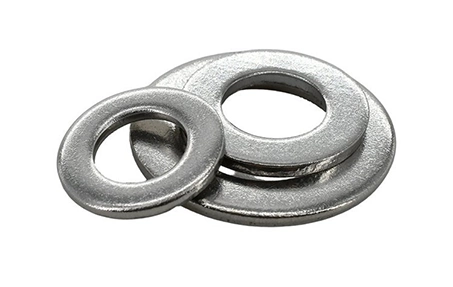
When sourcing stainless steel flat washers, confirm more than the nominal size. Material grade, thickness, applicable standards, surface finish, and inspection requirements should be agreed before production.
This guide covers washer specifications, the difference between 304 stainless steel and A2-70, relevant standards, custom manufacturing, inspection, cost factors, and the information to include in a request for quotation (RFQ).
- What a stainless steel flat washer does
- Product specifications and dimensional standards
- 304 stainless steel and A2-70
- Custom washer dimensions and finishing
- Inspecting stainless steel flat washers
- Applications
- Factors that affect washer cost
- RFQ checklist
- Frequently asked questions
1. What a stainless steel flat washer does
A stainless steel flat washer is a thin metal disc with a central hole. It sits between a bolt head or nut and the surface of the assembled component.
Its main purpose is to spread the clamping load over a larger bearing area. Depending on the assembly, it can also help protect a softer surface, support the fastener around a clearance or slotted hole, or reduce the chance of the bolt head or nut pressing into the mating material.
A standard flat washer does not, by itself, prevent a joint from loosening, seal against fluid leakage, or electrically isolate dissimilar metals. Those functions require a suitable washer design or additional engineering measures.
When selecting stainless steel flat washers, start with the application requirements and approved draqwing rather than the product name alone.
Washer types serve different purposes. Flat washers distribute bearing load; spring and locking washers provide specific spring or locking functions; sealing washers include sealing elements; and serrated or conical washers are used where their particular surface engagement or load characteristics are required. This guide focuses on flat washers, whose dimensions, material requirements, and standards may differ from those of other washer types.
2. Product specifications and dimensional standards
Before requesting a quotation, review the available product specifications and identify any details that need confirmation. A listed size range does not necessarily mean every size is in stock, and a standard reference does not replace confirmation of the actual dimensions and tolerances.
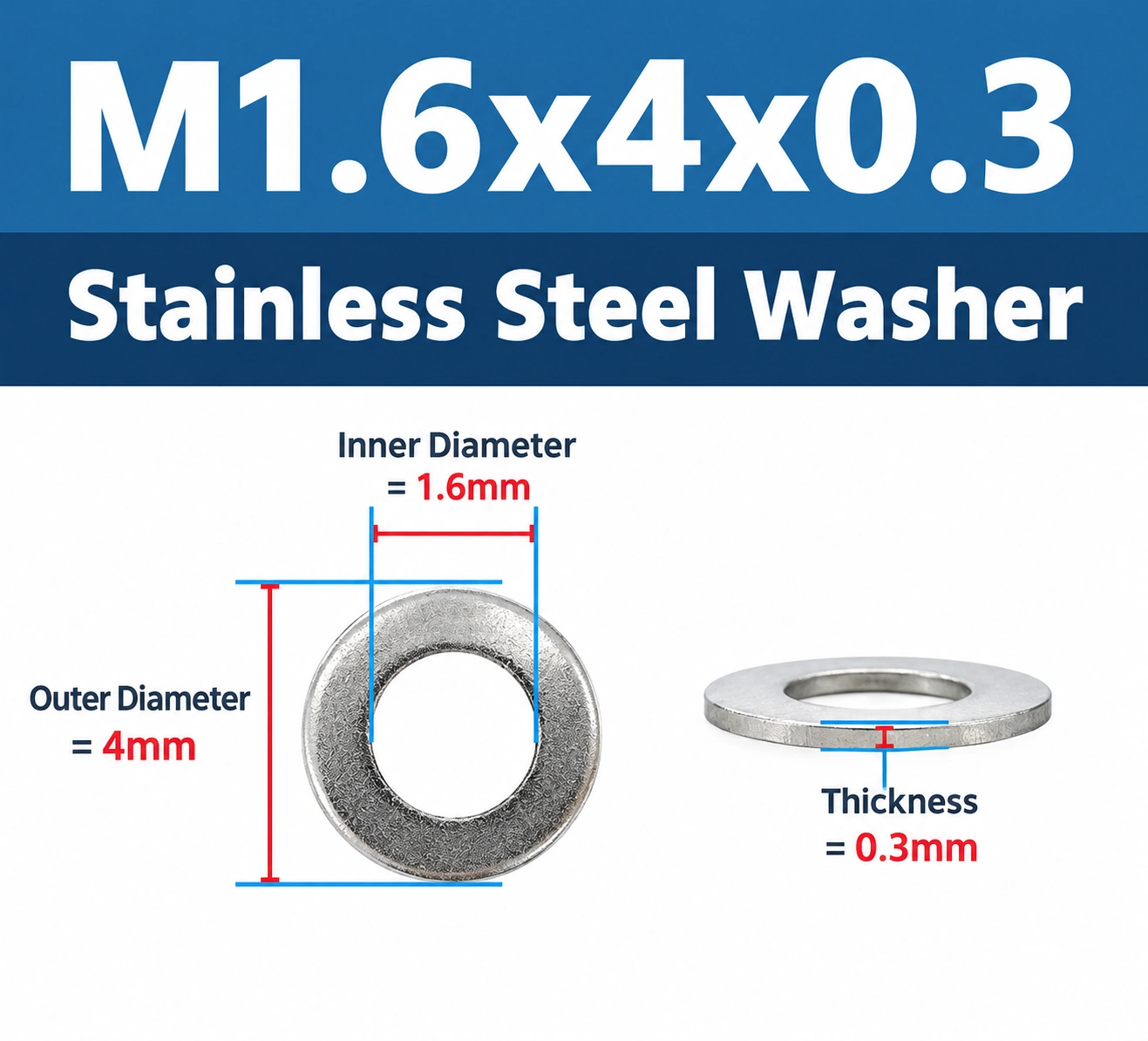
Dimension Example
DIN 125 and ISO 7089 are common references for metric plain washers. Buyers should check which edition and requirements apply to a new order.
DIN 125-1 and DIN 125-2 from the 1990 edition were superseded by DIN EN ISO 7089:2000-11, which adopts ISO 7089. ISO 7089 covers plain washers in the normal series and product grade A. See the official ISO 7089 standard page and the DIN EN ISO 7089 standard entry.
A standard number alone is not a complete purchasing specification. Confirm the applicable edition, nominal size, dimensions, tolerances, and any additional drawing requirements before approving production.
3. 304 stainless steel and A2-70
Material identification matters when sourcing washers for industrial assemblies. Product descriptions may include both a stainless steel grade and a fastener property class, but these terms are not interchangeable.
The available product information identifies the washer material as 304 stainless steel and also mentions A2-70. These designations should be checked separately.
304 stainless steel
Grade 304 is an austenitic stainless steel used in many general industrial applications. It offers corrosion resistance in a range of ordinary environments and is commonly selected where formability, durability, and appearance are required.
State the required material grade in the purchase specification. If traceability is required, ask the supplier to confirm the grade on a material certificate or other agreed documentation.
A2-70
A2-70 is a stainless steel fastener property-class designation covered by ISO 3506-1, which addresses the mechanical and physical properties of stainless steel bolts, screws, and studs. Washers are outside the scope of that part of the standard.
A description such as " 304 stainless steel (A2-70)" therefore needs clarification. A2-70 may refer to the mating bolt or screw, a fastener kit, or a requirement elsewhere in the assembly documentation. Ask the supplier exactly what the designation applies to. If it describes the mating fastener, specify the washer material separately.
See the official ISO 3506-1 standard page for the relevant fastener property-class requirements.
Choosing a material for the service environment
Select the material based on operating conditions, including moisture, temperature, chemical exposure, and contact with other metals.
304 stainless steel suits many indoor and general industrial applications, but its corrosion resistance has limits, particularly in environments involving chlorides, salt, or aggressive chemicals. For marine, chemical-processing, or other demanding applications, describe the environment in the RFQ and ask the supplier to confirm whether the proposed material is suitable. Consult the design engineer about alternative grades where necessary.
No stainless steel grade is corrosion-proof in every environment. Performance depends on the material, surface condition, and service conditions.
4. Custom washer dimensions and finishing
Standard washers may work for common assemblies. Other applications need non-standard dimensions, specific tolerances, or additional finishing. Custom requirements should be defined in the drawing or an approved sample.
The product information indicates that washers can be customized from a drawing or sample, subject to confirmation. For a drawing-based quotation, provide a dimensioned 2D drawing with its revision number, units, and tolerances. A 3D model can help clarify the design, and a physical sample may be useful when reproducing an existing part.
Identify the key dimensions and requirements:
- Inner diameter (ID): Must fit the intended fastener.
- Outer diameter (OD): Defines the bearing area.
- Thickness: Affects the installed stack height and may influence load distribution.
- Flatness and dimensional tolerances: Help ensure the washer meets assembly requirements.
- Edge and burr requirements: Help prevent interference, handling problems, and surface damage.
For precision assemblies, do not assume standard dimensions or general manufacturing tolerances will meet the application requirements. Call out critical characteristics on the drawing.
The product information lists a natural finish and natural colour. Confirm the actual surface condition; these terms do not specify a particular level of smoothness or cleanliness. If appearance matters, state the requirement explicitly. Depending on the application, finishing may include deburring, edge rounding, tumbling, cleaning, or passivation.
These processes serve different purposes. Passivation is a chemical treatment used to improve the passive surface condition of stainless steel. Tumbling is a mechanical finishing process that can help remove burrs and improve edge consistency. Agree on the finish and inspection criteria before production.
Sample approval
Sample approval helps establish the reference for production and reduces the risk of disputes about dimensions, appearance, or fit. A typical process is:
- Submit the drawing or sample for technical review.
- Confirm the material, dimensions, tolerances, and finish.
- Produce and inspect a sample if required.
- Obtain written approval before batch production.
- Complete the agreed production inspection and arrange shipment.
The product information mentions free samples. Confirm whether this includes shipping and whether setup or tooling charges apply.
5. Inspecting stainless steel flat washers
Inspection should follow the product drawing, applicable standards, and intended application. It should cover dimensions, material, and surface condition.
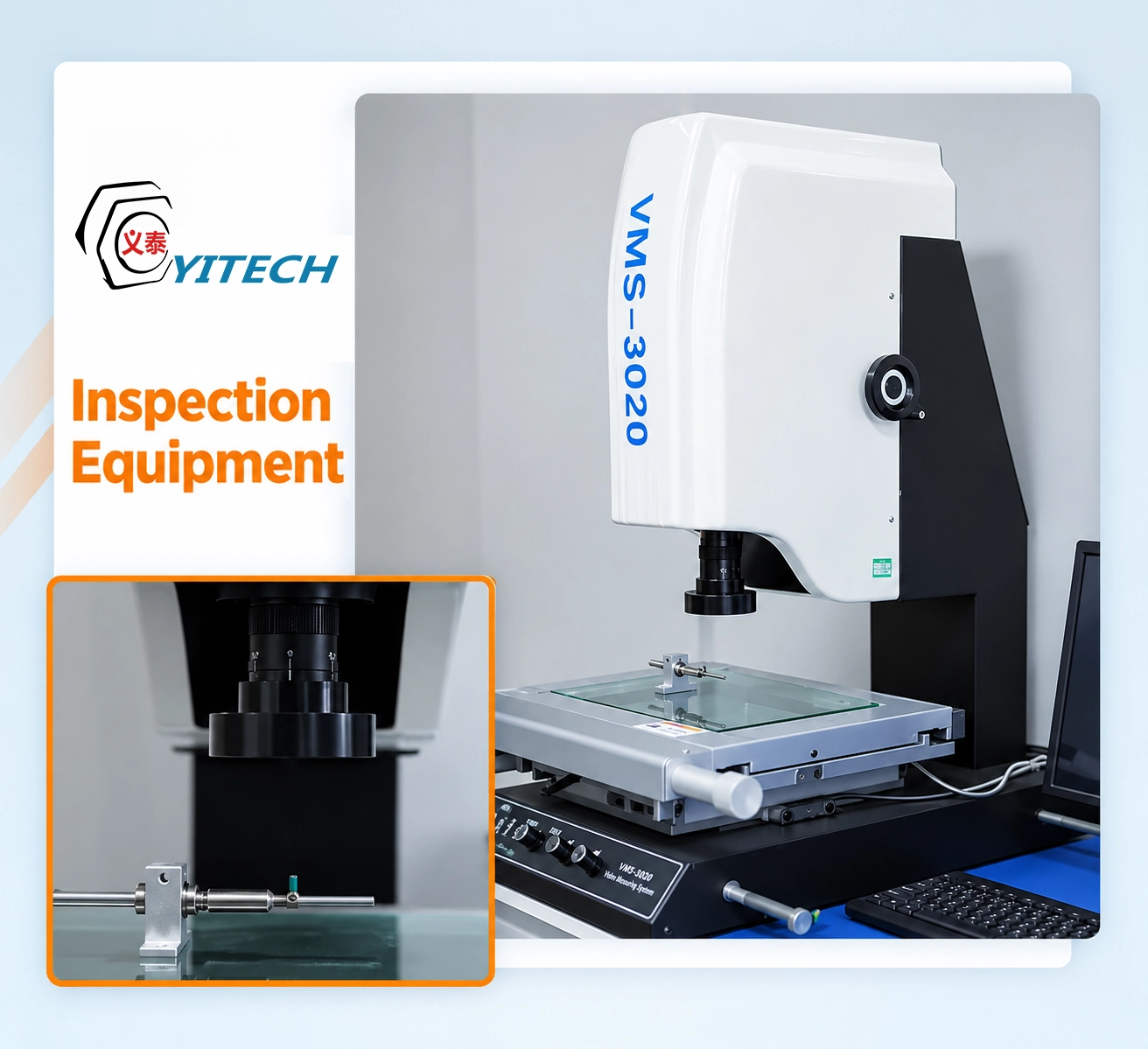
Dimensional inspection
Key dimensions include:
- Inner diameter: Confirms the washer fits the bolt or screw.
- Outer diameter: Checks the bearing surface dimensions.
- Thickness: Verifies the specified thickness and tolerance.
- Flatness: Checks that the washer meets the drawing requirement.
Depending on washer size and tolerances, inspection may use calipers, micrometers, gauges, or optical measuring equipment. Compare measurements with the approved drawing or applicable standard rather than judging the washer by appearance.
Surface inspection
Check for burrs, sharp edges, scratches, dents, damaged or uneven edges, contamination, discoloration, and variation in the specified finish. If deburring, polishing, or passivation is required, make sure the inspection criteria reflect the agreed process. Visual inspection can identify obvious defects, but it cannot replace dimensional measurement or material verification.
Material and performance checks
Material verification may involve reviewing certificates or using an appropriate identification method, depending on the order requirements.
Some applications or surface treatments may require corrosion testing, such as salt-spray testing. Agree on the test method and acceptance criteria in advance. A salt-spray result does not guarantee performance in every service environment. Include hardness testing only when hardness is specified and a suitable test method is available.
For custom or bulk orders, inspection records can list each measured feature, its drawing requirement, the inspection method, the result, and the inspection date. Define whether the report covers a first article, selected samples, or a batch checked under an agreed sampling plan.
6. Applications
Stainless steel flat washers are used in assemblies where they distribute clamping loads, protect mating surfaces, or support a bolted connection. Common applications include:
- Telecommunications: Communication equipment, mounting brackets, and structural assemblies.
- Electronics: Enclosures, circuit-board mounting structures, and hardware assemblies.
- Automotive: Vehicle components, engine assemblies, and mechanical fastening systems.
- Construction and machinery: Structural connections, industrial equipment, and mechanical assemblies.
- New energy: Solar mounting systems, energy equipment, and related structures.
- Chemical processing: Equipment assemblies where the selected stainless steel grade provides suitable corrosion resistance.
- Marine: Equipment, fittings, and fastened assemblies exposed to moisture or corrosive conditions.
The right washer material and specification depend on the environment, fastener requirements, and assembly design.
7. Factors that affect washer cost
The price depends on more than nominal size. Material, dimensions, tolerances, production volume, finishing, and inspection documentation can all affect the quotation.
Material grade and certificate requirements influence material and traceability costs. Larger dimensions and greater thickness generally use more material. Tight limits on thickness, flatness, or other critical features may require additional process control and inspection.
A washer with standard dimensions may cost less than a custom part with non-standard geometry or tighter tolerances. Requirements beyond the referenced standard should be identified clearly, since they can affect manufacturing and inspection.
Quantity also matters. Larger repeat orders may offer production efficiencies, while small custom batches may have a higher unit cost because setup, tooling, and inspection costs are spread across fewer parts.
Other possible cost factors include:
- Custom dimensions or non-standard geometry
- Sample production and approval rounds
- Special deburring or surface treatment
- Material certificates and traceability
- First-article inspection or batch reports
- Special packaging, labelling, or shipping arrangements
For an accurate quotation, provide the drawing, quantity, material, tolerances, finish, and documentation requirements together. Custom orders should be quoted against the actual requirements rather than an assumed stock specification.
8. RFQ checklist
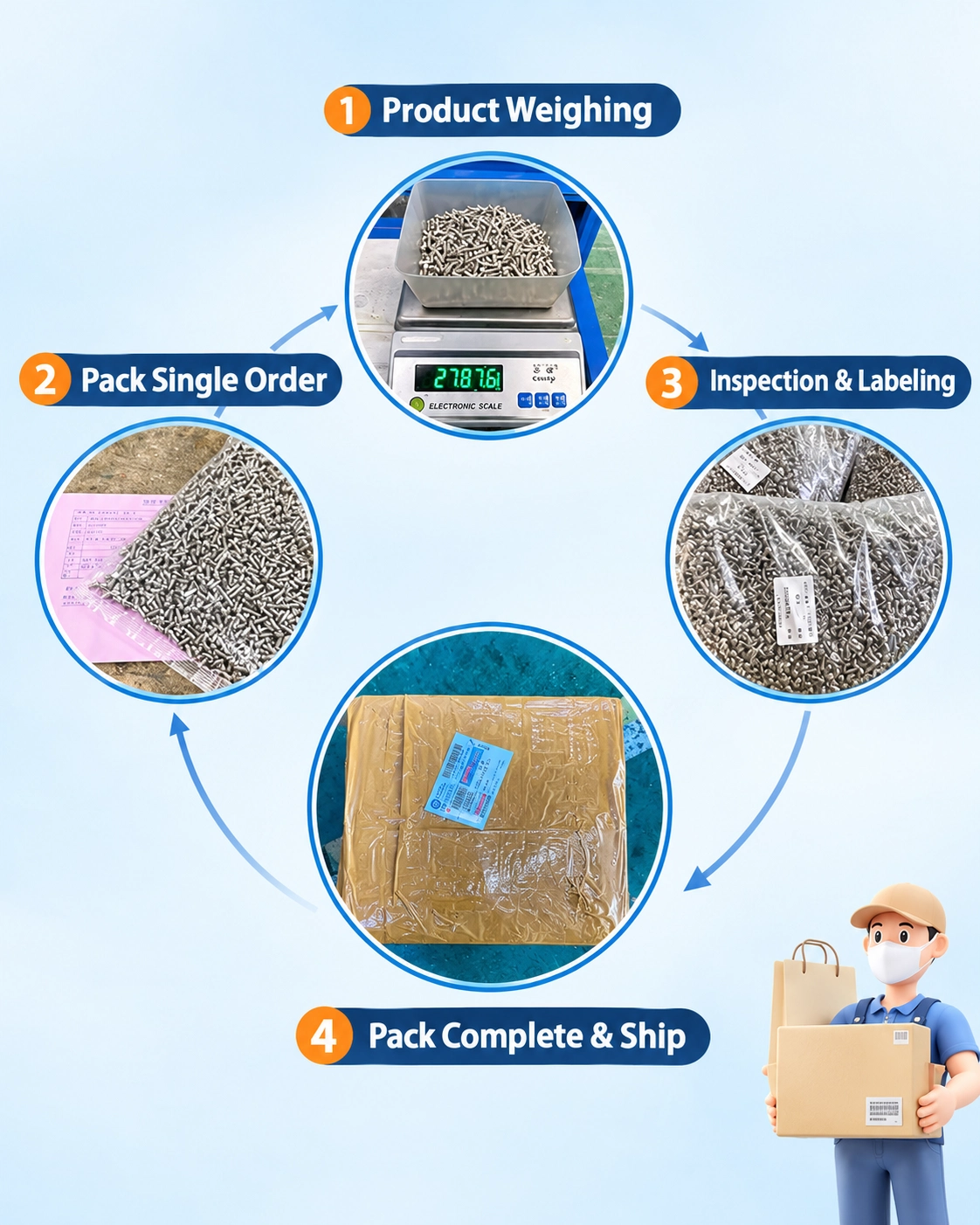
Packing Example
A complete RFQ helps suppliers quote against the same requirements and reduces follow-up questions. Include:
- Technical drawing: 2D drawing with revision number, units, dimensions, and tolerances.
- Supporting files: 3D model or physical sample, if available.
- Washer type and nominal size: Confirm that the part is a flat washer and identify the intended fastener size.
- Key dimensions: Inner diameter, outer diameter, and thickness.
- Material: Required stainless steel grade and certificate requirements.
- Standard: Applicable standard, edition, series, and product grade.
- Finish: Natural finish, passivation, deburring, edge treatment, or appearance requirements.
- Quantity: Initial order quantity, annual demand, and expected repeat orders.
- Application: Operating environment and details of the mating fastener or assembly.
- Inspection: Critical features, sampling requirements, test methods, and report format.
- Documentation: Material certificates, inspection reports, and traceability requirements.
- Delivery: Target date, packaging, and shipping destination.
The product information also mentions drawing- or sample-based customization, free samples, stock supply, wholesale orders, and one-stop purchasing. Confirm which services apply to the specific washer, especially if the order includes multiple sizes or related fasteners.
If supplier experience or certifications are part of the purchasing decision, request the relevant credentials and verify the certificate names, registration numbers, validity, and scope. General statements about years in business or certification do not replace product-specific evidence.
Once the specifications are ready, request a stainless steel washer quotation and attach the drawing. If the supplier also offers 304 stainless steel fasteners, ask whether washers, bolts, and nuts can be quoted together. Specify each component's material and dimensions separately.
9. Frequently asked questions
Q: What does a stainless steel flat washer do?
A: It sits between the fastener head or nut and the mating surface, distributing the clamping load over a larger area. Depending on the application, it can also help protect the surface or support the fastener around a clearance hole. Locking, sealing, and electrical isolation require additional design features or suitable components.
Q: What sizes are available?
A: The product information lists sizes from M1.6 to M52. Confirm which sizes are in stock, which require custom production, and whether the full range applies to the washer series you need.
Q: Is the washer 304 stainless steel or A2-70?
A: The product information identifies 304 stainless steel as the material and also mentions A2-70. Ask the supplier to confirm the washer's grade and provide the agreed material documentation. A2-70 is a fastener property class under ISO 3506-1 for bolts, screws, and studs; washers are outside that part's scope. Confirm whether the designation refers to the mating fastener, a kit, or another assembly requirement.
Q: Which standard should I specify?
A: DIN 125-1 and DIN 125-2 from the 1990 edition were superseded by DIN EN ISO 7089, which adopts ISO 7089. ISO 7089 covers plain washers in the normal series and product grade A. Verify the applicable edition and check that its dimensions and tolerances meet the approved drawing.
Q: Can I order custom washers?
A: Custom production may be available from a drawing or sample, subject to supplier confirmation. Provide the inner and outer diameters, thickness, material grade, tolerances, and finish. Also confirm sample approval, inspection scope, documentation, and packaging.
Q: What should I send with a quotation request?
A: Send a dimensioned drawing, material grade, applicable standard, quantity, tolerances, finish, inspection requirements, and target delivery date. If the washer will be used in a corrosive or otherwise demanding environment, describe those conditions so the supplier can assess the material requirements.
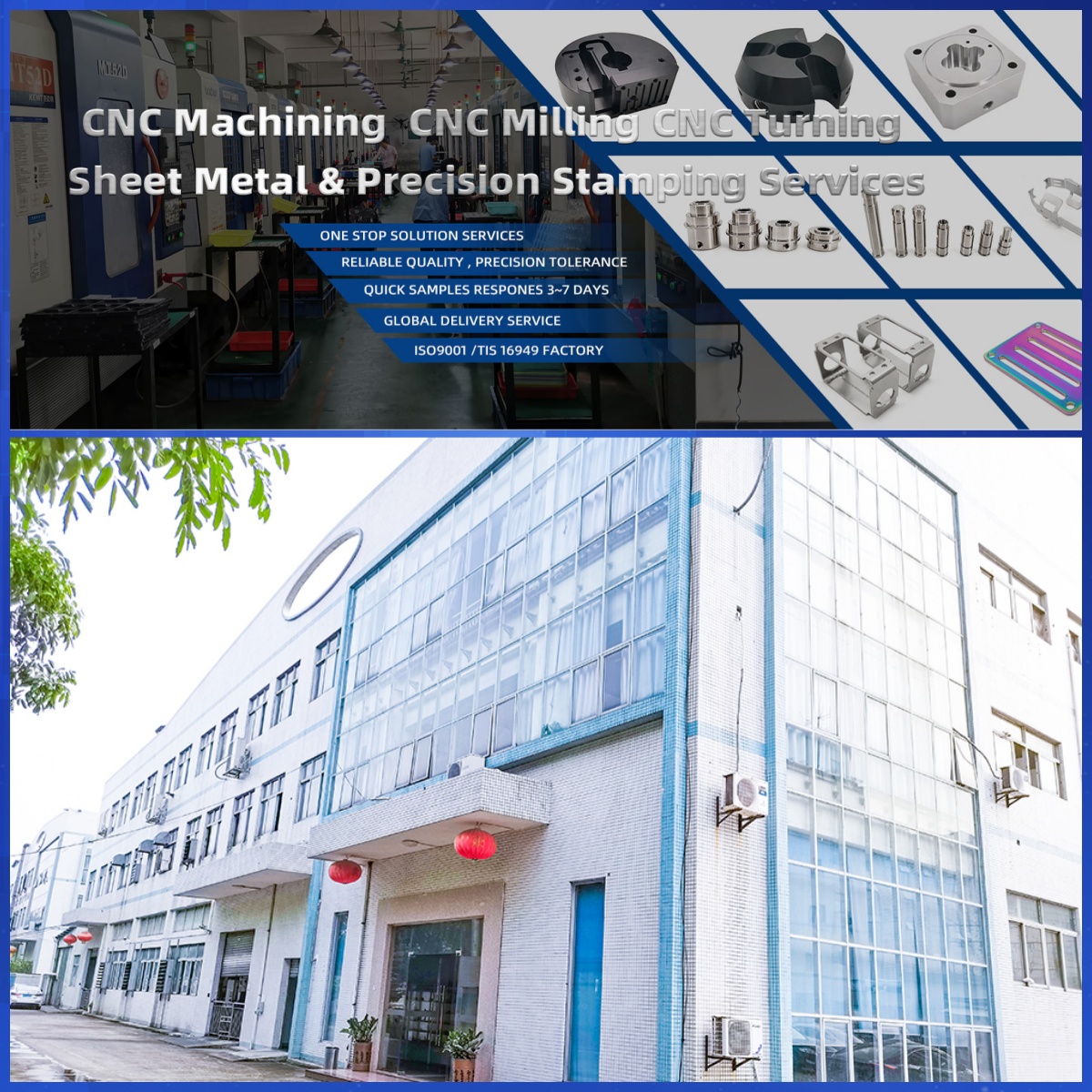
DongGuan YiTai Electronic Technologies Co.,Ltd
DongGuan YiTai Electronic Technologies Co.,Ltd is a manufacturing service provider located in Dongguan, China.
YiTai specialized in CNC turning machining and sheet metal fabrication mainly. As a member of Hung Mou Group, we focus on the overseas marketing development. And based on our parent company’s manufacturing capability and resources, YiTai also expended machining services such as die casting, injection molding, aluminum profile extrusion, 3D printing, which are committed to providing customers with one-stop purchasing services and experience.
CNC MACHINING , CNC MILLING , CNC TURNING , SHEETMETAL , FASTENER , OTHERS




Bronze Valve Guides: Function, Materials, and Custom Machining
Related Article