The Difference Between 304, 304L, 316, and 316L – The Complete Guide!
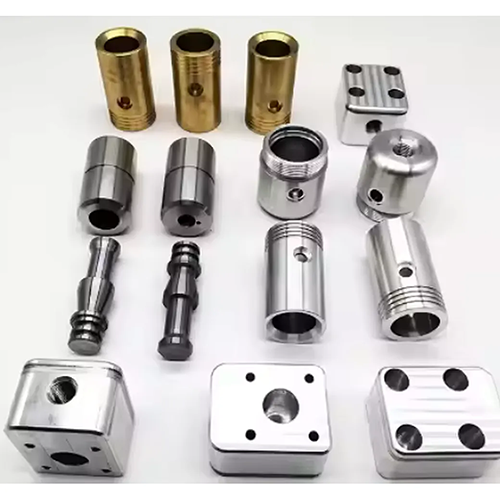
1. What is Stainless Steel?
Stainless steel is a type of steel. Steel is defined as an iron alloy with a carbon (C) content generally below 2%. An alloy with carbon above 2% is considered iron. By adding alloying elements such as Chromium (Cr), Nickel (Ni), Manganese (Mn), Silicon (Si), Titanium (Ti), and Molybdenum (Mo) during the smelting process, the properties of steel are enhanced, giving it corrosion resistance (i.e., it does not rust). This is what we commonly call stainless steel.
-
Steel: A material with iron as its main element, containing a carbon content generally below 2%, and including other elements. — GB/T 13304-91 "Steel Classification"
-
Iron: A metallic element with atomic number 26. Iron materials exhibit strong ferromagnetism and have good plasticity and thermal conductivity.
-
Stainless Steel: Steel that is resistant to weak corrosive media such as air, steam, and water, or that possesses stainless properties. The commonly used grades are 304, 304L, 316, and 316L, which belong to the austenitic 300 series of stainless steels.
2. Why Are There Different Grades of Stainless Steel?
During the smelting process of stainless steel, the types and amounts of alloying elements added differ. These variations lead to different characteristics. To distinguish them, they are designated with different grade numbers. The following table provides the alloy element content for common decorative stainless steel grades for reference:
Chemical Composition (Mass fraction, %)
| Grade | Carbon (C) | Silicon (Si) | Manganese (Mn) | Phosphorus (P) | Sulfur (S) | Chromium (Cr) | Nickel (Ni) |
|---|---|---|---|---|---|---|---|
| 304 | ≤0.08 | ≤1.00 | ≤2.00 | ≤0.045 | ≤0.03 | 18-20 | 8-10 |
| 301 | ≤0.15 | ≤1.00 | ≤2.00 | ≤0.045 | ≤0.03 | 16-18 | 6-8 |
| 202 | ≤0.15 | ≤1.00 | 7.5-10 | ≤0.05 | ≤0.03 | 17-19 | 4-6 |
| 201 | ≤0.15 | ≤1.00 | 5.5-7.5 | ≤0.05 | ≤0.03 | 16-18 | 3.5-5.5 |
3. 304 Stainless Steel
-
Performance Overview: 304 is the most common grade of stainless steel. As a widely used steel, it offers good corrosion resistance, heat resistance, low-temperature strength, and mechanical properties. It has good hot workability for processes like stamping and bending, and does not harden through heat treatment (it is non-magnetic, and operating temperature range is -196°C to 800°C).
-
Common Applications: Household items (type 1 & 2 tableware, cabinets, indoor piping, water heaters, boilers, bathtubs), automotive parts (windshield wipers, mufflers, molds), medical instruments, construction materials, chemical industry, food industry, agriculture, ship components.
4. 304L Stainless Steel (L for Low Carbon)
-
Performance Overview: As a low-carbon version of 304, its corrosion resistance is similar to that of 304 under general conditions. However, after welding or stress relief, its resistance to intergranular corrosion is excellent. It maintains good corrosion resistance even without heat treatment. Operating temperature range is -196°C to 800°C.
-
Common Applications: Equipment used in the chemical, coal, and petroleum industries where resistance to intergranular corrosion is critical, such as outdoor machinery, heat-resistant construction parts, and components difficult to heat treat.
5. 316 Stainless Steel
-
Performance Overview: Due to the addition of molybdenum, 316 stainless steel has particularly excellent corrosion resistance, atmospheric corrosion resistance, and high-temperature strength, allowing it to be used in harsh conditions. It has good work hardening properties (non-magnetic).
-
Common Applications: Equipment for use in seawater, chemical, dye, paper, oxalic acid, and fertilizer production facilities; photography industry, food industry, coastal facilities, ropes, CD rods, bolts, nuts.
6. 316L Stainless Steel (L for Low Carbon)
-
Performance Overview: As a low-carbon series of the 316 grade, it shares the same characteristics as 316 but offers superior resistance to intergranular corrosion.
-
Common Applications: Products with special requirements for resistance to intergranular corrosion.
7. Performance Comparison
-
Chemical Composition: 316 and 316L are molybdenum-containing stainless steel grades. The molybdenum content in 316 and 316L is typically the same (around 2-3%); the key difference is that 316L has a lower maximum carbon content (0.03% max). Due to molybdenum, these grades generally outperform 310 and 304 stainless steel. At high temperatures, 316 stainless steel has a wide range of applications when sulfuric acid concentration is below 15% and above 85%. 316 stainless steel also has good resistance to chloride erosion, making it suitable for marine environments. The low carbon content of 316L makes it suitable for applications that cannot be annealed after welding and require maximum corrosion resistance.
| Type | Carbon (max) | Manganese (max) | Phosphorus (max) | Sulfur (max) | Silicon (max) | Chromium | Nickel | Molybdenum | Other |
|---|---|---|---|---|---|---|---|---|---|
| 304 | 0.08 | 2.0 | 0.045 | 0.03 | 1.0 | 18-20 | 8-12 | -- | |
| 304L | 0.03 | 2.0 | 0.045 | 0.03 | 1.0 | 18-20 | 8-12 | -- | |
| 316 | 0.08 | 2.0 | 0.045 | 0.03 | 1.0 | 16-18 | 10-14 | 2-3 | -- |
| 316L | 0.03 | 2.0 | 0.045 | 0.03 | 1.0 | 16-18 | 10-14 | 2-3 | -- |
-
Corrosion Resistance: The corrosion resistance of 316 stainless steel is better than that of 304. It performs well in the pulp and paper production process and is also resistant to marine and corrosive industrial atmospheres. Generally, the difference in chemical corrosion resistance between 304 and 316 is not significant, but it becomes apparent in specific media. The original 304 stainless steel is susceptible to pitting corrosion in certain conditions. The addition of 2-3% molybdenum reduces this sensitivity, leading to the development of 316. This molybdenum also reduces corrosion from certain hot organic acids. 316 is almost the standard material in the food and beverage industry. Due to global molybdenum shortages and higher nickel content, 316 is more expensive than 304. Pitting corrosion is often caused by deposits on the stainless steel surface creating oxygen-deficient zones that prevent the formation of a protective chromium oxide layer. In most water environments, the corrosion resistance of 304 and 316 is almost identical, unless the chloride ion content is very high, in which case 316 is more suitable.
-
Heat Resistance: 316 stainless steel has good oxidation resistance for intermittent use up to 1600°C and continuous use up to 1700°C. It is best not to use 316 continuously in the 800-1575°C range, but outside this range, it performs well. 316L has better resistance to carbide precipitation than 316 within these temperature ranges.
-
Heat Treatment: Annealing is performed in the range of 1850-2050°F (1010-1121°C), followed by rapid cooling. 316 stainless steel cannot be hardened by heat treatment.
-
Welding: 316 stainless steel has good welding properties. All standard welding methods can be used. For optimal corrosion resistance, the welded section of 316 should undergo post-weld annealing. If 316L is used, post-weld annealing is not required.
-
Mechanical Properties: Austenitic stainless steels have the lowest yield strength of all steels. Therefore, from a mechanical perspective, they are not the best material for valve stems, as a larger diameter would be needed to ensure strength. Yield strength cannot be increased by heat treatment but can be enhanced by cold forming.
-
Magnetism: The widespread use of austenitic stainless steels creates the misconception that all stainless steel is non-magnetic. Fully austenitic grades are essentially non-magnetic. However, 304 that has undergone cold forming can become slightly magnetic.
8. Low-Carbon Types of Stainless Steel
The corrosion resistance of austenitic stainless steel comes from the protective chromium oxide layer formed on the metal surface. If the material is heated to between 450°C and 900°C, its structure changes, and chromium carbides form along the crystal boundaries. This depletes chromium along the grain boundaries, preventing the formation of the protective chromium oxide layer and leading to reduced corrosion resistance. This is known as intergranular corrosion. 304L and 316L were developed to combat this. Their lower carbon content means chromium carbide is not formed, thus preventing intergranular corrosion. It's important to note that this phenomenon occurs due to exposure to high temperatures (450°C-900°C), with welding being a common cause.
9. Why Does Stainless Steel Rust?
When brown rust spots appear on the surface of stainless steel pipes, people are often surprised, thinking "stainless steel doesn't rust; if it rusts, it must not be stainless steel, or there might be a problem with the quality." This is a one-sided misconception based on a lack of understanding. Stainless steel can rust under certain conditions. Stainless steel has the ability to resist atmospheric oxidation (rusting) and also to resist corrosion in media containing acid, alkali, and salt. However, its corrosion resistance depends on its chemical composition, processing state, service conditions, and the type of environmental medium. For example, a 304 steel pipe will have excellent rust resistance in a dry, clean atmosphere, but if moved to a coastal area with salt-laden sea fog, it will rust quickly. In contrast, 316 steel performs well. Therefore, not every type of stainless steel is corrosion-resistant and rust-proof in every environment.
DongGuan YiTai Electronic Technologies Co.,Ltd
DongGuan YiTai Electronic Technologies Co.,Ltd is a manufacturing service provider located in Dongguan, China.
YiTai specialized in CNC turning machining and sheet metal fabrication mainly. As a member of Hung Mou Group, we focus on the overseas marketing development. And based on our parent company’s manufacturing capability and resources, YiTai also expended machining services such as die casting, injection molding, aluminum profile extrusion, 3D printing, which are committed to providing customers with one-stop purchasing services and experience.
CNC MACHINING , CNC MILLING , CNC TURNING , SHEETMETAL , FASTENER , OTHERS




Titanium CNC Machining: Precision, Strength, and Applications
Metal Injection Molding (MIM) Process Introduction
Related Article