How to Find a Qualified Custom Sheet Metal Enclosure Manufacturer: A Deep Audit Checklist

-
Soft Power: Engineering Communication and Project Management
-
The Integrated Advantage of DongGuan YiTai: A Closed Loop from Single Parts to Full Enclosures
-
How to Start a Risk-Free Trial: From Small Batch Validation to Mass Production
1. Hard Capability Assessment: Equipment and Process Red Lines
A good sheet metal shop has the right machines. Do not visit the office first. Ask to see the shop floor.
Laser Cutter Power and Bed Size
The laser cuts the flat sheet. Ask two questions.
-
What is the maximum sheet size? Common sizes are 1500mm x 3000mm. Your largest part must fit.
-
What power laser do you use? For 1–3mm mild steel, 1000–2000W is enough. For stainless or thicker plate (6–10mm), you need 3000W or more. A shop with only low‑power lasers cannot cut thick material.
Press Brake Tonnage, Axes, and Bend Consistency
The press brake bends the flat sheet into a 3D shape. Look for three things.
-
Tonnage: A 100–150 ton brake bends 2mm steel up to 2 meters. For thicker or longer parts, you need more.
-
CNC axes (6‑axis or more): Modern brakes have automated backgauges and crowning systems. This gives repeatable bend angles across the whole batch.
-
Angle measurement: The best shops use a laser or camera system to check the first bend. They adjust automatically.
Ask for a bend test sample. Measure the bend angle at three places. It should not vary more than ±0.5°.
Welding: Robots or Skilled TIG Welders
Enclosures often need welding. Look at two types.
-
Robot welding: Good for long, straight seams. Consistent but expensive.
-
Manual TIG welding: For complex corners and small batches. Look for clean, even weld beads. No spatter. No burn‑through.
On the shop floor, watch a welder for one minute. A good welder wears proper safety gear. The weld puddle flows smoothly. The work is clean.
The table below summarizes key equipment checks.
| Equipment | Critical Spec | Red Flag |
|---|---|---|
| Laser cutter | Power ≥2000W for 3mm steel | Only has 500W or plasma |
| Press brake | 6+ CNC axes, tonnage ≥100 | Manual backgauge only |
| Welding | TIG with certified welders | Only stick or gasless wire |
2. Quality Assurance System: More Than an ISO Certificate
An ISO 9001 sticker is easy to get. Real quality comes from daily habits.

Inspection Tools: CMM, Height Gauge, and First Article Report
A serious shop has a CMM (coordinate measuring machine) or at least a height gauge with a granite table. Ask to see a First Article Inspection (FAI) report from a recent job. The report should list every critical dimension, the measured value, and the tolerance. No report? No trust.
Surface Coating Adhesion, Color Difference, and Thickness Control
Most enclosures are powder coated or painted. The coating must stick and look uniform. Ask for test results per ASTM or ISO standards.
-
Adhesion (ASTM D3359): The shop uses a cross‑hatch cutter and tape. No flakes come off.
-
Color difference (ΔE): A colorimeter measures the coated sample against a standard. ΔE ≤ 1.5 is good for most products.
-
Film thickness (ASTM D4138): A magnetic gauge measures coating thickness. For indoor enclosures, 60–80µm is standard. For outdoor, 80–120µm.
If a shop cannot show these test records, walk away.
3. Soft Power: Engineering Communication and Project Management
Machines are only half the story. Good communication saves weeks of delay.
DFM Analysis Report Before Sampling
A top manufacturer sends you a Design for Manufacturing (DFM) report before cutting the first sample. The report highlights problems like:
-
Holes too close to bends (causes distortion)
-
Bend radii too sharp (cracks)
-
Missing assembly tolerances
If a shop just says “okay, we can make it” without asking questions, they will likely fail.
Change Order (ECN) Transparency
Engineering changes happen. When you update a drawing, the shop must track the change. Ask for their ECN (Engineering Change Notice) process. A good process has a log: date, old version, new version, cost impact, and schedule shift. No log means confusion.
4. The Integrated Advantage of DongGuan YiTai: A Closed Loop from Single Parts to Full Enclosures
Many shops only cut and bend metal. Then you ship parts to another shop for welding, then another for coating. DongGuan YiTai Electronic Technologies does it all.
-
CNC turret punch and laser cutting for flat blanks
-
Press brakes with 6‑axis CNC for accurate bends
-
Certified TIG welders for strong, clean joints
-
In‑house powder coating line with color and thickness control
-
Assembly of hinges, latches, and hardware
This one‑stop model gives you one point of contact. No finger pointing between vendors. Faster delivery. Lower risk.
5. How to Start a Risk-Free Trial: From Small Batch Validation to Mass Production
Do not order 10,000 enclosures from a new supplier right away. Use a three‑step approach.
-
Single prototype: Order one enclosure. Test fit with your circuit boards and connectors. Check the finish.
-
Small batch (5–20 pcs): See how they handle multiple pieces. Check bend consistency. Measure a few random parts.
-
Ramp up: If the small batch passes, scale to 100, then 500, then full production.
A good manufacturer offers prototype service with no tooling fee for simple designs. Start small. Learn before you leap.
6. Expert Insight: The Hidden Cost of Low-Bid Enclosures
“I have audited over 50 sheet metal shops. The cheapest quote is almost never the cheapest in the end. One client saved 2perenclosurebutreceivedpartswithbentmountingtabs.TheycouldnotfitthePCB.Theypaid2perenclosurebutreceivedpartswithbentmountingtabs.TheycouldnotfitthePCB.Theypaid5,000 in rework. Another shop had poor weld penetration. The enclosures broke in the field. The lesson is: audit the process, not just the price. A good shop costs more per hour but makes parts that work the first time.”
— Supplier Quality Engineer, DongGuan YiTai Electronic Technologies
7. Frequently Asked Questions (FAQ)
Q: What is the minimum order quantity for custom sheet metal enclosures?
A: Many shops do prototype quantities of 1–5 pieces with no tooling charge. For mass production, 100–500 pieces per batch gives good pricing. We offer low volume as a service.
Q: What is the typical tolerance for a bent sheet metal enclosure?
A: For hole positions, ±0.1–0.2mm is typical. For overall outer dimensions after bending, ±0.3–0.5mm is good. For bend angles, ±0.5° . Ask for a DFM review to see if your tolerances are feasible.
Q: What surface finishes are available for sheet metal enclosures?
A: Common options: powder coating (durable, many colors), wet painting (cheaper for large areas), anodizing (for aluminum, thin but conductive), zinc plating (for steel, low cost), and brushed finish (natural metal). We offer all of these in‑house or through verified partners.
Q: How do I get a prototype quickly?
A: Send a 3D model (STEP or IGES) and a 2D drawing with clear tolerances. For a simple enclosure (flat pattern + 4 bends), we can ship a sample in 7–10 days. For complex designs with welding, count 2–3 weeks.
Q: Does DongGuan YiTai Electronic Technologies export sheet metal enclosures?
A: Yes. We ship worldwide. We can provide export packaging (wooden crates or foam‑lined boxes) to protect your parts. We also offer DDP shipping for some countries.
Q: How do you ensure the powder coating color matches my brand?
A: We use a colorimeter to measure ΔE against a RAL or Pantone standard. We also send a coated sample for your approval before running the full batch. No guesswork.
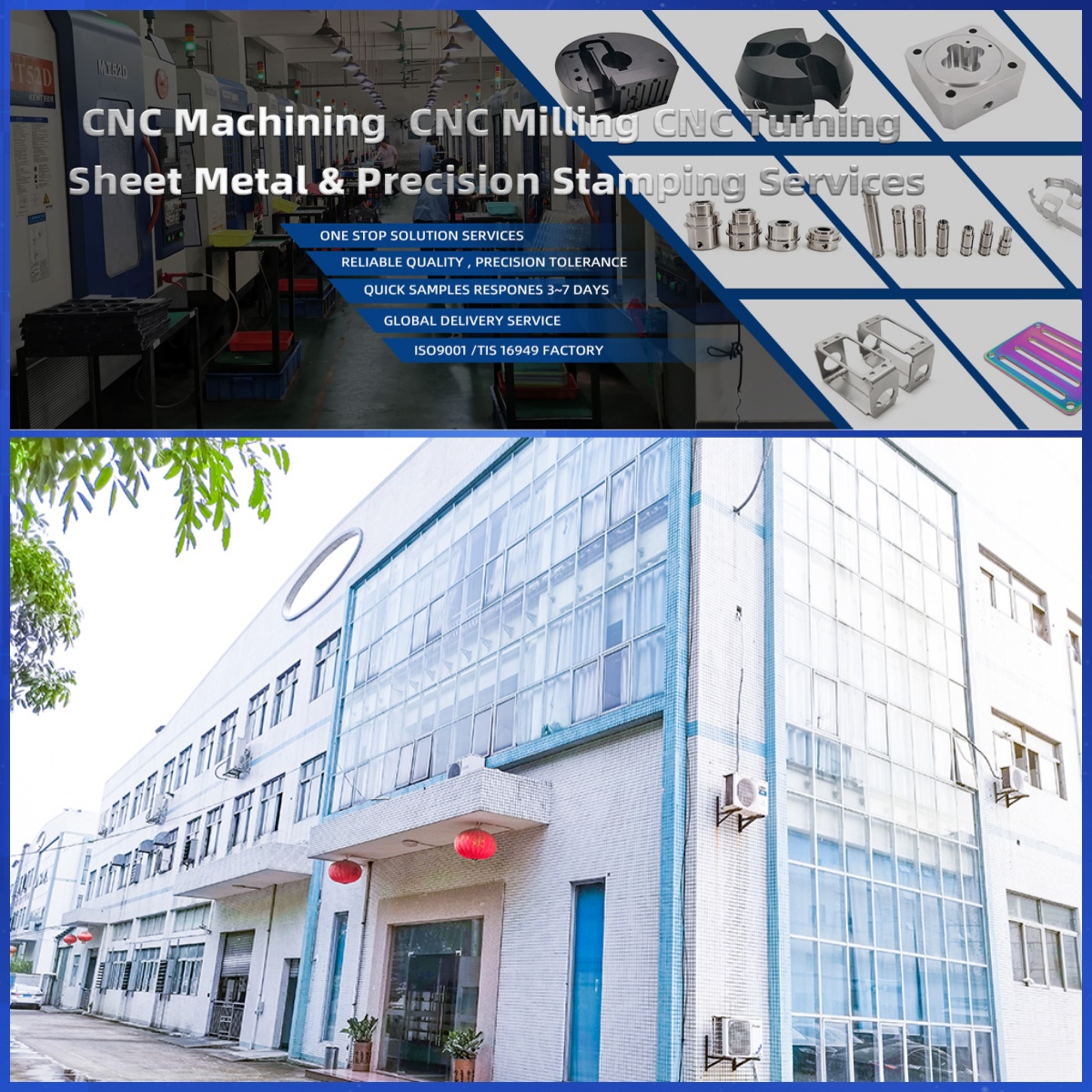
DongGuan YiTai Electronic Technologies Co.,Ltd
DongGuan YiTai Electronic Technologies Co.,Ltd is a manufacturing service provider located in Dongguan, China.
YiTai specialized in CNC turning machining and sheet metal fabrication mainly. As a member of Hung Mou Group, we focus on the overseas marketing development. And based on our parent company’s manufacturing capability and resources, YiTai also expended machining services such as die casting, injection molding, aluminum profile extrusion, 3D printing, which are committed to providing customers with one-stop purchasing services and experience.
CNC MACHINING , CNC MILLING , CNC TURNING , SHEETMETAL , FASTENER , OTHERS




Deep Dive into CNC Turning: From Outside Diameter to Threads – Mastering 9 Core Machining Types
Why Regulated Industries Like Aerospace and Medical See 5‑Axis Milling as a Manufacturing Lifeline
Related Article