Zero-Error Installation: The Golden Rules of Control Panel Sheet Metal Design (DFM)
-
Challenge 1: Achieving Excellent Electromagnetic Compatibility (EMC/EMI Shielding)
-
Challenge 2: Reaching IP54/IP65 or Higher Ingress Protection
-
Challenge 3: Efficient Heat Dissipation and Thermal Management
1. Introduction: When Panels Need "Smart" Protection

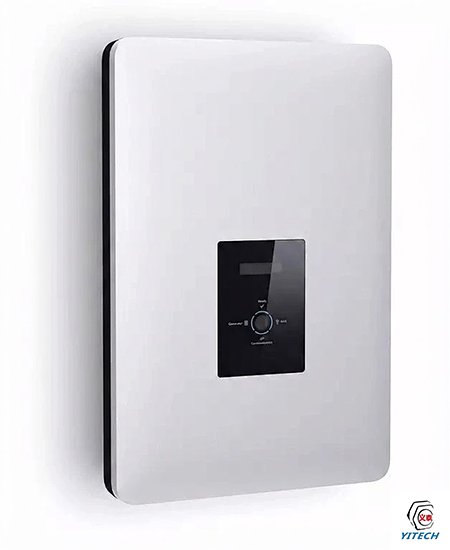
Modern control panels are not simple boxes. They are integrated engineering systems. They protect sensitive electronics in tough conditions. These conditions include factory floors, outdoor weather, and areas with strong electrical noise. Good design must solve many problems at once. It must block interference, keep out water and dust, and manage heat. This requires Design for Manufacturing (DFM) thinking. DFM means designing the part so it is easy to make correctly. This guide explains the key rules.
2. Challenge 1: Achieving Excellent Electromagnetic Compatibility (EMC/EMI Shielding)
2.1 Building a Faraday Cage
Electronic devices can interfere with each other. A panel must shield its internal electronics. This shield is called a Faraday cage.
-
Conductive Surface Finishes: The metal panel itself is conductive. But paint or standard finishes are not. You need a conductive finish. Common choices are conductive oxidation (chem film) or electroless nickel plating. These finishes keep the surface conductive.
-
Gasket Groove Design & Gap Management: All seams and holes create gaps. These gaps leak interference. You must design precise grooves for conductive EMI gaskets. These gaskets fill the gaps. You must also minimize the number of fasteners and control the gap distance between parts.
2.2 Filtered Interface for Cables
Cables going in and out act as antennas. They can let interference in or out.
-
The solution is to use filtered connectors. Design the panel with properly sized holes. These holes must mount shielded feed-through filters or connector panels. All cables must pass through these filters. This stops interference on the cable.
3. Challenge 2: Reaching IP54/IP65 or Higher Ingress Protection
3.1 Precision of the Gasket Groove
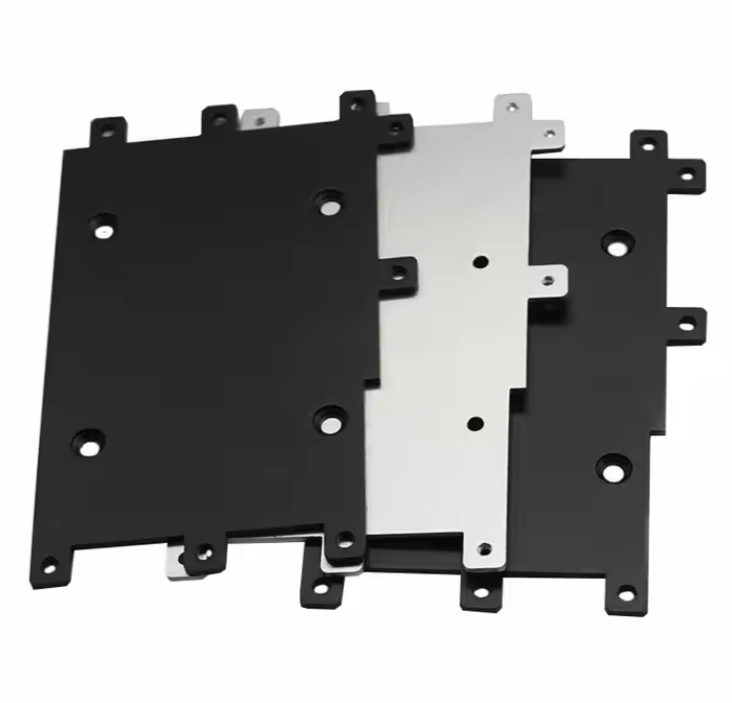
A waterproof seal depends completely on the groove.
-
The gasket groove must have very precise dimensions. Its width, depth, and corner radii must match the gasket specification. A bad groove causes a bad seal. The surface finish inside the groove must also be smooth.
-
The groove must form a continuous, unbroken path around the opening. Any gap in the groove is a leak.
3.2 Drain Holes and Breather Vents
Sometimes, you need to let some things in or out.
-
Drain Holes: If water can get in, it must be able to get out. Design small drain holes at the lowest point. Use hooded designs to stop direct water entry.
-
Breather Vents: These allow air pressure to equalize but block water and dust. You must choose the correct IP-rated vent and design a proper mounting for it.
4. Challenge 3: Efficient Heat Dissipation and Thermal Management
4.1 Using the Metal Panel as a Heatsink
The panel itself can help cool components.
-
Heat Sink Fins: You can add fins or louvers to the external sheet metal. This increases surface area for better air cooling.
-
Flatness Requirements: If a hot component (like a power supply) touches the panel wall, that wall must be very flat. Good surface flatness ensures full contact. This allows heat to transfer efficiently from the component to the panel.
4.2 Optimizing Layout for Fans and Vents
Forced air cooling needs careful planning.
-
Do not place air inlets and outlets close together. This creates a short circuit. Hot air just goes out and comes back in.
-
Design the internal layout so cool air flows past all hot components. Then the hot air exits.
| Design Goal | Key DFM Strategy | Common Pitfall to Avoid |
|---|---|---|
| EMI Shielding | Conductive finish + continuous EMI gasket groove | Using non-conductive paint; groove with sharp corners that damage gasket |
| IP65 Sealing | Precise, continuous groove for rubber gasket; sealed connectors | Rough groove surface; groove ends don't meet; using too few fasteners |
| Heat Management | Flat mounting surface for components; separated inlet/outlet vents | Mounting hot parts to uneven surface; vents placed side-by-side |
5. The Value of Integrated Manufacturing
Full-Process Control from Start to Finish
You can outsource sheet metal, machining, and plating to different companies. But this is risky for complex panels. Integrated manufacturing is better.
One supplier manages everything: sheet metal forming, precision welding, CNC machining, and surface finishing. This gives important benefits:
-
Ensures Functional Integrity: The welder knows the part needs a smooth seam for a gasket. The machinist knows the groove tolerance is critical. The plater knows the finish must be conductive. Everyone works toward the same functional goal.
-
Solves Problems Early: If a design flaw is found during forming, the machining team can quickly suggest a fix. There is no blame between different companies.
-
Maintains Accountability: One company is responsible for the final working part. You avoid situations where the sheet metal blames the plater, and the plater blames the assembler.
Anya Sharma, a manufacturing lead, explains: "We once had a panel that failed IP tests. The sheet metal was fine, but the external coating shop applied standard paint over the conductive finish on the mating flange. This broke the EMI shield. With our integrated process, that never happens. The finishing team is part of the same group and follows the same master plan."
6. Industry Expert FAQ
Q1: What is the most common DFM mistake in panel design?
The most common mistake is ignoring the gasket groove design. Designers just draw a simple rectangle and write "add gasket." They do not specify the exact groove dimensions, corner radius, or surface finish. This forces the manufacturer to guess, which often leads to leaks.
Q2: Can I achieve both good EMI shielding and good heat dissipation?
Yes, but it is a balance. Vents and fans create holes in the Faraday cage. The solution is to use shielded vents or fan units with metal mesh or honeycomb filters. These allow air flow but block significant interference.
Q3: Is stainless steel better than aluminum for outdoor panels?
Not always. Stainless steel is stronger and more corrosion-resistant. But aluminum is lighter, easier to machine, and has better natural thermal conductivity for heat sinking. Aluminum with a good coating (like powder coat) is often sufficient and more cost-effective.
Q4: How do I specify surface flatness for a heatsink wall?
You specify it on the technical drawing. Use a flatness tolerance (e.g., flat within 0.2mm over the entire surface). Also, specify that the area must be free of paint or coating if a component mounts directly to it for heat transfer.
Q5: What is the cost impact of moving from IP54 to IP65?
The cost increase is significant. IP65 requires much more precise sealing. It needs better gaskets, more fasteners to ensure even pressure, and often more expensive sealed connectors. Do not specify a higher IP rating than you truly need.
Q6: Why can't I just use silicone sealant to make a panel waterproof?
You can, but it is a bad practice for manufacturing. Sealant is messy, slow to apply, and not reusable. If you need to open the panel for service, you must remove and reapply the sealant. A properly designed gasket groove with a reusable rubber seal is more reliable, cleaner, and better for production.
DongGuan YiTai Electronic Technologies Co.,Ltd
DongGuan YiTai Electronic Technologies Co.,Ltd is a manufacturing service provider located in Dongguan, China.
YiTai specialized in CNC turning machining and sheet metal fabrication mainly. As a member of Hung Mou Group, we focus on the overseas marketing development. And based on our parent company’s manufacturing capability and resources, YiTai also expended machining services such as die casting, injection molding, aluminum profile extrusion, 3D printing, which are committed to providing customers with one-stop purchasing services and experience.
CNC MACHINING , CNC MILLING , CNC TURNING , SHEETMETAL , FASTENER , OTHERS




Supplier Evaluation Guide: How to Identify Top CNC Partners Through Their "Precision-Cost" Management Skills
Delrin (POM) vs. Nylon (PA): The Ultimate Showdown of Material Properties and Applications
Related Article