Sheet Metal Deep Drawing: A Complete Guide to the Process, Materials, and Capabilities

1. What Is Sheet Metal Deep Drawing?
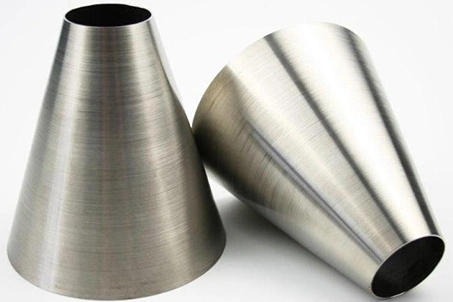
Sheet metal deep drawing is a metal forming process. It converts a flat sheet blank into a hollow, seamless 3D shape — like a cup, cylinder, box, or dome. A punch pushes the sheet into a die cavity. The sheet flows into the die without tearing or wrinkling.
The word "deep" means the drawn part is deeper than it is wide. If the depth is more than half the diameter, it is deep drawing. If the depth is less than half the diameter, it is shallow drawing — a simpler process.
Deep drawing produces parts that are seamless. There are no welds. There are no joints. The entire wall is one continuous piece of metal. This makes deep-drawn parts stronger than welded alternatives — the wall has no weak point.

1.1 How Deep Drawing Works: The Punch, Die, and Blank Holder
A deep drawing setup has three main components:
The process works like this:
- A flat circular blank is placed on the die face.
- The blank holder clamps down with a controlled force.
- The punch descends, pushing the blank into the die cavity.
- The sheet metal flows — the outer edge slides inward, the center forms the bottom of the cup.
- The punch retracts. The part is ejected.
For very deep parts (depth > diameter), one draw is not enough. The metal work-hardens as it stretches. You need multiple draw stages — each one making the part deeper and narrower. Between stages, the part may be annealed to restore ductility.
1.2 Deep Drawing vs. Stamping vs. Spinning vs. Hydroforming
| Factor | Deep Drawing | Stamping | Spinning | Hydroforming |
|---|---|---|---|---|
| Part shape | Deep hollow (cup, cylinder, box) | Flat or shallow formed | Axially symmetric hollow | Complex tubular shapes |
| Depth-to-diameter ratio | Up to 5:1 (multi-stage) | Under 0.5:1 | Up to 10:1 | N/A (tubular) |
| Wall uniformity | Good (varies by location) | Uniform (flat) | Good (manual varies) | Excellent |
| Seamless? | Yes | N/A (flat parts) | Yes | Yes |
| Production speed | 20–60 strokes/min | 60–200 strokes/min | Slow (1–5 min/part) | Slow (1–3 min/part) |
| Tooling cost | $10k–$80k | $5k–$30k | $2k–$10k | $20k–$100k |
| Best volume | 1,000–1,000,000 pcs | 5,000–1,000,000 pcs | 50–5,000 pcs | 500–100,000 pcs |
| Material thickness | 0.2–6 mm | 0.1–4 mm | 0.5–12 mm | 0.5–4 mm |
| Best for | Cans, housings, sinks, battery cells | Brackets, panels, flat parts | Lamp reflectors, bowls, cones | Auto frames, exhaust manifolds |
"Deep drawing is the only high-volume process that produces a seamless hollow shape from flat sheet. Welding a cylinder from rolled sheet is cheaper at low volume. But at 100,000 pieces, deep drawing wins on strength, consistency, and leak resistance — because there is no seam to fail."
— Dr. Pavel Novak, Metal Forming Research, Czech Technical University
2. Materials, Draw Ratios, and Defect Prevention
2.1 Material Compatibility and Drawability
Drawability is a material's ability to be deep-drawn without tearing. It is measured by the limiting draw ratio (LDR) — the maximum blank diameter that can be drawn into a cup of a given punch diameter before failure. Higher LDR = better drawability.
| Material | LDR (typical) | Drawability | Notes |
|---|---|---|---|
| Deep drawing steel (DC04/SPCE) | 2.0–2.2 | Excellent | The gold standard for deep drawing |
| Aluminum 1100 / 3003 (soft) | 2.0–2.1 | Excellent | Cookware, cans, housings |
| Aluminum 5052 (soft) | 1.8–2.0 | Good | Marine, automotive parts |
| Aluminum 6061-T4 | 1.6–1.8 | Fair | Hardens during drawing — may need annealing |
| Stainless 304 (soft) | 1.9–2.1 | Good | High strength — needs more force |
| Stainless 316 (soft) | 1.8–2.0 | Good | Work hardens faster than 304 |
| Brass (C260, soft) | 2.0–2.2 | Excellent | Lamp reflectors, decorative shells |
| Copper (soft) | 2.0–2.2 | Excellent | Electrical cups, heat sinks |
| Titanium (Grade 1, soft) | 1.7–1.9 | Fair | Needs hot drawing or lubrication |
Key rule: Always draw in the soft (annealed) condition. If the material is half-hard or full-hard, it will tear. For multi-stage draws, anneal between stages to restore ductility.
2.2 Common Defects and How to Prevent Them
| Defect | Cause | Prevention |
|---|---|---|
| Tearing at punch nose | Blank holder force too high; punch radius too sharp | Reduce holder force; increase punch radius |
| Wrinkling at flange | Blank holder force too low; material too thin | Increase holder force; use thicker material |
| Wrinkling on wall | Insufficient holder force for deep draws | Use draw beads or multi-stage drawing |
| Ironing (wall thinning) | Die-punch clearance too small | Increase clearance to 10% above sheet thickness |
| Orange peel surface | Grain size too large (over-annealed) | Control annealing temperature and time |
| Springback | Material elasticity (especially high-strength steel) | Over-form slightly; use simulation to predict |
| Earing at rim | Material has directional grain (anisotropy) | Use low-anisotropy material; trim ears after drawing |
| Surface scratching | Poor lubrication; rough die surface | Use drawing lubricant; polish die surface |
The blank holder force is the single most critical parameter. It must be high enough to prevent wrinkling but low enough to prevent tearing. The correct value is usually 30–50% of the tensile strength of the sheet, applied across the flange area. Modern presses use CNC-controlled blank holders that adjust force dynamically during the stroke — more force at the start, less as the flange shrinks.
3. Applications Across Industries

| Industry | Typical Deep-Drawn Parts | Material | Volume |
|---|---|---|---|
| Automotive | Oil pans, fuel tanks, door panels, fenders | DC04 steel, aluminum 5xxx | 100k–1M pcs/year |
| Packaging | Aluminum cans, food containers, aerosol cups | Aluminum 3004, tinplate | 1M–100M pcs/year |
| Electronics | Battery cell cans, connector housings, shield cans | Aluminum, stainless 304 | 50k–5M pcs/year |
| Kitchen & Bath | Sinks, cookware, pots, basins | Stainless 304, aluminum | 10k–500k pcs/year |
| Medical | Surgical trays, implant housings, device shells | Stainless 316L, titanium | 5k–100k pcs/year |
| Aerospace | Fairings, fuel cell housings, access panels | Aluminum 2024, titanium | 500–50k pcs/year |
| Lighting | Lamp reflectors, shade housings, downlight cups | Aluminum 1060, brass | 10k–500k pcs/year |
"The electric vehicle revolution has made deep drawing more important than ever. EV battery cell cans are deep-drawn from aluminum or stainless — and a single EV may contain thousands of them. The cell can must be perfectly seamless, perfectly round, and perfectly uniform in wall thickness. Only deep drawing delivers all three at scale."
— Marcus Reuter, Battery Manufacturing Director, Northvolt
4. Sheet Metal Fabrication Capabilities at DongGuan YiTai
Deep Drawing + Laser Cutting + Bending + Welding — All Under One Roof
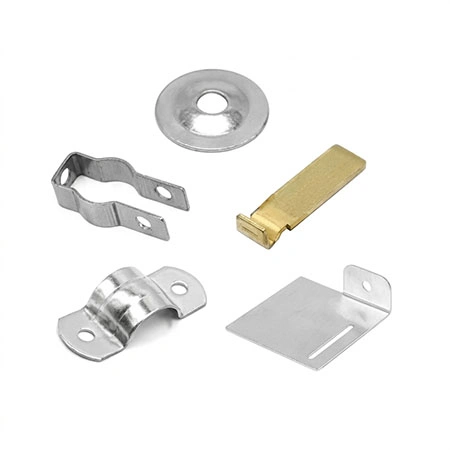
At DongGuan YiTai Electronic Technologies, we offer full sheet metal fabrication — not just one process. We combine deep drawing, CNC laser cutting, CNC bending, stamping, welding, and surface finishing in one facility. Your part goes from flat sheet to finished product without leaving our shop.
Our sheet metal fabrication capabilities:
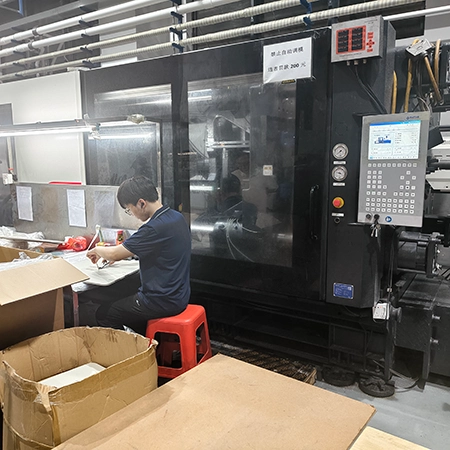
- Deep drawing press: 200-ton hydraulic, blank diameter up to Ø400 mm, depth up to 200 mm
- Multi-stage deep drawing: Up to 4 draw stages for very deep parts
- CNC fiber laser cutting: Up to 12 mm steel, 10 mm aluminum, 6 mm stainless
- CNC punch press: 30-ton, for high-volume thin-gauge parts
- CNC press brake: 100-ton, 2.5 m bed, ±0.5° bend angle
- Stamping presses: 40 to 200 ton, progressive die capability
- Welding: TIG (argon), MIG, spot welding, laser welding
- Materials: Steel (DC04, SPCC, Q235), Stainless (304, 316, 430), Aluminum (1060, 3003, 5052, 6061), Brass, Copper
- Sheet thickness range: 0.3 mm to 6 mm
- Surface finishing: Powder coating, anodizing, zinc plating, passivation, brushing, polishing
- Inspection: CMM (Zeiss), thickness gauge, surface roughness tester, leak testing for sealed parts
- Batch size: 100 pieces (prototype) to 500,000 pieces (production)
- Lead time: 7–10 days (prototype), 2–4 weeks (production with new tooling)
What makes us different:
- We do deep drawing AND cutting AND bending AND welding in one shop — no outsourcing between processes.
- We design and build draw tooling in-house — punch, die, and blank holder are all made and tested by us.
- We provide first-article inspection reports (wall thickness, depth, diameter) with every new part.
- We can anneal between draw stages for difficult materials — restoring ductility for deeper draws.
- We handle both prototype and production — start with 100 pieces, scale to 500,000.
Need Deep-Drawn or Sheet Metal Parts? Get a Quote in 24 Hours.
Send us your drawing. We will review it, recommend the best process (deep drawing, stamping, or hybrid), and send a quote within 24 hours. Full sheet metal fabrication under one roof.
Request Your Sheet Metal Quote5. Frequently Asked Questions
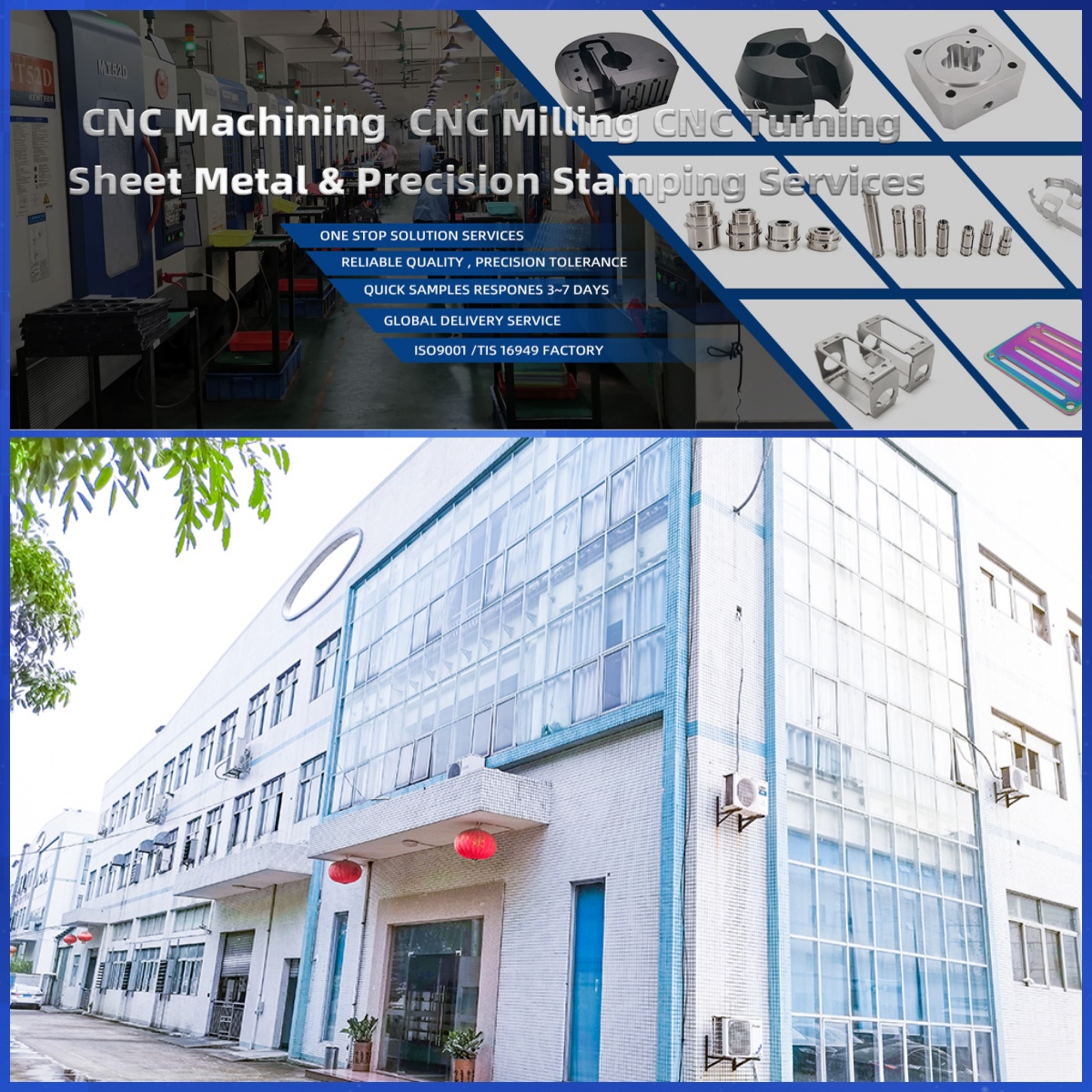
DongGuan YiTai Electronic Technologies Co.,Ltd
DongGuan YiTai Electronic Technologies Co.,Ltd is a manufacturing service provider located in Dongguan, China.
YiTai specialized in CNC turning machining and sheet metal fabrication mainly. As a member of Hung Mou Group, we focus on the overseas marketing development. And based on our parent company’s manufacturing capability and resources, YiTai also expended machining services such as die casting, injection molding, aluminum profile extrusion, 3D printing, which are committed to providing customers with one-stop purchasing services and experience.
CNC MACHINING , CNC MILLING , CNC TURNING , SHEETMETAL , FASTENER , OTHERS




DFM Analysis: How Design for Manufacturability Cuts Cost, Reduces Defects, and Speeds Up Production
Thread Rolling Services: The Complete Guide to Stronger, Faster, and More Cost-Effective Threads
Related Article