Precision CNC Secondary Machining for Roll-Formed Parts: A Complete Guide

1. Why Standard Roll-Formed Parts Need Secondary CNC Machining
Roll forming is excellent at making long metal profiles. It is fast. It is cheap. It works well for high-volume production. But roll forming has limits. The process cannot make precision holes. It cannot cut complex slots. It cannot machine threads. It cannot hold tight tolerances on cross-hole positions.
Most roll-formed parts need at least one secondary operation. That is where CNC machining comes in. CNC adds the precision features that make the part usable in final assembly.
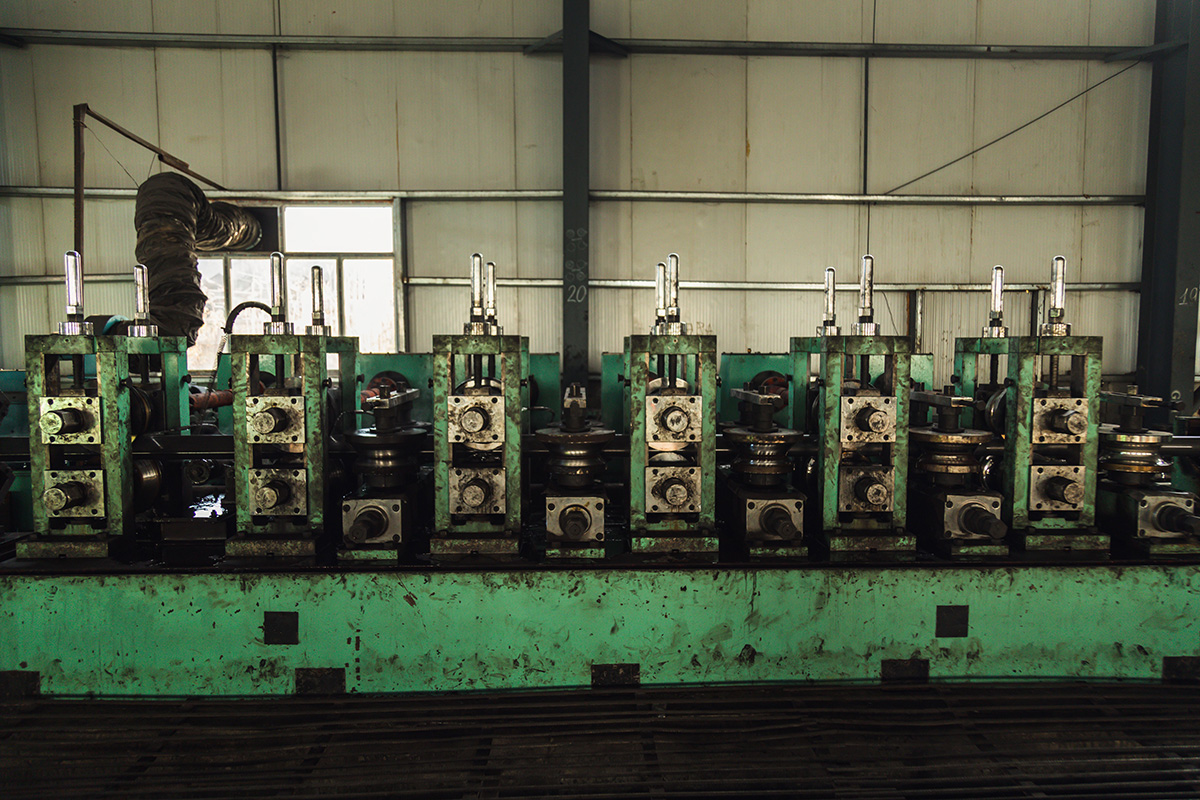
Roll-formed profiles are uniform and cost-effective, but they require CNC secondary operations to add mounting holes, threads, and precision features.
1.1 Adding Precision Mounting Holes, Slots & Non-Standard Chamfers
Roll forming creates the overall shape. But it cannot punch holes with ±0.05 mm tolerance. It cannot mill complex slots. It cannot add chamfers at exact angles. CNC machining handles all of these.
Here is what CNC secondary machining typically adds to roll-formed parts:
| Feature | Roll Forming Alone | With CNC Secondary Machining |
|---|---|---|
| Hole tolerance | ±0.3 mm | ±0.05 mm |
| Cross-hole position | Not possible | ±0.1 mm |
| Complex slots | Limited to simple shapes | Any 2D/3D profile |
| Chamfers | Standard only | Any angle, custom |
| Threaded holes | Cannot do | M1.6 to M12, any depth |
| Surface flatness | As-formed | Ground to Ra 0.8 μm |
The table shows the gap. Roll forming gets you 80% of the shape at low cost. CNC gets you the last 20% that makes the part assembly-ready.
For example, a LED lighting housing made from roll-formed aluminum needs holes for the PCB mounting. Roll forming cannot place those holes accurately enough. CNC drilling adds them after forming. The result is a part that costs less than full CNC machining but meets all tolerance requirements.
1.2 Precision Thread Machining for Special Assembly Requirements
Many roll-formed parts need threaded holes for assembly. Roll forming cannot create threads. You need CNC for this.
There are two ways to add threads:
For thin-wall roll-formed profiles, thread depth is often limited. The wall may be only 1.5 mm thick. A standard M3 thread needs at least 3 mm of engagement. In that case, you need press-in threaded inserts or PEM® fasteners installed by CNC secondary ops.
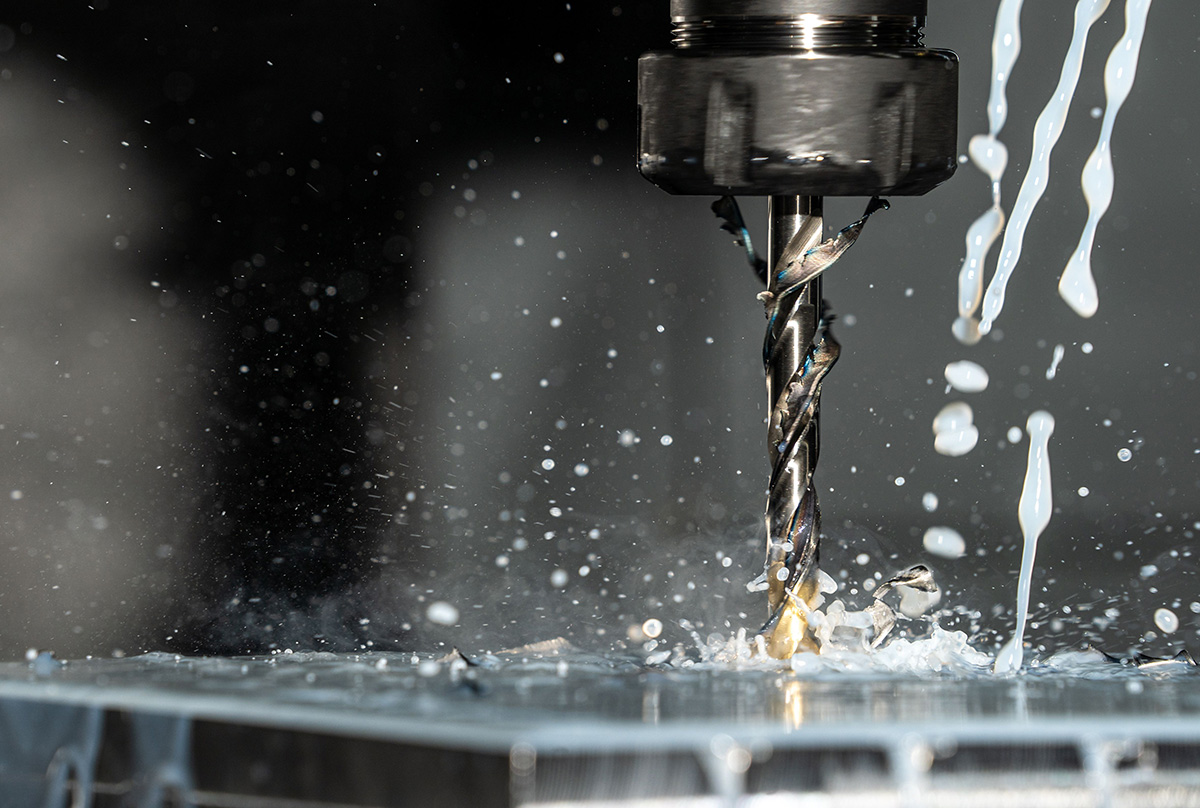
Thin-wall roll-formed profiles require careful fixturing during CNC drilling to avoid deformation and ensure accurate hole placement.
1.3 Dimensional Limits of Roll Forming vs. CNC Precision
Roll forming is a cold-forming process. The metal is bent progressively through rollers. Each roller adds a small bend. After 10-20 stations, the final shape is complete.
This process has inherent tolerances. The metal springs back. The rollers wear down. The profile can twist slightly over long lengths. Typical roll-formed profile tolerances are:
| Dimension | Typical Roll Forming Tolerance | CNC Secondary Machining Tolerance |
|---|---|---|
| Profile width | ±0.5 mm | Not usually machined |
| Length cut | ±1.0 mm | ±0.1 mm (with stop or CNC) |
| Hole position | ±0.3 mm | ±0.05 mm |
| Hole diameter | ±0.2 mm | ±0.03 mm |
| Flatness (local) | 0.5 mm over 100 mm | 0.1 mm over 100 mm (milled) |
| Surface roughness | Ra 3.2 μm (as-formed) | Ra 0.8 μm (milled) |
The message is simple. Use roll forming for the low-cost profile shape. Use CNC for the precision features. Together, they give you the best of both worlds.
"Roll forming gets you 90% of the way at 30% of the cost. CNC finishes the last 10% that actually matters for assembly. Smart designers use both processes. They do not choose one or the other."
— Dr. Michael Reynolds, Professor of Manufacturing Systems, University of Sheffield
2. Key Technologies to Ensure Secondary Machining Accuracy
Secondary machining of roll-formed parts is not the same as machining a solid block. The parts are thin-walled. They can deform under clamping force. They can vibrate during cutting. You need special techniques to get good results.
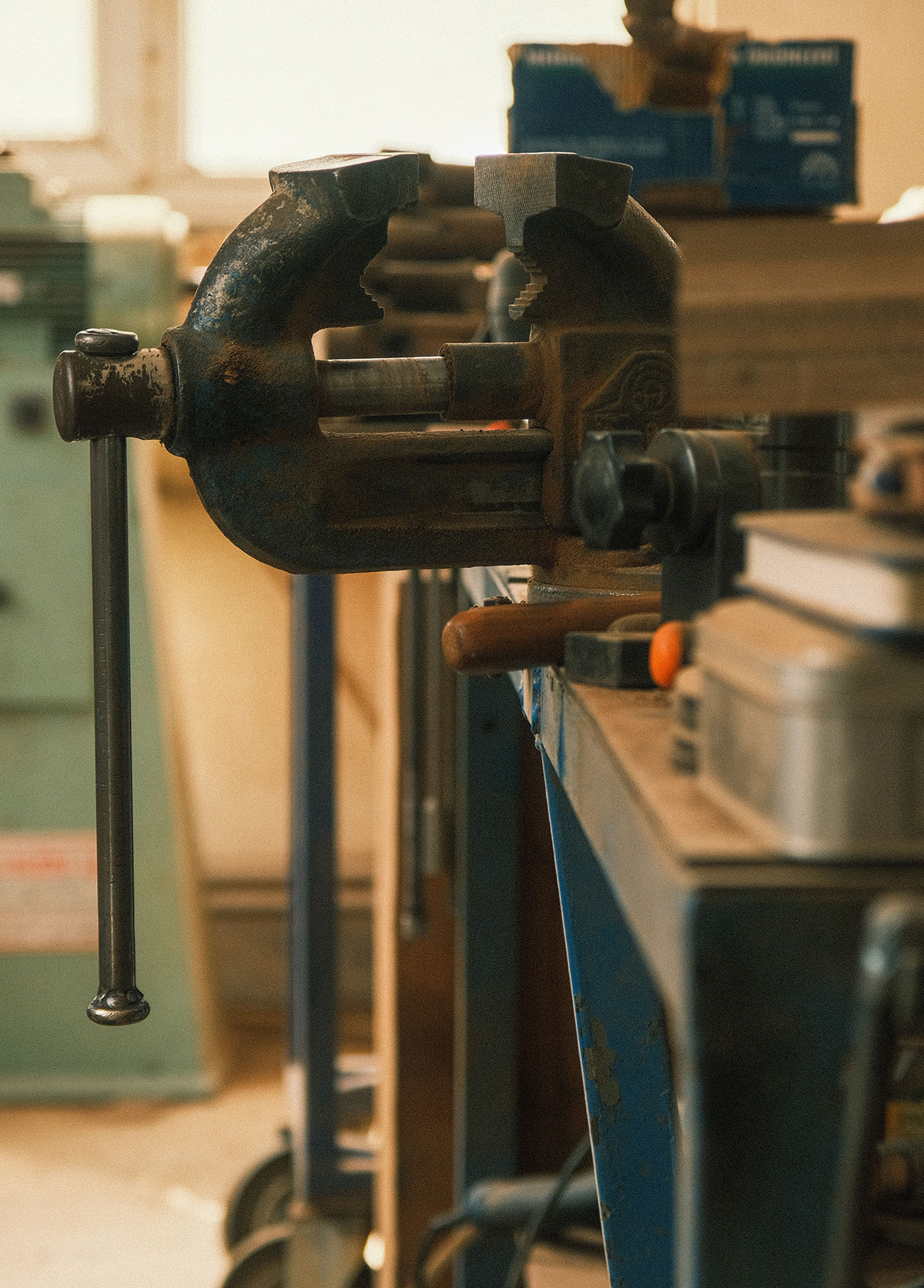
Custom fixtures distribute clamping force evenly across thin-wall profiles, preventing deformation during CNC secondary machining.
2.1 Custom Fixture Design for Thin-Wall Roll-Formed Profiles
This is the most important part of the whole process. If your fixture is wrong, the part will deform. The holes will be in the wrong place. The part will be scrap.
Here is what a good fixture for roll-formed profiles must do:
- Distribute clamping force. Do not clamp on a thin wall. The part will bend. Use a full-support jaw that contacts the entire profile length.
- Locate on formed features. Use the existing bends as datums. This ensures the CNC features align with the roll-formed shape.
- Allow chip evacuation. Chips trapped in the fixture will scratch the part. Design clearance slots in the fixture body.
- Use soft jaws. Aluminum or nylon jaws prevent surface damage on anodized or painted profiles.
A well-designed fixture can reduce setup time from 15 minutes to 2 minutes. Over a batch of 5,000 parts, that saves more than 1,000 minutes of labor. The fixture pays for itself in the first batch.
For complex profiles, we use 3D-printed fixture blocks (SLS nylon) that match the exact profile contour. These cost less than machined steel fixtures for low-volume runs. They work well for batches under 2,000 parts.
2.2 Minimizing Deformation: Stress Relief & Multi-Step Strategies
Roll-formed parts have internal stress. The metal was bent cold. It wants to spring back. If you machine one side aggressively, the part can warp.
Here is how to control deformation:
| Problem | Cause | Solution |
|---|---|---|
| Part warps after machining | Internal stress release | Stress-relief anneal before machining |
| Hole elongates | Fixturing force too high | Reduce clamping force, increase contact area |
| Vibration marks on surface | Thin wall, no support | Back-up support behind cutting area |
| Dimension shifts batch-to-batch | Fixture wear | Check fixture every 500 parts |
| Burrs on holes | Drill breaking through | Back-up plate under part during drilling |
For critical parts, we use a two-step machining process. Step 1: rough machine all features, leaving 0.2 mm stock. Step 2: let the part sit for 24 hours to stress-relieve naturally. Step 3: finish machine to final size. This adds cost, but it guarantees flatness and hole position.
2.3 In-Process Inspection and Dimensional Verification
You cannot machine 1,000 parts and then check the first one. By then, if the fixture shifted, all 1,000 parts are scrap. You need in-process inspection.
Here is a good inspection plan for CNC secondary machining of roll-formed parts:
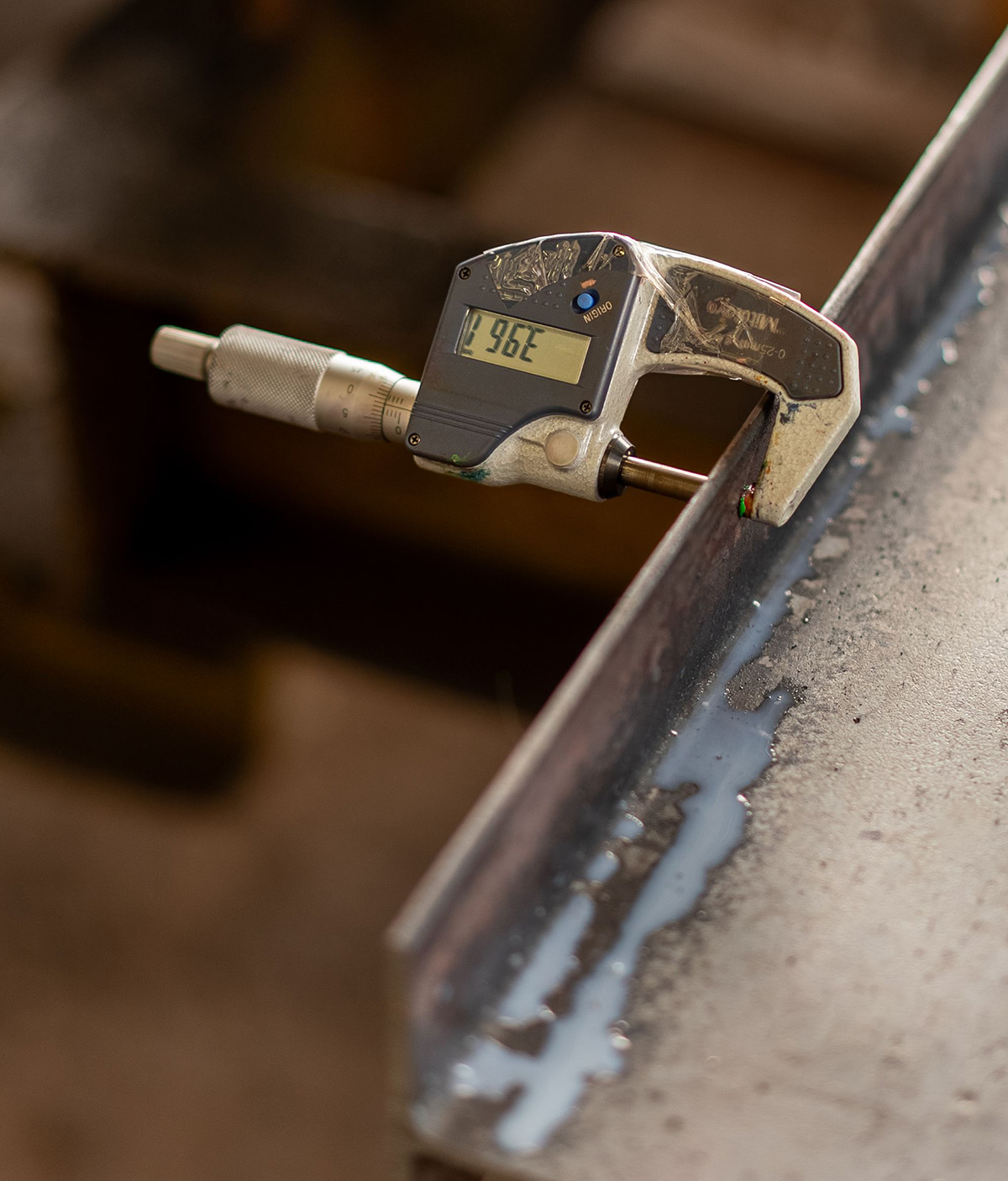
For high-volume production, we use automated vision inspection. A camera checks hole presence and position at the machine. It runs at 2 seconds per part. It never gets tired. It never misses a hole.
"The biggest mistake in secondary machining is assuming the roll-formed profile is perfect. It is not. Always measure the incoming profiles. Build the fixture to handle the actual variation, not the drawing tolerance."
— James Okonkwo, Senior Manufacturing Engineer, Honeywell Aerospace
3. One-Stop Service: From Post-Forming to Surface Finishing
Most suppliers do one thing. They roll form. Or they machine. Or they anodize. You have to coordinate all of them. That takes time. It adds handling. It creates quality gaps.
A one-stop supplier handles everything. Roll forming → CNC secondary machining → surface treatment → assembly. One PO. One quality system. One delivery date.
3.1 Integrated Process Flow Cuts Lead Time and Handling Costs
Here is what happens with a split supplier chain:
- Roll former makes the profiles. Ships them to you. 3 days.
- You inspect. Ship to CNC shop. 2 days.
- CNC shop machines. Ships to anodizer. 2 days.
- Anodizer finishes. Ships to you. 3 days.
- Total: 10 days of shipping and handling. Plus inspection at each step.
Here is the one-stop flow:
- Roll forming and CNC machining in the same factory. 0 days shipping.
- CNC to anodizing in the same city. 1 day.
- Anodizing back to factory for final inspection. 1 day.
- Total: 2 days of internal handling. No external shipping.
The time saving is obvious. But the quality benefit is bigger. When one supplier controls the whole process, they own the quality. If a hole is in the wrong place, they cannot blame the roll former. They fix it.
| Metric | Split Suppliers | One-Stop Supplier |
|---|---|---|
| Lead time | 4-6 weeks | 2-3 weeks |
| Handling steps | 5-7 handoffs | 1-2 handoffs |
| Quality disputes | Blame between suppliers | One responsible party |
| Logistics cost | 3-4 shipments | 1 shipment |
| Traceability | Fragmented records | Full batch traceability |
3.2 Surface Treatment Options: Anodizing, Plating, and Passivation
Roll-formed parts are often aluminum. After CNC machining, the bare aluminum will oxidize. It may corrode. It looks unfinished. You need surface treatment.
Here are the common options and when to use each:
| Process | Best For | Thickness | Corrosion Resistance | Appearance |
|---|---|---|---|---|
| Type II Anodizing | General indoor use | 5-25 μm | Good | Clear or colored |
| Type III Hard Anodize | Wear surfaces | 25-100 μm | Excellent | Dark gray, matte |
| Chemical Film (Alodine) | EMI shielding | 0.5-2.5 μm | Fair | Gold/yellow iridescent |
| Zinc Plating | Steel parts | 5-25 μm | Good (with chromate) | Silver, yellow, black |
| Passivation | Stainless steel | None (chemical) | Excellent | Natural finish |
For architectural parts (handrails, window frames, LED housings), Type II anodizing in black or silver is the most common choice. It looks good. It protects the metal. It costs about $0.50 to $1.50 per part depending on size.
For industrial parts that see wear (sliding tracks, hinge mounts), Type III hard anodizing adds a ceramic-hard surface. It extends part life by 3-5x.
4. How DongGuan YiTai Delivers Precision Secondary Machining at Scale
DongGuan YiTai: One-Stop CNC + Roll Forming Secondary Machining
We are not just a machine shop. We are a precision manufacturing partner. We understand roll-formed profiles. We know their limits. We design fixtures that work. We deliver parts that fit.
Our capabilities for roll-formed part secondary machining:
- Custom fixture design and build (in-house, 3-5 day turnaround)
- CNC drilling, tapping, milling on thin-wall profiles (0.8 mm minimum wall)
- Helicoil® and PEM® fastener installation
- In-process CMM inspection (first piece + every 200 pieces)
- Surface treatment: anodizing (Type II/III), plating, passivation
- Batch sizes from 50 to 50,000 pieces
- Tolerance down to ±0.05 mm on hole positions
- Material: aluminum, steel, stainless steel, galvanized steel
What makes us different:
- We measure every roll-formed batch before machining. We adjust the fixture to match the actual profile, not the drawing.
- We use soft jaws for anodized profiles. No scratches. No rework.
- We provide a first-article inspection report with every batch. You see the data before we run the full order.
- We stock common helical inserts and PEM® fasteners. No delays waiting for hardware.
If you have a roll-formed part that needs precision holes, threads, or slots, send us the drawing. We will review it for manufacturability. We will suggest the best fixture approach. We will quote the full process: forming → machining → finishing.
Ready to Improve Your Roll-Formed Part Quality?
Send your drawing to DongGuan YiTai. Get a quote in 24 hours. Get a DFM (Design for Manufacturability) review at no cost. See how our one-stop process can cut your lead time and improve your quality.
Request a Quote & DFM Review5. Frequently Asked Questions
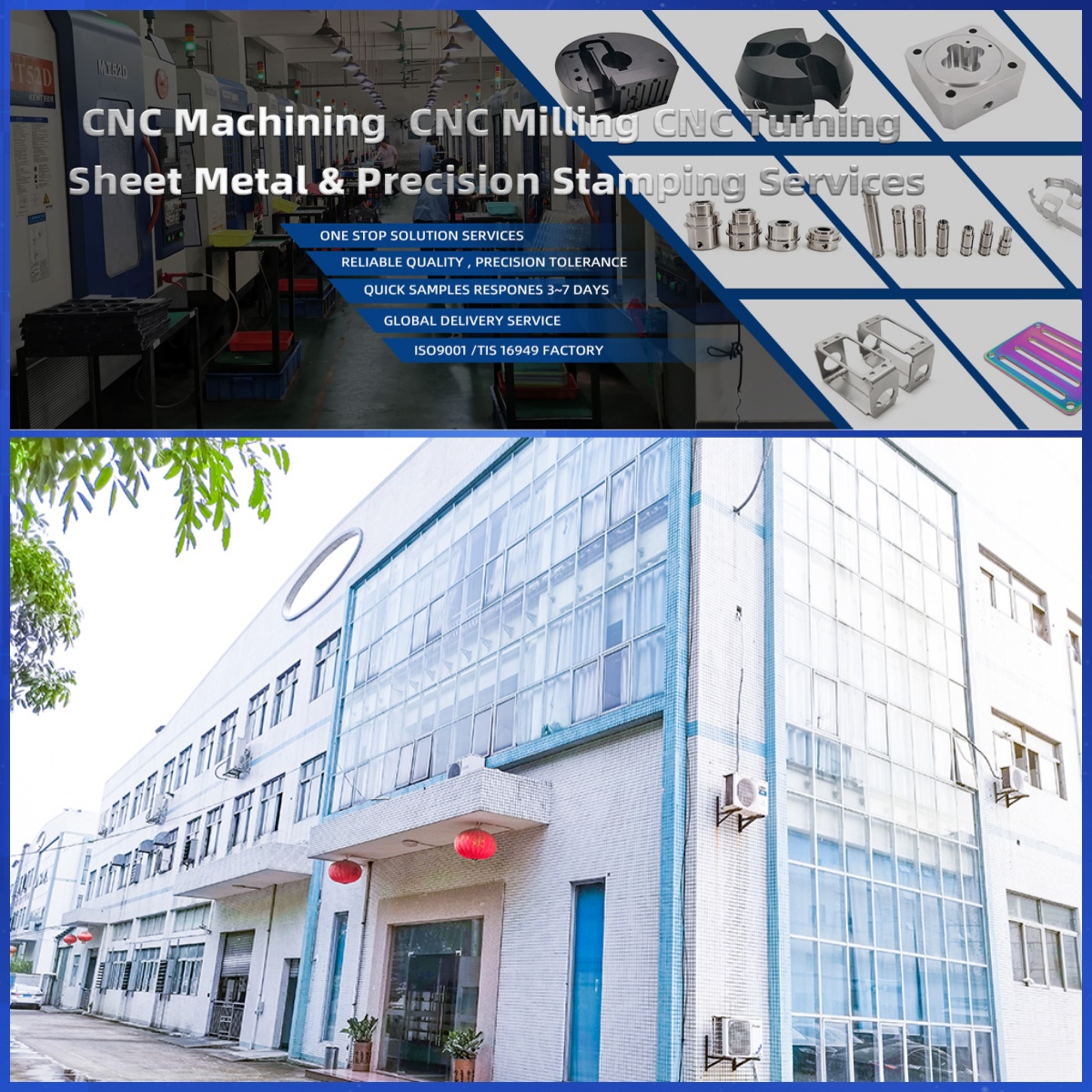
DongGuan YiTai Electronic Technologies Co.,Ltd
DongGuan YiTai Electronic Technologies Co.,Ltd is a manufacturing service provider located in Dongguan, China.
YiTai specialized in CNC turning machining and sheet metal fabrication mainly. As a member of Hung Mou Group, we focus on the overseas marketing development. And based on our parent company’s manufacturing capability and resources, YiTai also expended machining services such as die casting, injection molding, aluminum profile extrusion, 3D printing, which are committed to providing customers with one-stop purchasing services and experience.
CNC MACHINING , CNC MILLING , CNC TURNING , SHEETMETAL , FASTENER , OTHERS




Fineblanking Precision: The Complete Guide to Superior Edge Quality, Near-Net-Shape Accuracy, and Cost-Efficient Production
Surface Finishing for Custom CNC Components: Anodizing vs. Plating vs. Brushing — A Complete Comparison
Related Article