The Rise of Humanoid Robots: How Precision CNC Machining Solves Joint Module Manufacturing Challenges

-
2025 Smart Robot Trends: The Leap from Specialized to General Purpose
-
YITECH's Machining Advantages in High-Precision Robotic Components
1. 2025 Smart Robot Trends: The Leap from Specialized to General Purpose
The global robotics industry is undergoing a significant transformation. The focus of development is shifting from robots designed for single tasks to general-purpose humanoid robots capable of adapting to multiple scenarios. This shift is primarily driven by advancements in Embodied Artificial Intelligence (Embodied AI), which aims to equip machines with the ability to perceive, make decisions, and act within a physical environment. The potential is immense, with market forecasts indicating that the global humanoid robot market is expected to exceed $120 billion (approximately RMB 870 billion) by 2030, demonstrating substantial promise.
The New Hardware Demands of Embodied AI

Embodied Artificial Intelligence (AI) places unprecedented demands on robotic hardware. For a robot to operate reliably in unstructured environments—such as a home or a busy workshop—its body must be robust, dexterous, and energy-efficient. Experts point out that for large-scale application, humanoid robots must meet two key conditions: first, a robust physical body capable of stable and reliable long-term operation, and second, a general intelligence that can safely handle multiple tasks across various scenarios. This means hardware development can no longer proceed in isolation; it requires deep integration with AI algorithms and control systems. A published 2025 trend explicitly highlights the need for "highly synergistic and dynamically adaptive consistency between embodied intelligence software and hardware," meaning hardware development must predefine interfaces for algorithms, while algorithm design must incorporate physical constraints.
The Impact of Leaders Like Tesla Optimus on the Supply Chain
Industry leaders such as Tesla with its Optimus robot play a crucial role in shaping the entire supply chain. Their pursuit of mass production sets new standards for cost, performance, and reliability. However, this path has challenges. Tesla's journey illustrates the difficulties in scaling complex hardware; the company reportedly faced a series of hardware design issues during testing of its second-generation Optimus robot, including motor overheating, lower-than-expected load capacity for dexterous hands, and insufficient lifespan of transmission devices. Such challenges from a major player have a ripple effect. They force the entire upstream supply chain—including component manufacturers and material suppliers—to innovate rapidly. The goal is to meet stringent requirements while achieving the scale and cost targets necessary for commercialization. Consequently, there is a strong push for supply chain localization and cost reduction. Reports indicate that in some Chinese industrial clusters, the local procurement rate for the "chip-joint-sensor" chain has reached 80%.
2. Manufacturing Pain Points of Robot "Joints"
The joint module is the core of a humanoid robot's movement, often compared to its "muscles and tendons." These modules typically integrate components like harmonic reducers, precision ball screws, and servo motors. They account for a significant portion—60% to 70%—of the total robot cost. Manufacturing these components to the required standard is one of the biggest hurdles in robot production.
The High Concentricity Requirements of Harmonic Reducer Housings
The harmonic reducer is a key component for precise torque transmission and speed reduction in robot joints. Its performance depends on the ultra-precise fit between its flexible spline, circular spline, and wave generator. To ensure smooth operation and long life, the housing that holds these parts must have exceptional geometric accuracy. Any tiny deviation in concentricity or perpendicularity can lead to increased friction, accelerated wear, vibration, and reduced positioning accuracy. Achieving this requires advanced CNC (Computer Numerical Control) machining centers with high rigidity and thermal stability. Furthermore, specialized precision grinding and coordinate measuring processes are essential for final machining and verification.
Multi-Axis Machining for Complex Curved Surface Parts
Humanoid robots are designed with biomimetic structures to allow natural movement. This results in components with complex, organic curved surfaces that are difficult to manufacture using conventional methods. Parts like lightweight structural frames, custom motor housings, and links for dexterous hands often require simultaneous 5-axis CNC machining. This technology allows the cutting tool to approach the workpiece from any direction in a single setup, enabling the creation of intricate geometries, improving surface finish, and significantly reducing production time compared to multiple setups on 3-axis machines.
Table: Comparison of Key Materials for Robot Joint Components
| Feature | Aeronautical Aluminum 7075 | Titanium Alloy (e.g., Ti-6Al-4V) | Next-Generation Nanomaterials |
|---|---|---|---|
| Key Strength | Very high strength-to-weight ratio, good machinability | Excellent strength, exceptional corrosion resistance, biocompatibility | Extremely high strength-to-weight and stiffness-to-weight ratios |
| Weight | Lightweight | Moderate (denser than aluminum) | Extremely light (light as foam plastic) |
| Cost | Relatively lower | High material and machining cost | Currently very high (R&D stage) |
| Typical Application | Main structural frames, housings, non-critical joints | Critical high-stress joints, components requiring corrosion resistance | Future potential for ultra-lightweight structural components |
3. Balancing Lightweight and Strength: Material Selection
Choosing the right material is a constant trade-off. Every gram saved on the arm of a robot reduces the energy required to move it, extending battery life. However, the material must be strong enough to handle repeated stress, impacts, and loads.
Aeronautical Aluminum 7075 vs. Titanium Alloy in Joint Applications
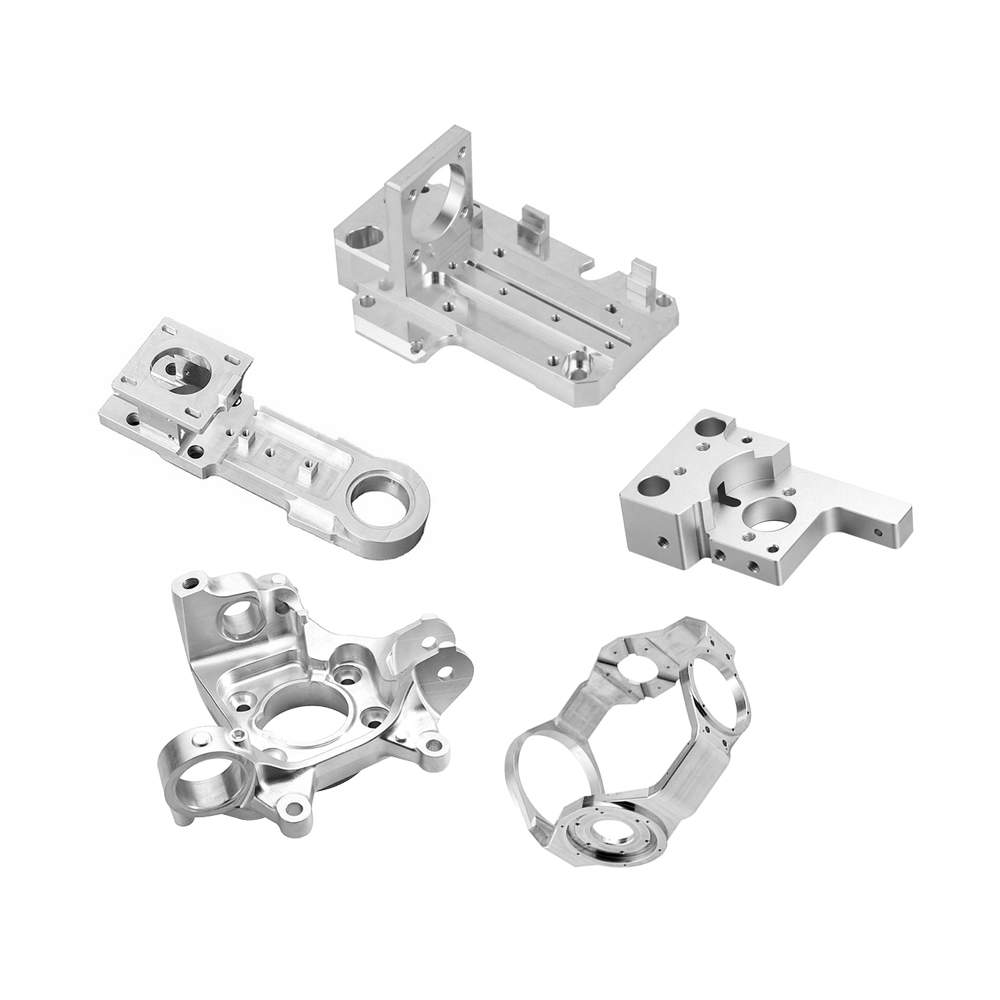
Two metals are commonly considered for high-performance joints:
-
Aeronautical Aluminum 7075: This is a favorite for many structural parts. It offers an excellent strength-to-weight ratio and is relatively easier and cheaper to machine than titanium. It is suitable for most frame sections and housings.
-
Titanium Alloy (e.g., Ti-6Al-4V): Titanium is used for the most critical applications. While heavier than aluminum, it is significantly stronger and more resistant to fatigue and corrosion. It is often chosen for key load-bearing joints, fasteners, and components exposed to harsh environments. The challenge with titanium is its high cost and the difficulty of machining it, which requires specialized tools and techniques.
Looking ahead, research into new materials like nanostructured lattices promises a revolution. Scientists have used machine learning and 3D printing to create nano-architected materials that are as strong as carbon steel but as light as plastic foam. While not yet commercially viable for robots, such materials point to a future where the lightweight-strength dilemma could be profoundly resolved.
4. YITECH's Machining Advantages in High-Precision Robotic Components
Specialized manufacturing partners are vital to overcoming the hardware challenges in robotics. Companies like Yite Electronics, which focus on high-precision CNC machining, bridge the gap between design and reliable mass production. Their role involves more than just operating machines.
The core advantage lies in systemic problem-solving. For instance, machining the thin-walled features of a harmonic reducer housing without causing deformation requires precise control of cutting parameters, specialized fixtures, and sometimes in-process measurement compensation. Furthermore, expertise in machining difficult materials like titanium alloys or advanced engineering plastics is crucial. This includes selecting the correct cutting tools, coolants, speeds, and feeds to achieve the desired surface integrity and dimensional accuracy while maintaining tool life.
Ultimately, a skilled precision machining provider acts as an extension of the robot developer's engineering team. They ensure that the sophisticated designs for joint modules, actuator components, and sensor mounts are translated into physical parts that meet the stringent requirements for precision, durability, and performance that embodied intelligence hardware demands.
5. Industry Frequently Asked Questions (FAQ)
-
Q1: What is the most significant barrier to the mass production of humanoid robots today?
-
A: While AI and software are critical, many industry experts point to hardware manufacturing as a major bottleneck. Achieving the necessary precision, reliability, and cost targets for core components like joint modules—which integrate motors, reducers, and sensors—remains a formidable challenge. The consistency between advanced software and capable hardware is also a key focus.
-
-
Q2: Why is precision so important for components like harmonic reducers?
-
A: Extreme precision ensures high efficiency, minimal backlash, smooth motion, and long service life. Tiny errors in gear tooth profile or housing alignment cause friction, heat, vibration, and premature failure, directly impacting the robot's movement accuracy, energy consumption, and durability.
-
-
Q3: What does "concentricity" mean in manufacturing, and why is it stressed for robot parts?
-
A: Concentricity is a measure of how perfectly different cylindrical features (like bores or outer diameters) share a common central axis. In a robot joint, if the bearing seats or gear mounting surfaces are not perfectly concentric, it creates imbalanced forces, leading to uneven wear, increased noise, and reduced performance.
-
-
Q4: What are common calibration needs for maintaining robot precision?
-
A: Robots may require zero-point calibration in situations such as after a collision, when replacing components like motors or reducers, or if the controller's data is lost. Regular maintenance, such as annual replacement of the encoder battery in motors, is also essential to prevent data loss and maintain positional accuracy.
-
-
Q5: Are general-purpose humanoid robots available for purchase now?
-
A: Truly general-purpose robots for home or complex unstructured environments are still in the development and early commercialization phase. However, many companies have begun scaled deliveries of humanoid robots targeted at specific industrial applications, such as simple factory tasks, marking the start of their journey from labs to market.
-
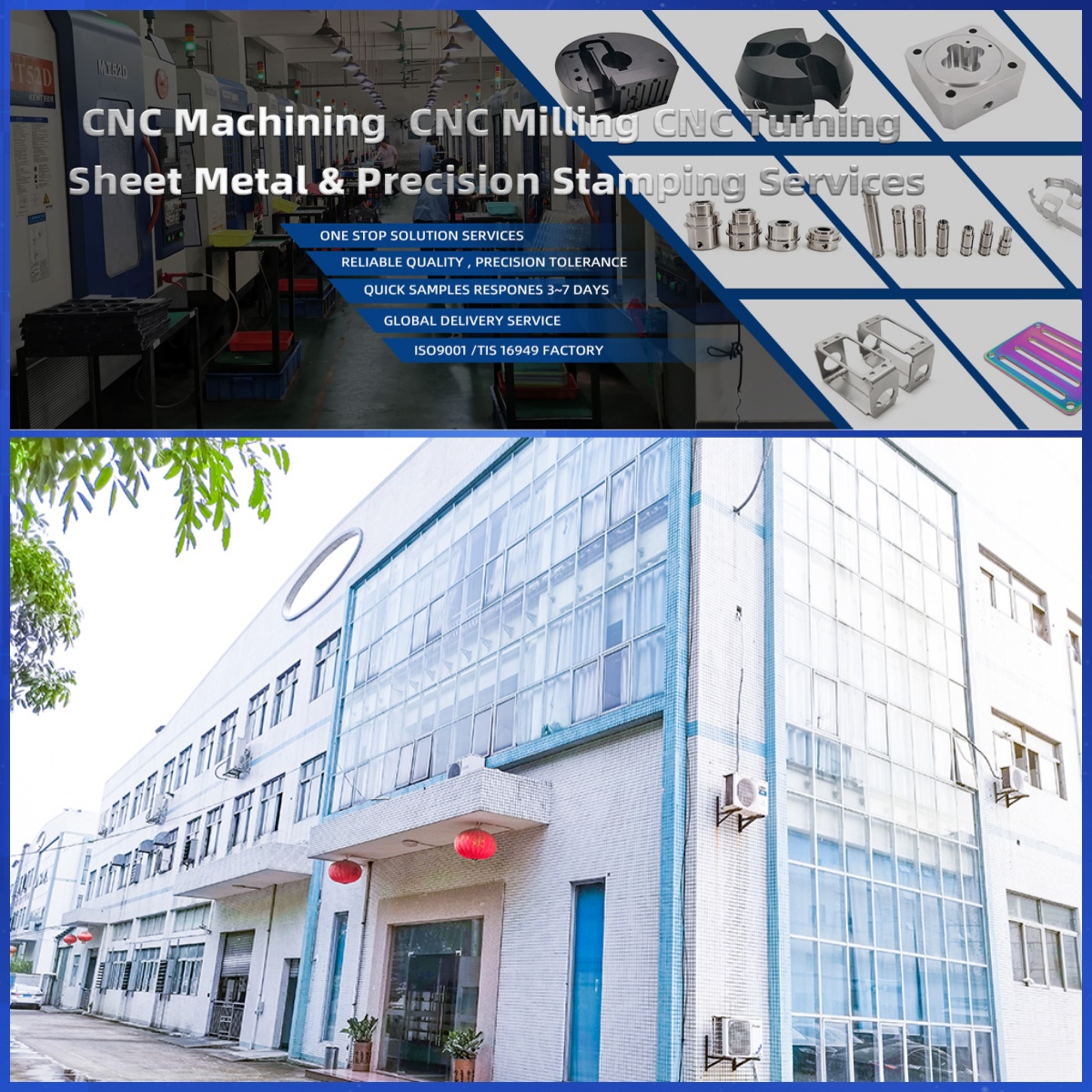
DongGuan YiTai Electronic Technologies Co.,Ltd
DongGuan YiTai Electronic Technologies Co.,Ltd is a manufacturing service provider located in Dongguan, China.
YiTai specialized in CNC turning machining and sheet metal fabrication mainly. As a member of Hung Mou Group, we focus on the overseas marketing development. And based on our parent company’s manufacturing capability and resources, YiTai also expended machining services such as die casting, injection molding, aluminum profile extrusion, 3D printing, which are committed to providing customers with one-stop purchasing services and experience.
CNC MACHINING , CNC MILLING , CNC TURNING , SHEETMETAL , FASTENER , OTHERS




From PCB to Enclosure: The Ultimate Guide to CNC Prototyping for Electronics R&D
Aluminum 6061 vs 7075: Which is Best for Precision Electronic Parts?
Related Article