Elevating Product Aesthetic Appeal: A Guide to Rainbow PVD Coating for Custom CNC Parts
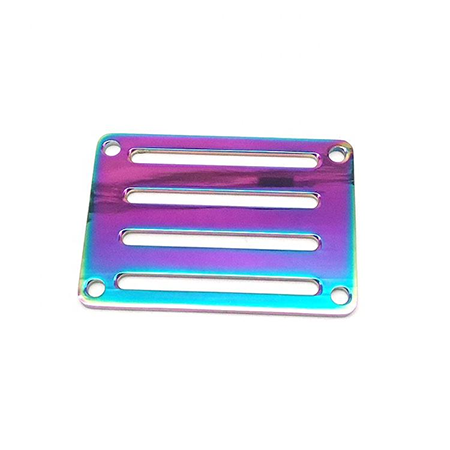
A product that looks ordinary sells for an ordinary price. A product with a rainbow PVD finish stands out on the shelf — the surface shifts color as light hits it from different angles. This is not paint. It is not dye. It is a thin-film interference effect created inside a vacuum chamber at atomic level. This guide explains how rainbow PVD works, why it beats traditional plating and anodizing for premium parts, and how to get it on your CNC components.
1. What Is Rainbow PVD Coating (Vacuum Deposition)?
1.1 Process Principles and Color Formation Mechanism
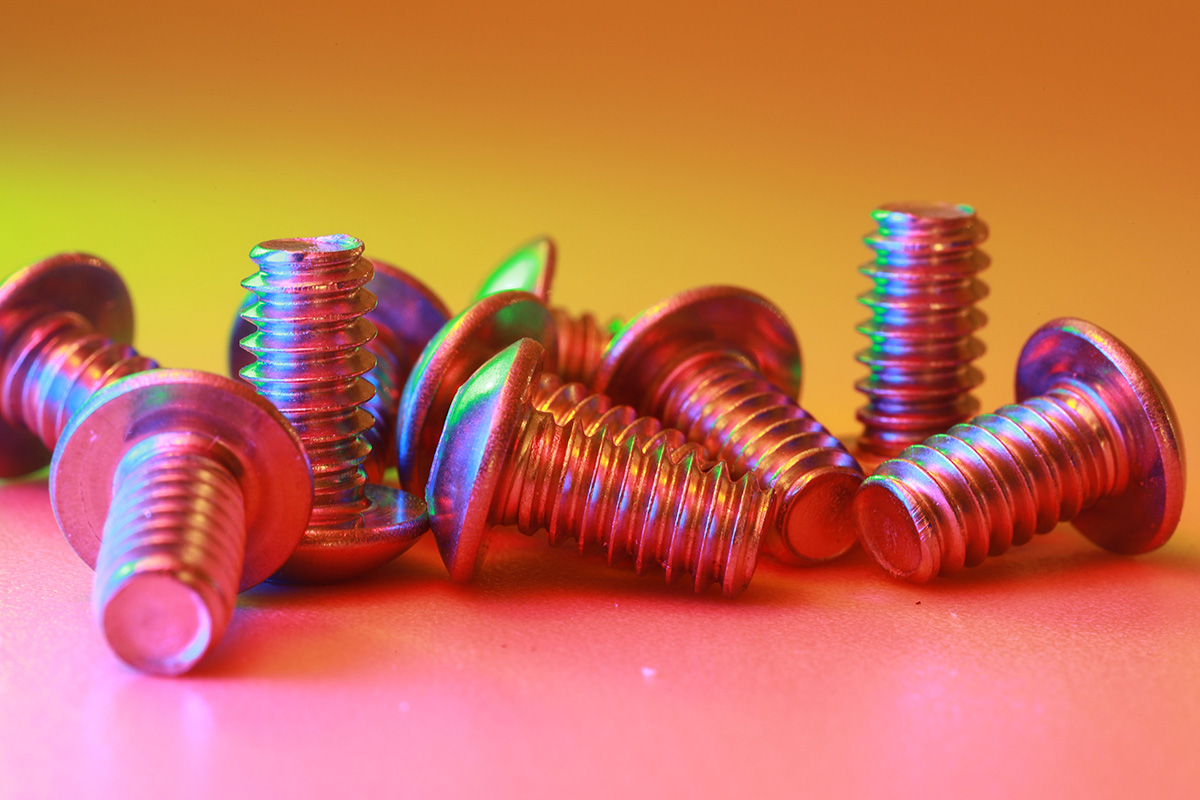
PVD stands for Physical Vapor Deposition. The process happens inside a sealed vacuum chamber. A solid metal target — usually titanium, zirconium, or chromium — is vaporized using an electric arc or a sputtering system. The metal vapor travels through the vacuum and condenses onto the surface of your CNC part. The result is an extremely thin, extremely hard coating — typically 0.3 to 5 micrometers thick.
How the rainbow colors appear:
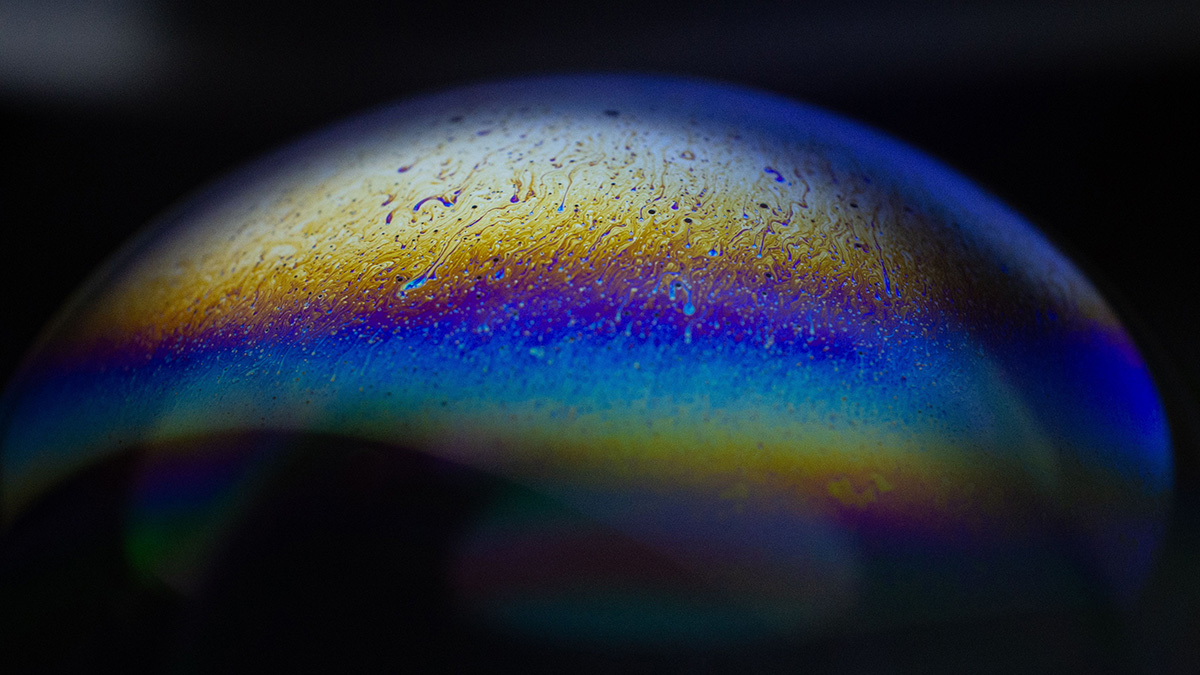
The colors do not come from pigment. They come from light interference. When the PVD coating is a specific thickness, light waves bouncing off the top surface and the bottom surface of the film interfere with each other. Some wavelengths cancel out. Others combine and amplify. The result: the eye sees different colors at different angles. This is the same physics that makes soap bubbles and oil films on water look colorful.
The coating process, step by step:
By changing the type of reactive gas (nitrogen, oxygen, or acetylene) and the deposition time, the coating color shifts across a full spectrum — from gold and bronze to purple, blue, green, and the full rainbow gradient.
"PVD coatings are not decorative layers — they are ceramic-grade thin films. A titanium nitride coating at 2,300 HV is harder than hardened tool steel. The color is a side effect of the film thickness, not a pigment. This is why PVD parts keep their color for years while painted parts fade in months."— Dr. Helga Bauer, Senior Researcher in Surface Engineering, Fraunhofer Institute for Surface Engineering (IOT), published in Surface and Coatings Technology, March 2026
1.2 Comparison with Traditional Plating and Anodizing
How does rainbow PVD compare to the two most common surface finishes? The table below shows the key differences:
| Property | Rainbow PVD | Electroplating (Ni/Cr) | Anodizing (Type II/III) |
|---|---|---|---|
| Coating hardness | 2,000–2,500 HV (TiN) | 400–1,000 HV (Hard Cr) | 350–500 HV (Type III) |
| Coating thickness | 0.3–5 µm | 5–50 µm | 5–150 µm |
| Color range | Full spectrum (gold, purple, blue, rainbow) | Metal tones only (silver, gold) | Dyeable colors (limited metallic feel) |
| Environmental impact | No toxic chemicals, dry process | Hexavalent chromium, cyanide baths | Acid baths, sealed with Ni/Co |
| Color fade resistance | 10+ years (UV stable) | 5–8 years (tarnishes) | 2–5 years (dyes fade in UV) |
| Adhesion to base metal | Atomic-level bond | Chemical/mechanical | Integral oxide layer |
| Dimensional change | Minimal (<5 µm) | 5–50 µm buildup | 25–75 µm (Type II) |
| Cost (relative) | $$$ | $$ | $ to $$ |
| Best for | Premium consumer goods, watch cases, jewelry, automotive trim | Wear parts, electrical contacts | Aluminum enclosures, aerospace |
The key takeaway: PVD is harder, more environmentally friendly, and more color-stable than both plating and anodizing. The trade-off is higher unit cost and the need for a smooth base surface — PVD follows the surface exactly, so any scratches or marks under the coating will show through.
2. Core Advantages of Rainbow PVD for Sheet Metal and CNC Components

CNC parts with PVD coating combine precision geometry with a finish that signals quality at first glance.
2.1 Superior Wear Resistance and Corrosion Protection
A titanium nitride (TiN) PVD coating has a hardness of 2,000 to 2,500 HV. For comparison, hardened tool steel is about 700–800 HV. This means the PVD layer is 3 times harder than the steel underneath it. When a coated part rubs against another surface, the coating takes the wear — not the base material.
This matters for real-world applications:
- Watch cases and buckles resist daily scratches from desks, doorframes, and keys. The coating stays glossy for years.
- Automotive trim pieces survive stone chips and road salt without pitting or peeling.
- Kitchen faucet handles withstand constant handling, water exposure, and cleaning chemicals — the PVD layer is chemically inert.
- CNC tool holders and collets coated with TiN last 3 to 5 times longer between replacements.
| Test Parameter | Rainbow PVD (TiN/TiCN) | Electroless Nickel | Type III Hard Anodize |
|---|---|---|---|
| Surface hardness | 2,000–2,500 HV | 450–550 HV | 350–500 HV |
| Taber abrasion (mg/1000 cycles) | < 2 mg | 5–8 mg | 8–12 mg |
| Salt spray test (hours, no rust) | 500+ hours | 500+ hours | 200–300 hours |
| Chemical resistance | Excellent (inert ceramic) | Good (attacked by acids) | Good (attacked by alkali) |
| UV / sunlight fade | No fade (ceramic, not dye) | No fade | Fades in 2–5 years |
"For any part that a customer touches every day — a watch, a faucet, a phone frame — PVD is the best finish available today. The coating does not just look good on day one. It looks the same on day 1,000. That is what 'premium' actually means."— Marcus Tan, Product Design Director, Hong Kong Industrial Design Centre, 2026 Consumer Goods Materials Forum
2.2 Unique Visual Aesthetics That Boost Brand Premium
The shifting rainbow effect catches the eye in a way that no single-color finish can match.
The shifting rainbow effect catches the eye in a way that no single-color finish can match.
Why do brands choose rainbow PVD? Because it creates a visual experience that single-color finishes cannot. The color shifts as the viewing angle changes. A single watch case can show gold, purple, and blue in the same second, depending on how light hits it. This effect is called thin-film interference, and it cannot be replicated with paint, dye, or powder coating.
For brands, this means price positioning power. A stainless steel watch case costs the same whether it has a brushed finish or a rainbow PVD finish — but the PVD version can sell for 30 to 60% more because the perceived value is higher. The coating cost is small. The margin gain is large.
| PVD Color | Coating Material | Typical Application | Market Segment |
|---|---|---|---|
| Gold | TiN (Titanium Nitride) | Watch cases, jewelry, faucets | Luxury, lifestyle |
| Rose Gold | TiN + Cu alloy target | Jewelry, cosmetic packaging | Fashion, beauty |
| Champagne | TiN (low N₂ flow) | Smartwatch frames, eyewear | Consumer electronics |
| Rainbow | TiN graded film (variable gas) | Premium trim, custom accessories | High-end, limited edition |
| Blue / Purple | TiCN / TiAlN | Phone frames, automotive badges | Tech, automotive |
| Gunmetal / Black | DLC (Diamond-Like Carbon) | Watches, knives, tactical gear | Premium, professional |
3. DongGuan YiTai's Expertise in High-End Surface Treatment

From raw stock to rainbow-finished product — YiTai manages every step under one quality system.
3.1 One-Stop Service from Precision Machining to Brilliant Coating
PVD coating quality depends heavily on the base surface quality. If the CNC machining leaves tool marks, scratches, or poor surface roughness, the PVD coating will amplify those defects — not hide them. This is why machining and coating must be controlled by the same team.
YiTai's Integrated PVD Workflow
- CNC machining: 3/4/5-axis milling and turning to ±0.005 mm tolerance, with surface finish pre-optimized for PVD (Ra 0.2–0.4 µm before coating)
- Pre-coating polishing: Mechanical polishing, electropolishing, or vibratory finishing to achieve mirror or satin base finish
- Ultrasonic cleaning: Multi-stage solvent + aqueous ultrasonic cleaning to remove all oils, dust, and machining residue
- PVD deposition: Arc ion plating or magnetron sputtering in Class 10,000 cleanroom-adjacent environment
- Post-coating inspection: Color consistency check under D65 standard light, adhesion tape test, thickness measurement by X-ray fluorescence
- Packaging: Individual protective wrapping to prevent coating damage during shipping
| Parameter | Specification |
|---|---|
| Coating materials | TiN, TiCN, TiAlN, CrN, ZrN, DLC |
| Available colors | Gold, rose gold, champagne, blue, purple, green, rainbow, gunmetal, black |
| Coating thickness | 0.3–5 µm (controlled to ±0.1 µm) |
| Max part size | 600 × 600 × 800 mm (chamber dependent) |
| Compatible base materials | Stainless steel (304/316), titanium, brass, copper, hardened steel, aluminum (with base layer) |
| Surface hardness | 2,000–2,500 HV (TiN); 3,000+ HV (DLC) |
| Salt spray resistance | 500+ hours (ASTM B117) |
| Typical lead time | 5–7 working days (standard); 48 hours (rush) |
3.2 Get Your Custom Appearance Parts Quote Today
Every PVD project starts with the part geometry, the base material, and the target color. Send us your 3D file or sample part. Our engineering team will review it and return a complete quote covering:
What Your Free Quote Includes
- CNC machining cost — per part, at your target quantity
- Pre-coating surface preparation — polishing or electropolishing required for your base material
- PVD coating cost — by color, coating material, and thickness
- Color sample — a physical sample panel in your target color, shipped before production
- Full lead time — from order to finished, packaged parts
- Alternative options — if a different base material or coating type would reduce cost without sacrificing quality
Ready to Make Your Product Stand Out?
Upload your 3D file or drawing. Our engineers return a detailed PVD coating quote — including CNC machining, surface prep, and color options — within 24 hours. Free. No obligation.
Request Your PVD Quote →4. Frequently Asked Questions
How long does rainbow PVD coating last compared to regular plating?
Rainbow PVD coatings typically last 10+ years without significant color change or wear under normal use. The coating is a ceramic film — it does not oxidize, does not fade in UV light, and does not react with skin oils or household chemicals. Regular electroplating (nickel or chrome) starts to tarnish in 5–8 years. Dyed anodizing fades in 2–5 years of sun exposure. PVD is the most durable color finish available for metal parts.
Can PVD coating be applied to aluminum CNC parts?
Yes, but with a base layer. Aluminum is soft and porous. If you deposit PVD directly on raw aluminum, the coating can crack under pressure. The standard approach is to first apply a thin electroless nickel or hard anodize base layer (5–10 µm), then PVD on top. This gives you the rainbow color and the wear resistance of PVD, with a stable foundation. YiTai handles this multi-layer process routinely.
Does PVD coating change the dimensions of my CNC part?
Yes, but minimally. PVD coatings are 0.3 to 5 micrometers thick. This is much thinner than electroplating (5–50 µm) or anodizing (5–150 µm). For most parts, the dimensional change is within normal machining tolerance and does not require pre-compensation. For very tight fits (bearing housings, threading), we can adjust the pre-coating machining size to account for the coating thickness. Always tell us which surfaces have critical dimensions so we mask them if needed.
Is PVD coating environmentally friendly?
Yes. PVD is a dry vacuum process. It does not use toxic chemicals, cyanide baths, or hexavalent chromium — all of which are common in traditional electroplating. The process produces no liquid waste. The only byproducts are inert metal vapor and small amounts of nitrogen gas. PVD is RoHS and REACH compliant by default, which makes it easier to pass environmental audits for European and North American markets.
What is the minimum order quantity for custom PVD-coated CNC parts?
There is no strict minimum. Single prototype parts can be PVD coated. However, the vacuum chamber setup time is the same whether you coat 1 part or 500 — so per-part coating cost drops significantly at higher quantities. For 1–10 parts, expect a premium per-unit price. For 100+ parts, the per-part coating cost is very competitive. We provide exact pricing at each quantity break in your quote.
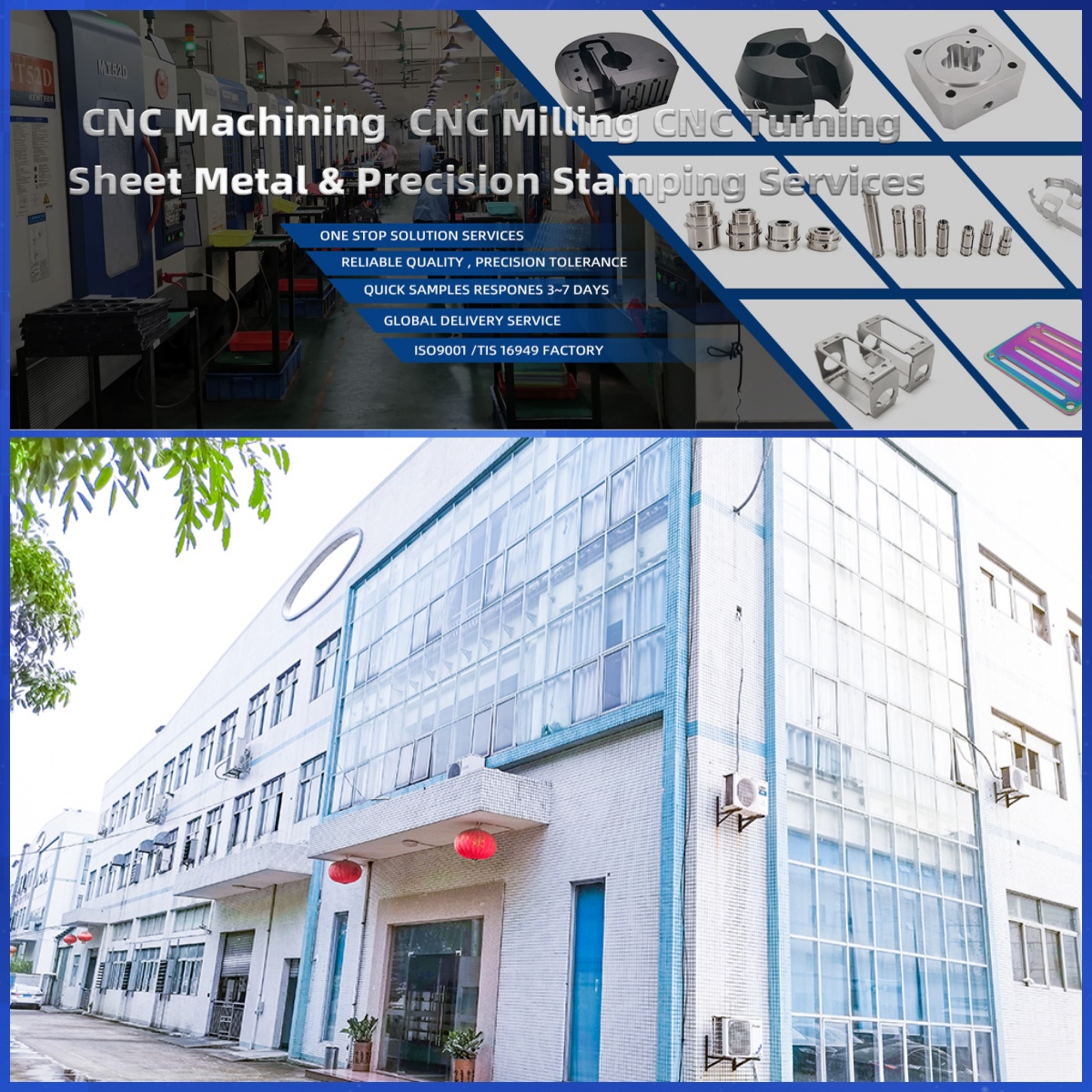
DongGuan YiTai Electronic Technologies Co.,Ltd
DongGuan YiTai Electronic Technologies Co.,Ltd is a manufacturing service provider located in Dongguan, China.
YiTai specialized in CNC turning machining and sheet metal fabrication mainly. As a member of Hung Mou Group, we focus on the overseas marketing development. And based on our parent company’s manufacturing capability and resources, YiTai also expended machining services such as die casting, injection molding, aluminum profile extrusion, 3D printing, which are committed to providing customers with one-stop purchasing services and experience.
CNC MACHINING , CNC MILLING , CNC TURNING , SHEETMETAL , FASTENER , OTHERS




Bicycle Handle Grips: A Complete B2B Buyer's Guide to Materials, Manufacturing, and Supplier Selection
Successful Procurement of Custom RF Shielding Enclosures: Practical Manual from Supplier Audit to Final Acceptance
Related Article