Incoming vs In-Process vs Final Inspection: A Complete Quality Control Strategy for CNC Machining
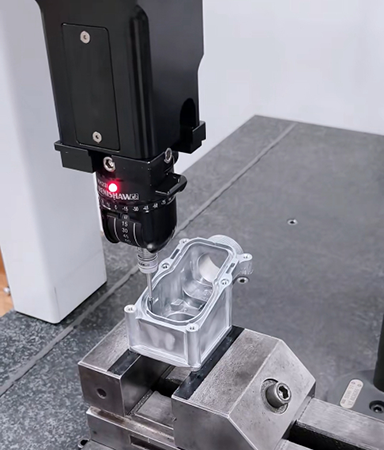
A better way is three-stage inspection. You check at the start. You check during production. You check at the end. This guide explains each stage. You will learn how to catch problems early. You will see why prevention is better than detection.
Table of Contents
-
Incoming Quality Control (IQC) – Stop Problems at the Source
-
Final Quality Control (FQC/OQC) – The Last Check Before Shipping
1. The Three Stages of Quality Inspection and Their Value
There are three main inspection stages in CNC machining.
| Stage | Name | When It Happens | Goal |
|---|---|---|---|
| 1 | Incoming QC (IQC) | Before machining | Check raw material and bought parts |
| 2 | In-Process QC (IPQC) | During machining | Catch errors before many bad parts are made |
| 3 | Final QC (FQC/OQC) | After machining, before shipping | Verify the part meets all drawing requirements |
Why You Cannot Rely Only on Final Inspection
Final inspection only tells you if the part is good or bad. It does not stop bad parts from being made. If you find a problem at final inspection, the whole batch may be scrap. Prevention is better than detection. Catching a problem early saves time and money.
2. Incoming Quality Control (IQC) – Stop Problems at the Source
IQC happens before any cutting starts. You check the raw material and any outside parts (like heat-treated blanks or bought screws).
Raw Material Inspection
Every metal bar or plastic sheet needs a check.
-
Material certificate: Does the certificate match the order? Check grade and heat number.
-
Visual check: Look for rust, dents, or cracks on the surface.
-
Dimension check: Measure the diameter or thickness. A 20mm bar should be 20mm, not 19.5mm.
Outside Process and Standard Part Inspection
Many CNC parts go outside for heat treatment or plating. When they come back, check them.
-
Heat-treated parts: Check hardness with a portable tester.
-
Plated parts: Check coating thickness and appearance.
-
Standard parts (screws, inserts): Random sample check for thread fit and dimensions.
Non-Conforming Material Process
If a material fails IQC, you must act fast.
-
Isolate: Put a red tag on it. Move it to a locked area.
-
Review: Decide if you can use it (with customer approval) or if it must go back.
-
Return: Send it back to the supplier. Get a replacement.
3. In-Process Quality Control (IPQC) – Monitor in Real Time
IPQC happens while the machine runs. It is the most important stage for preventing scrap.

First Article Inspection (FAI)
Every new batch gets a first article. When the machine makes the first part, you stop. Measure every dimension on the drawing.
-
When to do FAI: Start of batch, after tool change, after machine setup, after program change.
-
What to check: All critical dimensions. All tolerances.
-
Result: If the first part is good, the rest will likely be good. If it is bad, fix the setup before making more.
Patrol Inspection (Roving Check)
The quality inspector walks the shop floor. They check parts at a fixed frequency.
-
Frequency: Every 30 minutes, every hour, or every 50 parts. Depends on the tolerance.
-
What to check: Key dimensions that change with tool wear (hole size, diameter).
-
Record: Write the measurements on a control chart.
Self-Check and Cross-Check
The machine operator is the first line of defense.
-
Self-check: The operator measures the first part and one part every hour.
-
Cross-check: The next shift or the next machine checks the previous work.
Statistical Process Control (SPC)
SPC uses data to track the process. You measure parts at regular times. You put the numbers on a chart. You calculate CPK.
-
CPK ≥ 1.33: The process is stable. Good.
-
CPK < 1.00: The process is not capable. Fix it.
SPC tells you when the machine is drifting before you make bad parts.
4. Final Quality Control (FQC/OQC) – The Last Check Before Shipping
After all parts are machined, cleaned, and deburred, final inspection begins.

100% Inspection vs Sampling
Not every part needs a full check. It depends on the part.
-
100% inspection: Critical safety parts (medical, aerospace). High-value parts. Use for dimensions that are hard to hold.
-
Sampling (AQL standard): For large batches of non-critical parts. Check a random sample. If the sample passes, the batch passes.
Function Testing and Reliability Checks
Some parts need more than dimension checks.
-
Function test: Does the part assemble with its mating part? Does it move smoothly?
-
Pressure test: Does the valve hold pressure?
-
Torque test: Does the thread hold the specified torque?
Packaging and Label Check
The part can be perfect. But if it ships in the wrong box, the customer is not happy.
-
Check packaging: No damage. No missing parts. Clean and dry.
-
Check label: Part number, quantity, batch number, date.
Shipping Documents
Every shipment should include these.
-
Inspection report: List of all critical dimensions with measured values.
-
Material certificate: From the raw material supplier.
-
Certificate of conformance: A letter saying the parts meet all requirements.
5. Case Study: Catching Tool Wear with IPQC Saves 200 Parts
A client ordered 500 aluminum housings. The tolerance on a 10mm hole was ±0.02mm. The operator made the first article. It passed. Then the machine ran.
The IPQC inspector checked one part every hour. After 3 hours (80 parts), the hole measured 10.03mm. Still in tolerance. After 4 hours (120 parts), the hole measured 10.05mm. Out of tolerance.
The inspector stopped the machine. The tool was worn. They changed the tool. They re-inspected the last 40 parts. Only 2 were bad. They remade those 2.
Result: Without IPQC, the machine would have run all 500 parts. 200 parts would be scrap. The client would have waited 2 extra weeks. With IPQC, they saved 200 parts and kept the schedule.
6. Expert Insight: Prevention Costs Less Than Scrap
*“I have seen shops skip in-process checks to save time. They think it is faster to run and check at the end. But then they find 30% of the batch is bad. They have to remake everything. That is not faster. That is expensive. A 30-second check every hour costs almost nothing. It saves hours of rework. Good quality is not expensive. Bad quality is expensive.”*
— Quality Manager, DongGuan YiTai Electronic Technologies
Our Quality Control Practice at DongGuan YiTai Electronic Technologies
At 'DongGuan YiTai Electronic Technologies' , we follow all three stages. We check raw material before it goes to the machine. We do first article inspection on every batch. We patrol check every hour. We track CPK on critical features. And we do 100% final inspection on tight tolerances.
We do not guess. We measure. We record. We report. Every shipment comes with a full inspection report.
Send us your drawing. We will machine your parts. We will inspect them. And we will ship them with confidence.
7. Frequently Asked Questions (FAQ)
Q: What is the difference between IQC, IPQC, and FQC?
A: IQC checks raw material before machining. IPQC checks parts while the machine runs. FQC checks finished parts before shipping. Each stage catches different types of problems.
Q: Why is first article inspection so important?
A: The first part tells you if the setup is correct. If the first part is good, the rest will likely be good. If the first part is bad, you fix the setup before making hundreds of bad parts. FAI prevents batch scrap.
Q: What is a good CPK value for CNC machining?
A: CPK ≥ 1.33 is good. It means the process is stable. For critical aerospace or medical parts, customers may ask for CPK ≥ 1.67. For simple parts, CPK ≥ 1.00 may be enough.
Q: When should I use 100% inspection instead of sampling?
A: Use 100% inspection for safety-critical parts (medical implants, aerospace brackets). Also use it for very tight tolerances (±0.01mm or less). For general industrial parts with moderate tolerances, sampling is fine.
Q: What is the AQL standard for sampling?
A: AQL stands for Acceptable Quality Level. It is a table from the ANSI/ASQ Z1.4 standard. For example, you may set AQL 1.5% for major defects. This means you accept a batch if the defect rate in the sample is under 1.5%. We use AQL to decide how many parts to check.
Q: Does DongGuan YiTai Electronic Technologies provide inspection reports?
A: Yes. Every order comes with a full dimensional inspection report for all critical features. We also provide material certificates and certificates of conformance on request.
DongGuan YiTai Electronic Technologies Co.,Ltd
DongGuan YiTai Electronic Technologies Co.,Ltd is a manufacturing service provider located in Dongguan, China.
YiTai specialized in CNC turning machining and sheet metal fabrication mainly. As a member of Hung Mou Group, we focus on the overseas marketing development. And based on our parent company’s manufacturing capability and resources, YiTai also expended machining services such as die casting, injection molding, aluminum profile extrusion, 3D printing, which are committed to providing customers with one-stop purchasing services and experience.
CNC MACHINING , CNC MILLING , CNC TURNING , SHEETMETAL , FASTENER , OTHERS




Complete Guide to Brass Precision Turned Components: Material Advantages, CNC Machining Processes, and Typical Applications
Complete Guide to PVC CNC Machining: Material Types, Process Characteristics, and Precision Part Applications
Related Article