Technical Level, Market Prospects, and Development Trends of the Home Hardware Industry in 2025
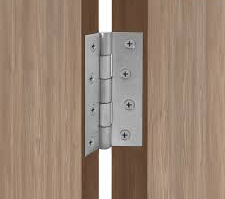
Table of Contents
-
Technical Level and Characteristics of the Home Hardware Industry
-
Development Trends and Market Prospects of the Home Hardware Industry
1. Development Overview of the Home Hardware Industry

Home hardware refers to metal components used in living scenarios such as kitchens, bedrooms, bathrooms, living rooms, and balconies, providing functions like storage, decoration, connection, and movement. They are an essential part of modern home furnishings, characterized by durability, rust resistance, and moisture resistance. They can be classified into basic hardware, functional hardware, storage hardware, etc., as detailed below:
-
Basic Hardware: Refers to hardware components that provide supporting, connecting, and fixing functions, mainly including hinges, handles, slides, hanging codes, dampers, etc.
-
Functional Hardware: Refers to hardware products that achieve specific functions, mainly including sliding door hardware accessories, kitchen faucets, sinks, knives, draining baskets, bathroom racks, angle valves, etc.
-
Storage Hardware: Refers to hardware products with storage functions, mainly including pull-out baskets, spice racks, drawers, clothes racks, trouser racks, shelves, cup holders, etc.
-
Other Hardware: Mainly includes door locks, drying racks, and cookware hardware products.
After more than 30 years of development, China's hardware industry has now formed a complete and comprehensive home hardware manufacturing industrial cluster. With the continuous changes in social demand and the continuous innovation of materials and technology, home hardware industry enterprises have significantly improved in scale, management, efficiency, product variety, quality, and process technology.
On the other hand, as a necessary consumer product in construction and home decoration, and against the backdrop of consumption upgrading and consumers' increasing demand for mid-to-high-end home hardware products, the market size of China's home hardware industry continues to expand.
According to the "2024 China Furniture Hardware Industry Development Report" released by the China Hardware Products Association: In 2023, the market size of China's furniture hardware industry was approximately 2,261.1 billion RMB. It is projected that the compound annual growth rate (CAGR) of the market size in the next five years will reach 7.6%, and the market size will grow to 3,244.5 billion RMB by 2028, representing an important part of the future incremental market for China's hardware industry. The main production areas of China's furniture hardware industry are concentrated in the economically developed eastern coastal regions, such as the Pearl River Delta and the Yangtze River Delta.
2. Technical Level and Characteristics of the Home Hardware Industry
The technical level of the home hardware industry is mainly reflected in R&D design, production and manufacturing capabilities, and information technology application.
2.1. R&D and Design Level
R&D and design are the driving force behind the technological development of the home hardware industry. With the rapid economic development, people's quality of life has greatly improved, and consumer demand for home products has shifted from practicality to intelligentization, comfort, and convenience. As home hardware is a crucial bridge for realizing the functions of home products, higher requirements are placed on the R&D and design of hardware products.
For mature home hardware products such as hinges and slides, their basic functions already meet downstream customer needs. Further enhancing product sophistication and convenience, and reducing product costs, rely on further R&D improvements by home hardware enterprises. At the same time, as the home industry gradually develops towards customization and intelligence, the home hardware industry is also transforming from the original basic hardware OEM model to becoming providers of overall home hardware solutions.
Therefore, a sound design and R&D system, along with capabilities, are important guarantees for home hardware enterprises to provide better functional solutions and a wider range of product options, and are a key reflection of the technical level of hardware industry enterprises.
2.2. Production and Manufacturing Capability
Home hardware is a key component for achieving style changes and functional improvements in downstream home products. The grade and quality of downstream products largely depend on the precision of home hardware products. Therefore, the technical level of production and manufacturing is one of the key factors affecting the industry's technical level.
Production and manufacturing capability is a comprehensive reflection of an enterprise's production management level and degree of automation. The production management level of an enterprise comes from long-term experience accumulation, while high-level automated production is a powerful guarantee for enterprises to achieve high-quality and efficient production. The production of home hardware products involves multiple steps, numerous batches, and large quantities. The investment in automated equipment and the automated control of the production process can ensure orderly production, guarantee product quality stability, reduce product costs, and bring scale benefits.
2.3. Information Technology Application
Home hardware products are numerous in variety, and their production involves multiple steps, batches, and large quantities. The application of information technology enables full-process management from R&D design, order placement, procurement management, production delivery, to warehousing and logistics.
On one hand, the application of information technology helps enterprises control product quality comprehensively and ensure product quality stability. On the other hand, full-process management of production helps improve and optimize organizational processes, enhance production and operation management levels, and achieve cost control, efficiency improvement, and loss reduction through IT application. Therefore, the application of information technology is an important means for home hardware enterprises to improve efficiency, strengthen management, and gain competitive advantage.
3. Development Trends and Market Prospects of the Home Hardware Industry
3.1. Development Trends of the Home Hardware Industry
3.1.1. Digitalization of the Production Process
Home hardware products come in numerous categories, and their production involves multiple steps, batches, and large quantities. Therefore, stable and efficient automated production is a necessary path to improve production efficiency, gain scale advantages, and enhance corporate competitiveness. In this context, home hardware companies are continuously improving the automation level of their production processes, replacing manual labor with automated equipment, implementing automated control of production flows, and building digital platforms to create smarter factories.
In the future, home hardware manufacturing technology will continue to integrate with new-generation information technologies and other high-end technologies, establishing a comprehensive digital system in the R&D, design, and production processes of home hardware products, thereby improving the operational efficiency of machinery and equipment. The industry will continue to move towards "digitalization" and "intelligentization".
3.1.2. Intelligentization of Hardware Products
With the advancement of industrial levels and technology, the improvement in people's quality of life, and the pursuit of a better life, consumer demands for home products are transitioning from traditional sturdiness and durability to also needing to satisfy pursuits of comfort, easy installation/removal, and intelligent control. This guides the downstream hardware industry to not only meet traditional hardware qualities such as mechanical performance, rust resistance, moisture resistance, and fatigue resistance of moving parts but also to assist home products in fulfilling consumers' needs for intelligent, comfortable, and convenient home spaces.
Currently, the home hardware industry is gradually incorporating elements like controllers and sensors into products to achieve intelligentization. With the further popularization of emerging concepts like smart homes, the promotion and application of intelligent homes will become one of the main drivers of growth in the home hardware market in the future.
3.1.3. Competition in Building Proprietary Brands
The number of domestic home hardware enterprises is large, and competition is fierce. European home hardware companies such as Hettich and Blum, due to their long-term industry experience and early branding efforts, have established brand advantages and consequently enjoy extremely high brand premiums. In response, domestic home hardware companies are gradually realizing the importance of branding. Therefore, domestic home hardware enterprises represented by Dongtai Hardware, HIGOLD Group, Tute, Sunshare and Jusen are actively building their own hardware brands to provide the market with high-quality home hardware products.
3.1.4. Further Increase in Industry Concentration
The home hardware market is currently in the initial stage of brand concentration development. A large number of small and medium-sized enterprises constitute the main participants in China's low-end home hardware market. These enterprises have small production scales, weak brand awareness, insufficient independent R&D and design capabilities, and rely on low-price competition for survival. Their products have low technological content and suffer from serious homogeneity.
With rising labor costs and intensifying market competition, the profit margins of home hardware enterprises that rely on low-quality, low-price competition, lacking brands, independent R&D capabilities, and low added value, will be further squeezed. Leading home hardware enterprises in the industry, leveraging their scale advantages, can better focus on developing core products, increase the proportion of automated production, greatly improve production efficiency, achieve cost advantages, and stand out in industry competition. Home hardware enterprises lacking scale advantages will gradually be absorbed, merged, or eliminated. The industry will gradually develop towards standardization and scale, and industry concentration will further increase.
3.2. Development Prospects of the Home Hardware Industry
As an important supplier to the furniture industry, the market space for home hardware is closely related to the development of its downstream home industry. According to the "2025 Global Home Goods Industry Report" released by retail research firm RetailX, the home goods industry will maintain steady growth. The global home goods market size is expected to increase to 1,450 billion USD in 2025 and reach 1,910 billion USD in 2029, with a compound annual growth rate of 7%. Therefore, the home hardware industry has a relatively broad market space.
For China's home hardware industry, its development trend mainly depends on the demand from the downstream domestic furniture industry and the foreign demand for home hardware products.
3.2.1. Demand in the Domestic Furniture Industry
Since the reform and opening up, China's rapid national economic development, ongoing urbanization, and continuous improvement in people's living standards have provided a good socio-economic foundation for the development of the home industry. After decades of development, China's home industry has formed a certain industrial scale, and production technology and processes have become increasingly mature.
China is now the world's largest manufacturer and exporter of home products, further consolidating its position as the global supply center for home products, and the status of Chinese enterprises in the international home market continues to improve. According to data released by the National Bureau of Statistics, the revenue of large-scale furniture manufacturing enterprises in China has maintained rapid growth in recent years, with the CAGR from 2003 to 2017 reaching 19.88%. Since 2018, with the slowdown in the growth of the downstream real estate market, the revenue growth of furniture manufacturing enterprises has declined, but the overall market size remains huge. In 2024, the operating revenue of China's large-scale furniture manufacturing enterprises was 677.15 billion RMB, a year-on-year increase of 3.29%.
In July 2023, the Ministry of Commerce and 12 other departments issued the "Notice on Several Measures to Promote Home Consumption," encouraging localities to combine old residential area renovation, support residents in carrying out old house decoration and partial upgrades, promote organic integration of policies, and form a synergy for consumption promotion. In the same month, a meeting of the Political Bureau of the CPC Central Committee again mentioned the need to actively expand domestic demand, leverage the fundamental role of consumption in driving economic growth, drive effective supply through terminal demand, and boost bulk consumption such as automobiles, electronics, and homes.
In March 2024, the State Council issued the notice on the "Action Plan for Promoting Large-Scale Equipment Renewal and Consumer Goods Trade-in," which made comprehensive deployments for promoting large-scale equipment renewal and consumer goods trade-in, focusing on the implementation of four actions: equipment renewal, consumer goods trade-in, recycling, and standards upgrading. The National Development and Reform Commission, together with relevant parties, will increase fiscal, financial, tax, and other policy support, strengthen land, energy use, and other factor guarantees, and scientific and technological innovation support, and deeply implement the four actions. The document proposes to implement the action of trading in consumer goods. Carry out trade-ins for durable consumer goods such as cars, home appliances, and homes, and through various methods such as government support and corporate profit concessions, support residents in trading in home decoration consumer goods, encourage enterprises to provide affordable products and services, and meet diverse consumption needs.
Therefore, favorable policies will bring new development opportunities to China's furniture manufacturing industry, and China's home hardware industry will further develop and prosper accordingly.
3.2.2. Export Situation of China's Home Hardware Products
China is a major manufacturer of home hardware products. For a long time, Chinese home hardware enterprises have exported products abroad or acted as OEM/ODM for foreign brands, making China also a major exporter of home hardware products. According to data from the General Administration of Customs, since 2017, the export value of China's home hardware products has shown a growing trend. By 2022, China's home hardware export scale had increased to 15.095 billion USD, with a slight decline in 2023. In 2024, China's home hardware export value was 13.725 billion USD, a year-on-year increase of 0.42%.
As the global economic situation gradually improves, related industries gradually recover, and global consumption further increases, the export value of China's home hardware products is expected to continue to grow.
In summary, the demand for home hardware products driven by the prosperity of the domestic furniture manufacturing industry, coupled with the increase in foreign demand for Chinese home hardware products, will usher in a new round of growth for China's home hardware industry.
4. Trends in Industry Technology Development
4.1. Digitalization of the Production Process
Home hardware products come in numerous categories, and their production involves multiple steps, batches, and large quantities. Therefore, stable and efficient automated production is a necessary path to improve production efficiency, gain scale advantages, and enhance corporate competitiveness. In this context, home hardware companies are continuously improving the automation level of their production processes, replacing manual labor with automated equipment, implementing automated control of production flows, and building digital platforms to create smarter factories.
In the future, home hardware manufacturing technology will continue to integrate with new-generation information technologies and other high-end technologies, establishing a comprehensive digital system in the R&D, design, and production processes of home hardware products, thereby improving the operational efficiency of machinery and equipment. The industry will continue to move towards "digitalization" and "intelligentization".
4.2. Intelligentization of Hardware Products
With the advancement of industrial levels and technology, the improvement in people's quality of life, and the pursuit of a better life, consumer demands for home products are transitioning from traditional sturdiness and durability to also needing to satisfy pursuits of comfort, easy installation/removal, and intelligent control. This guides the downstream hardware industry to not only meet traditional hardware qualities such as mechanical performance, rust resistance, moisture resistance, and fatigue resistance of moving parts but also to assist home products in fulfilling consumers' needs for intelligent, comfortable, and convenient home spaces. Currently, the home hardware industry is gradually incorporating elements like controllers and sensors into products to achieve intelligentization.
With the further popularization of emerging concepts like smart homes, the promotion and application of intelligent homes will become one of the main drivers of growth in the home hardware market in the future.
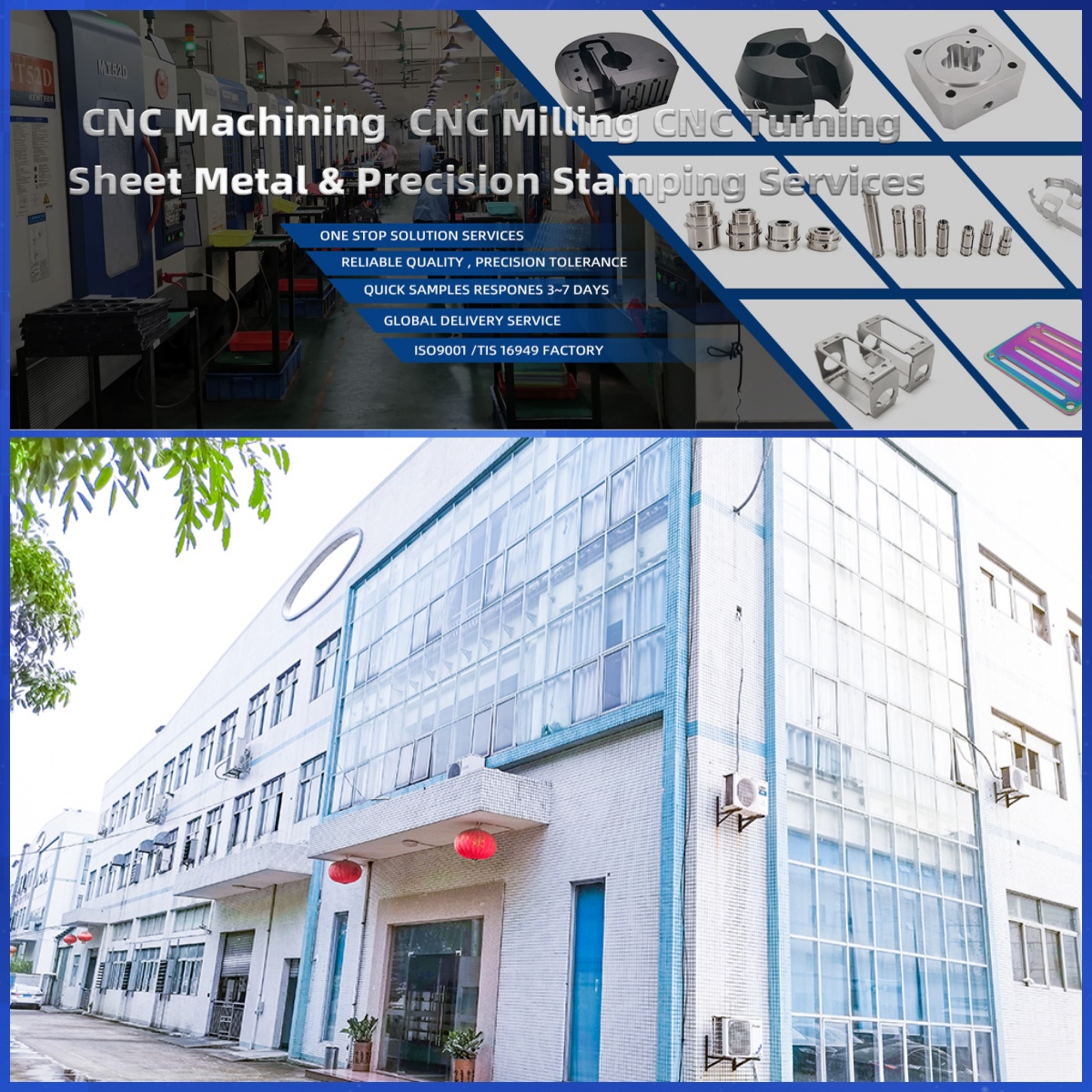
DongGuan YiTai Electronic Technologies Co.,Ltd
DongGuan YiTai Electronic Technologies Co.,Ltd is a manufacturing service provider located in Dongguan, China.
YiTai specialized in CNC turning machining and sheet metal fabrication mainly. As a member of Hung Mou Group, we focus on the overseas marketing development. And based on our parent company’s manufacturing capability and resources, YiTai also expended machining services such as die casting, injection molding, aluminum profile extrusion, 3D printing, which are committed to providing customers with one-stop purchasing services and experience.
CNC MACHINING , CNC MILLING , CNC TURNING , SHEETMETAL , FASTENER , OTHERS




What Are the Softest Metals?
Is Nylon Plastic?
Related Article