
Analysis of the characteristics of oil spraying and powder spraying processes
author: YITECH
2025-02-26
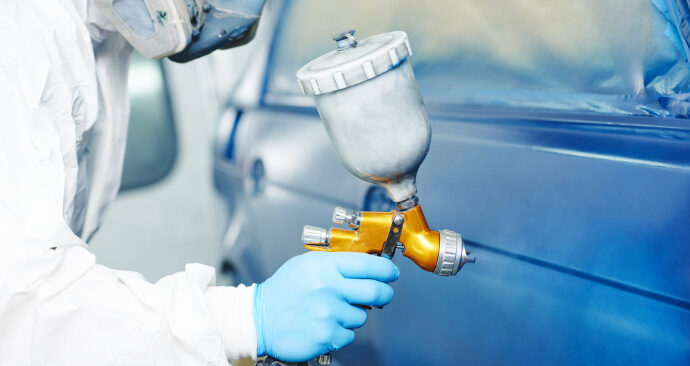
In a groundbreaking development, the new powder spraying technology has revolutionized the manufacturing industry, offering eco-friendly and cost-efficient solutions for surface coating processes
Powder spraying process
1. Powder coating does not contain any solvents and is a 100% solid coating. Its manufacturing, transportation, storage and construction solve the pollution problem caused by solvents, improve the working conditions of operators, and are beneficial to the health of operators.
2. Simplify the coating process. The powder spraying process only requires three processes such as powder spraying, curing and cooling to form a film at one time. It greatly simplifies the coating process, shortens the production cycle, and can produce products on the same day. In the electrostatic coating of powder coating, automatic coating machinery and recycling circulation system can be configured to form automated production, thereby saving energy and resources and improving production efficiency.
3. The utilization rate of powder coating is high. Powder coating can be directly applied to the surface of the coated object, and a coating film is formed after baking and curing. Moreover, the uncoated powder can be recycled and sent to the powder supply system for use. The utilization rate of powder coating is about 95% or more.
4. Powder coating has good performance and is durable. Powder coating can use resins that are insoluble in solvents at room temperature, or polymer resins that are not easily dissolved and cannot be liquefied to prepare high-performance coatings with various functions. In addition, when preparing or forming powder coatings, no solvent is added or released, and no pinholes that penetrate the coating will be produced, so the coating is denser.
5. Powder coating can be applied once, and a coating with a thickness of 50 to 300 μm can be obtained in one application. It is not easy to produce dripping or stagnation (oil accumulation) when thick paint is applied, and no solvent pinholes will occur. It does not cause defects in thick film coating, and the corner coverage rate is also high. The film thickness of paint is generally 5 to 20 μm for one application. If you want to obtain a thick coating or a coating with medium and high-end requirements, you must go through multiple applications to achieve it.
6. Color change is difficult and the cycle is long. Since powder coatings cannot be mixed on site with raw color materials like paints, the color of powder coatings has been determined when they leave the factory. If you want to change its color, you need to change the formula of powder coatings, so it is difficult to complete the color matching work in a short time. Due to the use of electrostatic spraying, if the color is changed in the middle of the operation, the spray gun, powder feeder, powder spraying room, powder conveying pipe, recovery system, etc. must be cleaned up, otherwise it will seriously affect the surface quality of the coating. In particular, the change between dark and light colors is more complicated, so it is not easy to change multiple tones in a short time.
7. It is not easy to achieve thin film coating. Due to the process principle of electrostatic spraying, the film thickness of powder coatings is generally above 50μm. Even if the powder coating is excellent and the construction conditions are good, the minimum film thickness is about 40μm. It is currently very difficult to form a coating below 40μm.
8. The appearance flatness of the coating is slightly poor. Since the powder coating is leveled on the coated object by heating and melting, its melt viscosity is high and it is easy to be slightly orange peel-like. The coating flatness is not as good as paint.
9. It has certain limitations. The limitations of powder coating technology are mainly manifested in three aspects: first, since the curing temperature of powder coating is generally above 160℃, it limits its application in some heat-sensitive products (such as plastics); second, since most of the plastic spraying processes use electrostatic spraying, the coated object must be conductive, which requires the coated object to be a metal part. If it is a non-metallic part, the surface must be conductive and can withstand temperatures above 160℃.
2. Simplify the coating process. The powder spraying process only requires three processes such as powder spraying, curing and cooling to form a film at one time. It greatly simplifies the coating process, shortens the production cycle, and can produce products on the same day. In the electrostatic coating of powder coating, automatic coating machinery and recycling circulation system can be configured to form automated production, thereby saving energy and resources and improving production efficiency.
3. The utilization rate of powder coating is high. Powder coating can be directly applied to the surface of the coated object, and a coating film is formed after baking and curing. Moreover, the uncoated powder can be recycled and sent to the powder supply system for use. The utilization rate of powder coating is about 95% or more.
4. Powder coating has good performance and is durable. Powder coating can use resins that are insoluble in solvents at room temperature, or polymer resins that are not easily dissolved and cannot be liquefied to prepare high-performance coatings with various functions. In addition, when preparing or forming powder coatings, no solvent is added or released, and no pinholes that penetrate the coating will be produced, so the coating is denser.
5. Powder coating can be applied once, and a coating with a thickness of 50 to 300 μm can be obtained in one application. It is not easy to produce dripping or stagnation (oil accumulation) when thick paint is applied, and no solvent pinholes will occur. It does not cause defects in thick film coating, and the corner coverage rate is also high. The film thickness of paint is generally 5 to 20 μm for one application. If you want to obtain a thick coating or a coating with medium and high-end requirements, you must go through multiple applications to achieve it.
6. Color change is difficult and the cycle is long. Since powder coatings cannot be mixed on site with raw color materials like paints, the color of powder coatings has been determined when they leave the factory. If you want to change its color, you need to change the formula of powder coatings, so it is difficult to complete the color matching work in a short time. Due to the use of electrostatic spraying, if the color is changed in the middle of the operation, the spray gun, powder feeder, powder spraying room, powder conveying pipe, recovery system, etc. must be cleaned up, otherwise it will seriously affect the surface quality of the coating. In particular, the change between dark and light colors is more complicated, so it is not easy to change multiple tones in a short time.
7. It is not easy to achieve thin film coating. Due to the process principle of electrostatic spraying, the film thickness of powder coatings is generally above 50μm. Even if the powder coating is excellent and the construction conditions are good, the minimum film thickness is about 40μm. It is currently very difficult to form a coating below 40μm.
8. The appearance flatness of the coating is slightly poor. Since the powder coating is leveled on the coated object by heating and melting, its melt viscosity is high and it is easy to be slightly orange peel-like. The coating flatness is not as good as paint.
9. It has certain limitations. The limitations of powder coating technology are mainly manifested in three aspects: first, since the curing temperature of powder coating is generally above 160℃, it limits its application in some heat-sensitive products (such as plastics); second, since most of the plastic spraying processes use electrostatic spraying, the coated object must be conductive, which requires the coated object to be a metal part. If it is a non-metallic part, the surface must be conductive and can withstand temperatures above 160℃.
Painting process
1. There are many varieties of paints and a wide range of choices. According to the film-forming material, my country divides paints into 17 categories. There are thousands of kinds of paints produced, and new varieties are constantly emerging. Users can choose paints in a targeted manner according to factors such as product performance, purpose, and use environment, in order to achieve the best coating effect.
2. Complete process means and strong adaptability. At present, the methods of paint coating include brush coating, dipping coating, pouring coating, roller coating, scraping coating, air spraying, high-pressure airless spraying, electrophoretic coating, electrostatic spraying, etc. Among them, brush coating, air spraying and electrophoretic coating are the most widely used.
3. The one-time investment in equipment is small. Air spraying is the most widely used construction method by coating manufacturers at present, which is suitable for medium and small coating operations. It has the characteristics of simple construction, uniform coating, flatness and smoothness. The required equipment is only a spray gun, an air compressor, an oil-water separator and necessary accessories such as gas hoses. Compared with the equipment investment of hundreds of thousands or millions of yuan in the plastic spraying process, the one-time investment in equipment is small, the production cost is low, and the capital recovery is fast.
4. The pre-treatment process can be simplified. When using the spray painting process, because the primer has excellent anti-rust performance and good adhesion to the substrate and topcoat, it greatly improves the corrosion resistance of the coating and ensures the service life of the coating. The object to be coated can be sprayed with primer only after degreasing and rust removal without phosphating. Therefore, the pre-treatment process is simplified, production costs are saved, and production efficiency is improved.
5. The operator's skills are required to be high. Due to the wide variety of paints, the operator is required to have a detailed understanding of the use, performance, scope of use, construction methods, precautions in operation, and the matching of various paints. He must have certain knowledge of color science and be able to use the original color to mix the color required by the object to be coated according to needs. Generally, the paint film consists of three parts: primer, putty, and topcoat. Therefore, the correct coating process must be mastered during construction to avoid coating quality problems.
6. The production cycle is long, the comprehensive cost is high, and the painting process is more than the spraying process. Generally speaking, a typical painting process includes the following 6 steps:
The first is the preparation work before painting construction, which includes:
Step 1: Check the performance of the paint, stir the paint thoroughly, adjust the viscosity of the paint, purify and filter the paint, and adjust the color of the paint;
Step 2: Apply primer;
Step 3: Apply putty;
Step 4: Apply intermediate coating;
Step 5: Sanding;
Step 6: Apply topcoat.
2. Complete process means and strong adaptability. At present, the methods of paint coating include brush coating, dipping coating, pouring coating, roller coating, scraping coating, air spraying, high-pressure airless spraying, electrophoretic coating, electrostatic spraying, etc. Among them, brush coating, air spraying and electrophoretic coating are the most widely used.
3. The one-time investment in equipment is small. Air spraying is the most widely used construction method by coating manufacturers at present, which is suitable for medium and small coating operations. It has the characteristics of simple construction, uniform coating, flatness and smoothness. The required equipment is only a spray gun, an air compressor, an oil-water separator and necessary accessories such as gas hoses. Compared with the equipment investment of hundreds of thousands or millions of yuan in the plastic spraying process, the one-time investment in equipment is small, the production cost is low, and the capital recovery is fast.
4. The pre-treatment process can be simplified. When using the spray painting process, because the primer has excellent anti-rust performance and good adhesion to the substrate and topcoat, it greatly improves the corrosion resistance of the coating and ensures the service life of the coating. The object to be coated can be sprayed with primer only after degreasing and rust removal without phosphating. Therefore, the pre-treatment process is simplified, production costs are saved, and production efficiency is improved.
5. The operator's skills are required to be high. Due to the wide variety of paints, the operator is required to have a detailed understanding of the use, performance, scope of use, construction methods, precautions in operation, and the matching of various paints. He must have certain knowledge of color science and be able to use the original color to mix the color required by the object to be coated according to needs. Generally, the paint film consists of three parts: primer, putty, and topcoat. Therefore, the correct coating process must be mastered during construction to avoid coating quality problems.
6. The production cycle is long, the comprehensive cost is high, and the painting process is more than the spraying process. Generally speaking, a typical painting process includes the following 6 steps:
The first is the preparation work before painting construction, which includes:
Step 1: Check the performance of the paint, stir the paint thoroughly, adjust the viscosity of the paint, purify and filter the paint, and adjust the color of the paint;
Step 2: Apply primer;
Step 3: Apply putty;
Step 4: Apply intermediate coating;
Step 5: Sanding;
Step 6: Apply topcoat.
During the construction process, a variety of materials such as primer, putty, thinner, and topcoat are used. Drying time must be left between each process. Some paints cannot dry naturally and need to be heated and dried. Therefore, whether in terms of material consumption, energy consumption, or labor costs, the comprehensive cost of the painting process is higher than that of the plastic spraying process, and the production cycle is longer.
7. Poor environmental protection, which is harmful to the health of the operator. Since the paint contains certain organic solvents, these organic solvents are easily volatilized into the air during the construction and curing process. When using the air spray method, a large amount of overspray mist will be generated, which is harmful to the body, so the operators need to be equipped with gas masks.
8. The fire hazard is higher than that of the powder coating process. We say that the fire hazard of the spray painting process is higher than that of the plastic spraying process for the following three reasons: First, because the paint contains volatile organic solvents, once it comes into contact with open flames (sparks, sparks), it is easy to cause combustion and explosion, while the powder coating does not contain organic solvents, so the hazard is lower than the spray painting process; secondly, the ignition point, flash point, and ignition energy of the paint are lower than those of the powder coating, and the combustion and diffusion speed is faster than that of the powder coating; finally, when the commonly used air spraying method is used to paint the workpiece, whether it is ventilation equipment, construction environment, or operating procedures, they are inferior to the plastic spraying process, so the fire hazard of the former is higher than that of the latter.
8. The fire hazard is higher than that of the powder coating process. We say that the fire hazard of the spray painting process is higher than that of the plastic spraying process for the following three reasons: First, because the paint contains volatile organic solvents, once it comes into contact with open flames (sparks, sparks), it is easy to cause combustion and explosion, while the powder coating does not contain organic solvents, so the hazard is lower than the spray painting process; secondly, the ignition point, flash point, and ignition energy of the paint are lower than those of the powder coating, and the combustion and diffusion speed is faster than that of the powder coating; finally, when the commonly used air spraying method is used to paint the workpiece, whether it is ventilation equipment, construction environment, or operating procedures, they are inferior to the plastic spraying process, so the fire hazard of the former is higher than that of the latter.
One point must be pointed out in particular. Although the fire hazard of the spray painting process is higher than that of the plastic spraying process, once the powder coating explodes, the intensity and destructive power of the explosion will be much greater than that of the liquid coating.
Process summary:
1. Choose from the surface effect. If you want to see a very delicate effect on the surface, then choose spray painting. If you choose a rough one that feels rough to the touch, then choose powder coating. Of course, powder spraying can also be very fine, but not as fine as spray painting.
2. Choose from abrasion resistance and stain hiding, choose powder spraying, because powder spraying is nearly 3-10 times thicker than oil spraying.
3. Choose from volume and price. For small items, use spray painting, because the appearance effect can be more delicate and beautiful, and for large items, choose powder spraying, which is low in cost.
4. From the perspective of environmental protection, it is still powder spraying. Because the fire hazard and toxic gas emission are much lower.
5. Choose from color diversity, then choose spray painting. The color adjustment cycle of powder spraying is long and very troublesome.
1. Choose from the surface effect. If you want to see a very delicate effect on the surface, then choose spray painting. If you choose a rough one that feels rough to the touch, then choose powder coating. Of course, powder spraying can also be very fine, but not as fine as spray painting.
2. Choose from abrasion resistance and stain hiding, choose powder spraying, because powder spraying is nearly 3-10 times thicker than oil spraying.
3. Choose from volume and price. For small items, use spray painting, because the appearance effect can be more delicate and beautiful, and for large items, choose powder spraying, which is low in cost.
4. From the perspective of environmental protection, it is still powder spraying. Because the fire hazard and toxic gas emission are much lower.
5. Choose from color diversity, then choose spray painting. The color adjustment cycle of powder spraying is long and very troublesome.
Different types of surface treatment
Advantages and Disadvantages of Roll Plating
Related Article

Choosing between 316 and 316L? 316L resists weld decay better, 316 holds strength at higher heat. Both food-grade, both marine-grade. Quick, no-fluff breakdown.
316 vs 316L Stainless Steel for CNC Machining
What is stamping and when do you use it? A plain guide to sheet metal stamping, dies, and progressive tools, plus the parts it makes faster than machining.
What Is Stamping in Metal Manufacturing?

