Plastic Fabrication: Methods, Applications, and Selection Guide
That range is the reason two suppliers can quote the same drawing at very different prices. Each of those plastic manufacturing processes carries its own tooling cost, cycle time, and practical limits. This guide explains what plastic fabrication is, how the main methods differ, which engineering plastics suit which jobs, and how to pick a route before you spend money on tooling.
- What Is Plastic Fabrication?
- Common Plastic Fabrication Methods
- Plastic Fabrication Method Comparison
- Common Materials Used in Plastic Fabrication
- Why Use CNC Machining for Plastic Parts?
- How to Choose a Plastic Fabrication Method
- Applications of Custom Plastic Fabrication
- Plastic Fabrication vs. Metal Fabrication
- How to Work With a Custom Plastic Fabrication Supplier
- Frequently Asked Questions
1. What Is Plastic Fabrication?
Plastic fabrication can involve cutting, shaping, joining, molding, or machining plastic. A CNC-machined housing, an injection-molded clip, a thermoformed cover, an extruded tube, and a welded tank all fall under the same broad category. In each case, raw polymer is turned into a finished part through a controlled process.
The right process depends on the part's geometry, quantity, tolerance, material, and target cost. A one-off assembly fixture and a million-piece consumer product need different manufacturing routes, even if their drawings look similar. In general, fabrication work falls into three groups: prototypes and one-off parts, low-volume custom components, and mass-produced products.
Prototypes and low-volume runs require flexibility because the design may still change. High-volume production depends on repeatability, with tooling costs spread across a large number of parts. Choosing the right balance between flexibility and repeatability is often the key decision.

2. Common Plastic Fabrication Methods
Six routes cover most of the plastic fabrication methods used in a modern shop. They are not competing versions of the same thing, and they are not interchangeable. Each one solves a different combination of geometry, volume, and cost.
CNC Machining
CNC machining removes material from plastic stock with rotating cutters and controlled tool paths. It suits prototypes, low-volume production, tight-tolerance parts, and complex features, because the program carries the geometry and no dedicated mold is needed.
Common materials include ABS, POM (Delrin), nylon, PC, PMMA (acrylic), PEEK, PTFE, and HDPE. Each behaves differently at the cutter. Plastics conduct heat poorly, so heat builds up at the cutting edge and can soften the workpiece. Chip evacuation matters because chips wrap instead of breaking like steel swarf. Fixturing has to hold the part without squeezing it out of shape, and thin walls move once the material is relieved.
Those points are not theory. They are the reason a plastic job is planned around cutting conditions first and dimensions second. Our plastic CNC machining services are set up around that sequence.

Injection Molding
Injection molding injects molten plastic into a custom mold cavity. It suits medium- to high-volume production and delivers repeatable geometry once the tooling is validated. The mold is the investment, and the part cost falls as quantity rises.
The trade-off is commitment. A mold locks in the geometry, so a design change after tooling is cut is expensive. This is why molding projects usually run a prototype phase first, often on machined parts, before the tool is ordered.

Thermoforming
Thermoforming heats a plastic sheet and forms it over or into a mold. It is common for trays, covers, housings, packaging, and larger thin-wall parts. Tooling cost sits between machining and molding, so it works where moderate detail is enough and the part is large and shallow.
Extrusion
Extrusion pushes plastic continuously through a die. The output is a constant cross-section: profiles, tubes, channels, seals, and long continuous parts. Because the process never stops to index, it is efficient for high volumes of one profile, but it cannot produce a closed 3D shape on its own.

Plastic Welding and Bonding
Welding and bonding join separate plastic components into one assembly. Options include ultrasonic welding, hot-plate welding, solvent bonding, and adhesive bonding. Material compatibility has to be verified before production, because the same two polymers that look identical may not bond reliably together.
3D Printing
Additive manufacturing is useful for fast prototypes, design validation, jigs, fixtures, and some low-volume parts. Layer-by-layer building means geometry that cannot be machined is still possible. The catch is that material properties and surface finish differ from machined or molded plastics, so a printed prototype validates the design, not always the final performance.

3. Plastic Fabrication Method Comparison
Side by side, the trade-offs become clear. Notice where tooling sits in each row, because that single factor usually decides the answer.
| Method | Best for | Volume | Tooling need | Typical advantage |
|---|---|---|---|---|
| CNC machining | Precise, complex custom parts | Low to medium | Low | Flexible design changes |
| Injection molding | Repeatable production parts | Medium to high | High | Lower unit cost at scale |
| Thermoforming | Thin-wall sheets and covers | Low to high | Medium | Suitable for large panels |
| Extrusion | Continuous profiles and tubing | High | High | Efficient continuous production |
| 3D printing | Prototypes and short runs | Low | Low | Fast iteration |
| Welding / bonding | Multi-part assemblies | Varies | Low to medium | Enables larger assemblies |
This is also where the question of plastic fabrication vs injection molding usually lands. Molding is not the better version of fabrication. It is one route inside it, and it only pays off when volume is high enough to absorb the mold.
4. Common Materials Used in Plastic Fabrication
Material choice follows the job, not a preference list. These grades cover most custom work, and each one exists because it solves a specific problem.
- ABS — general-purpose housings and prototypes; easy to machine and bond.
- POM / Delrin — wear-resistant moving parts and precision components with low friction.
- Nylon — durable parts that need toughness and impact resistance.
- Polycarbonate — impact-resistant transparent or protective parts.
- Acrylic / PMMA — clear panels, displays, and covers with good optical clarity.
- PEEK — high-performance parts for demanding industrial applications.
- PTFE — low-friction and chemically resistant components.
- HDPE — chemically resistant tanks, guards, and industrial parts.
Selection is rarely about the material alone. It is about how the grade behaves in the process you chose. A grade that machines cleanly may not weld, and a grade that tolerates chemicals may not hold a polished finish. That balance is what plastic material selection actually means in practice.

Whether a material suits food contact, medical use, electrical insulation, or high-temperature service depends on the customer standard, the material datasheet, and the real application. Those are three separate checks. Confirm them with the material supplier and the customer specification before production rather than relying on a general grade description.
5. Why Use CNC Machining for Plastic Parts?
Plastic CNC machining is often the preferred option for prototypes, low-volume production, and parts with tight dimensional requirements. Unlike injection molding, it does not require a dedicated production mold, which makes it far more flexible while a design is still changing.
The practical advantages are straightforward:
- No dedicated mold is required, so there is no tooling gate to clear.
- Design changes are handled by editing the program, not cutting new tooling.
- Complex pockets, holes, threads, and precision features are machined directly.
- A broad range of engineering plastics can be cut on the same equipment.
- The same process bridges prototype validation and early production runs.
"The mistake we see most often is treating plastic like soft metal. Plastics move with heat, spring back differently, and hold a different tolerance than a steel part the same size. When a customer sends a drawing for CNC machining plastic parts, the first review is about wall thickness, heat build-up, and how the part will be held. Those three points decide whether the tolerance on the drawing is realistic before any program is written."
— Engineering review team, DongGuan YiTai
Our engineering plastic materials page lists the grades we machine regularly, with the properties that matter for part design.
6. How to Choose a Plastic Fabrication Method
When you are working out how to choose a plastic fabrication method, seven factors drive the answer. Run them in order, because the early ones eliminate most options on their own.
- Production volume — prototype, low-volume, or mass production. This alone separates molding from machining.
- Part geometry — flat, hollow, continuous, or complex 3D. Extrusion only makes constant cross-sections.
- Tolerance requirements — critical dimensions and assembly interfaces. Plastics move more than metals, so tolerance has to match the material.
- Material performance — strength, chemical resistance, temperature, transparency, or wear resistance.
- Surface requirements — texture, polish, colour, or cosmetic finish. Not every process delivers every finish.
- Budget and tooling timeline — upfront cost against long-term unit cost.
- Design maturity — frequent changes favour CNC machining or 3D printing, because neither locks the geometry into a mold.
Read the list twice if the design is still moving. A cheaper unit price at volume means nothing if the tool is cut before the drawing is frozen.
7. Applications of Custom Plastic Fabrication
Custom plastic fabrication shows up in more places than most buyers expect, usually because plastic solves a weight, insulation, or chemical problem that metal cannot.
- Electronics enclosures and insulation components
- Medical equipment housings and fixtures
- Automotive interior and functional parts
- Industrial machine guards and wear components
- Robotics and automation fixtures
- Laboratory equipment components
- Consumer product housings and covers
- Custom jigs, fixtures, and assembly aids
Many of these parts are not plastic in isolation. A machined plastic housing may be assembled with metal inserts, and a guard may be welded from several cut panels. That is why custom plastic parts are usually quoted as a complete route rather than a single operation.

Describe plastic parts by their measured properties and confirmed standards, not by marketing labels. Terms such as medical-grade or food-safe only mean something when a specific standard and certificate back them up. If documentation is required, say so at the quotation stage so it can be confirmed with the material supplier.
8. Plastic Fabrication vs. Metal Fabrication
Plastic and metal are usually not competing for the same job. The comparison matters when a part could genuinely go either way.
| Factor | Plastic fabrication | Metal fabrication |
|---|---|---|
| Weight | Usually lower | Usually higher |
| Corrosion resistance | Depends on polymer | Depends on alloy and finish |
| Strength and stiffness | Varies by material | Often higher overall |
| Electrical insulation | Often good | Usually conductive |
| Heat resistance | Material-dependent | Often higher |
| Machining behavior | Risk of heat deformation | Risk of tool wear and burrs |
The pattern is consistent. Plastic wins on weight, insulation, and chemical resistance. Metal wins on stiffness and service temperature. When both are close, the deciding factor is usually the environment the part will live in.
9. How to Work With a Custom Plastic Fabrication Supplier
A custom plastic parts manufacturer can only quote accurately when the request is complete. These are the items that turn a rough enquiry into a firm process recommendation.
- 2D drawings and 3D CAD files
- Material preference, or the performance requirement if the grade is open
- Quantity and expected annual volume
- Tolerance requirements, especially on assembly interfaces
- Surface finish and colour requirements
- Assembly requirements, including inserts and bonding
- Target delivery date
Send these together and the reply becomes a process recommendation with realistic tolerances, not a number that changes later.

Conclusion
Plastic fabrication includes a range of processes, from CNC machining and injection molding to thermoforming, extrusion, welding, and 3D printing. The best option depends on the material, part complexity, tolerance, volume, and cost target. For custom or low-volume precision parts, plastic CNC machining offers a flexible and reliable route, because the geometry lives in the program rather than in a mold.
Start with volume and geometry, confirm the material against the real service environment, and settle the tolerance before tooling is discussed. That order keeps a project off the expensive path of cutting a mold for a design that was not finished yet.
Need custom plastic parts for your project?
Send us your drawings for a material and DFM review. We will confirm the process, the realistic tolerances, and the tooling route before any production starts.
Request a DFM ReviewIf you already have a drawing and want a second opinion on the process route, request a DFM review and we will tell you which method fits the part and why.
10. Frequently Asked Questions
What is plastic fabrication?
Plastic fabrication is the process of shaping, cutting, molding, joining, or machining plastic materials into functional parts and products. It covers several routes, including CNC machining, injection molding, thermoforming, extrusion, welding, and 3D printing.
What is the best plastic fabrication method?
The best method depends on part geometry, material, tolerance, quantity, surface requirements, and budget. Injection molding usually wins at high volume, while CNC machining and 3D printing are often better for prototypes and low-volume custom parts.
Is CNC machining suitable for plastic parts?
Yes. CNC machining is suitable for prototypes, low-volume production, complex geometry, and parts with tight dimensional requirements. It needs no production mold, so a design change is handled by editing the program rather than cutting new tooling.
What plastics can be CNC machined?
Common CNC machined plastics include ABS, POM, nylon, polycarbonate, acrylic, PEEK, PTFE, and HDPE. Machining behavior varies by grade, so feeds, speeds, and fixturing are set per material.
Is injection molding cheaper than CNC machining?
Injection molding can offer a lower unit cost at high volume, but it requires upfront tooling investment. CNC machining is often more economical for prototypes and low-volume parts because there is no mold to pay for.
Can custom plastic parts receive surface finishing?
Yes. Depending on the material, plastic parts may be polished, textured, painted, dyed, engraved, bonded, or assembled. The suitable finish depends on the polymer and the appearance or function the part needs.
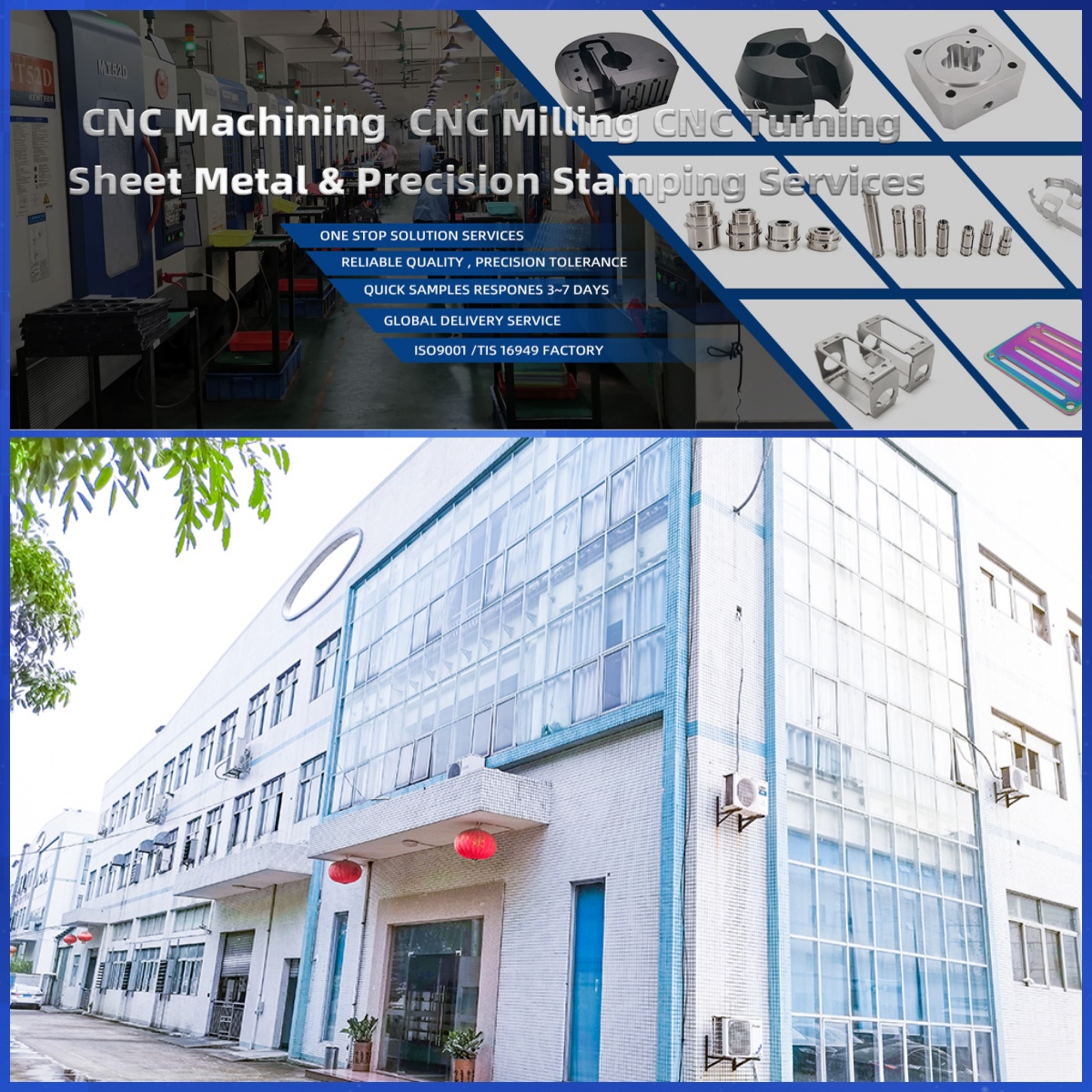
DongGuan YiTai Electronic Technologies Co.,Ltd
DongGuan YiTai Electronic Technologies Co.,Ltd is a manufacturing service provider located in Dongguan, China.
YiTai specialized in CNC turning machining and sheet metal fabrication mainly. As a member of Hung Mou Group, we focus on the overseas marketing development. And based on our parent company’s manufacturing capability and resources, YiTai also expended machining services such as die casting, injection molding, aluminum profile extrusion, 3D printing, which are committed to providing customers with one-stop purchasing services and experience.
CNC MACHINING , CNC MILLING , CNC TURNING , SHEETMETAL , FASTENER , OTHERS




316 vs 316L Stainless Steel for CNC Machining
Related Article