
Four Types of Profiles
author: YITECH
2024-11-23
Perforated steel sheet is a type of sheet metal that has been punched with a series of holes to create a pattern. The holes can be of different shapes and sizes, providing flexibility in designing and achieving specific aesthetic or functional goals. Perforated steel sheet is widely used in industries such as architecture, construction, automotive, and HVAC because of its durability, strength, and aesthetic appeal. It is typically made from steel, and the size and pattern of the holes can be customized to meet specific project requirements.......
Today, we will introduce the main types of profiles, including I-beams, angle steel, channel steel, and H-beams.
I-beams
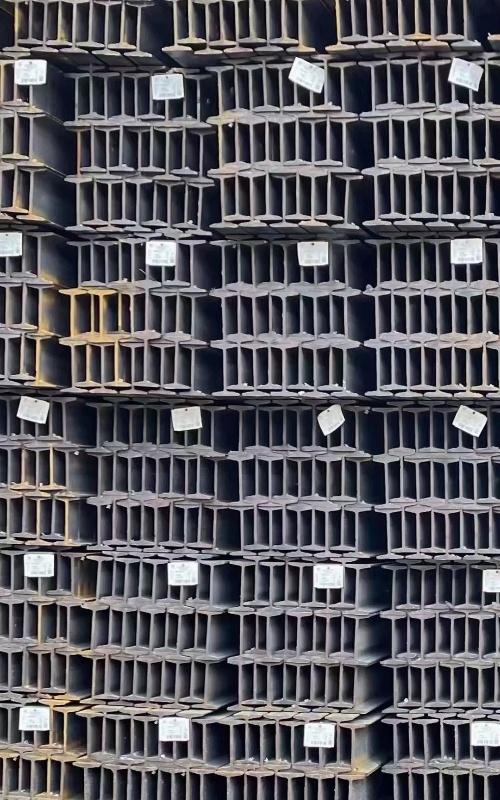
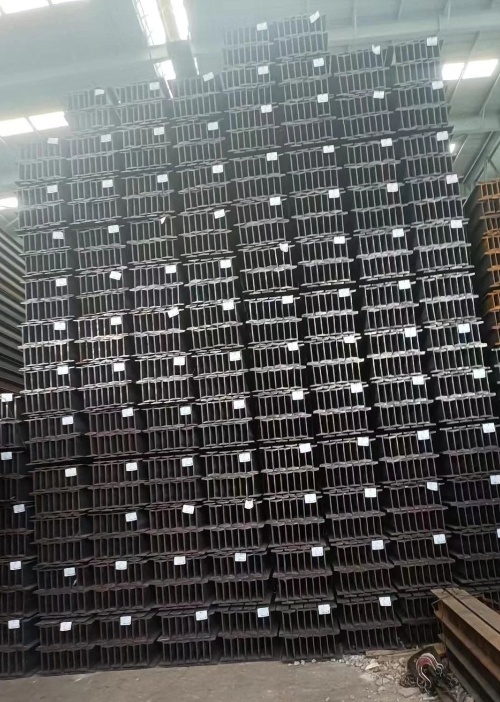
They are mainly divided into ordinary I-beams, light I-beams, and wide flange I-beams. According to the ratio of the height of the flange to the web, they are further divided into wide, medium, and narrow flange width I-beams. The specifications produced by the former two range from 10 to 60, which correspond to heights from 10cm to 60cm. At the same height, light I-beams have narrow flanges, thin webs, and are lightweight. Wide flange I-beams, also known as H-beams, have the characteristic of two parallel legs with no inclination on the inner side of the legs. They belong to the economic section steel and are rolled on a four-roller universal rolling mill, so they are also called "universal I-beams". Ordinary I-beams and light I-beams have formed national standards, with their specifications represented by height x leg thickness x waist thickness or by size numbers of the main dimensions. For example, 18 I-beam represents an I-beam with a height of 18cm. If I-beams have the same height, they can be annotated with angle codes a, b, or c after the size number, such as 36a, 36b, 36c, and so on. They are further divided into ordinary I-beams, light I-beams, and wide flange I-beams. According to the ratio of the height of the flange to the web, they are further divided into wide, medium, and narrow flange width I-beams, with the former two ranging from 10 to 60, which correspond to heights from 10cm to 60cm.
Angle steel
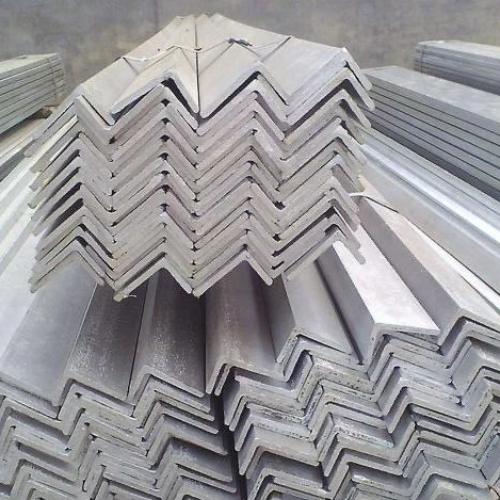
Angle steel can be composed of various different structural components according to different structural requirements, and can also be used as connecting components between components. It is widely used in various building and engineering structures, such as roof beams, bridges, transmission towers, lifting and transportation machinery, ships, industrial furnaces, reaction towers, container racks, cable trench brackets, power pipe installation brackets, busbar supports, and warehouse shelves. It is mainly divided into equal angle steel and unequal angle steel, which can be further divided into unequal thickness and unequal thickness. The specifications of angle steel are represented by the size of the side length and the thickness of the side. Currently, the domestic specifications of angle steel range from 2 to 20, with the number corresponding to the size of the side length in centimeters. The same number of angle steel usually has 2 to 7 different thicknesses. Imported angle steel states the actual size of both sides and the thickness and indicates the relevant standards. Angle steel with a side length of more than 12.5cm is a large angle steel, 12.5cm-5cm is a medium angle steel, and a side length of less than 5cm is a small angle steel. The section height of unequal angle steel is calculated based on the width of the long side of the unequal angle steel. It refers to steel with a sectional shape of an angle with two unequal sides, which is a type of angle steel. Its side length ranges from 25mmx16mm to 200mmx125mm and is rolled by a hot rolling mill. The common specifications of unequal angle steel range from L50*32 to L200*125, with a thickness of 4-18mm.
Unequal angle steel is widely used in various metal structures, bridges, machinery manufacturing and shipbuilding industries, various building and engineering structures, such as roof beams, bridges, transmission towers, lifting and transportation machinery, ships, industrial furnaces, reaction towers, container racks, and warehouses.
I-beams
They are mainly divided into ordinary I-beams, light I-beams, and wide flange I-beams. According to the ratio of the height of the flange to the web, they are further divided into wide, medium, and narrow flange width I-beams. The specifications produced by the former two range from 10 to 60, which correspond to heights from 10cm to 60cm. At the same height, light I-beams have narrow flanges, thin webs, and are lightweight. Wide flange I-beams, also known as H-beams, have the characteristic of two parallel legs with no inclination on the inner side of the legs. They belong to the economic section steel and are rolled on a four-roller universal rolling mill, so they are also called "universal I-beams". Ordinary I-beams and light I-beams have formed national standards, with their specifications represented by height x leg thickness x waist thickness or by size numbers of the main dimensions. For example, 18 I-beam represents an I-beam with a height of 18cm. If I-beams have the same height, they can be annotated with angle codes a, b, or c after the size number, such as 36a, 36b, 36c, and so on. They are further divided into ordinary I-beams, light I-beams, and wide flange I-beams. According to the ratio of the height of the flange to the web, they are further divided into wide, medium, and narrow flange width I-beams, with the former two ranging from 10 to 60, which correspond to heights from 10cm to 60cm.
Angle steel
Angle steel can be composed of various different structural components according to different structural requirements, and can also be used as connecting components between components. It is widely used in various building and engineering structures, such as roof beams, bridges, transmission towers, lifting and transportation machinery, ships, industrial furnaces, reaction towers, container racks, cable trench brackets, power pipe installation brackets, busbar supports, and warehouse shelves. It is mainly divided into equal angle steel and unequal angle steel, which can be further divided into unequal thickness and unequal thickness. The specifications of angle steel are represented by the size of the side length and the thickness of the side. Currently, the domestic specifications of angle steel range from 2 to 20, with the number corresponding to the size of the side length in centimeters. The same number of angle steel usually has 2 to 7 different thicknesses. Imported angle steel states the actual size of both sides and the thickness and indicates the relevant standards. Angle steel with a side length of more than 12.5cm is a large angle steel, 12.5cm-5cm is a medium angle steel, and a side length of less than 5cm is a small angle steel. The section height of unequal angle steel is calculated based on the width of the long side of the unequal angle steel. It refers to steel with a sectional shape of an angle with two unequal sides, which is a type of angle steel. Its side length ranges from 25mmx16mm to 200mmx125mm and is rolled by a hot rolling mill. The common specifications of unequal angle steel range from L50*32 to L200*125, with a thickness of 4-18mm.
Unequal angle steel is widely used in various metal structures, bridges, machinery manufacturing and shipbuilding industries, various building and engineering structures, such as roof beams, bridges, transmission towers, lifting and transportation machinery, ships, industrial furnaces, reaction towers, container racks, and warehouses.


We will talk about channel steel and H-shaped steel next page, please pay attention to me if you are interested in it!
Four Profile steels
7 Steps to Operate A CNC Machining Center
Related Article

Choosing between 316 and 316L? 316L resists weld decay better, 316 holds strength at higher heat. Both food-grade, both marine-grade. Quick, no-fluff breakdown.
316 vs 316L Stainless Steel for CNC Machining
What is stamping and when do you use it? A plain guide to sheet metal stamping, dies, and progressive tools, plus the parts it makes faster than machining.
What Is Stamping in Metal Manufacturing?

