Mastering Precision Motor Shaft Manufacturing

-
Where Precision Shafts Power Performance: Key Application Scenarios
-
Precision Motor Shaft FAQs: Answering Your Critical Questions
Introduction: The Critical Role of the Motor Shaft

The humble motor shaft is far more than just a simple metal rod. It is the vital kinetic link, the torque transmitter, and the precision backbone converting electrical energy into reliable mechanical rotation. In demanding applications, even microscopic deviations in a shaft's dimensions, straightness, balance, or surface finish can lead to catastrophic failures like bearing seizure, excessive vibration, noise, energy loss, and premature motor burnout. This blog delves into the world of precision motor shafts, exploring their critical applications and the sophisticated manufacturing processes that transform raw material into high-performance rotational cores. For insights into what types of parts benefit most from CNC machining, see our previous blog: What types or structures of parts are CNC suitable for machining?
Where Precision Shafts Power Performance: Key Application Scenarios

Industrial Motors & Pumps
The workhorses of industry demand shafts capable of handling continuous heavy loads, high speeds, and operating in harsh environments (heat, dust, chemicals). Precision ensures maximized efficiency, minimized downtime, and extended service life for motors driving conveyors, compressors, fans, and pumps.
Electric Vehicles (EVs) & Hybrids
EV traction motors operate at extremely high RPMs and generate significant torque. Shafts here require exceptional balance (G2.5 or better is common), high strength-to-weight ratios, and often specialized surface treatments to handle unique lubrication regimes and prevent fretting corrosion. Precision directly impacts range, power delivery, and NVH (Noise, Vibration, Harshness).
Aerospace & Defense Systems
Aircraft actuators, generators, and auxiliary power units (APUs) demand ultra-lightweight yet incredibly robust shafts. Materials like high-strength alloys and titanium are common. Processes like precision grinding and superfinishing are critical to achieve the required tolerances and surface integrity under extreme operating conditions. Reliability is non-negotiable.
Robotics & Automation
Robotic joints and servo motors require shafts offering minimal friction, near-zero backlash, and exceptional positional accuracy. Precision grinding and specialized surface finishes (like diamond-like carbon - DLC) are often employed to ensure smooth motion control and long-term repeatability.
Precision Medical & Laboratory Equipment
Devices like MRI scanners, centrifuges, and surgical tools rely on shafts that are biocompatible (if applicable), non-magnetic, and run with ultra-smoothness and silence. Contamination control and achieving sub-micron runout are paramount.
The Anatomy of Excellence: Core Manufacturing Processes
Creating a high-performance precision motor shaft is a symphony of advanced manufacturing techniques:

Turning: Establishing the Foundation
-
Process: CNC turning is the primary operation for creating the initial cylindrical form, establishing critical diameters, shoulders, and tapers. High-precision CNC lathes ensure concentricity and dimensional accuracy from the start. This step defines the basic geometry upon which all subsequent operations build.
-
Importance: Sets the baseline for dimensional accuracy, surface finish, and concentricity. Efficient material removal.
Milling: Adding Complexity & Features
-
Process: CNC milling machines are used to create non-rotationally symmetric features essential for shaft function and assembly. This includes:
-
Keyways & Splines: For transmitting torque to gears, pulleys, or couplings.
-
Flats & D-shaped Sections: For set screws or anti-rotation purposes.
-
Cross-holes & Threads: For lubrication passages or fastening.
-
-
Importance: Enables complex shaft designs and secure component interfacing. Precision milling ensures these features are accurately located and sized relative to the shaft's centerline.
Grinding: Achieving Micron-Level Precision
-
Process: Precision grinding (especially cylindrical grinding and often centerless grinding) is the definitive operation for achieving the final critical diameters, bearing journals, and sealing surfaces. It removes minimal material to achieve:
-
Tight Geometric Tolerances: Diameter (often within microns), roundness, cylindricity.
-
Superior Surface Finish: Critical for bearing life and seal effectiveness.
-
Exact Size Control: Essential for press fits and clearance specifications.
-
-
Expert Insight: "Grinding is where the magic happens for bearing fits," says Michael Chen, Senior Manufacturing Engineer at Axion Precision. "Achieving that mirror-like finish and sub-micron roundness isn't just about looks; it's the difference between a bearing lasting 10,000 hours or 50,000 hours. Thermal management during grinding is absolutely critical to prevent micro-cracking that leads to premature failure." Learn more about the specific process in our dedicated blog: What is external grinding?
-
Importance: Delivers the final functional geometry and surface integrity required for reliable performance under load and speed.
Heat Treatment: Building Strength & Durability
-
Process: Applying controlled heating and cooling cycles to alter the shaft material's microstructure. Common treatments include:
-
Through Hardening: (e.g., Quenching & Tempering) Increases overall hardness and strength.
-
Case Hardening: (e.g., Carburizing, Nitriding, Induction Hardening) Creates a hard, wear-resistant surface layer while maintaining a tougher core. Nitriding is popular for motor shafts due to its minimal distortion and excellent wear and corrosion resistance.
-
-
Importance: Enhances load-bearing capacity, resistance to wear and fatigue, and overall longevity. Careful control is needed to minimize distortion, which subsequent grinding must correct.
Dynamic Balancing: Ensuring Smooth, Vibration-Free Operation
-
Process: The shaft is spun on a precision balancing machine. Sensors detect vibration caused by uneven mass distribution (unbalance). Material is then strategically removed (e.g., drilling) from specific locations to counteract this unbalance.
-
Importance: Reduces vibration to acceptable levels (specified in balance grades like G1, G2.5, G6.3). This is critical for preventing bearing damage, minimizing noise, reducing energy losses, and ensuring smooth operation, especially at high speeds. Balancing is often performed at multiple stages (semi-finished, after grinding, final assembly).
Surface Treatment: Enhancing Performance & Longevity
-
Process: Applying specialized treatments to the shaft surface after final grinding and balancing:
-
Coatings:
-
Electroless Nickel (EN): Excellent corrosion resistance, good wear resistance, uniform coating. Common in harsh environments (marine, chemical).
-
Chrome Plating: Very high hardness and wear resistance. Used on bearing journals subject to extreme abrasion. Environmental concerns are driving alternatives.
-
Diamond-Like Carbon (DLC): Extremely low friction, high hardness, excellent wear resistance. Ideal for high-performance, low-lubrication applications (e.g., some EVs, aerospace).
-
-
Surface Enhancement:
-
Shot Peening: Bombards the surface with small media to induce compressive residual stresses. Significantly improves fatigue life by resisting crack initiation and propagation.
-
Superfinishing/Polishing: Further refines the ground surface to an almost mirror finish, minimizing friction and further enhancing bearing/seal life.
-
-
-
Importance: Addresses tribological challenges (friction, wear), corrosion resistance, and fatigue performance. The choice depends heavily on the application's specific demands (load, speed, environment, lubrication). For a deeper dive into why surface treatment is vital, see: What is the role of surface treatment in mechanical processing products?
Expert Insights: The Nuances of Shaft Perfection
Dr. Lena Petrov, Materials Scientist specializing in Rotating Equipment: "The interplay between material selection, heat treatment, and final grinding is paramount. Choosing the optimal steel grade (e.g., 4140, 4340, Nitralloy) is step one. However, the heat treatment recipe must be meticulously tailored not just for hardness, but to achieve the right core toughness and residual stress profile. Any compromises here create weaknesses that even the best grinder cannot fix. Furthermore, surface integrity post-grinding – avoiding burns, tensile stresses, or micro-cracks – is non-negotiable for fatigue performance in high-cycle applications like EVs or turbomachinery. Non-destructive testing (NDT) like magnetic particle inspection (MPI) is crucial, especially after grinding and shot peening."
Precision Motor Shaft FAQs: Answering Your Critical Questions
Q: Why is dynamic balancing so critical for motor shafts?
A: Unbalanced shafts create destructive centrifugal forces that increase exponentially with rotational speed. This leads to excessive vibration, causing premature bearing failure, seal damage, increased noise, energy loss, and potential catastrophic mechanical failure. Balancing ensures smooth, efficient, and reliable operation, especially at high RPMs.
Q: What are the main differences between carburizing and nitriding for shaft hardening?
-
Carburizing: Adds carbon to the surface at high temps (1700°F+), then quenched. Creates a very deep, hard case (up to 0.050"+) and a tough core. Excellent for high bending/torsional loads but causes significant distortion requiring extensive post-heat treat machining/grinding.
-
Nitriding: Diffuses nitrogen into the surface at lower temps (950-1050°F). Creates a very hard, thin case (0.010"-0.020") with exceptional wear/fretting resistance and superior corrosion resistance. Key advantage: Minimal distortion ("near-net-shape"), reducing post-processing costs. Excellent for sliding wear applications (bearing journals, splines) and shafts requiring high dimensional stability. See our surface treatment blog for more details.
Q: When is grinding absolutely necessary vs. just turning?
A: Turning is excellent for bulk material removal and achieving good initial tolerances (±0.001" or 25µm is typical). Grinding is essential when you require:
-
Tighter Tolerances: Diameters within ±0.0001" (2.5µm) or less.
-
Superior Surface Finish: Ra < 16 µin (0.4µm) or better, crucial for bearing fits.
-
Higher Geometric Accuracy: Exceptional roundness, cylindricity, straightness.
-
Hard Material Machining: Grinding is the primary method for finishing hardened steels (>45 HRC) after heat treatment. If your application involves high-speed operation, precision bearings, or critical sealing surfaces, grinding is almost always mandatory.
Q: What factors influence the choice of surface coating for a motor shaft?
A: The selection depends on the primary performance requirement:
-
Extreme Wear Resistance: Chrome Plating (traditional), DLC (advanced).
-
Corrosion Resistance: Electroless Nickel (EN), specific grades of DLC.
-
Low Friction / Dry Running: DLC, specialized polymer coatings.
-
Cost-Effectiveness in Moderately Harsh Environments: EN is often a good balance.
-
Fatigue Life Improvement: Shot peening (not a coating, but a surface enhancement).
-
Operating Environment: Temperature, chemical exposure, presence of lubricant.
-
Dimensional Impact: Some coatings add measurable thickness; final grinding might need compensation.
Q: How does CNC machining benefit precision shaft manufacturing?
A: As detailed in our previous blog What types or structures of parts are CNC suitable for machining?, CNC machining is ideally suited for precision shafts because:
-
Complex Geometries: CNC lathes and mills easily handle features like tapers, multiple diameters, complex threads, keyways, splines, and cross-holes with high accuracy and repeatability.
-
High Precision & Repeatability: CNC machines consistently hold tight tolerances essential for bearing fits, balance, and assembly.
-
Efficiency & Automation: CNC allows for high-volume production with minimal operator intervention and quick changeovers between shaft designs.
-
Flexibility: Easily reprogrammable for different shaft designs, making it perfect for both prototypes and production runs. Rotational symmetry makes shafts a core CNC application.
Conclusion: The Unsung Hero of Rotational Systems
The precision motor shaft, though often hidden from view, is a masterpiece of engineering and manufacturing. Its performance hinges on the meticulous execution of processes like precision grinding, controlled heat treatment, exacting dynamic balancing, and tailored surface treatments. Understanding these processes – from the foundational CNC turning and milling to the finishing touches – is crucial for selecting or manufacturing shafts that deliver reliability, efficiency, longevity, and quiet operation in the world's most demanding applications. Investing in precision here pays dividends in reduced downtime, lower energy consumption, and superior overall system performance. It truly is the heartbeat of efficient rotation.
Ready to discuss your precision motor shaft requirements? Contact our engineering team today for expert guidance on material selection, optimal processing routes, and achieving the tightest tolerances for your application. Explore our related resources on CNC machining capabilities and surface engineering for deeper insights!
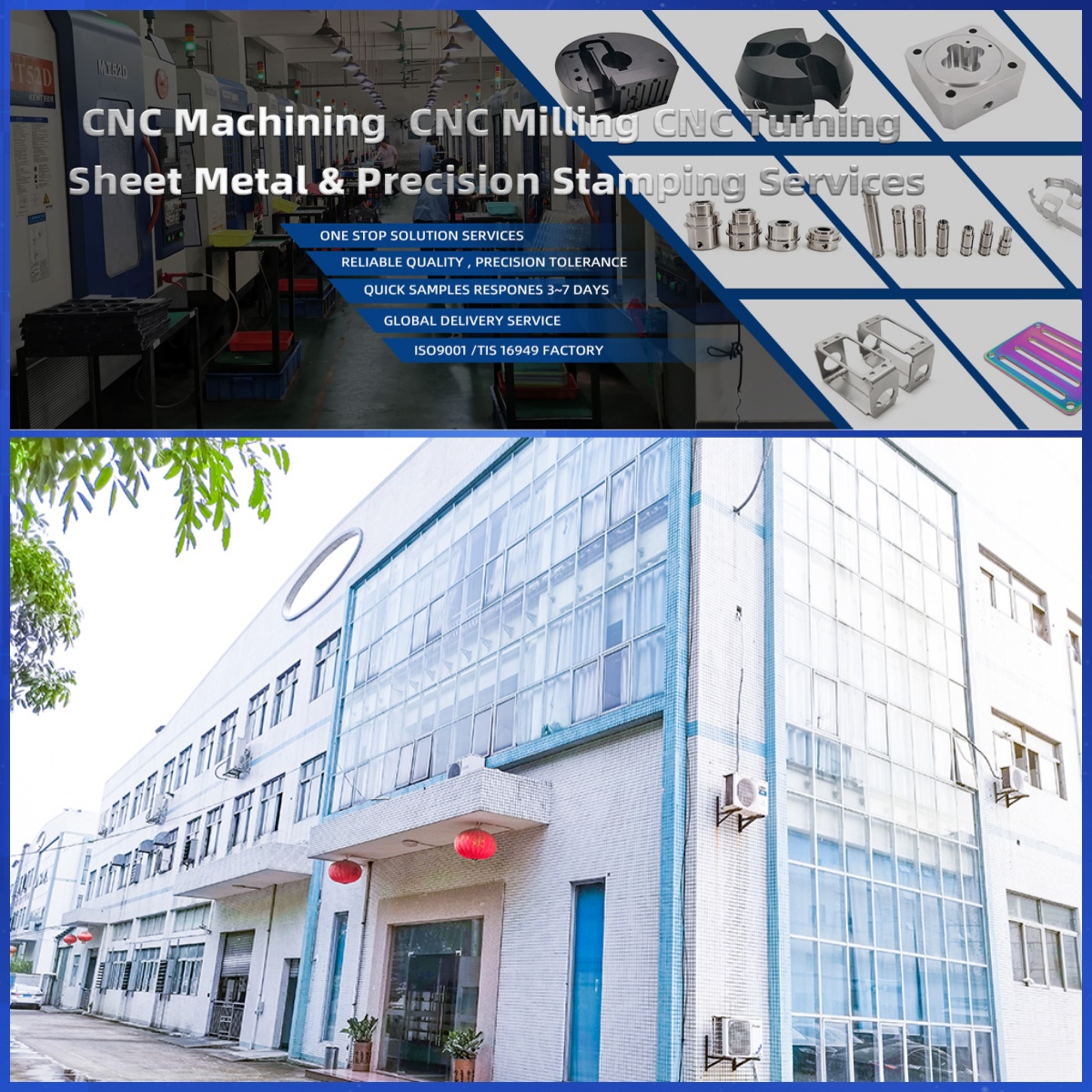
DongGuan YiTai Electronic Technologies Co.,Ltd
DongGuan YiTai Electronic Technologies Co.,Ltd is a manufacturing service provider located in Dongguan, China.
YiTai specialized in CNC turning machining and sheet metal fabrication mainly. As a member of Hung Mou Group, we focus on the overseas marketing development. And based on our parent company’s manufacturing capability and resources, YiTai also expended machining services such as die casting, injection molding, aluminum profile extrusion, 3D printing, which are committed to providing customers with one-stop purchasing services and experience.
CNC MACHINING , CNC MILLING , CNC TURNING , SHEETMETAL , FASTENER , OTHERS




Aluminum Toothbrush Handles: Engineering the Future of Sustainable Oral Care
Engineered for Strength and Space: The Hex Socket Cap Screw Advantage
Related Article