Deformation Issues and Countermeasures in CNC Machining of Plastic Parts
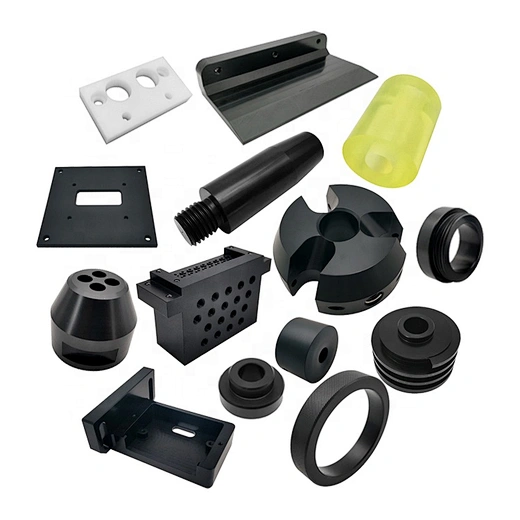
Table of Contents
-
Why Plastic Parts Are Prone to Deformation After CNC Machining
-
How to Prevent or Reduce Deformation of Plastic Parts After Machining
-
Case Study: Deformation Control of a Thin-Walled POM Gearbox Housing
1. Introduction
Plastic parts are widely used in industries such as medical devices, consumer electronics, and automotive due to their advantages like low density, light weight, and diversity of material choices. However, when machining plastics using CNC equipment, a series of challenges distinct from metal machining are encountered. One of the most common issues is the deformation of parts after machining, which not only affects dimensional accuracy but also impacts assembly and functional stability.
This article will systematically analyze the main reasons for deformation in plastic parts after CNC machining and propose practical solutions combined with real-world production cases.
2. Why Plastic Parts Are Prone to Deformation After CNC Machining
Compared to metals, plastics are more susceptible to deformation during machining due to their low rigidity, low thermal conductivity, and high coefficient of thermal expansion. The main reasons include:
2.1 Release of Internal Residual Stresses
Many plastic materials, especially sheets or rods formed by extrusion or injection molding, contain internal residual stresses from the forming process. When CNC machining removes material, it disrupts the original stress balance, causing stresses within the remaining material to redistribute. Unevenly released stress leads to part warping, bending, or deformation.
2.2 Thermal Deformation Induced by Cutting Heat
Plastics have low thermal conductivity and low softening points. If the heat generated during CNC cutting is not dissipated promptly, it accumulates in the cutting zone and the part's surface layer, causing local overheating, thermal expansion, or even melting, leading to dimensional changes or surface defects.

2.3 Clamping Deformation
Plastic materials have poor rigidity and are easily squeezed and deformed under fixture pressure. This is especially true for thin-walled structures, which may deform under clamping pressure. When the pressure is released, they spring back, causing shape changes and dimensional deviations.
2.4 Material Hygroscopicity and Batch Fluctuations
Plastics like Nylon and PEEK are hygroscopic (moisture-absorbing). Their dimensions can change if influenced by environmental humidity during and after machining. Furthermore, the mechanical properties and stress distribution can vary between different batches of plastic material, leading to inconsistent machining results.
3. How to Prevent or Reduce Deformation of Plastic Parts After Machining
To effectively solve post-machining deformation problems, comprehensive optimization from multiple dimensions is necessary, including material handling, process parameters, clamping methods, and machining path strategies:
3.1 Stress Relief Annealing Before Machining
Annealing the material before machining can effectively release internal residual stresses. For example, annealing PC material at 120°C for 2 hours can significantly reduce warping deformation after machining, making it particularly suitable for parts with high requirements for structural features and appearance, such as transparent optical components.

3.2 Use Sharp Tools and Control Heat Buildup
Select sharp tungsten carbide tools with high rake angles, paired with appropriate spindle speeds and feed rates to reduce cutting heat. Avoid using high RPMs that exacerbate thermal expansion. For cooling, air blast or minimum quantity lubrication (MQL) is recommended to avoid moisture absorption and swelling caused by water cooling.
3.3 Reduce Clamping Force and Use Flexible Fixtures
Use vacuum fixtures or fixtures with soft pads to avoid concentrated clamping pressure causing plastic compression deformation. For thin-walled parts, reduce the cutting force per pass through staged semi-finishing to minimize deformation risk.
3.4 Control Material Storage and Pre-processing
Hygroscopic materials like Nylon should be stored in low-humidity environments. Adequate drying before machining (e.g., 6 hours at 80°C) is necessary to avoid dimensional instability caused by changes in water content.
3.5 Adopt Symmetrical Machining Strategies
Optimize tool paths and process sequence. For example, during roughing, use zoning and alternate cutting from both sides to effectively balance stress release. Avoid large-area cutting on one side which causes stress concentration and part warping.
4. Case Study: Deformation Control of a Thin-Walled POM Gearbox Housing
Thin-walled plastic parts are highly susceptible to deformation during CNC machining. This case study involves a POM (Polyoxymethylene) gearbox housing with very strict dimensional and structural requirements.
4.1 Part Description & Problem Definition
The gearbox housing is made of black POM material for a micro actuator, measuring approximately 90mm × 60mm × 26mm. Its structural features include:
-
Thin-walled structures around the perimeter with a thickness of 1.8mm.
-
Multiple precision mounting holes (e.g., M4 threaded holes and H7 tolerance locating holes) on two perpendicular faces.
-
A high-precision bearing installation seat in the center (tolerance requirement 0.02mm).
-
An open-box shape structure with only limited internal reinforcing ribs for support.
Problem Description after initial machining:
-
Significant outward warping of the sidewalls, with maximum deformation reaching 1.5mm.
-
Positional offset of mounting holes by 0.2mm, exceeding design requirements.
-
Slight ovalization of the bearing hole, preventing press-fit accuracy.
-
Elastic spring-back deformation occurred after releasing the part from the fixture, indicating residual stress release.
Consequently, the part could not be used for assembly verification and functional testing and required rework.
4.2 Problem Analysis
-
Inappropriate Clamping Strategy: The initial process used full perimeter clamping, applying excessive clamping force to the thin-walled areas, causing elastic deformation. Stress was released upon unclamping, leading to outward warping of the sidewalls.
-
Unreasonable Machining Sequence: Internal features (bearing seat, reinforcing ribs) were completed before roughing the external shape, prematurely removing structural support. This caused micro-displacement and accumulated errors during subsequent external machining due to lack of support.
-
Material Thermal Response: POM has a certain coefficient of thermal expansion and is prone to heat melting and tool chip adhesion during cutting. The tools used in the initial machining were dull, and the feed rate was too low, causing localized heating and exacerbating stress concentration and warping risk.
4.3 Optimization Measures
-
Fixture Structure Adjustment: Switched to a vacuum adsorption fixture combined with custom support blocks and limit locating pins, providing gentle support for thin-walled areas to avoid forced deformation and ensure machining stability.
-
Toolpath and Process Sequence Optimization: Moved the external contour finishing to the final step. This ensured the internal cavity and thin-walled structures remained as fully supported as possible until just before they were machined, reducing deformation transfer.
-
Cutting Parameters Optimization:
-
Used an 8mm diameter 3-flute flat end mill for dynamic roughing, leaving a 3mm allowance.
-
Spindle speed: 3500 RPM
-
Feed rate: 2000 mm/min
-
Cutting depth: 20mm
-
Stepover: 1.6mm
-
Compared to layer-by-layer roughing, dynamic roughing better reduces heat buildup and improves chip evacuation, thereby reducing thermal stress.
-
-
Intermediate Annealing Treatment: Added an intermediate temperature annealing step (60°C, hold for 1 hour, air cool) between roughing and finishing to release some residual stresses and improve overall dimensional stability.
4.4 Final Results
-
Part warping was controlled within 0.3mm; appearance and dimensions were stable.
-
Mounting hole position accuracy was restored to within ±0.05mm.
-
Bearing hole accuracy achieved H7 tolerance, and assembly was completed successfully.
-
No significant spring-back or deformation occurred after releasing the fixture.
5. Engineering Practice Insights
-
Plastic machining cannot simply apply metal machining experience; specialized strategies are needed to address heat, stress, humidity, etc.
-
The core of residual stress control is "prevention."
-
Details such as tool sharpness, cooling method, and fixture design determine success or failure.
-
Machining plans require dynamic adjustment: optimize the machining approach based on differences in part material, structure, and accuracy requirements.
6. Conclusion
With the growing demand for high-precision plastic structural components, deeply understanding their machining characteristics and deformation mechanisms has become a key课题 (key topic/challenge) in the field of plastic CNC machining. For CNC engineers, mastering these key details will effectively enhance the dimensional consistency of plastic parts and the yield rate of finished products.
DongGuan YiTai Electronic Technologies Co.,Ltd
DongGuan YiTai Electronic Technologies Co.,Ltd is a manufacturing service provider located in Dongguan, China.
YiTai specialized in CNC turning machining and sheet metal fabrication mainly. As a member of Hung Mou Group, we focus on the overseas marketing development. And based on our parent company’s manufacturing capability and resources, YiTai also expended machining services such as die casting, injection molding, aluminum profile extrusion, 3D printing, which are committed to providing customers with one-stop purchasing services and experience.
CNC MACHINING , CNC MILLING , CNC TURNING , SHEETMETAL , FASTENER , OTHERS




Stainless Steel Knowledge Popularization: 304 Stainless Steel
Anodizing Dyeing Principles and Color Theory
Related Article