Mastering the Precision Manufacturing Code of Machinable Stainless Steel: From 303 to 17‑4PH – A Complete Guide to Grades and CNC Processes

This guide explains what makes stainless steel “free‑machining”. It covers the best grades (303, 416, 17‑4PH). It also gives CNC best practices for turning, milling, drilling, and threading.
1. What Does "Machinable Stainless" Mean?
Standard stainless steel (304, 316) has low machinability. The relative machinability rating compares a material to free‑cutting brass (100%). Standard 304 has a rating of only 40–50%. That means it takes twice as long to machine as brass.
Free‑machining stainless steels add small amounts of sulfur (S), selenium (Se), or lead (Pb). These elements create tiny stress points inside the chips. The chips break into short pieces instead of long strings. Short chips do not wrap around the tool. They also reduce built‑up edge.
| Material | Machinability Rating | Key Additive |
|---|---|---|
| Free‑cutting brass (C360) | 100% (baseline) | Lead |
| 303 stainless | 75–80% | Sulfur |
| 416 stainless | 85–90% | Sulfur + phosphorus |
| 17‑4PH (H900) | 45–50% | None (but harder) |
| 304 stainless | 40–45% | None |
As the table shows, 303 and 416 are much easier to machine than 304.
2. Deep Dive into Core Free‑Machining Stainless Grades
303 Stainless – The Austenitic Free‑Machining King
303 is 304 with sulfur added. It has excellent machinability (75–80%). Chips break well. Tool life is long. It is non‑magnetic. It has good corrosion resistance, but slightly less than 304.
-
Best for: High‑volume screw machine parts. Electronic connectors. Shafts. Fittings.
-
Limitation: Not for welding (sulfur causes hot cracking). Not for severe marine environments.
416 Stainless – Martensitic, Heat Treatable
416 has sulfur and a higher carbon content. It is magnetic. You can heat treat it to 35–45 HRC. Machinability is 85–90% – one of the best for stainless.
-
Best for: Gears, valve stems, pump shafts, and any part that needs both machinability and moderate hardness.
-
Limitation: Lower corrosion resistance than 303. Not for salt water.
17‑4PH (630) – Precipitation Hardening for High Strength
17‑4PH does not contain sulfur. Its machinability is only 45–50% (similar to 304). But it is included here because it is the most commonly machined precipitation hardening stainless. You machine it in the soft Condition A (35 HRC), then age harden to H900 (45–48 HRC) or H1150 (35 HRC).
-
Best for: Aerospace fittings, hydraulic components, nuclear parts. High strength + good corrosion resistance.
-
Machining tip: Use sharp carbide tools. Take heavy cuts to avoid work hardening. After aging, finish grind critical surfaces.
Other Grades – 203 and 430F
-
203 (XM1): An austenitic free‑machining grade similar to 303. Used for automatic screw machine parts.
-
430F: A ferritic stainless with sulfur. Magnetic. Good machinability (80%). Used for solenoid parts and automotive sensors.
3. CNC Best Practices for Machinable Stainless Steel
Even free‑machining grades need the right parameters.
Tool Material Selection
| Workpiece Material | Recommended Tool |
|---|---|
| 303, 416 (soft) | Uncoated carbide or TiN‑coated carbide |
| 416 (hardened) | AlTiN‑coated carbide or cermet |
| 17‑4PH (Condition A) | TiAlN‑coated carbide |
| 17‑4PH (aged H900) | CBN (cubic boron nitride) or ceramic |
Cutting Speeds and Feeds (Lathe Turning – approximate)
| Grade | Speed (m/min) – Carbide | Feed (mm/rev) |
|---|---|---|
| 303 | 150–200 | 0.1–0.3 |
| 416 (soft) | 170–220 | 0.1–0.3 |
| 416 (hardened 40 HRC) | 80–120 | 0.05–0.15 |
| 17‑4PH (Condition A) | 100–150 | 0.1–0.25 |
Use high‑pressure coolant (60‑80 bar) directed at the cutting edge. This breaks chips and removes heat. Avoid dry cutting.
Drilling, Tapping, and Reaming
-
Drilling: Use parabolic flute drills for deep holes. Peck cycle (2‑3mm per peck) to clear chips.
-
Tapping: Use spiral point (gun) taps for through holes. For blind holes, use spiral flute taps. Reduce speed by 50% compared to turning.
-
Reaming: Leave 0.1‑0.2mm stock. Use a carbide reamer with coolant through the tool.
4. Case Examples – From Electronic Connectors to Hydraulic Valve Spools
Electronic Connector (303 stainless)
-
Part: Small cylindrical connector pin with a cross hole and a knurl.
-
Process: Swiss‑type CNC lathe. Turn OD, drill cross hole, knurl, cut off. Cycle time 30 seconds.
-
Result: 10,000 parts per week. Tool life over 20,000 parts.
Hydraulic Valve Spool (17‑4PH Condition A)
-
Part: Spool with multiple precision grooves and a threaded end. Hardness after aging 45 HRC.
-
Process: Rough turn and mill in soft state. Leave 0.3mm stock. Age harden to H900. Finish grind OD and grooves to ±0.002mm.
-
Result: CPK 1.67. No rework.
5. Expert Insight: The Sulfur Trade‑off
“303 is a dream to machine. But I see engineers specify it for marine equipment. Then the part rusts after six months. The sulfur in 303 reduces corrosion resistance. For salt water, use 316 or 17‑4PH instead. Also, never weld 303. It will crack. Know the limits of free‑machining grades. They are not universal replacements for standard stainless.”
— Senior Materials Engineer, DongGuan YiTai Electronic Technologies
Our Difficult‑to‑Cut Material Center – Precision Parts in All Machinable Stainless Grades
At DongGuan YiTai Electronic Technologies , we machine 303, 416, 17‑4PH, and other stainless grades every day. We use rigid CNC lathes and milling centers with high‑pressure coolant. We also offer heat treatment (age hardening for 17‑4PH) and passivation.
We provide full traceability, CMM reports, and material certificates.
Send us your drawing. Tell us the grade and quantity. We will recommend the best process and give you a transparent quote.
6. Frequently Asked Questions (FAQ)
Q: What is the easiest stainless steel to machine?
A: 416 stainless has the highest machinability rating (85–90%). But it is magnetic and less corrosion resistant. 303 is the easiest non‑magnetic austenitic grade. For high strength, 17‑4PH is machinable but harder than 303.
Q: Can you weld 303 stainless?
A: No. The sulfur causes hot cracking. For weldable free‑machining stainless, use 303Se (selenium instead of sulfur) or Project 70+ 304. But the best weldable grade is standard 304L.
Q: Is 17‑4PH difficult to machine?
A: In the annealed (Condition A) state, it machines like 304 stainless (45% rating). It is not free‑machining, but with sharp tools and proper feeds, it is manageable. After aging to H900 (45 HRC), it becomes very hard. You should grind or use CBN tools.
Q: How do you prevent work hardening in 303?
A: 303 work hardens less than 304. But still avoid rubbing. Take a cut depth of at least 0.2mm. Use positive rake inserts. Do not take very light finishing passes (under 0.05mm).
Q: What is the best stainless for hydraulic valve spools?
A: 17‑4PH is common. Machine in Condition A, then age to H900. The surface is hard and wear‑resistant. For lower cost and good machinability, 416 works if corrosion is not critical.
Q: Does DongGuan YiTai Electronic Technologies offer 416 stainless machining?
A: Yes. We machine 416, 303, 17‑4PH, and 430F. We also offer heat treatment for martensitic and precipitation hardening grades. Contact us with your requirements.
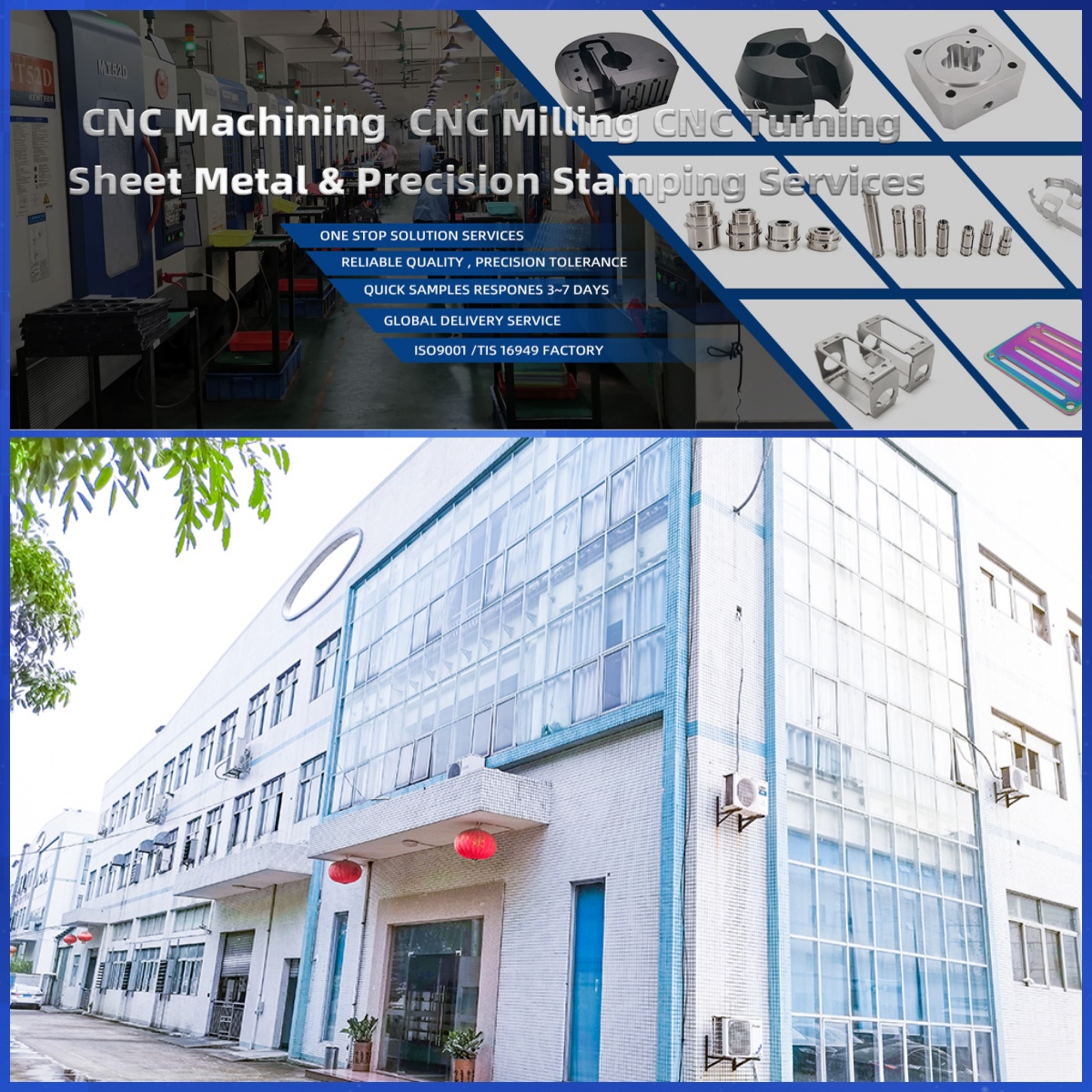
DongGuan YiTai Electronic Technologies Co.,Ltd
DongGuan YiTai Electronic Technologies Co.,Ltd is a manufacturing service provider located in Dongguan, China.
YiTai specialized in CNC turning machining and sheet metal fabrication mainly. As a member of Hung Mou Group, we focus on the overseas marketing development. And based on our parent company’s manufacturing capability and resources, YiTai also expended machining services such as die casting, injection molding, aluminum profile extrusion, 3D printing, which are committed to providing customers with one-stop purchasing services and experience.
CNC MACHINING , CNC MILLING , CNC TURNING , SHEETMETAL , FASTENER , OTHERS




Purchasing Aluminum Parts Made with Stamping + CNC: A Complete Supplier Selection and Project Management Handbook
Aluminum: The Ubiquitous Backbone of Precision Manufacturing – Exploring the Top Applications of CNC Machined Aluminum Parts
Related Article