Lost wax casting
author: YITECH
2024-12-09

We offer a comprehensive range of lost wax casting supplies, including high-quality waxes, fillers, and resins, to provide our customers with everything they need to achieve outstanding results in their investment casting processes.
The lost-wax casting is one of the most important steps in the investment casting process. Kevin Lee completed a significant amount of work in this area during his Ph.D. and investigated many aspects of the process.
The lost-wax casting is considered one of the most critical processes in producing investment casting shells. Microcracks established in the shell during the building process are easily visible when dewaxing occurs. We know that the shell before dewaxing, and the raw investment (or wax) before dewaxing, are brittle. The components of the shell are basically made up of colloid networks, occasionally polymer, and fibers bound together.
Most foundries use high-pressure steam autoclaves for dewaxing operations. We know that some foundries are using flash firing dewaxing, but I won't dwell on that momentarily. The primary advantage of using steam and not air (in an oven) is the fast transfer of "energy" to the wax interface layer possible. Another advantage of using this method is that the melted wax can be recycled, which also reduces pollution gas emissions compared to flash firing. The amount of residual wax after dewaxing in a steam pressurized kettle is relatively low (see Figure 1), and hence, there is less ash produced during the firing process.
During the steam pressurization process, an instantaneous source of heat in the form of steam is introduced to the shell's surface, and the solid wax within the shell starts to phase change and becomes a liquid. Phase change and liquid volume expansion begin to apply stress on the shell's internal surface. The pressure generated due to expansion must be quickly released before the shell ruptures. The mechanism of pressure release is that when the steam penetrates the shell and reaches the melted wax surface, the wax penetrates the shell through the penetration layer. The amount of lost wax after penetrating the shell helps to relieve the accumulated stress inside the shell. Meanwhile, external shells provide a more robust, tolerant system for absorbing pressure due to the presence of the polymer.

Shell Performance - Perforated Layer
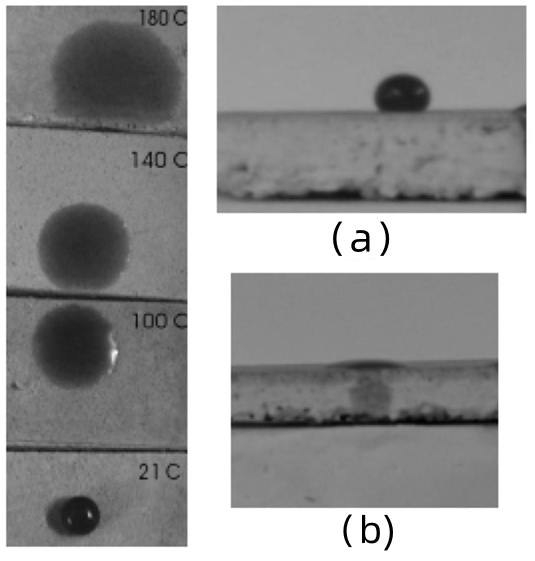
It is essential to release sufficient pressure through the perforated layer without compromising surface roughness and the integrity of the perforated layer. Polymers are sometimes added to slip slurries to provide increased elasticity of the permeable layer and an absorbing wax expansion. Gavin Dooley, Ph.D., elaborated more in his AdBond®Quikset™ article on the advantages of adding polymers to slurry. To achieve good permeability, the slurry layer must be easily wetted by the liquid wax. Factors influencing the wetting of the shell surface include surface roughness of the slip layer, surface irregularities, temperature, and wettability.
Shell Performance - Backup Layer
When preventing the shell from cracking, backing the shell is most noteworthy. The backup layer provides extra strength to prevent the shell from cracking. Depending on the slurry system and the increase in mechanical strength with shell thickness, backup coatings can vary from four layers to ten or even twelve layers. However, increasing shell thickness increases Boilerclave®'s heat capacity, requiring more steam energy to melt the wax in the shell. Therefore, it is important to have a balanced porous shell system that allows sufficient steam to penetrate the shell and good mechanical strength. Also, adding polymers will increase raw investment strength, thereby increasing the survival rate during dewaxing.
Wax Model Performance
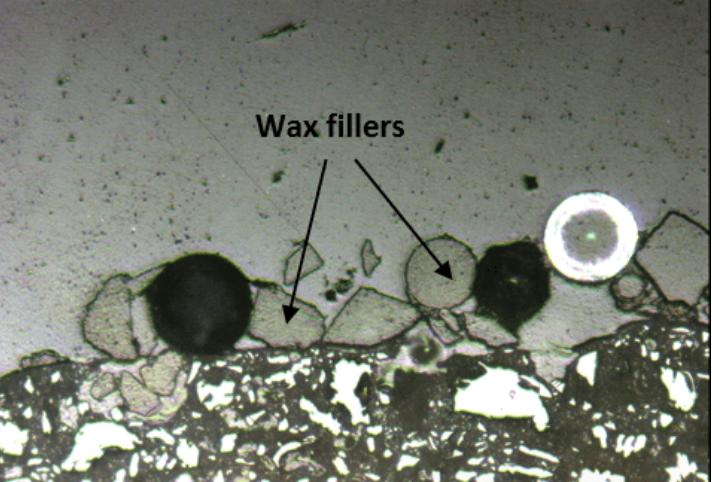
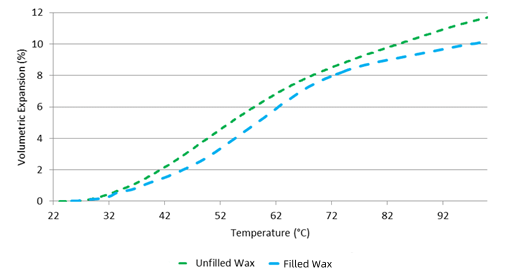
Wax models for investment casting materials typically consist of paraffin wax and microcrystalline wax, with the microcrystalline wax forming the basis wax and further adding fillers, resins, and plasticizers depending on the application. To design a wax that is suitable for high-pressure dewaxing kettles, parameters such as volume thermal expansion, viscosity, melting point, heat capacity, and conductivity are critical.
Let's start with filled waxes. The main purpose of adding fillers to wax is to improve dimensional performance, reduce shrinkage, and improve mechanical performance. The two common fillers added to wax are not limited to crosslinked polystyrene and phthalic acid. There are other available fillers that have been used for different waxes, including water. There have even been pattern waxes without any fillers recently, such as FastFormTM.
Adding suitable fillers is complex. The addition of fillers changes the rheological properties of the base wax, typically increasing the viscosity. Plasticizers are another occasionally added additive to control wax rheological behavior. The addition of fillers also increases the thermal conductivity of the pattern wax. The fillers usually are better conductors of heat, but can result in overmelting of the wax block causing pressure to form in the shell mold during dewaxing.
Wax thermal expansion is also affected by the wax's crystallinity. They believe the crystallinity of the wax changes due to shear in wax injection, and the greater the crystallinity of the wax, the greater the volume expansion. Some resins can be added to reduce crystal structure to reduce expansion and contraction.

That's all for today, if you still want to get more information about lost-wax casting, or you do finding a manufacturer of lost-wax casting, just contact us, we are the best one you are looking for!
Nickel Plating-1
Electrophoresis & Blackening
Related Article
Learn how metal spinning forms rotationally symmetric parts, compare process options, and review materials, applications, cost factors, and RFQ requirements.
Metal Spinning: How the Process Works and When to Use It
Explore precision metal fabrication processes, tolerance control, inspection, cost factors, and what to include in a custom-part RFQ.
Precision Metal Fabrication: From Drawing Review to Inspection