From Drawing to Heat Dissipation Tool: Deconstructing the CNC Custom Delivery, Cost Structure, and Full Service Process for a High-End LED Light Heat Sink Housing
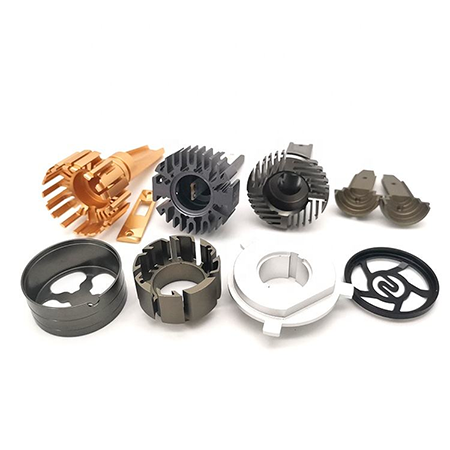
This guide uses a real project. You will see the challenges, the full process, the real cost, and the quality checks for a high‑density LED heat sink housing.
-
Real Cost Breakdown and Quoting Logic for LED Heat Sink Housing CNC Machining
-
Your End‑to‑End Service Process: Seven Steps to a Perfect Heat Sink Housing
-
Why Choose DongGuan YiTai as Your Mass Production Partner for LED Heat Sink Housings
1. Why LED Heat Sink Housings Need Precision CNC Machining
Heat kills LEDs. For every 10°C rise in junction temperature, the LED life can cut in half. A good heat sink keeps the temperature low.

What Extruded Aluminum Cannot Do
Extruded aluminum is cheap. It makes straight fins. But it cannot make:
-
High‑density, non‑straight fins (pin fins, spiral fins)
-
One‑piece housings with internal cavities for heat pipes
-
Very flat mounting surfaces (needed for good thermal contact)
CNC machining cuts solid aluminum. It can make any shape. It gives flat surfaces ≤0.03mm . It also allows tight tolerances for sealing.
Typical Applications for CNC Machined LED Heat Sinks
-
Stage lighting (moving heads, follow spots)
-
UV curing systems
-
High‑power automotive headlights
-
Sports stadium floodlights
2. Deep Dive of a Real Project Case: Custom High‑Density Heat Sink Housing for a Stage Light Manufacturer
A client needed a housing for a 120W LED module. The outer size was limited to 150mm diameter. The base plate temperature had to stay below 75°C.
Our Engineering Solution
-
Material: 6063‑T5 aluminum (better thermal conductivity than 6061)
-
Fin design: 72 spiral pin fins. Each fin was 12mm tall and 0.6mm thick at the tip.
-
Additional features: Grooves for heat pipes + sealing groove for waterproof gasket.
Key Challenges and How We Solved Them
| Challenge | Solution |
|---|---|
| Thin fins (0.6mm) breaking | Used micro end mills (1mm diameter). Slow, light passes. Reduced feed rate to prevent tool bending. |
| Base plate flatness (≤0.03mm) | Finished with a face mill. Then measured on‑machine with a Renishaw probe. Adjusted tool paths for second pass if needed. |
| Black hard anodizing for high emissivity | Used hard anodizing (Type III). Emissivity reached 0.92. This helps radiate heat away. |
Results
-
First batch of 500 pieces: Thermal resistance was 18% lower than client required.
-
Process capability (CPK): >1.4 on all critical dimensions.
-
Outcome: Client approved the housing for their new flagship stage light.
3. Real Cost Breakdown and Quoting Logic for LED Heat Sink Housing CNC Machining
The cost of a heat sink housing comes from four main factors.
Cost Factor Breakdown
| Cost Factor | Percentage | Notes |
|---|---|---|
| Material (6063 aluminum bar/plate) | 15–25% | Larger diameter bars cost more per kg. |
| CNC machining time | 45–55% | High‑density fins take the most time. 72 fins × 12mm depth adds up. |
| Surface finishing (anodizing) | 15–20% | Hard anodizing is more expensive than clear. |
| Inspection & packaging | 8–12% | CMM report + custom foam trays. |
Batch Price Reference (for a 150mm diameter housing, approximate)
| Quantity | Estimated Price per Housing |
|---|---|
| 1–5 (prototype) | $180–250 (includes programming and fixturing) |
| 100–500 (small batch) | $60–80 |
| 2,000+ per month (mass production) | $35–45 |
Our pricing principle: No hidden fees. Each quote line shows material, machining, finishing, and inspection. Volume discounts apply from 500 pieces. We can lock prices for 6–12 months with a yearly agreement.
4. Your End‑to‑End Service Process: Seven Steps to a Perfect Heat Sink Housing
We follow a strict seven‑step process.
-
Design review (within 24 hours) – We check thermal needs and manufacturability. We ask about fin height, thickness, and spacing.
-
DFM report & quote – We suggest fin shape changes to reduce cost. We send a detailed line‑item quote.
-
Sample machining – We make 3–5 samples using production methods. Full CMM report included.
-
Client thermal test – You mount the LED and measure junction temperature. We can adjust fin design if needed.
-
Small batch trial (50–100 pcs) – We verify process stability. We send CPK data and anodizing color samples for sign‑off.
-
Mass production – We use AQL sampling for dimensions and visual checks. CMM checks every 50th part.
-
Packaging & delivery – VCI anti‑rust paper + custom foam trays. We send material certificates, inspection reports, and 48‑hour support.
5. Why Choose DongGuan YiTai as Your Mass Production Partner for LED Heat Sink Housings
We have the right machines and deep experience.
Core Equipment
-
High‑speed CNC mills (20,000 RPM spindles)
-
Renishaw on‑machine probing
-
CMM (coordinate measuring machine)

Specialized Knowledge
We have machined pin fins, straight fins, spiral fins, and hybrid designs. We know the best tool paths to avoid tool breakage.
Quality Commitment
-
CPK ≥ 1.33 for all critical dimensions
-
Anodizing color difference ΔE < 1.0 (measured with colorimeter)
-
On‑time delivery ≥ 98%
Flexible Manufacturing
We handle 1 piece for prototyping up to 100,000 pieces per year for mass production. No job too small or too large.
6. Expert Insight: Every Fin Adds Cooling, and Cost
“I see designers add fins everywhere. More fins mean more cooling. But each fin adds machining time. A 120mm housing with 40 straight fins might take 15 minutes to machine. Add 80 spiral pin fins, and time jumps to 45 minutes. The thermal improvement may be only 10%. Always run a thermal simulation first. Find the point of diminishing returns. Then design the fins to be just enough. That saves cost without hurting performance.”
— Senior CNC Programmer, DongGuan YiTai Electronic Technologies
7. Frequently Asked Questions (FAQ)
Q: What is the best aluminum alloy for LED heat sinks?
A: 6063‑T5 is better than 6061. It has higher thermal conductivity (200 W/m·K vs 180 W/m·K). It also anodizes more evenly. For very high power, use 6063. For lower cost, 6061 is fine.
Q: How do you machine 0.6mm thick fins without breaking them?
A: We use micro end mills (0.8–1.0mm diameter). We take light depth cuts (0.2–0.3mm per pass). We run at high RPM (15,000–20,000) and slow feed. We also use air blast to clear chips. No pushing.
Q: What is the typical flatness for the LED mounting surface?
A: For good thermal contact, 0.03mm (30µm) or better is required. We use a face mill and then measure with a probe. If flatness is not met, we take a second finishing pass. For very high power LEDs (150W+), we can grind to 0.01mm.
Q: Does black anodizing help cooling?
A: Yes. Black hard anodizing increases emissivity to about 0.85–0.92. Natural aluminum is only 0.20–0.30. This means black fins radiate heat much better. For passive cooling (no fan), black anodizing is very helpful.
Q: How long does it take to make a prototype heat sink housing?
A: For a new design with complex fins, about 10–15 working days after drawing approval. This includes programming, fixturing, and first article inspection. Rush service can cut to 7–8 days with extra cost.
Q: Do you provide thermal test support?
A: We do not have a thermal lab. But we can help you design the test setup. We also share our experience: typical temperature drop vs fin density. Many clients test the sample in their own fixture. We are happy to iterate based on your test results.
DongGuan YiTai Electronic Technologies Co.,Ltd
DongGuan YiTai Electronic Technologies Co.,Ltd is a manufacturing service provider located in Dongguan, China.
YiTai specialized in CNC turning machining and sheet metal fabrication mainly. As a member of Hung Mou Group, we focus on the overseas marketing development. And based on our parent company’s manufacturing capability and resources, YiTai also expended machining services such as die casting, injection molding, aluminum profile extrusion, 3D printing, which are committed to providing customers with one-stop purchasing services and experience.
CNC MACHINING , CNC MILLING , CNC TURNING , SHEETMETAL , FASTENER , OTHERS




The Complete Guide to Clevis and Fork-End Fasteners: CNC Precision Manufacturing from Standard Parts to Custom Engineering
Deconstructing Precision CNC Manufacturing of Phone Housings and Middle Frames: From a Real Project to See the Full Picture of Cost, Quality, and Delivery
Related Article