What is Laser Engraving?
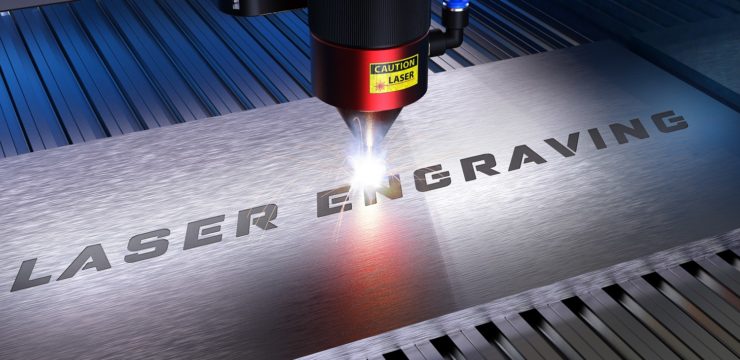
Laser engraving is a surface treatment process, and screen printing pad printing similar, are printed on the product or pattern, the process iand price are different.
How it works


Precautions
2. Do not allow the Q power supply to work no-load (that is, the output end of the Q-switched power supply is suspended).
3. If there is an abnormal phenomenon, first turn off the galvanometer switch and key switch, and then check.
4. It is not allowed to start other components before the krypton lamp is lit to prevent high pressure from leaking into the damaged components.
5. Note that the output end (anode) of the laser power supply is suspended to prevent ignition and breakdown with other electrical appliances.
6. Keep the internal circulating water clean, clean the tank regularly and change the clean deionized water or pure water.

Laser engraving process inspection points
1. The following appearance defects shall not occur
- Toothing (radium-carved marks should not be zigzag)
- Missing mark (missing mark radium mark)
- Pinholes (no pinholes allowed on the surface)
- Different color points (Different color points on the surface are not allowed ≥0.2mm)
- Oil stains/dirt (removable oil stains/dirt, non-removable oil stains/dirt)
- Scratches (length ≤5mm, width ≤0.1mm, number ≤1, and distance ≥15mm in the same plane; In the same plane length ≥5mm, width ≥0.1mm sense scratch)
- Shrinkage (Visible shrinkage lines can be seen in natural, non-reflective conditions
- Deformation (affects assembly, cannot be restored by assembly, does not affect assembly, can be restored by assembly)
- Lack of glue (the product does not allow lack of glue)
- Water marks (no water marks allowed on the surface)
- Batch front (affects assembly and hand scraping)
- Fuse wires (No fuse wires allowed on the surface)
- Color (the comparison template is obviously shiny/too dumb, uneven, the comparison template is basically close)
- Exposed yellow (large area of outer surface and marking yellow)
- Blistering (brush foam that will not spread with fingernail, brush paint foam that will spread around with fingernail)
- Dust spot (There is a pitting spot with a diameter of 0.1≤D≤0.15mm within an area of 1cm in the same plane, and there are two dust/spots with a diameter of 0.1≤D≤0.15mm within an area of 1cm in the same plane, and there are dense dust spots on the surface (except pockmarked surfaces)
- Oil accumulation (piles of paint on a surface)
- Fly oil (paint sprayed on surfaces that do not need painting)
- Less oil (surface paint layer thickness is not enough, exposing the bottom material)
- Offset (radium engraved mark offset can not be greater than 0.1mm)

2. Size detection:
3. Adhesion test:
- Quickly remove the tape at 45º and tape it 3 times, using new tape each time. Adhesion up to 4B(or 3B) is required for qualification.
- 5B- The edge of the scribing is smooth, no paint layer falls off at the edge of the scribing and at the crossing point;
- 4B- Small pieces of paint are shed at the crossing points of the lines, and the total area of the shed is less than 5%;
- 3B- Small pieces of paint are shed at the edges of the lines and at the intersections, and the total area of the shed is between 5% and 15 percent
- 2B- There are sheets of paint falling off at the edge of the line and at the intersection, and the total area of the falling off is between 15% and 35%.
- 1B- There are sheets of paint falling off at the edge of the line and the crossing point, and the total area of the loss is between 35% and 65. 0B- There are sheets of paint falling off at the edge of the line and the crossing point, and the total area of the loss is ≥65%
Note 2: When the thickness of the paint layer is less than 50µm, draw 10X10 small squares of 1mmX1mm; When the thickness of the paint layer is greater than 50µm, draw 5X5 small squares of 2mmX2mm.
Note 3: For the smooth surface of the oil injection parts, the surface adhesion of more than 4B; For the paint layer with skin grain on the surface, the adhesion is required to reach more than 3B.
4. Wear resistance test:
The surface friction is 200 cycles, and the paint layer is not exposed to the substrate.(The supplier provides the test report).
5. Alcohol resistance test:
6. Light leakage test:
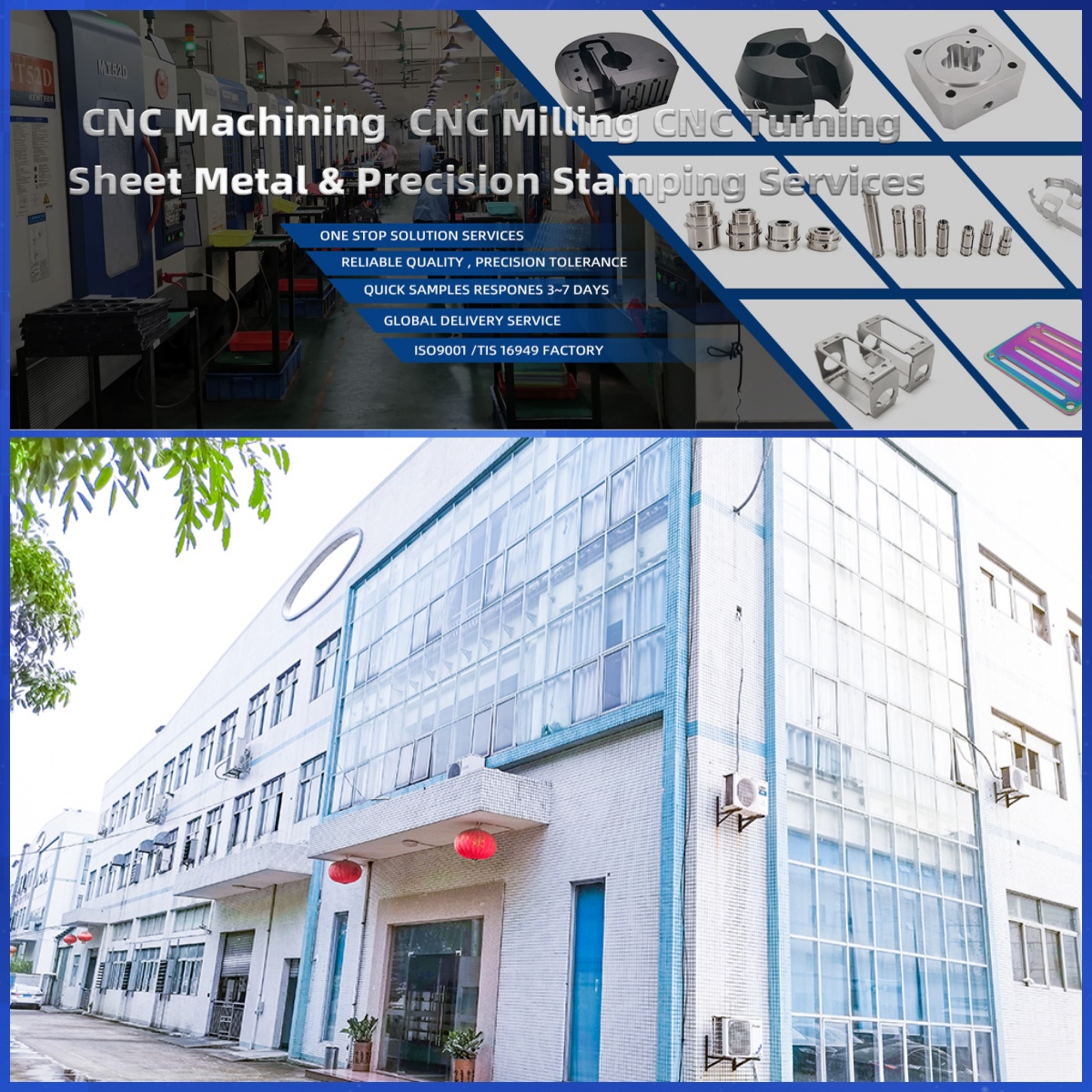
DongGuan YiTai Electronic Technologies Co.,Ltd
DongGuan YiTai Electronic Technologies Co.,Ltd is a manufacturing service provider located in Dongguan, China.
YiTai specialized in CNC turning machining and sheet metal fabrication mainly. As a member of Hung Mou Group, we focus on the overseas marketing development. And based on our parent company’s manufacturing capability and resources, YiTai also expended machining services such as die casting, injection molding, aluminum profile extrusion, 3D printing, which are committed to providing customers with one-stop purchasing services and experience.
CNC MACHINING , CNC MILLING , CNC TURNING , SHEETMETAL , FASTENER , OTHERS




Aluminium and Aluminium Alloys (Part 1)
What is the difference between AL1100 and AL1060?
Related Article