Is Nickel a Magnetic Material?

1. Introduction to Nickel and Magnetism

Nickel is a common metal. People use it in many things. For example, it is in coins and batteries. But is nickel magnetic? This is a good question. The answer is yes, nickel is magnetic. But it is not as magnetic as some other metals. In this blog, we will explore nickel's magnetic properties. We will look at how it compares to other materials. We will also share expert views. And we will answer common questions.
Many people think about magnets and metals. They wonder which metals stick to magnets. Nickel is one of them. But there is more to know. So, let us start with the basics.
2. What Makes a Material Magnetic?
To understand nickel, we need to know about magnetism. Magnetism comes from the atoms in a material. Atoms have electrons. Electrons spin and move. This creates tiny magnetic fields. In some materials, these fields line up. Then, the material becomes magnetic.
There are different types of magnetic materials. Ferromagnetic materials are strongly magnetic. They can be magnets themselves. Paramagnetic materials are weakly magnetic. They only become magnetic in a magnetic field. Diamagnetic materials are not magnetic. They even repel magnetic fields.
Nickel is a ferromagnetic material at room temperature. This means it is magnetic. But this can change with heat. We will talk about that later.
3. Nickel's Magnetic Properties
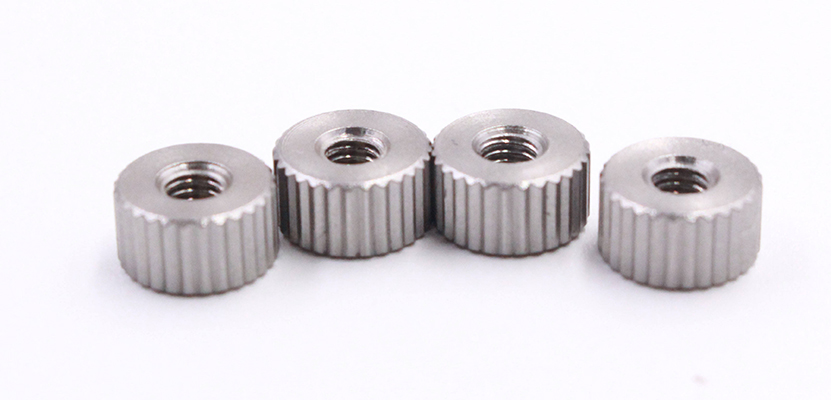
Nickel is a metal. It is shiny and silver-white. It is often used in alloys. For example, stainless steel has nickel. But let us focus on its magnetism.
Ferromagnetism in Nickel
Nickel is ferromagnetic. This means it has a strong magnetic response. The atoms in nickel have unpaired electrons. These electrons align in the same direction. This creates a magnetic field. So, nickel can be attracted to a magnet. It can also be made into a magnet.
But nickel is not the strongest magnetic metal. Iron and cobalt are stronger. Still, nickel is important. It is used in many magnetic applications.
Curie Temperature of Nickel
The Curie temperature is key. It is the temperature when a material loses its magnetism. For nickel, the Curie temperature is about 358°C (676°F). Above this temperature, nickel becomes paramagnetic. This means it is only weakly magnetic. So, if you heat nickel, it stops being magnetic. But when it cools down, it becomes magnetic again.
This property is useful. It helps in making devices like sensors and switches.
4. Comparison with Other Magnetic Materials
Now, let us compare nickel to other magnetic materials. Iron and cobalt are also ferromagnetic. They are often used with nickel. Below is a table to show the differences.
Parameter Table: Nickel vs. Iron vs. Cobalt
| Material | Curie Temperature (°C) | Magnetic Type at Room Temperature | Common Uses |
|---|---|---|---|
| Nickel | 358 | Ferromagnetic | Batteries, coins, alloys |
| Iron | 770 | Ferromagnetic | Magnets, steel production |
| Cobalt | 1121 | Ferromagnetic | High-strength magnets, medical devices |
This table shows that nickel has a lower Curie temperature. This means it loses magnetism at a lower heat. Iron and cobalt keep their magnetism longer. But nickel is still valuable. It is often used in alloys to improve properties.
For example, Alnico magnets use nickel. They are strong and resist heat. Nickel also makes stainless steel less magnetic. This is useful for some applications.
5. Expert Opinions on Nickel's Magnetism
Experts have studied nickel for years. Dr. Maria Lopez is a materials scientist. She says, "Nickel's ferromagnetism is due to its atomic structure. The electrons in nickel align easily. This makes it magnetic. But nickel is not as strong as iron. So, we often mix it with other metals."
Another expert, Prof. James Lee, works in physics. He explains, "The Curie point of nickel is important. It helps us control magnetism in devices. For instance, in temperature sensors, we use nickel because it changes with heat."
These views show that nickel is useful. But it has limits. Experts use it in smart ways.
6. Industry FAQs about Nickel and Magnetism
Here are some common questions and answers.
Is nickel always magnetic?
No, nickel is not always magnetic. It is magnetic at room temperature. But above 358°C, it loses its magnetism. So, heat affects it.
How does nickel compare to iron in magnetism?
Iron is more magnetic than nickel. Iron has a higher Curie temperature. It is stronger as a magnet. But nickel is lighter and resists corrosion better.
Can nickel be used to make permanent magnets?
Yes, but not alone. Nickel is often used in alloys. For example, with iron and cobalt. This makes strong permanent magnets.
Why is nickel used in stainless steel if it is magnetic?
Stainless steel has nickel and chromium. This mix can reduce magnetism. Some stainless steel is non-magnetic. It depends on the amount of nickel.
Is pure nickel magnetic?
Yes, pure nickel is magnetic. But in practice, it is often mixed with other metals. This can change its magnetic properties.
What happens when nickel is cooled below its Curie temperature?
It becomes ferromagnetic again. The atoms realign. So, it regains its magnetism.

DongGuan YiTai Electronic Technologies Co.,Ltd
DongGuan YiTai Electronic Technologies Co.,Ltd is a manufacturing service provider located in Dongguan, China.
YiTai specialized in CNC turning machining and sheet metal fabrication mainly. As a member of Hung Mou Group, we focus on the overseas marketing development. And based on our parent company’s manufacturing capability and resources, YiTai also expended machining services such as die casting, injection molding, aluminum profile extrusion, 3D printing, which are committed to providing customers with one-stop purchasing services and experience.
CNC MACHINING , CNC MILLING , CNC TURNING , SHEETMETAL , FASTENER , OTHERS




C3604 Brass Alloy: Uses, Properties & Our Processing Capabilities
How to Manufacture Copper Nuts & Bolts: Processes, Uses & Our Production Capacity
Related Article