Delve Into Hot and Cold Chamber Die Casting
- Introduction
- Understanding Die Casting Basics
- Hot Chamber Die Casting: An In-Depth Look
- Cold Chamber Die Casting: An In-Depth Look
- Direct Comparison: Hot vs Cold Chamber Die Casting
- Our Company's Expertise in Die Casting
- Common Questions About Die Casting
1. Introduction
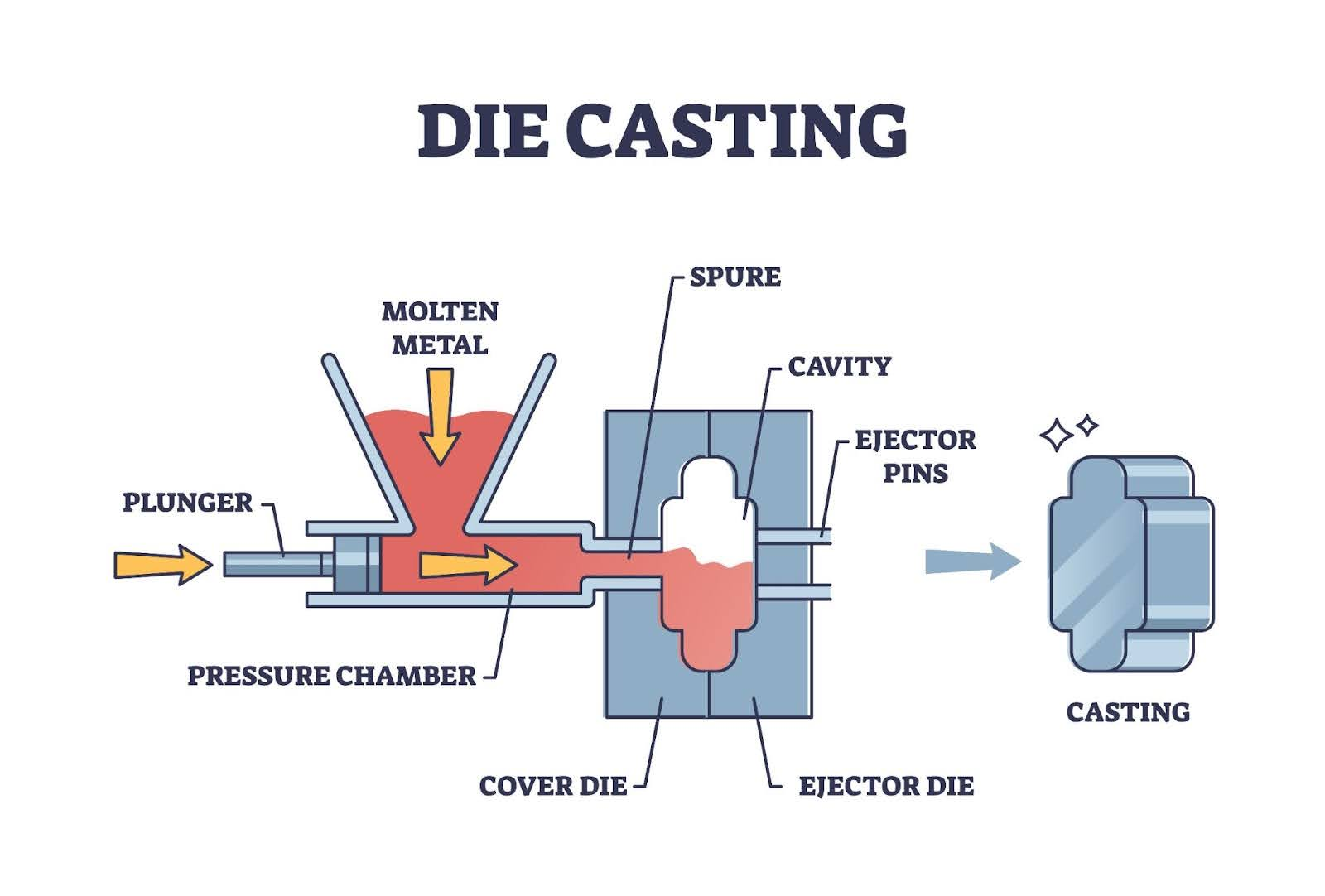
2. Understanding Die Casting Basics
3. Hot Chamber Die Casting: An In-Depth Look
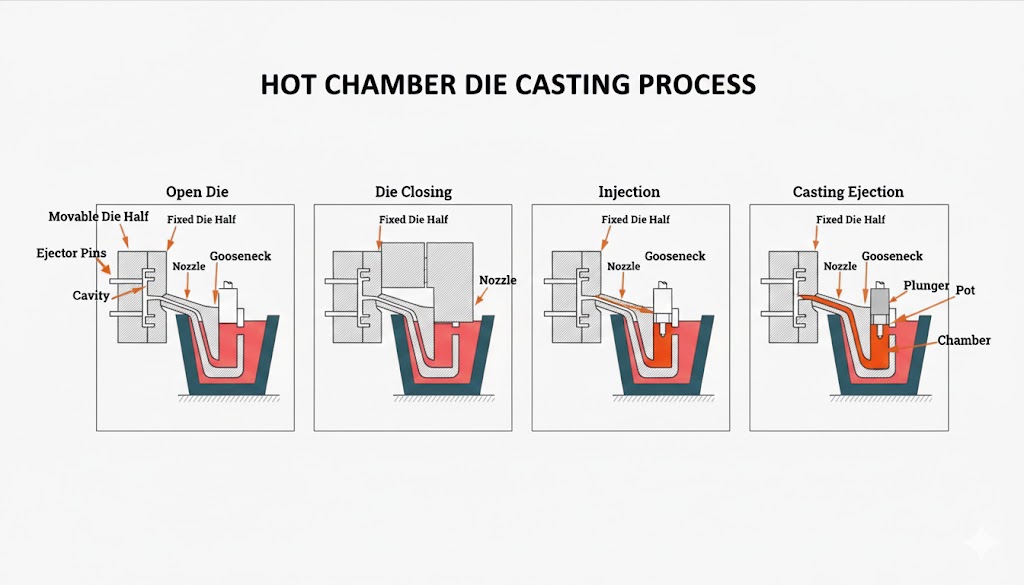
3.1 How It Works and Its Applications
Hot chamber die casting is sometimes called gooseneck casting. In this process, the shot chamber is immersed in the molten metal bath . A gooseneck metal feed system draws the molten metal into the die cavity. The process uses a piston to force the metal into the die under high pressure.
This method is mainly used for metals with low melting points such as zinc, magnesium, and lead alloys . These metals do not easily attack the immersed parts of the machine. Hot chamber die casting is common in making automotive parts, instrument panels, 3C electronics, and daily-use hardware items .
3.2 Benefits and Limitations
Key advantages of hot chamber die casting include:
-
High production efficiency: The process can achieve 3,000-7,000 cycles every eight hours because no separate pouring is needed
-
Better metal quality: Metal flows through enclosed pipes with less chance for oxidation and impurities
-
Lower energy use: The metal stays molten in the chamber, saving heating energy
-
Longer die life: The process works well with low-melting-point metals that cause less damage to equipment
However, this method has some limitations:
-
Not suitable for metals with high melting points like aluminum and copper
-
The immersed parts can be attacked by certain molten metals
-
Maximum locking force is typically limited to about 400 tons
-
Lower pressure range (7-14 MPa) compared to cold chamber machines
4. Cold Chamber Die Casting: An In-Depth Look
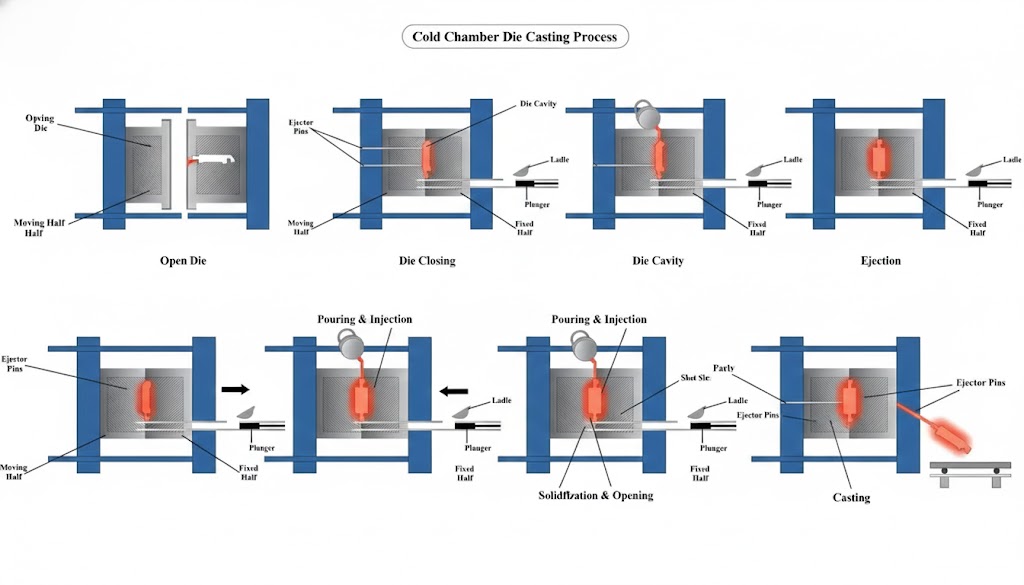
4.1 How It Works and Its Applications
Cold chamber die casting works differently. The molten metal is poured into a cold chamber from a separate melting furnace . Then a hydraulic piston pushes the metal into the die cavity under high pressure. After the metal solidifies, the die opens and the part is ejected.
This process is ideal for metals with high melting points such as aluminum, copper, and their alloys . These metals would attack the immersed components in hot chamber machines. Cold chamber die casting is often used for automotive components like engine blocks and wheels, as well as many industrial parts.
4.2 Benefits and Limitations
Main advantages of cold chamber die casting include:
-
Ability to cast high-melting-point metals like aluminum and copper alloys
-
Higher pressure capability for better part density and strength
-
Larger part production with locking forces exceeding 4000 tons in some cases
-
Good for complex geometries with better mechanical properties
The limitations include:
-
Slower production cycles due to separate pouring step
-
Higher energy consumption since metal must be remelted for each cycle
-
More air inclusion potential during pouring, which may cause porosity
5. Direct Comparison: Hot vs Cold Chamber Die Casting
The table below compares key parameters and characteristics of both die casting methods:
Table: Comparison between Hot Chamber and Cold Chamber Die Casting
| Parameter | Hot Chamber Die Casting | Cold Chamber Die Casting |
|---|---|---|
| Melting Point Compatibility | Low melting point metals (zinc, magnesium) | High melting point metals (aluminum, copper) |
| Pressure Range | 7-14 MPa | 14-140 MPa |
| Production Rate | High (3,000-7,000 cycles per 8 hours) | Moderate |
| Equipment Cost | Lower | Higher |
| Part Size Range | Small to medium | Small to very large |
| Metal Fluidity | Better flow in thin sections | Requires higher pressure for thin walls |
| Common Applications | Electronics, hardware, small parts | Automotive, aerospace, industrial parts |
6. Our Company's Expertise in Die Casting
Our company has deep experience in both hot and cold chamber die casting technologies. We have served various industries including automotive, electronics, and consumer goods.
Technical Capabilities and Services
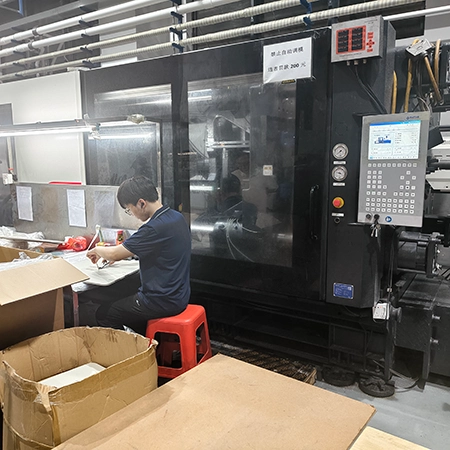
We operate advanced die casting machines of various sizes and capabilities. Our equipment includes both hot and cold chamber machines to handle different materials and part requirements. Our technical team has expertise in process optimization to reduce defects and improve quality.
We follow strict quality control procedures throughout production. Our engineers use simulation software to predict and prevent potential casting defects before manufacturing. This approach saves time and resources while ensuring part quality.
7. Common Questions About Die Casting
1. Which is cheaper, hot or cold chamber die casting?
Hot chamber die casting generally has lower operating costs for compatible metals due to faster cycle times and less energy usage. However, cold chamber die casting may be more cost-effective for high-melting-point metals despite higher operational costs.
2. How to choose between hot and cold chamber die casting?
The choice mainly depends on the metal being cast and the part requirements. Consider hot chamber for zinc, magnesium, or lead alloys when high production speed is needed. Choose cold chamber for aluminum, copper, or other high-temperature alloys.
3. What are common defects in die casting and how to prevent them?
Common defects include porosity, cold shuts, and erosion . Prevention methods include proper mold design, optimized process parameters, vacuum systems for removing air , and controlled mold temperature.
4. Can aluminum be cast using hot chamber die casting?
Typically, no. Aluminum has a high melting point (660°C) which would attack the immersed components in hot chamber machines. Aluminum is better suited for cold chamber die casting .
5. What materials work best with hot chamber die casting?
Zinc alloys are most common due to their low melting point (about 420°C) and good fluidity. Magnesium alloys also work well with proper safety measures against combustion.
6. How to reduce porosity in cold chamber die casting?
Use vacuum systems to remove air from the mold cavity . Optimize the pouring process to reduce air entrapment. Adjust piston speed and pressure parameters during injection.
7. What is the typical life of a die casting mold?
Mold life varies with the cast material and mold maintenance. For zinc alloys (hot chamber), mold life can exceed 1 million shots. For aluminum alloys (cold chamber), mold life is typically 100,000 to 500,000 shots.
8. How to choose the right die casting method for my project?
Consider these factors: material selection, part complexity, production volume, budget, and quality requirements. Consult with our die casting experts to analyze your specific needs and recommend the best approach.
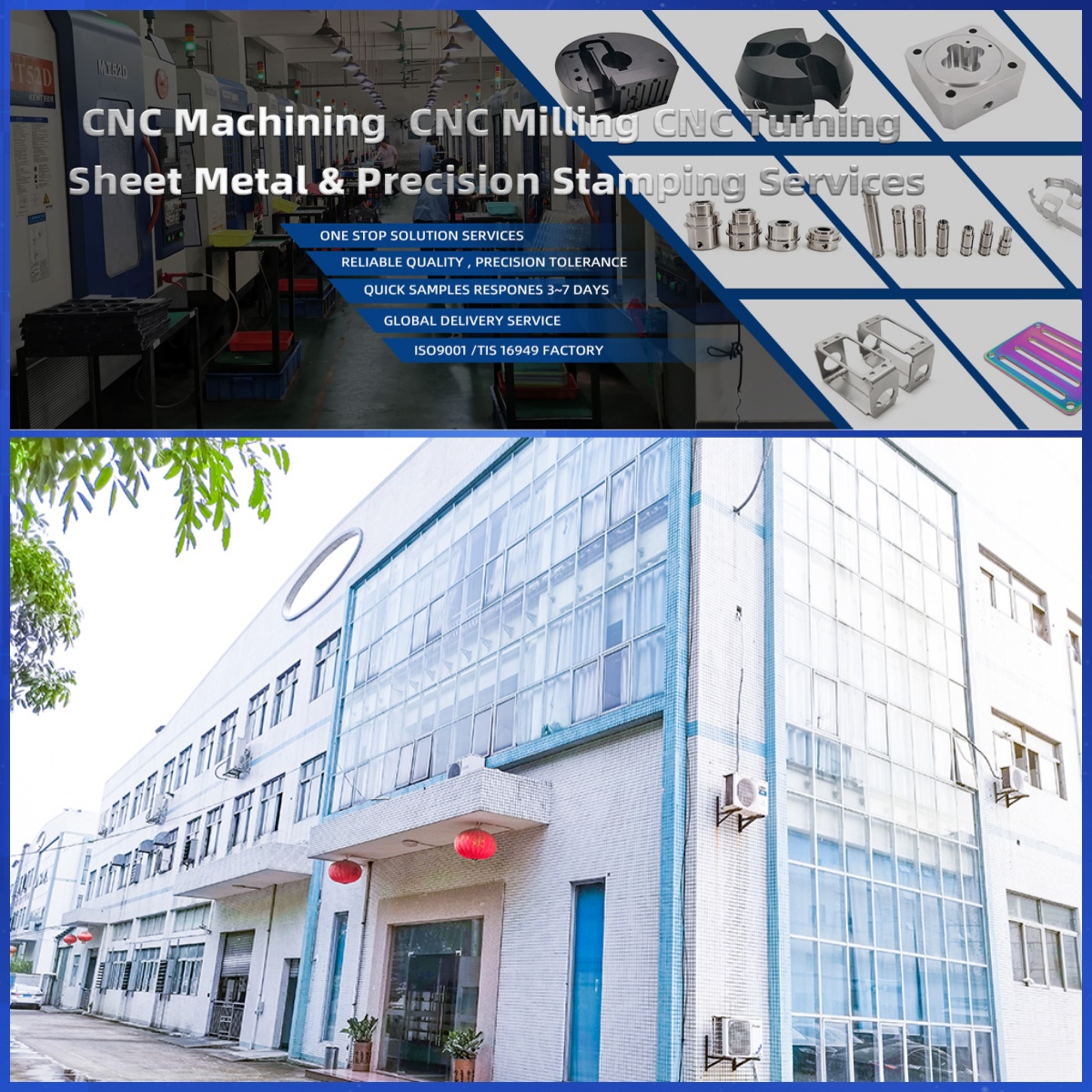
DongGuan YiTai Electronic Technologies Co.,Ltd
DongGuan YiTai Electronic Technologies Co.,Ltd is a manufacturing service provider located in Dongguan, China.
YiTai specialized in CNC turning machining and sheet metal fabrication mainly. As a member of Hung Mou Group, we focus on the overseas marketing development. And based on our parent company’s manufacturing capability and resources, YiTai also expended machining services such as die casting, injection molding, aluminum profile extrusion, 3D printing, which are committed to providing customers with one-stop purchasing services and experience.
CNC MACHINING , CNC MILLING , CNC TURNING , SHEETMETAL , FASTENER , OTHERS




2026 The Latest Market Trends in Custom Hardware Manufacturing
The Core of CNC: A Guide to Essential Materials
Related Article