Holemaking Decision Tree: Drilling vs Helical Milling vs Boring – Finding the Best Choice Based on Accuracy, Cost, and Flexibility

This guide gives you a decision tree. You will learn the capability of each process. You will see how to choose based on tolerance, material, batch size, and cost.
1. How Each Process Works and Its Capability Limits

Drilling – Highest Material Removal Rate, for Rough or Direct Holes
A twist drill spins and pushes into solid metal. It removes material fast. One drill makes one hole size.
-
Typical tolerance: IT9 to IT11 (about ±0.02‑0.1mm)
-
Surface finish: Ra 1.6‑6.3µm (rough, with visible spiral marks)
-
Best for: Bolt clearance holes, starter holes, high‑volume roughing.
-
Limits: Cannot correct position. Drill can wander. Roundness is not perfect.
Helical Milling (Interpolation) – One Tool for Any Diameter
A small end mill moves in a spiral path. It cuts the hole from solid or enlarges an existing hole. The same tool can make a 6mm hole, a 20mm hole, or a slot.
-
Typical tolerance: IT7 to IT9 (about ±0.01‑0.05mm)
-
Surface finish: Ra 0.8‑3.2µm (good, with very small step‑over marks)
-
Best for: Non‑standard diameters, hard materials (Inconel, titanium), thin walls, blind holes with flat bottoms.
-
Limits: Slower than drilling for large volumes. Requires CNC with helical interpolation.
Boring – Ultimate Finishing for Position and Roundness
A single‑point boring bar removes a thin layer from an existing hole. It can correct position and straighten a crooked hole.
-
Typical tolerance: IT5 to IT7 (about ±0.003‑0.015mm)
-
Surface finish: Ra 0.2‑1.6µm (smooth to very smooth)
-
Best for: Bearing bores, hydraulic cylinder holes, gearbox housings with tight position.
-
Limits: Slowest method. Needs a pre‑existing hole. Tool overhang can cause chatter.
The table below summarizes capability limits.
| Process | Typical Tolerance (IT) | Ra Range (µm) | Position Correction? | Speed |
|---|---|---|---|---|
| Drilling | IT9‑IT11 | 1.6‑6.3 | No | Very fast |
| Helical milling | IT7‑IT9 | 0.8‑3.2 | No (follows path) | Medium |
| Boring | IT5‑IT7 | 0.2‑1.6 | Yes | Slow |
2. Key Decision Dimensions Compared
Use these four dimensions to choose.
Tolerance and Geometric Accuracy
-
IT5‑IT6 (bearing fit): Only boring can reliably hold this. Helical milling may reach IT7 on a very rigid machine.
-
IT7‑IT8 (general fit): Helical milling or reaming. Drilling is too rough.
-
IT9 and looser (clearance): Drilling is cheapest.
Surface Finish
-
Ra ≤ 0.4µm (seal or bearing): Boring with a fine feed, or reaming.
-
Ra 0.8‑1.6µm (general machined surface): Helical milling with small step‑over works well.
-
Ra > 1.6µm (hidden or clearance): Drilling is fine.
Tool Cost and Cycle Time per Hole
| Process | Tool Cost per Hole | Cycle Time (per 10mm hole in 6061) | Best Batch Size |
|---|---|---|---|
| Drilling | Very low (one drill makes 1000+ holes) | 1‑2 seconds | High (>500) |
| Helical milling | Low (one end mill makes many hole sizes) | 5‑15 seconds | Low to medium (1‑500) |
| Boring | Medium (boring head + insert) | 10‑30 seconds (plus pre‑drill) | Low (1‑100, high precision) |
Material and Hole Geometry
-
Hard materials (Inconel, titanium): Helical milling is best. Drilling causes work hardening. Boring is slow but can be used for finishing.
-
Thin walls (under 2mm): Helical milling applies lower radial force. Drilling can push the wall outward.
-
Large diameter holes (over 30mm): Helical milling uses a small tool. A large drill is expensive and needs high torque.
3. Typical Process Chains for Real Parts
No single process does everything. Good process chains combine methods.
Precision Dowel Pin Hole (IT6, Ra 0.4µm, 12mm diameter in steel)
-
Drill 11.5mm hole (fast).
-
Rough bore to 11.9mm (correct position).
-
Finish bore to 12.000mm (+0.005/‑0.000) with a fine boring head.
Non‑Standard Through Hole (16.5mm diameter, aluminum, 100 parts)
-
Helical milling only: Use a 10mm end mill. Spiral down, then one finishing pass. No tool change. Good flexibility.
Hard Material Hole (Inconel 718, 8mm diameter, 50mm deep)
-
Helical mill entry (to avoid drill walking).
-
Drill with a carbide stub drill (peck cycle).
-
Finish bore with a carbide boring bar (if tolerance is tight).
The table below shows common process chains.
| Part Feature | Recommended Chain |
|---|---|
| Low tolerance clearance hole | Drill only |
| Medium tolerance, high volume | Drill + ream (reamer is faster than boring) |
| High precision, position critical | Drill + rough bore + finish bore |
| Large diameter, one‑off | Helical mill from solid |
| Hard material, thin wall | Helical mill (rough + finish) |
4. Expert Insight: Helical Milling Is Not Always Slower
“People think helical milling is always slower than drilling. But for a 20mm hole in a hard material like 316 stainless, drilling at low speed takes a long time. You also need a second tool to deburr the exit. Helical milling with a 12mm end mill can be just as fast. Plus, you get a flat bottom and no exit burr. For a job shop with many different hole sizes, helical milling saves tool change time. Do the math on cycle time, not just the cutting time.”
— CNC Applications Engineer, DongGuan YiTai Electronic Technologies
We Design Holemaking Processes for Your Part – Balancing Machinability and Economy
At DongGuan YiTai Electronic Technologies , we do not just drill holes. We plan the whole process. We look at your material, tolerance, batch size, and machine capability. Then we recommend the fastest, most accurate way to make your holes.
Send us your drawing. We will reply with a process recommendation and a firm quote. No obligation.
5. Frequently Asked Questions (FAQ)
Q: When should I choose helical milling instead of drilling?
A: Choose helical milling when: (1) you have many different hole diameters, (2) the material is hard (Inconel, titanium), (3) you need a flat bottom, (4) you have thin walls, or (5) you want to avoid buying many drills.
Q: Can boring correct a hole that was drilled off‑center?
A: Yes. A single‑point boring bar can remove more material from one side. You can bring the hole back to the correct center. Drilling and helical milling cannot do this – they follow the existing hole.
Q: What is the smallest hole I can helical mill?
A: The smallest hole diameter is about 1.5x the end mill diameter. With a 3mm end mill, you can helical mill a 4.5mm hole. For smaller holes, drilling is better.
Q: Is reaming better than boring for IT7 holes?
A: Reaming is faster and gives a smooth finish. But reaming does not correct position. If your pre‑drilled hole is already in the right place, reaming is cheaper. If position is off, you must bore.
Q: How do I avoid chatter when boring a deep hole?
A: Use a boring bar with a large shank (as big as the hole allows). Keep overhang as short as possible. Use a positive rake insert. Reduce cutting speed. For very deep holes (depth > 4x diameter), consider a different process like EDM.
Q: Does DongGuan YiTai Electronic Technologies offer all three holemaking processes?
A: Yes. We drill, helical mill, and bore on our CNC mills and lathes. We also ream and tap. We choose the best method for your part. Contact us with your hole specifications.
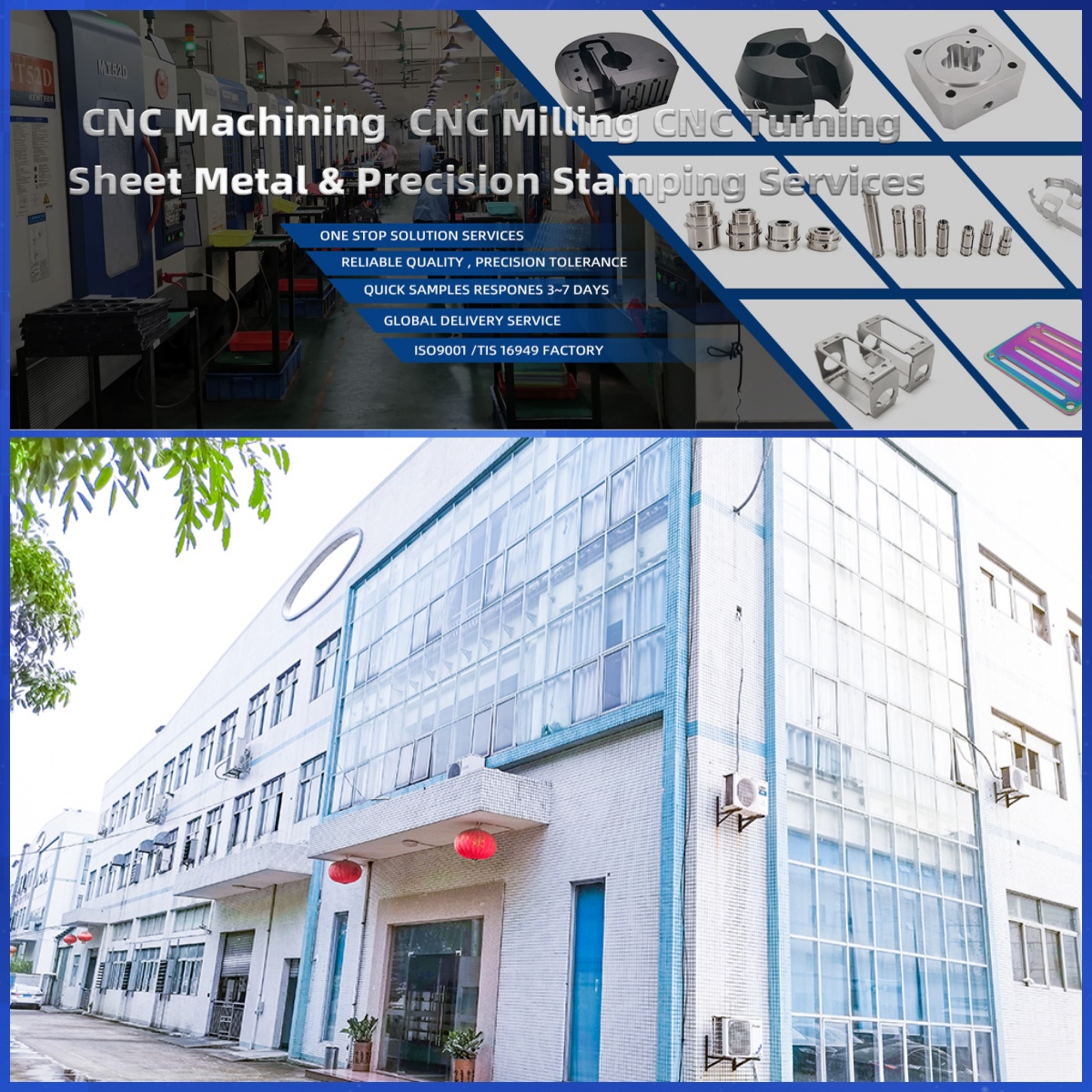
DongGuan YiTai Electronic Technologies Co.,Ltd
DongGuan YiTai Electronic Technologies Co.,Ltd is a manufacturing service provider located in Dongguan, China.
YiTai specialized in CNC turning machining and sheet metal fabrication mainly. As a member of Hung Mou Group, we focus on the overseas marketing development. And based on our parent company’s manufacturing capability and resources, YiTai also expended machining services such as die casting, injection molding, aluminum profile extrusion, 3D printing, which are committed to providing customers with one-stop purchasing services and experience.
CNC MACHINING , CNC MILLING , CNC TURNING , SHEETMETAL , FASTENER , OTHERS




Beyond Traditional Cutting: How to Decide When Your Precision Part Should Switch to EDM and Work with CNC Machining
Stainless Steel Selection Guide: 18/8, 316, or 303? Finding the Manufacturing Optimum Between Machinability, Corrosion Resistance, and Cost
Related Article