2026 The Latest Market Trends in Custom Hardware Manufacturing

- Introduction to Custom Hardware Manufacturing Trends 2026
- Key Market Trends Shaping 2026
- Traditional vs. 2026 Trend-Driven Custom Hardware Manufacturing: Comparison Table
- Expert Opinion on 2026 Custom Hardware Trends
- FAQ About 2026 Custom Hardware Manufacturing Trends
1. Introduction to Custom Hardware Manufacturing Trends 2026
2. Key Market Trends Shaping 2026
2.1 AI-Driven Customization: Faster, Smarter Design & Production
- Rapid Design Iteration: AI tools like generative design software create multiple custom prototypes based on customer inputs (e.g., size, weight, load capacity). For example, a manufacturer designing a custom aluminum bracket for a drone can input “must hold 2kg, fit in 10cm x 5cm space” and get 15 optimized designs in 3 hours—compared to 3 days with traditional CAD software.
- Predictive Customization: AI analyzes customer data to suggest personalized tweaks. A furniture hardware brand uses AI to recommend custom hinge sizes based on a customer's cabinet dimensions and usage habits (e.g., frequent opening/closing).
- Real-Time Quality Control: AI-powered cameras and sensors inspect every custom part. They detect defects like uneven threading or surface scratches with 99.5% accuracy—far higher than manual checks (75% accuracy). This reduces waste by 40% and ensures consistent quality for small-batch orders.
2.2 Sustainable & Circular Manufacturing: Eco-Friendly by Default
- Recycled & Low-Carbon Materials: At least 70% of raw materials in custom hardware are recycled or low-carbon. For example, custom stainless steel bolts use 85% recycled scrap steel (up from 50% in 2021), reducing CO2 emissions by 60kg per ton of steel. Brass hardware makers switch to “green brass” (recycled from old plumbing parts) to cut resource use.
- Waste-Reducing Processes: Manufacturers use “near-net shaping” techniques (e.g., 3D printing, precision casting) to minimize material waste. A custom hardware factory producing sensor housings now generates 5% waste, down from 25% with traditional machining. Low-VOC (volatile organic compound) coatings and water-based finishes replace toxic chemicals.
- Eco-Certifications as Standard: 90% of custom hardware products carry eco-certifications like ISO 14001 (environmental management) and RoHS (restriction of hazardous substances). These certifications are mandatory for selling in EU, US, and Japanese markets. Some brands even offer “carbon-neutral hardware” by offsetting emissions through reforestation projects.
2.3 Full Automation & Smart Production Lines: 24/7 Flexibility
- Collaborative Robots (Cobots): Cobots work alongside human workers to assemble custom parts. A factory making custom electrical connectors uses cobots to insert tiny pins into housings—they work 24/7 without fatigue, increasing production speed by 35%.
- 3D Printing for Metal Custom Parts: Metal 3D printing (e.g., laser powder bed fusion) is now mainstream for custom hardware. It creates complex shapes (e.g., lattice structures, internal channels) that traditional machining can't. A medical device maker uses 3D printing to produce custom titanium bone screws—each tailored to a patient's anatomy—with a lead time of 2 days (down from 2 weeks).
- IoT-Connected Factories: IoT sensors on machines track real-time data (e.g., temperature, tool wear, production speed). Manufacturers use this data to adjust processes on the fly. For example, if a CNC machine cutting custom brass nuts shows signs of overheating, the IoT system automatically slows it down and alerts maintenance—preventing defects.
2.4 Smart & Connected Custom Hardware: Beyond Basic Functionality
- Smart Home Hardware: Custom door handles with built-in fingerprint scanners connect to home security apps. Custom cabinet hinges with sensors detect when doors are left open and send alerts to users' phones. These products account for 30% of custom hardware sales in the residential sector.
- Industrial Smart Hardware: Custom sensors and brackets for factories monitor equipment performance. A custom stainless steel sensor housing for a manufacturing line tracks vibration and temperature—predicting maintenance needs 2 weeks in advance. This reduces downtime by 25%.
- Data Security for Connected Hardware: Manufacturers add encryption and secure firmware to smart custom hardware. A custom IoT-enabled valve for plumbing systems uses end-to-end encryption to prevent hacking—critical for commercial buildings and hospitals.
2.5 Localized & Resilient Supply Chains: Speed & Stability
- Nearshoring Production: 74% of North American custom hardware manufacturers now produce in Mexico or the US (up from 45% in 2021). European brands manufacture in Eastern Europe or North Africa. This cuts lead times from 4-6 weeks to 3-5 days for custom orders.
- Diversified Supplier Networks: Manufacturers work with 3-5 local suppliers for raw materials (e.g., steel, aluminum) instead of relying on one global source. A custom hardware maker in Germany sources recycled steel from three regional mills—avoiding shortages if one mill has issues.
- On-Demand Inventory: Manufacturers use AI to predict demand and keep minimal inventory. Custom parts are produced “on demand” instead of stockpiled, reducing storage costs and waste. A small-batch hardware brand now holds 60% less inventory than in 2021, saving $50,000 annually.
3. Traditional vs. 2026 Trend-Driven Custom Hardware Manufacturing: Comparison Table
| Feature | Traditional Manufacturing (2021) | 2026 Trend-Driven Manufacturing |
|---|---|---|
| Design Time (Custom Part) | 3-5 days | 1-3 hours (AI-generated) |
| Material Composition | 50% virgin, 50% recycled | 70%+ recycled/low-carbon |
| Production Efficiency | 8-hour workday, 5 days/week | 24/7 automated (cobots + IoT) |
| Defect Rate | 3-5% | 0.5% (AI quality control) |
| Customization Flexibility | Limited to standard templates | High (small-batch, complex 3D shapes) |
| Supply Chain | Global, 4-6 week lead time | Local/regional, 3-5 day delivery |
| Energy Use | 60% fossil fuel-dependent | 80% renewable energy (solar/wind) |
| Product Type | Basic, non-connected | Smart, IoT-integrated (30% of sales) |
| Waste Generation | 25% of raw materials | 5% of raw materials |
| Eco-Certifications | 30% of products | 90% of products |
4. Expert Opinion on 2026 Custom Hardware Trends
5. FAQ About 2026 Custom Hardware Manufacturing Trends
Q1: Will AI make custom hardware more expensive?
Q2: Are recycled materials as strong as virgin materials for custom hardware?
Q3: Can small manufacturers adopt these 2026 trends?
Q4: How secure are smart custom hardware products?
Q5: Will localized production limit material choices?
Q6: What's the most in-demand custom hardware category in 2026?
Q7: How long does it take to get a custom hardware order in 2026?
Q8: Do eco-certifications add cost to custom hardware?
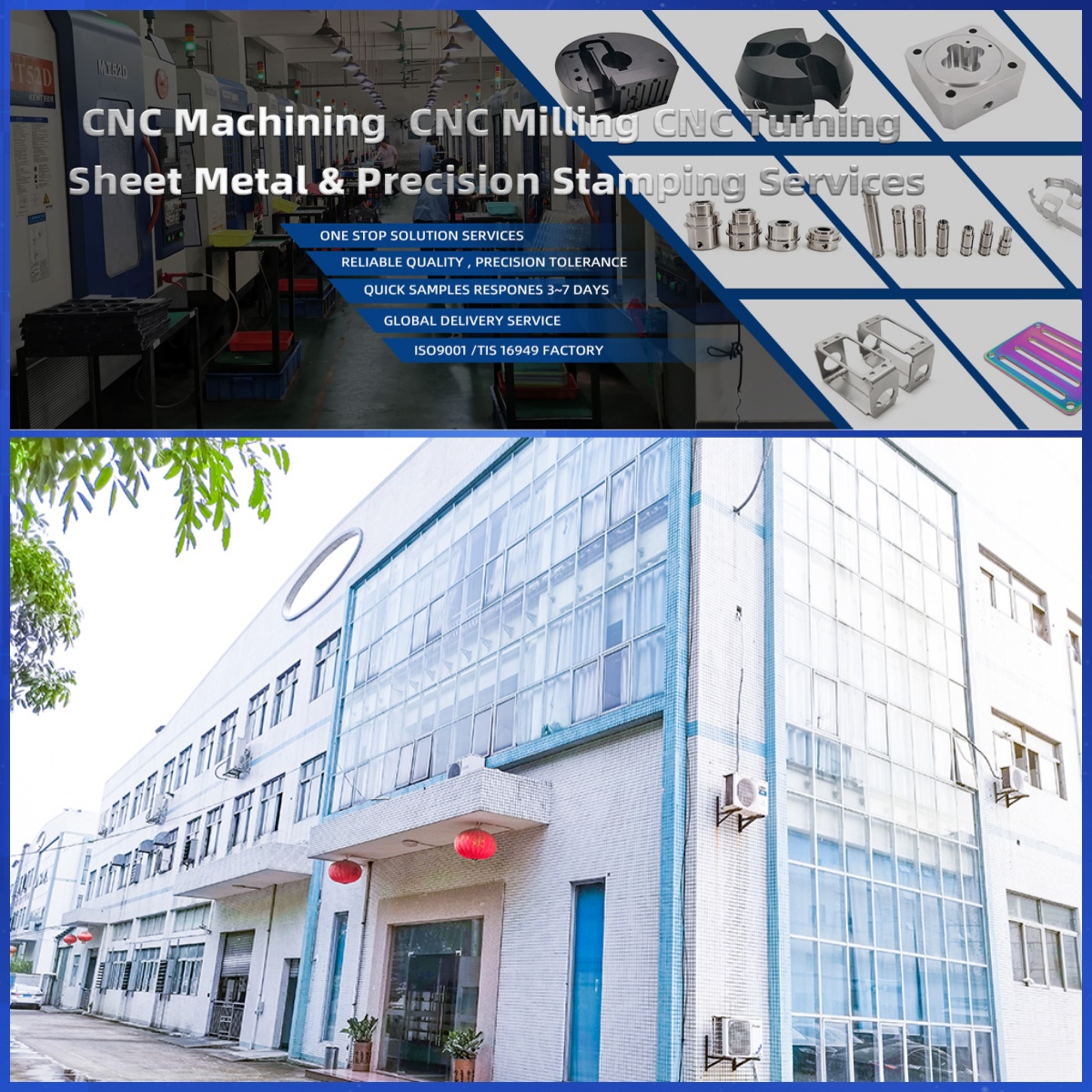
DongGuan YiTai Electronic Technologies Co.,Ltd
DongGuan YiTai Electronic Technologies Co.,Ltd is a manufacturing service provider located in Dongguan, China.
YiTai specialized in CNC turning machining and sheet metal fabrication mainly. As a member of Hung Mou Group, we focus on the overseas marketing development. And based on our parent company’s manufacturing capability and resources, YiTai also expended machining services such as die casting, injection molding, aluminum profile extrusion, 3D printing, which are committed to providing customers with one-stop purchasing services and experience.
CNC MACHINING , CNC MILLING , CNC TURNING , SHEETMETAL , FASTENER , OTHERS




The Role of a Machinist Vise in CNC Machining
Delve Into Hot and Cold Chamber Die Casting
Related Article