Bicycle Handle Grips: A Complete B2B Buyer's Guide to Materials, Manufacturing, and Supplier Selection
1. What Makes a Bicycle Grip Perform? Material and Design Fundamentals
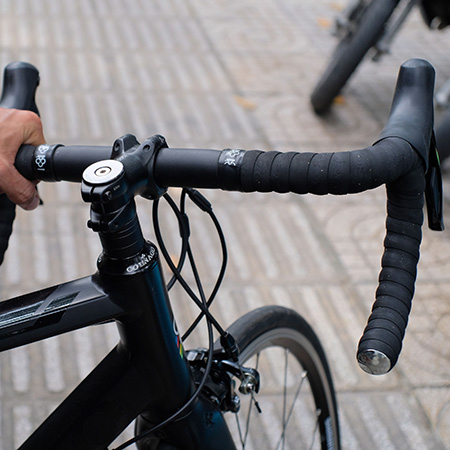
A bicycle handle grip looks simple. But a good grip and a bad grip are worlds apart. The difference comes from material science, surface texture design, and manufacturing precision. For OEM buyers and brand managers, understanding these factors is the difference between a product that generates warranty claims and one that generates repeat orders.
Grips do three jobs at the same time. They absorb vibration from the road. They provide a secure handhold in wet and dry conditions. And they must survive thousands of hours in sun, rain, and sweat — without fading, cracking, or slipping. That is a demanding specification. Getting it right starts with material selection.

1.1 Rubber, Silicone, and TPE: A Material Comparison for OEM Buyers
Three materials dominate the bicycle grip market. Each has strengths. Each has trade-offs. The choice affects unit cost, durability, comfort, and tooling investment.
| Property | Natural Rubber (NR/SBR) | Silicone | TPE / TPU |
|---|---|---|---|
| Cost per pair (raw material) | $0.30–$0.60 | $0.80–$1.50 | $0.50–$1.00 |
| Grip feel (dry) | Excellent | Outstanding | Good |
| Grip feel (wet) | Good | Excellent | Fair (can be slippery) |
| Vibration damping | Good | Excellent | Moderate |
| UV / weather resistance | Poor (degrades without additives) | Excellent | Good (UV grades available) |
| Durability (abrasion) | Very good | Moderate (can tear) | Good to very good |
| Colorability | Limited (mostly black) | Wide color range | Good (darker colors better) |
| Typical application | City bikes, kids bikes | High-end road / MTB | Mid-range commuter bikes |
| Odor | Often has rubber smell | Odorless | Low odor |
| Recyclability | Difficult | Difficult | Thermoplastic — recyclable |
The market has shifted. Five years ago, rubber dominated. Today, silicone grips are taking market share in the premium segment. They cost more. But end-users rate them higher for comfort and weather resistance. TPE (thermoplastic elastomer) sits in the middle — a balanced choice for brands that want durability at a reasonable cost.
1.2 Ergonomic Design Features That End-Users and Brands Demand
Material is only half the story. Surface geometry is the other half. The texture, pattern depth, and contour shape determine how the grip feels. OEM buyers should understand what design features drive consumer preference:
| Design Feature | Consumer Benefit | Manufacturing Complexity |
|---|---|---|
| Diamond / waffle pattern | Multi-directional grip, classic look | Low — standard mold engraving |
| Ergonomic wing / palm rest | Reduces hand fatigue on long rides | Medium — requires asymmetric mold |
| Lock-on clamp system | Zero slip, easy installation | Medium — adds aluminum clamp cost |
| Variable-density zones | Soft where hand rests, firm where fingers grip | High — dual-shot molding |
| Micro-textured surface | Breathable, reduces sweaty palms | Low to medium |
| Flange / outer lip | Prevents hand from sliding off end | Low — standard mold feature |
The hottest trend in 2026 is lock-on grips with dual-density construction. These are grips with a hard inner core (for clamp security) and a soft outer layer (for comfort). They retail at $25–$60 per pair. The B2B cost is $3–$8 per pair at volume. That is a healthy margin for brands that can source the right supplier.
"The #1 complaint in grip warranty returns is delamination — the outer layer separating from the core. This happens when the overmolding bond is weak. A good supplier runs peel-strength tests on every batch. A bad supplier does not."
— Lena Bergström, Product Quality Director, Scandinavian Cycling Components (SCANDIC)
2. Manufacturing Methods: How Quality Bicycle Grips Are Made

2.1 Injection Molding vs. Compression Molding: Cost, Tolerances, and Tooling
There are two main ways to make bicycle grips. The method impacts nearly everything: part cost, surface finish, design freedom, and minimum order quantity.
| Factor | Injection Molding | Compression Molding |
|---|---|---|
| Tooling cost | $5,000–$20,000 per cavity set | $2,000–$8,000 per cavity set |
| Cycle time per pair | 30–60 seconds | 90–180 seconds |
| Surface finish | Excellent — smooth, detailed texture | Good — may have flash lines |
| Dimensional tolerance | ±0.1 mm | ±0.3 mm |
| Material waste | Low (runner can be reground) | Higher (flash trimming waste) |
| Minimum order quantity | 1,000 pairs | 500 pairs |
| Best for | High-volume, high-quality | Prototyping, low-volume, simple shapes |
| Color change time | 30–60 min (purge required) | 10–15 min (change preform) |
For OEM production above 5,000 pairs, injection molding wins. The higher tooling cost is offset by faster cycle times and better consistency. For small brands doing limited editions of 500–1,000 pairs, compression molding may be the better entry point.
2.2 Overmolding and Dual-Density Production for Premium Grips
Premium grips are not one material. They are two materials fused together. The process is called overmolding — sometimes called dual-shot or 2K molding. It requires specialized equipment and deep process knowledge.
Here is how it works:
The key risk in overmolding is delamination. If the first shot cools too much before the second shot, the bond is weak. If the materials are chemically incompatible, the bond never forms. A good supplier runs peel tests on every production batch. Insist on seeing the data.

3. B2B Procurement: What to Check Before You Place an Order
3.1 Certifications, Durability Testing, and Quality Standards
Bicycle grips are safety-relevant components. If a grip slips off during a ride, the rider loses control. OEM buyers must verify that their supplier follows recognized testing standards.
| Test / Standard | What It Measures | Passing Threshold |
|---|---|---|
| EN 14764 / ISO 4210 | City and trekking bicycle safety | Grip must withstand 70 N axial force without slipping |
| EN 14766 / ISO 4210 | Mountain bike safety | Same axial pull test, plus wet-condition grip test |
| PAHs / REACH (EU) | Chemical safety — no toxic rubber additives | PAH content <1 mg/kg per substance |
| CPSIA (USA) | Children's product safety (kids bikes) | Lead <100 ppm, phthalates <0.1% |
| UV aging (ASTM G154) | Color fading and material degradation | 500 hours QUV, Delta-E <3 |
| Salt spray (ASTM B117) | Corrosion of lock-on clamps | 48 hours, no red rust on aluminum clamps |
| Abrasion (DIN 53516) | Surface wear under friction | Volume loss <250 mm³ for grip rubber |
Do not accept a supplier who says "trust me, the grips are strong." Ask for test reports. A professional supplier will provide third-party lab reports or in-house test data with traceable calibration records.
3.2 Customization: Colors, Branding, Packaging, and MOQ
OEM buyers need brand identity on their grips. That means custom colors, embossed or printed logos, and retail-ready packaging. Here is what to expect from a good supplier:
| Custom color (Pantone) | Masterbatch pigment in raw material | Low — $0.05–$0.15/pair | No change (1000 pairs) |
| Embossed logo | Engraved into mold | One-time — $200–$500 mold fee | Amortize over 5000+ pairs |
| Laser-engraved logo | Post-molding laser etch | $0.10–$0.25/pair | No minimum (one-offs OK) |
| Custom clamp color (anodized) | Anodizing the aluminum lock ring | $0.20–$0.50/pair | 500 clamps minimum |
| Retail packaging (hang card, box) | Graphics + cardboard + blister | $0.40–$1.20/pair | 1,000 units minimum |
| Bulk (OEM) packaging | Polybag with label | $0.05–$0.10/pair | None — standard option |
The smartest way to brand grips at low volume is laser engraving. No mold modification needed. You can change the logo design between batches. The downside is that laser etching wears off over time — it is best for brands doing under 5,000 pairs per year.
"Branded grips are one of the highest-ROI touchpoints on a bicycle. The rider's hands are on the grips for every minute of every ride. A subtle logo emboss on the grip surface is seen thousands of times over the product's life. The mold engraving costs $300. That is the best brand investment you will ever make."
— Taro Nakamura, Brand Strategy Director, Tokyo Cycle Design Co.
4. DongGuan YiTai: Your OEM Partner for Precision Bicycle Components
From CAD to Container: Your Bicycle Grip Manufacturing Partner
DongGuan YiTai Electronic Technologies brings CNC precision engineering to bicycle component manufacturing. We produce handle grips, lock-on clamps, bar-end plugs, and full grip assembly kits for OEM bike brands worldwide.
Our bicycle grip capabilities:
- Materials: Silicone, TPE, TPU, natural rubber (SBR/NR compounds)
- Process: Injection molding, compression molding, overmolding
- Aluminum clamps: CNC machined + anodized in custom colors
- Tolerances: Inner diameter ±0.1 mm, wall thickness ±0.15 mm
- Testing: Axial pull (EN 14764), peel strength, UV aging, PAHs/REACH compliance
- Customization: Colors (any Pantone), embossed/laser logos, retail packaging
- MOQ: 1,000 pairs for injection molding, 500 for compression molding
- Lead time: 4–6 weeks (new mold), 2–3 weeks (repeat orders)
We do not just mold grips. We CNC machine the aluminum lock rings in-house. We anodize them to match your brand color. We assemble and package the complete kit. One supplier. One quality system. One shipping container.
Ready to Source Your Next Batch of Bicycle Grips?
Send us your design brief or reference sample. We will provide a material recommendation, mold cost estimate, and production timeline within 48 hours. No cost for the consultation.
Request Your Grip Sourcing Consultation5. Frequently Asked Questions
DongGuan YiTai Electronic Technologies Co.,Ltd
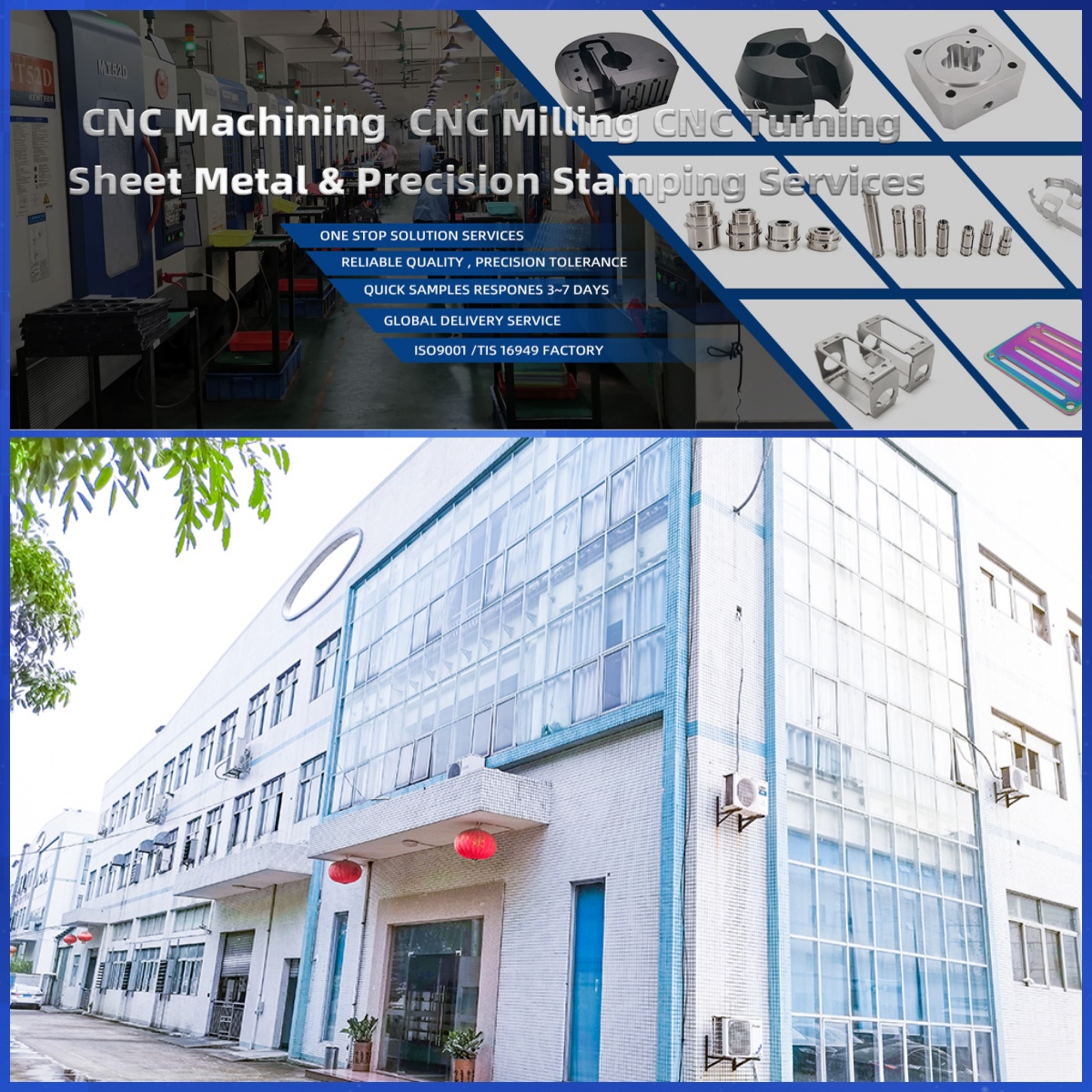
DongGuan YiTai Electronic Technologies Co.,Ltd is a manufacturing service provider located in Dongguan, China.
YiTai specialized in CNC turning machining and sheet metal fabrication mainly. As a member of Hung Mou Group, we focus on the overseas marketing development. And based on our parent company’s manufacturing capability and resources, YiTai also expended machining services such as die casting, injection molding, aluminum profile extrusion, 3D printing, which are committed to providing customers with one-stop purchasing services and experience.
CNC MACHINING , CNC MILLING , CNC TURNING , SHEETMETAL , FASTENER , OTHERS




Custom Metal Brackets: A Complete Guide to Design, Materials, and CNC Manufacturing
Elevating Product Aesthetic Appeal: A Guide to Rainbow PVD Coating for Custom CNC Parts
Related Article