Why Regulated Industries Like Aerospace and Medical See 5‑Axis Milling as a Manufacturing Lifeline

This guide explains why. You will see how five‑axis machines make complex parts that save lives and fly safely. You will also learn how we at DongGuan YiTai Electronic Technologies help meet these high standards.
-
Precision Electronics & Optics: High‑Performance Optomechanical Parts
-
Choosing a 5‑Axis Supplier with Industry Expertise Means Certainty
1. The Gold Standards That Demand More from Machining
Aerospace and medical parts are not like consumer goods. They must follow strict rules.
| Standard | Industry | What It Demands |
|---|---|---|
| AS9100 | Aerospace | Full traceability, risk management, no counterfeit parts |
| ISO 13485 | Medical | Cleanroom production, biocompatibility, validated processes |
These standards push machining to its limits. Parts must have perfect geometry. Surfaces must be smooth. Materials like titanium and Inconel must be cut without defects. A three‑axis mill cannot reach all sides of a complex part. You need two, three, or four setups. Each setup adds error risk. Five‑axis milling does the whole job in one setup. This reduces errors. It also keeps the part cleaner.
2. Life‑Saving Artwork: Orthopedic Implants and Surgical Tools
Medical implants and tools have curved, organic shapes. They look like art. But they must function perfectly inside the human body.

3D Printed Titanium Bone Plates – Finish Machining with 5‑Axis
Many bone plates are 3D printed from titanium powder. Printing gives a rough, porous surface. That is good for bone growth. But the screw holes and mating surfaces need a smooth finish. A five‑axis mill machines only the critical areas. It reaches angled holes and curved undersides. The rest of the porous surface stays intact.
Cobalt‑Chromium Joint Implants – Mirror Finish on Hard Material
Cobalt‑chromium (CoCrMo) is very hard. It is used for hip and knee bearings. The ball and socket must have a mirror finish (Ra ≤ 0.05μm) . Any scratch will wear the plastic bearing quickly. Five‑axis milling uses small step‑overs and high spindle speeds. The tool stays normal to the curved surface. This gives a polished look right off the machine. No extra hand polishing is needed.
3. Conquering the Sky: Critical Engine and Structural Parts
Aerospace parts face extreme heat and stress. They must be strong and light.
Best Toolpath Strategy for Inconel Turbine Blades
Inconel is a nickel superalloy. It gets harder when you cut it. It also holds heat. For turbine blades, we use 5‑axis simultaneous milling. The tool tilts continuously to keep the cutting edge engaged. This reduces rubbing. Rubbing causes work hardening. We also use high‑pressure coolant directed at the cut. The result: a smooth blade surface with no micro‑cracks.
Gyroscope Housing for Inertial Navigation – Micron‑Level Tolerances
A gyroscope housing must be perfectly round and straight. The inner bore and the outer mounting faces must be concentric within ±0.002mm . With a 3‑axis machine, you would need two or three setups. Each setup loses alignment. A five‑axis mill machines the bore and the outer features in one clamping. The part never moves. The concentricity is perfect.
4. Precision Electronics & Optics: High‑Performance Optomechanical Parts
Even electronics and optics benefit from 5‑axis milling.
One‑Piece Heat Sinks and Enclosures
High‑end electronics need cooling. A heat sink with angled fins and a curved bottom is hard to make on a 3‑axis machine. You would need to flip the part several times. Five‑axis milling cuts the fins, the base, and the mounting holes in one setup. The fins are straight. The base is flat. The result is better heat transfer and lower cost.
At DongGuan YiTai Electronic Technologies , we use 5‑axis mills to make complex enclosures for optical sensors. The parts have angled windows and tight sealing grooves. One setup gives us perfect alignment.
5. Choosing a 5‑Axis Supplier with Industry Expertise Means Certainty
Not every shop with a 5‑axis machine can do medical or aerospace work. You need three things.

-
Certifications: AS9100 for aerospace, ISO 13485 for medical.
-
Material experience: Titanium, Inconel, cobalt‑chrome, PEEK.
-
In‑process inspection: Probing on the machine plus CMM reports.
We have all three. We also offer cleanroom packaging for medical parts. We give full traceability on every batch.
Send us your drawing. Tell us your industry. We will show you how 5‑axis milling can make your part safer and faster.
6. Expert Insight: One Setup Is Everything
“In medical and aerospace, error is not allowed. Every time you move a part to a new machine, you risk misalignment. Five‑axis lets us cut the whole part from one reference point. The holes line up. The surfaces blend smoothly. For a spinal implant, that means the screw goes in straight. For a turbine blade, the airflow is correct. That small difference in alignment can save a life or prevent an engine failure. That is why we use five‑axis for anything critical.”
— Senior Applications Engineer, DongGuan YiTai Electronic Technologies
7. Frequently Asked Questions (FAQ)
Q: What is the main advantage of 5‑axis for medical implants?
A: One‑setup machining. The implant’s curved surfaces are cut without moving the part. This gives perfect surface continuity. It also reduces the risk of contamination from multiple handlers.
Q: Can 5‑axis mill Inconel without work hardening?
A: Yes, with the right strategy. Use climb milling, a constant chip load, and high‑pressure coolant. Keep the feed rate steady. Do not let the tool rub. Our five‑axis machines are rigid enough for Inconel.
Q: How do you inspect a 5‑axis part for medical use?
A: We use in‑process probing on the machine. The touch probe measures critical features while the part is still clamped. Then we do a final CMM inspection on a sample. We give a full inspection report with every order.
Q: Is 5‑axis milling more expensive than 3‑axis?
A: The machine hour rate is higher. But the total cost per good part is often lower because you need fewer fixtures, less handling, and less rework. For complex medical and aerospace parts, 5‑axis is the cheaper option.
Q: Does DongGuan YiTai Electronic Technologies have AS9100 or ISO 13485?
A: Yes. We are ISO 9001:2015 certified and follow AS9100 and ISO 13485 quality management systems. We also have a cleanroom for medical device finishing. Contact us for our current certifications.
Q: What is the lead time for a 5‑axis machined prototype?
A: For a medical or aerospace prototype, count 2–3 weeks for programming, tooling, and first article inspection. Production runs shorten after the setup is proven. Send us your file for a fast estimate.
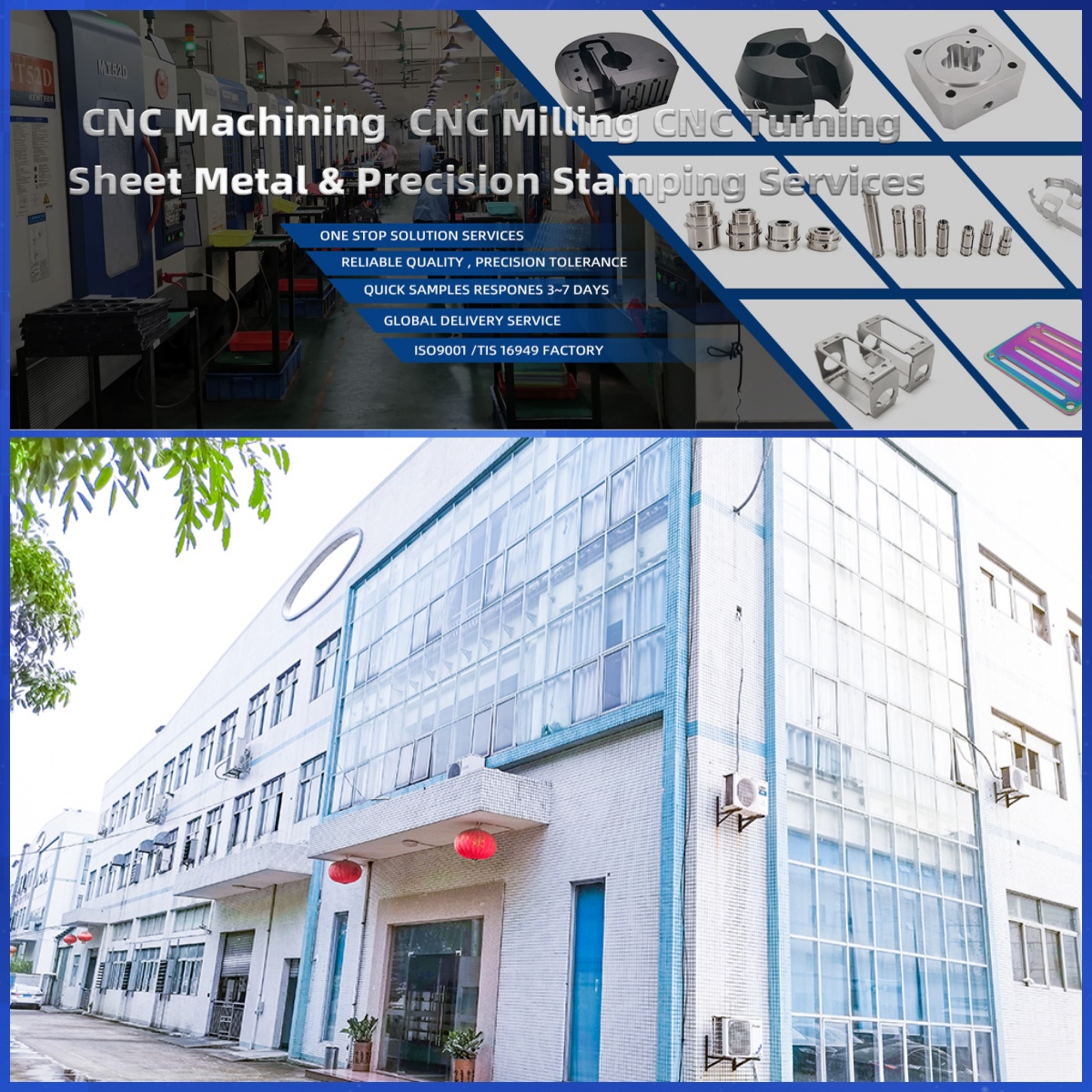
DongGuan YiTai Electronic Technologies Co.,Ltd
DongGuan YiTai Electronic Technologies Co.,Ltd is a manufacturing service provider located in Dongguan, China.
YiTai specialized in CNC turning machining and sheet metal fabrication mainly. As a member of Hung Mou Group, we focus on the overseas marketing development. And based on our parent company’s manufacturing capability and resources, YiTai also expended machining services such as die casting, injection molding, aluminum profile extrusion, 3D printing, which are committed to providing customers with one-stop purchasing services and experience.
CNC MACHINING , CNC MILLING , CNC TURNING , SHEETMETAL , FASTENER , OTHERS




How to Find a Qualified Custom Sheet Metal Enclosure Manufacturer: A Deep Audit Checklist
The Buyer's Guide to Custom Sand Blasted Aluminum Parts: How to Avoid Costly Mistakes
Related Article