Fineblanking Precision: The Complete Guide to Superior Edge Quality, Near-Net-Shape Accuracy, and Cost-Efficient Production

- 1. What Is Fineblanking? The Three-Force System Explained
- 2. Precision Capabilities of Fineblanking
- 3. Fineblanking vs. Conventional Stamping vs. CNC Machining
- 4. Industries That Rely on Fineblanking Precision
- 5. DongGuan YiTai: Precision Fineblanking and CNC Integration
- 6. Frequently Asked Questions
1. What Is Fineblanking? The Three-Force System Explained
Fineblanking is an advanced precision metal forming process. It produces parts with fully sheared, smooth edges and tight dimensional tolerances. Unlike conventional stamping — which rips the metal apart — fineblanking cuts it cleanly.
The result? Parts that come off the press ready for assembly. No secondary grinding. No deburring. No edge finishing needed.
1.1 How Fineblanking Differs from Conventional Stamping
Conventional stamping uses a punch and die to shear metal. The material fractures partway through. About one-third of the edge is a rough fracture zone. The rest is a smooth shear band. This is fine for many parts. But it is not fine for precision applications.
Fineblanking changes the physics. It uses three forces working together to keep the material under compression during the cut. No fracture. No tearing. The result is a 100% sheared edge across the full material thickness.
| Feature | Conventional Stamping | Fineblanking |
|---|---|---|
| Edge quality | 1/3 fracture zone | 100% smooth shear |
| Dimensional tolerance | ±0.1–0.2 mm | ±0.02–0.05 mm |
| Hole-to-edge distance | ≥1.5x material thickness | ≥0.6x material thickness |
| Flatness | Often needs coining | Excellent as-stamped |
| Secondary ops needed | Deburring, grinding, reaming | Often none needed |
| Tooling cost | $5,000–$20,000 | $15,000–$60,000 |
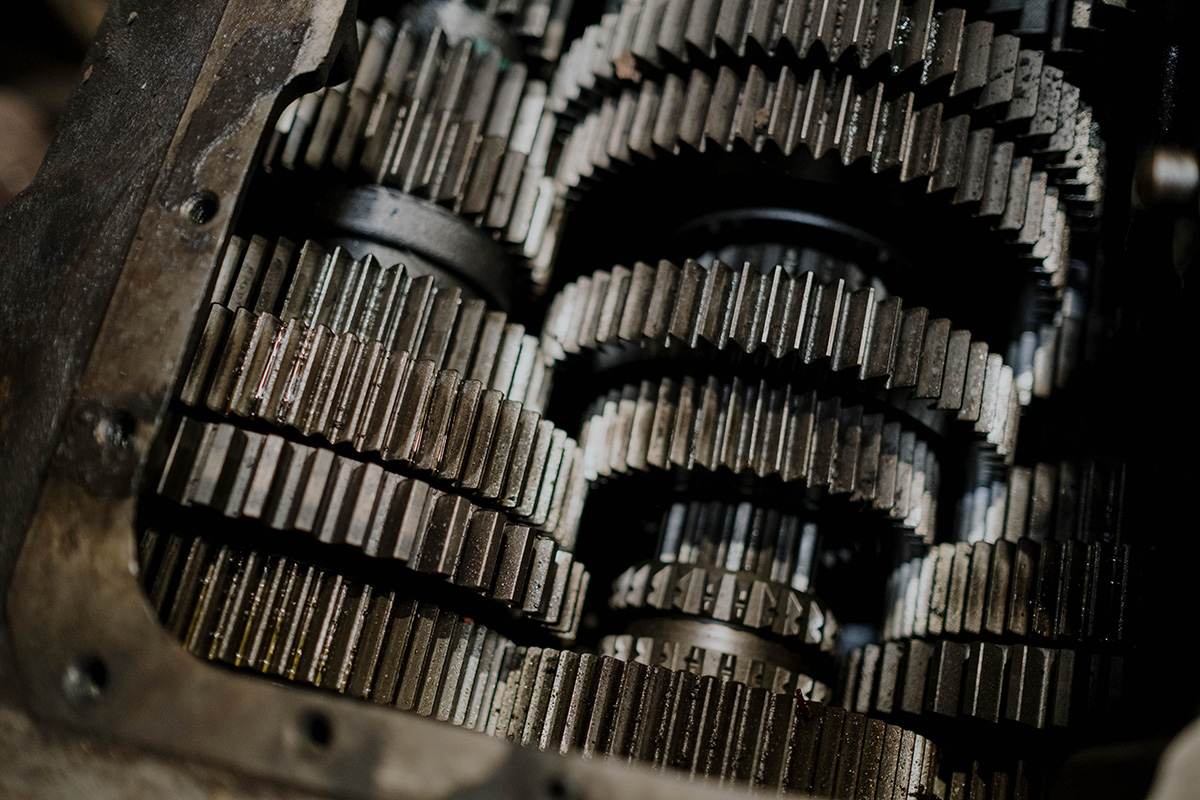
1.2 The V-Ring, Counter Pressure, and Ejector — A Breakdown
The secret to fineblanking precision is the three-force system. Each force has a specific job. Together, they suppress fracture and produce the clean cut.
A V-shaped ring on the die face presses into the sheet metal. It creates a hydrostatic compressive stress zone around the cut line. This stops the metal from separating before the punch finishes cutting. Think of it like holding a stack of paper tight before cutting it with a knife — the compression makes the cut clean.
A hydraulic cushion pushes back against the punch from below. It keeps the material in compression through the full thickness. Without this, the bottom side would fracture. With it, the shear zone extends from top to bottom. The result is 100% smooth edge — no fracture zone at all.
After the cut, the ejector pushes the part out of the die cavity. It also holds the part flat during the return stroke. This prevents the part from bending or warping as it exits the die. The ejector is the reason fineblanked parts maintain excellent flatness right off the press.
"Fineblanking is the only sheet metal process that produces a fully sheared edge through the entire material thickness. The three-force system transforms a brittle fracture process into a ductile shearing process. It is fundamentally different physics."
— Dr. Heinrich Vogel, Director of Metal Forming Research, Fraunhofer Institute for Production Technology (IPT)
2. Precision Capabilities of Fineblanking
2.1 Dimensional Tolerances Down to ±0.02 mm
Fineblanking holds tolerances that are 3 to 5 times tighter than conventional stamping. This is not a marketing claim. It is a result of the process physics.
Here is what fineblanking can achieve in production:
| Dimension Type | Fineblanking Tolerance | Conventional Stamping |
|---|---|---|
| Hole diameter | ±0.02 mm | ±0.1 mm |
| Hole position | ±0.03 mm | ±0.15 mm |
| Outside contour | ±0.03 mm | ±0.15 mm |
| Flatness | 0.02 mm / 25 mm | 0.1 mm / 25 mm |
| Surface roughness (edge) | Ra 0.4–1.6 μm | Ra 3.2–6.3 μm |
| Material thickness range | 0.5–16 mm | 0.1–10 mm (difficult past 6 mm) |
These tolerances are repeatable across millions of parts. The die determines the accuracy. Once the die is made, every part comes out the same. CNC machining can match this accuracy, but it cannot match the throughput. A fineblanking press can run 30–80 strokes per minute. That means tens of thousands of parts per shift — all with consistent precision.
2.2 The 100% Sheared Edge: Why Fineblanked Parts Skip Secondary Finishing
The defining feature of fineblanking is the edge quality. In conventional stamping, the edge has a shear zone (smooth), a fracture zone (rough), and often a burr. The fracture zone is the problem. It is rough. It has micro-cracks. It can fail under cyclic loading. For functional surfaces — like gear teeth or cam profiles — a fracture zone is unacceptable.
Fineblanking eliminates the fracture zone. The edge is 100% smooth shear. The surface roughness on the edge is Ra 0.4–1.6 μm — comparable to a ground finish. This means:
- No deburring needed. Parts go straight to assembly.
- No edge grinding needed. The sheared edge is the finished surface.
- Better fatigue life. Smooth edges have fewer stress concentrators. Parts last longer under load.
For gear teeth, pawls, ratchets, and cam surfaces, this is a game-changer. The edge IS the functional surface. Fineblanking makes it right the first time.
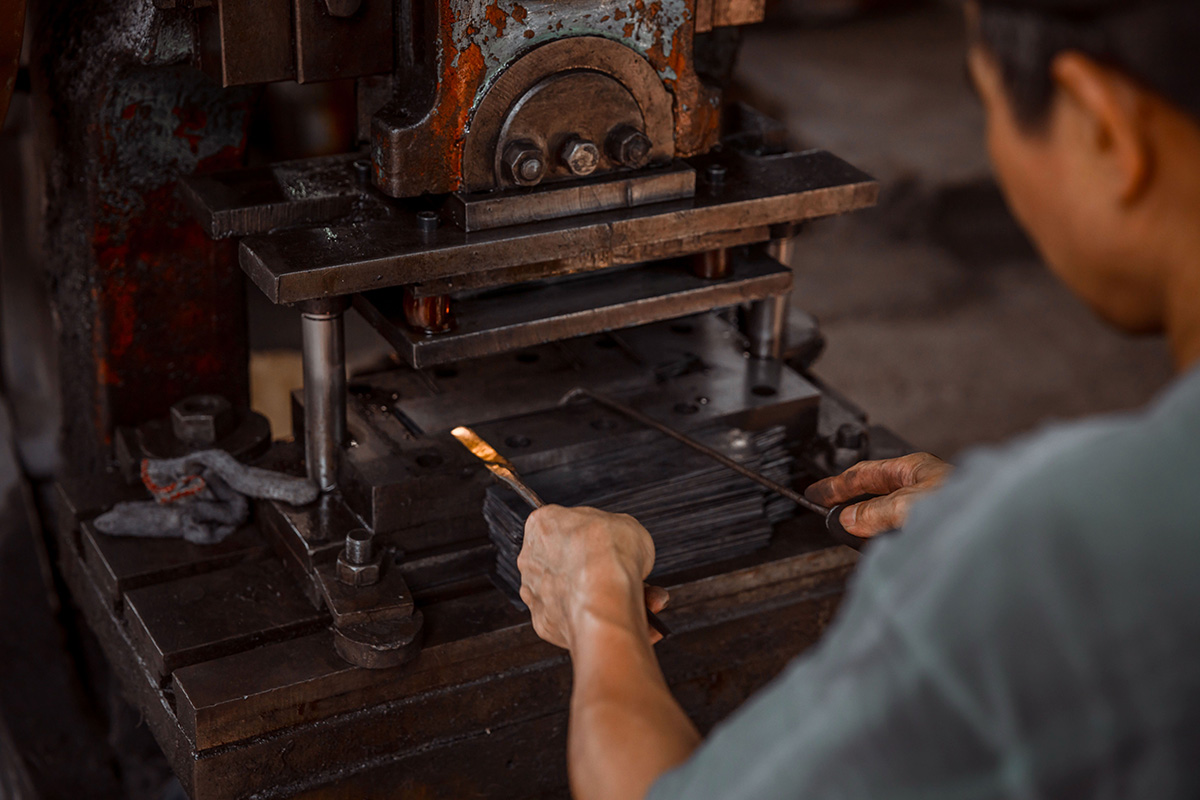
2.3 Flatness and Surface Quality Without Coining
Conventionally stamped parts often come off the press with some distortion. The punch pushes through the material unevenly. The part warps. Many shops solve this by adding a coining operation — a second press hit that flattens the part. Coining costs money. It adds cycle time. It wears the die faster.
Fineblanking produces parts with flatness of 0.02 mm per 25 mm of length directly off the press. No coining needed. The counter pressure and ejector keep the part flat through the entire cycle. This saves a secondary operation and preserves the surface finish.
"The cost argument for fineblanking is not the part price alone. It is the total cost of everything you stop doing: no deburring, no grinding, no coining, no rework. Fineblanking is not cheap tooling. But cheap tooling with ten secondary operations costs more in the end."
— Mathias Krüger, Head of Stamping Technology, GERBER Technology Europe
3. Fineblanking vs. Conventional Stamping vs. CNC Machining
Every precision part has three possible manufacturing routes. Each has a different price point and quality profile. The right choice depends on volume, tolerance, and material thickness.
3.1 Cost-Performance Comparison at Production Scale
| Metric | Conventional Stamping | Fineblanking | CNC Machining |
|---|---|---|---|
| Tooling cost | $5k–$20k | $15k–$60k | $0 (no tooling) |
| Part cost (1000 pcs) | $0.50–$2.00 | $1.50–$5.00 | $8.00–$25.00 |
| Part cost (100,000 pcs) | $0.10–$0.40 | $0.30–$1.00 | $6.00–$18.00 |
| Edge quality | 1/3 fracture | 100% shear | Excellent (milled) |
| Dimensional tolerance | ±0.1 mm | ±0.02 mm | ±0.01 mm |
| Secondary ops needed | 2–4 operations | 0–1 operations | Often complete in one setup |
| Best for volume | 50k+ pcs/year | 20k–500k pcs/year | 1–5,000 pcs/year |
| Material thickness limit | 0.1–6 mm | 0.5–16 mm | No practical limit |
3.2 When Fineblanking Is the Right Choice
Fineblanking is not always the best answer. Here is a simple decision guide:
- Your part has functional edges (gear teeth, cams, locking surfaces).
- You need ±0.05 mm or better tolerances on holes and contours.
- Your volume is 20,000 to 500,000 pieces per year.
- You want to eliminate deburring, grinding, and reaming operations.
- Material thickness is 2–12 mm steel — the sweet spot for fineblanking.
- Volume is under 5,000 pieces — tooling cost cannot be amortized.
- The part has 3D features (pockets, angles, non-linear cuts) that a 2D process cannot create.
- You need ±0.01 mm tolerance — beyond what fineblanking can hold.
- Prototyping is still active and the design may change.
- Edge quality does not matter (brackets, washers, shims).
- Volume is over 500,000 pieces — unit cost matters more than edge quality.
- Material is thin (< 1 mm) and easy to shear cleanly.
- Budget is tight and you can accept post-stamping deburring as a separate step.
4. Industries That Rely on Fineblanking Precision
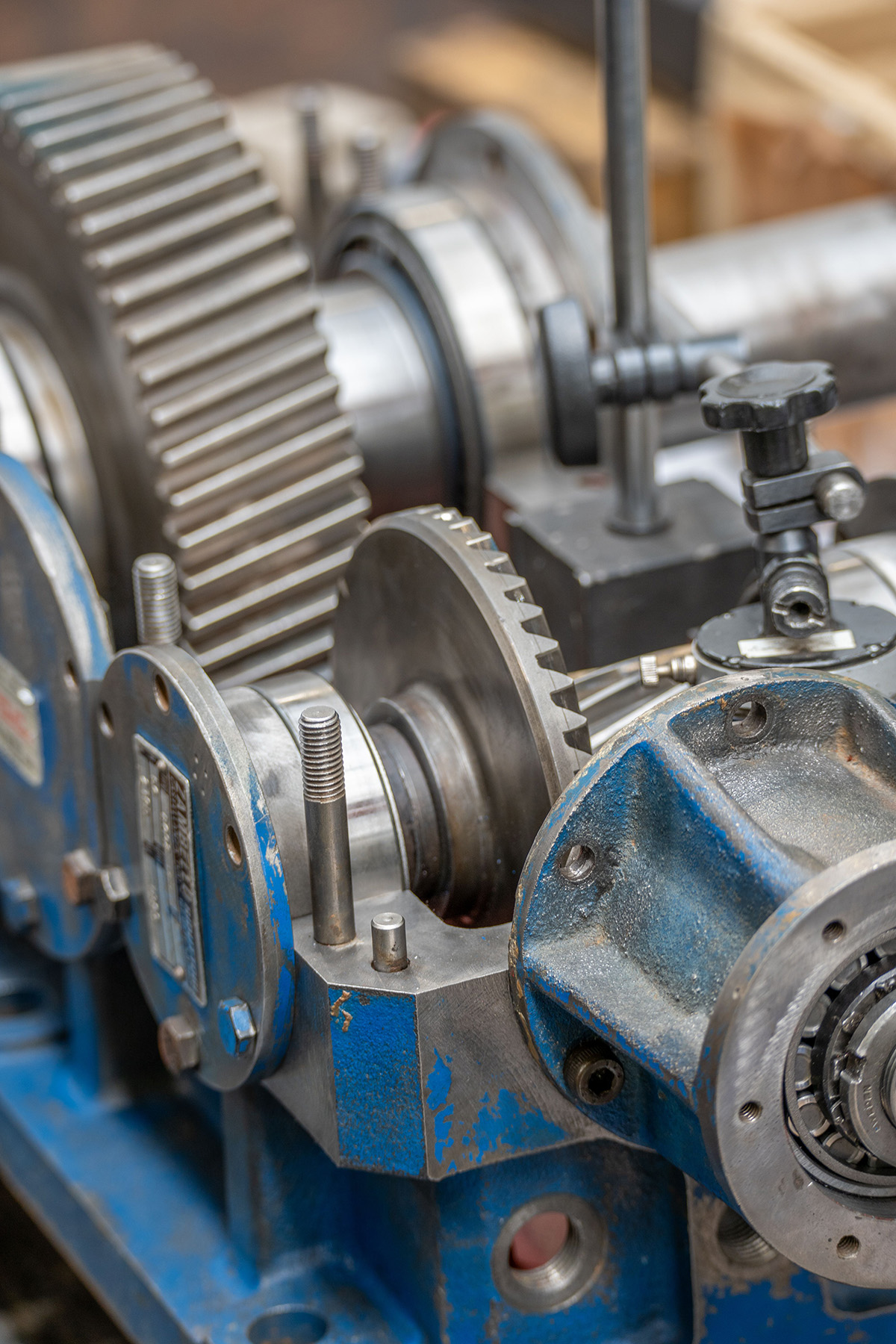
Fineblanking is not a one-industry process. But some sectors depend on it more than others:
| Industry | Typical Parts | Key Requirement |
|---|---|---|
| Automotive | Seat recliner gears, brake backing plates, transmission pawls, door latch components | Fatigue strength, consistent quality at 500k+ volume |
| Power Tools | Chuck jaws, ratchet gears, bearing retainers | Wear resistance, edge hardness |
| Aerospace | Control linkage brackets, hinge plates, seat track components | 100% inspection, material certs, zero defects |
| Medical Devices | Surgical instrument linkages, implant tray locking mechanisms | Clean edges, no burr (patient safety) |
| Industrial Equipment | Coupling flanges, cam followers, locking plates | Dimensional stability, long die life |
In automotive alone, a single car contains 30–80 fineblanked parts. The seat mechanism has roughly 8–12 of them. The transmission has another 10–15. The door lock and hinge systems add 5–10 more. These parts must last 15+ years without failure. Fineblanking gives them the edge quality and dimensional precision to do that.
5. DongGuan YiTai: Precision Fineblanking and CNC Integration
Your Fineblanking Precision Partner in Dongguan, China
At DongGuan YiTai Electronic Technologies, we combine fineblanking tooling expertise with in-house CNC machining and surface treatment. This means your parts go from blank sheet to finished assembly under one quality system.
Our fineblanking capabilities include:
- Material thickness: 0.5 mm to 12 mm (steel, stainless, aluminum, copper alloys)
- Press capacity: 160 to 800 tons
- Tolerances: ±0.03 mm on holes and contours, 0.02 mm flatness
- Edge quality: 100% shear, Ra 0.4–1.6 μm surface finish
- Die design and build: In-house toolroom with CAD/CAM and wire EDM
- Secondary services: CNC drilling, tapping, PEM® insertion, anodizing, plating
- Inspection: CMM first-article, SPC in-process, full batch traceability
- Volume: Prototype (100 pcs) to production (500k+ pcs/year)
We do not just run the press. We design the die. We grind the punch. We set the V-ring geometry to match your material. And we inspect every batch with CMM reports you can see. Transparency is part of our quality promise.
Is Fineblanking Right for Your Part?
Send us your drawing. We will review it within 24 hours. We will tell you whether fineblanking, CNC machining, or a combination of both gives you the best result at the lowest total cost. No cost. No commitment. Just a clear answer.
Request Your Free Process Review6. Frequently Asked Questions
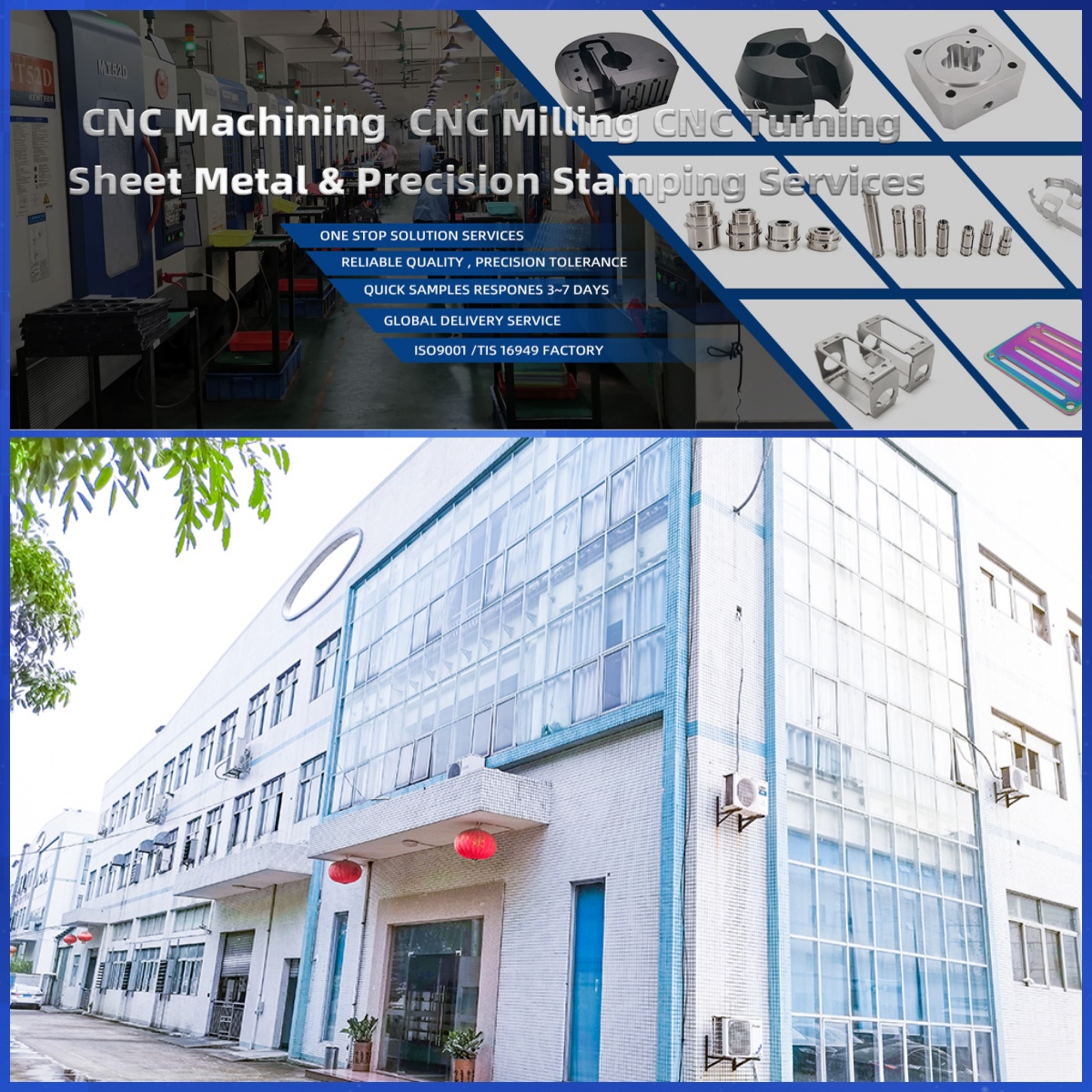
DongGuan YiTai Electronic Technologies Co.,Ltd
DongGuan YiTai Electronic Technologies Co.,Ltd is a manufacturing service provider located in Dongguan, China.
YiTai specialized in CNC turning machining and sheet metal fabrication mainly. As a member of Hung Mou Group, we focus on the overseas marketing development. And based on our parent company’s manufacturing capability and resources, YiTai also expended machining services such as die casting, injection molding, aluminum profile extrusion, 3D printing, which are committed to providing customers with one-stop purchasing services and experience.
CNC MACHINING , CNC MILLING , CNC TURNING , SHEETMETAL , FASTENER , OTHERS




XRF Coating Thickness Measurement Equipment: How It Ensures Anodizing Quality in Precision Manufacturing
Precision CNC Secondary Machining for Roll-Formed Parts: A Complete Guide
Related Article