From PCB to Enclosure: The Ultimate Guide to CNC Prototyping for Electronics R&D

In electronics research and development (R&D), turning a circuit design into a real, working product is a big challenge. The path from a Printed Circuit Board (PCB) to a final product enclosure requires careful steps. CNC (Computer Numerical Control) machining is a very important tool in this process. This guide explains how CNC prototyping helps at every stage of electronic product development.
1. Why CNC is Essential for Electronic Hardware Development
CNC machining is a subtractive manufacturing process. It uses computer-controlled tools to cut away material from a solid block to create a part. For electronics developers, this method is very important for making sure the virtual design works perfectly in the real world.
1.1 Validating Stack-up Design and PCB Interference Detection
A common problem in electronic assembly is physical interference. This happens when the PCB, its components, and the enclosure do not fit together correctly. A 3D model on a screen cannot show this problem completely.
CNC machining solves this by creating a precise physical model of the enclosure. Engineers can assemble a real PCB into the CNC-machined prototype. They can check if all connectors align, if tall components hit the case roof, and if the screws fit properly. This step finds design mistakes early, saving a lot of time and money that would be spent fixing them later.
Furthermore, modern 3D IC and chiplet designs create new challenges with vertical stacking. While not directly machined, the precise spatial requirements of these advanced packages make the accurate prototyping of their enclosures and heat sinks via CNC even more critical.

1.2 Advantages Over 3D Printing: Material Authenticity
While 3D printing is useful for early shape studies, CNC has a big advantage for functional testing: material authenticity.
-
Real Materials: CNC prototypes can be made from the exact final production materials, like aluminum alloys or specific engineering plastics. A 3D-printed plastic part will feel, weigh, and react to heat differently than an injection-molded or CNC-machined one.
-
Superior Precision and Finish: CNC machining offers much tighter tolerances (as good as ±0.025 mm) and a smoother surface finish directly from the machine. This is vital for testing waterproof seals, thermal performance, and the professional look of a product.
-
Functional Strength: Parts machined from solid blocks of metal or plastic are fully dense and isotropic, meaning they have the same strength in all directions. This makes them perfect for stress testing, drop tests, and evaluating heat dissipation in a way that most 3D-printed parts cannot match.
Comparison: CNC vs. 3D Printing for Prototyping
| Feature | CNC Machining | 3D Printing (FDM) |
|---|---|---|
| Material Options | Real metals (Aluminum, Steel), Engineering Plastics | Primarily plastic filaments (PLA, ABS) |
| Dimensional Tolerance | High (±0.025 – ±0.05 mm) | Lower (±0.1 – ±0.5 mm) |
| Surface Finish | Smooth, often ready for finishing | Visible layer lines, requires post-processing |
| Part Strength | Solid, identical to final part | Layer-dependent, can be weaker |
| Best For | Functional testing, fit-check, final validation | Form studies, early concept models |
2. The Three Stages of Prototype Development
A structured approach to prototyping reduces risk. CNC machining plays a key role in three main stages.
2.1 Stage One: Look-and-Feel Model
The first model focuses on the user's experience. Its goal is to check the size, shape, ergonomics, and overall aesthetics. At this stage, the model might not have any internal features. The priority is to make a visually accurate part quickly, often using a less expensive material like machineable plastic, to get early feedback.

2.2 Stage Two: Engineering Verification Test (EVT)
This is where CNC truly shines. EVT units are fully functional prototypes. They house actual PCBs and electronics. The enclosure is machined with all details:
-
Internal ribs and bosses for screw mounts.
-
Precise openings for screens, buttons, and ports.
-
Heat sink fins or thermal pathways if needed.
These units are used for rigorous electrical, thermal, and mechanical testing. The use of real materials ensures test results are reliable for the final product.
2.3 Stage Three: Design Verification Test (DVT)
DVT is the final check before mass production. These units are made from production-grade materials using processes as close to final manufacturing as possible. CNC machining is ideal for creating the small batch (e.g., 50-200 units) needed for:
-
Compliance testing (FCC, CE).
-
Long-term reliability tests.
-
User trials and market testing.
At this stage, the design is frozen, and the CNC-machined DVT enclosures should be identical to what will later be produced through casting, molding, or extrusion.
3. Common Electronic Enclosure Material Choices
Selecting the right material is a balance of function, cost, and appearance. Here are two common choices:

3.1 Aluminum Alloy 6061 (Excellent Heat Dissipation)
-
Advantages: High strength-to-weight ratio, excellent thermal conductivity to act as a heat sink, good EMI shielding, and a premium feel with various finishing options (anodizing, sandblasting).
-
Best For: High-performance devices (routers, servers), products with powerful processors, outdoor equipment, and applications needing a robust, metallic enclosure.
3.2 ABS/PC (Insulation and Lightweight)
-
Advantages: Good electrical insulation, lightweight, good impact resistance (especially PC blends), lower cost than metal, and easier to color.
-
Best For: Consumer electronics (handheld devices, smart home gadgets), medical housings, and products where weight and cost are key factors.
For small-batch production, CNC machining these plastics is often more cost-effective than making an injection mold, which has high upfront costs.
4. How Yitai Electronics Shortens Your NPI Cycle
At Yitai Electronics, we integrate CNC prototyping into a seamless New Product Introduction (NPI) flow. We understand that speed and accuracy are critical.
Our process uses advanced, intelligent CNC systems. For example, systems similar to the Huazhong 9-type use AI to optimize tool paths and predict maintenance, reducing setup and machining time. Furthermore, technology like the JD60 CNC system employs digital twin simulation. This allows us to simulate and perfect the entire machining process in a virtual environment before cutting any material, preventing errors and saving days in the prototyping cycle.
From receiving your 3D CAD files to delivering finished, anodized, and assembled prototypes, our integrated approach ensures a faster path from your PCB to a professionally enclosed product.
5. Expert Opinions on CNC Technology
Industry leaders highlight the strategic value of advanced CNC.
-
Chen Jihong of Huazhong CNC emphasizes that intelligent CNC systems represent a fundamental shift: "Breaking through the blockade, we refused to accept the status quo. The performance of core technical indicators was overcome." This pursuit of autonomous, high-precision manufacturing is what powers modern prototyping.
-
The developers behind the JD60 system focus on closed-loop manufacturing. They state that integrating in-machine measurement and real-time compensation "can elevate machining accuracy to the micron level... shortening the entire process chain." This level of precision is what allows prototypes to truly represent final production quality.
6. Frequently Asked Questions (FAQs)
Q1: For a simple plastic enclosure prototype, shouldn't I just use 3D printing?
For a basic form or fit check, 3D printing is a good start. However, if you need to test strength, durability, precise fit with metal inserts, or thermal performance, CNC machining from ABS or PC will give you much more reliable results.
Q2: Is CNC machining too expensive for prototyping?
While the hourly rate for CNC is higher than 3D printing, its speed and material authenticity for functional testing often make it more cost-effective in the later stages. Finding a design flaw in an EVT prototype is far cheaper than finding it after making production molds. For small batches (10-500 units), CNC can be very competitive.
Q3: What file format do I need to provide for a CNC machined enclosure?
You should provide a complete 3D CAD model in a standard format like STEP, IGES, or SLDPRT. Also include detailed 2D drawings with critical dimensions, tolerances, and surface finish notes.
Q4: Can CNC machines create the very thin walls I have in my plastic design?
CNC machining has some design rules. Thin walls can be challenging because they may vibrate or break during cutting. A good rule of thumb is to keep walls above 1.0 mm for plastics and 0.8 mm for aluminum. Always consult with your machining partner during design.
Q5: How do you ensure the CNC-machined enclosure will match my future injection-molded part?
We use the same grade of material (e.g., ABS-150). We also apply textures and finishes (like bead blasting or polishing) to the CNC part that can be replicated in the mold. This gives you the most accurate preview of the final product's look and feel.
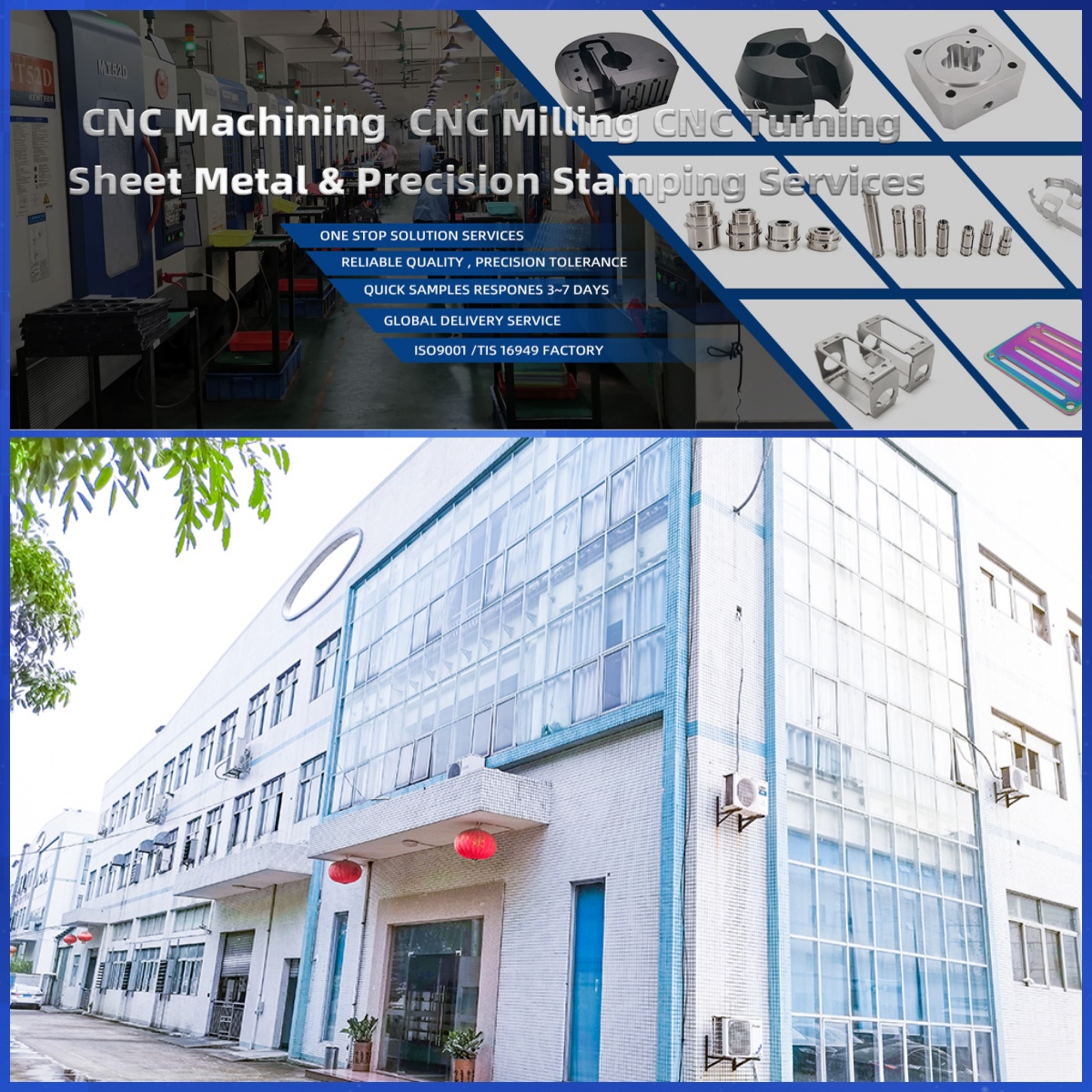
DongGuan YiTai Electronic Technologies Co.,Ltd
DongGuan YiTai Electronic Technologies Co.,Ltd is a manufacturing service provider located in Dongguan, China.
YiTai specialized in CNC turning machining and sheet metal fabrication mainly. As a member of Hung Mou Group, we focus on the overseas marketing development. And based on our parent company’s manufacturing capability and resources, YiTai also expended machining services such as die casting, injection molding, aluminum profile extrusion, 3D printing, which are committed to providing customers with one-stop purchasing services and experience.
CNC MACHINING , CNC MILLING , CNC TURNING , SHEETMETAL , FASTENER , OTHERS




Optimizing Die Casting Mold: A Comprehensive Guide
The Rise of Humanoid Robots: How Precision CNC Machining Solves Joint Module Manufacturing Challenges
Related Article