CNC Machining in Drone Manufacturing: How to Make High-Precision, Lightweight Parts

1. Why Drones Need CNC Precision Machining
Drone parts must meet four demands.

-
Light weight: Every gram matters. Less weight means longer flight time.
-
High strength: Parts handle vibration, wind, and impact.
-
Aerodynamic shape: Smooth curves reduce drag.
-
Tight tolerances: Motor shafts and bearings need perfect fit. Loose parts cause crashes.
CNC machining meets all four better than other methods.
-
High material utilization: You use expensive aluminum or carbon fiber wisely. Little scrap.
-
Complex surface shaping: 5-axis CNC cuts any airfoil or curve.
-
Fast iteration: Change the CAD file. Make a new part in hours. No mold waiting.
-
Low volume economy: Molds cost thousands. CNC has zero tooling cost. Perfect for 10 to 10,000 parts.
2. Typical CNC Machined Drone Components
A drone has many CNC machined parts. The table below shows common ones.
| Component | Typical Material | Key Feature | Why CNC? |
|---|---|---|---|
| Arm connectors | 7075 aluminum | High strength-to-weight | Complex shape, tight fit to carbon tube |
| Motor mounts | 6061 or 7075 aluminum | Precise bolt pattern, concentric bore | ±0.01mm hole position for vibration-free spin |
| Propeller clamps | 7075 aluminum | Threaded holes, smooth surface | Safe grip on propeller |
| Gimbal parts | 6061 aluminum, small | Thin walls, curved arms | 5-axis needed for complex shape |
| Flight controller case | 6061 aluminum | EMI shielding, light | Thin walls, tight screw holes |
| Battery box / quick release | 6061 aluminum or POM | Wear resistance, snap fit | Precision slots and latches |
Arm Connectors
Carbon fiber tubes are light. But you cannot thread them. CNC machined aluminum connectors go inside or around the tube. They hold the motor and the frame together.
Motor Mounts
The motor must spin true. The mount holes must line up. CNC milling holds hole positions to ±0.01mm. This keeps the propeller flat. No vibration.
Gimbal Components
The camera gimbal has many small, curved parts. They must be light. They must move smoothly. 5-axis CNC machines cut these from solid aluminum. No assembly. No slop.
Battery Boxes
Drones use many batteries. The box must hold them tight. But the pilot must remove them fast. CNC machined slots and spring latches give a secure, repeatable fit.
3. From Prototype to Mass Production: The Role of CNC
CNC machining is not just for one type of run. It works at every stage.】

Prototype Stage
A new drone design needs testing. The shape may change. The holes may move. With CNC, you upload a new CAD file. The machine cuts a new part in hours. No mold. No waiting.
-
Benefit: Test 10 designs in a week. Find the best one.
Small Batch Trial (50–500 units)
Before buying a mold, you want to test market response. CNC gives you 50 to 500 parts with the same quality as the prototype. You can still change the design between batches.
-
Benefit: Low risk. Flexible.
Mass Production (1,000+ units)
For very high volume, you may switch to casting or forging. But CNC still plays a role. You cast a rough blank. Then CNC finish machines only the critical features – bearing bores, threaded holes, mounting faces. This is faster and cheaper than machining the whole part from solid.
-
Benefit: Lower cost per part than full CNC. Higher precision than casting alone.
The table below compares methods at different volumes.
| Volume | Best Method | Role of CNC |
|---|---|---|
| 1–10 units | CNC machining only | 100% CNC |
| 10–500 units | CNC machining | 100% CNC |
| 500–5,000 units | Casting + CNC finishing | Finish critical features |
| 5,000+ units | Forging + CNC finishing | Finish high-tolerance areas |
4. CNC Trends in Drone Manufacturing
Drone parts are getting more advanced. CNC technology keeps up.
5-Axis Machining for One-Piece Arms
Older drones used separate parts bolted together. New designs use one-piece arms that curve from the center to the motor. This is stronger and lighter. Only 5-axis CNC can cut these shapes from a solid block.
High-Speed Machining of Thin Walls
Gimbal arms can be 1mm thick. Milling thin walls without chatter is hard. New high-speed spindles (30,000+ RPM) and light cutting passes make it possible. The part stays rigid. The wall is smooth.
CNC Post-Processing of Carbon Fiber
Some drones use carbon fiber plates. CNC routers cut the plate shape. But carbon fiber dust is harmful. Machines need dust collection and sealed ways. We use special diamond-coated tools to cut carbon cleanly.
5. Expert Insight: CNC Gives You Speed and Control
“I have worked with drone startups. They always ask: should I make a mold? I say no. Not for the first 1,000 units. Every week you wait for a mold, your competitor flies. With CNC, you can go from idea to flying prototype in 48 hours. You can change the arm length overnight. You cannot do that with casting. CNC is the drone maker’s best friend for the first year.”
— Senior Manufacturing Engineer, DongGuan YiTai Electronic Technologies
Our CNC Expertise for Drone Parts
At ‘DongGuan YiTai Electronic Technologies’ , we make drone components every week. We run 3-axis, 4-axis, and 5-axis CNC mills. We machine aluminum (6061, 7075), POM, and carbon fiber sheets. We hold tight tolerances for motor mounts and bearing fits.
We also offer finishing. Deburring. Tumbling for smooth edges. Anodizing in black, clear, or other colors.
Send us your drone part drawing. Tell us the quantity (1, 100, or 1,000). We will give you a quick quote and a DFM review. Get your drone in the air fast.
6. Frequently Asked Questions (FAQ)
Q: Why use 7075 aluminum for drone arms instead of 6061?
A: 7075 is much stronger (about 80% higher yield strength). It is also harder to machine. For high-performance drones that take impact, 7075 is worth the cost. For lighter drones, 6061 is fine.
Q: Can CNC machining make carbon fiber drone frames?
A: Yes, but with special tools. We use a CNC router with diamond-coated end mills and dust collection. Carbon fiber is abrasive. It dulls standard tools fast. We also seal the machine to keep dust out of moving parts.
Q: What is the typical tolerance for a drone motor mount?
A: The bolt hole circle should be ±0.02mm from the center. The bore that fits the motor bearing should be ±0.005mm. This keeps the motor shaft straight. Vibration is bad for drone flight and camera video.
Q: How long does it take to CNC a set of drone arms (4 pieces)?
A: For a simple arm design on a 3-axis mill, about 2–3 hours for 4 pieces. For a complex 5-axis one-piece arm, about 4–5 hours. Prototype lead time from file to parts is 5–7 days.
Q: Do you offer assembly of CNC parts into a full drone?
A: We focus on machining. But we can help with basic assembly (inserting brass nuts, screwing parts together) for prototype or small batch orders. For large assembly, we recommend a contract manufacturer. We can refer you.
Q: Does DongGuan YiTai Electronic Technologies machine drone parts for racing drones?
A: Yes. Racing drone parts are very small (3–5mm thick arms, tiny motor mounts). We use Swiss-type lathes and small end mills (1mm diameter) for these parts. We also offer anodizing in bright colors for team identification. Send us your STP file.
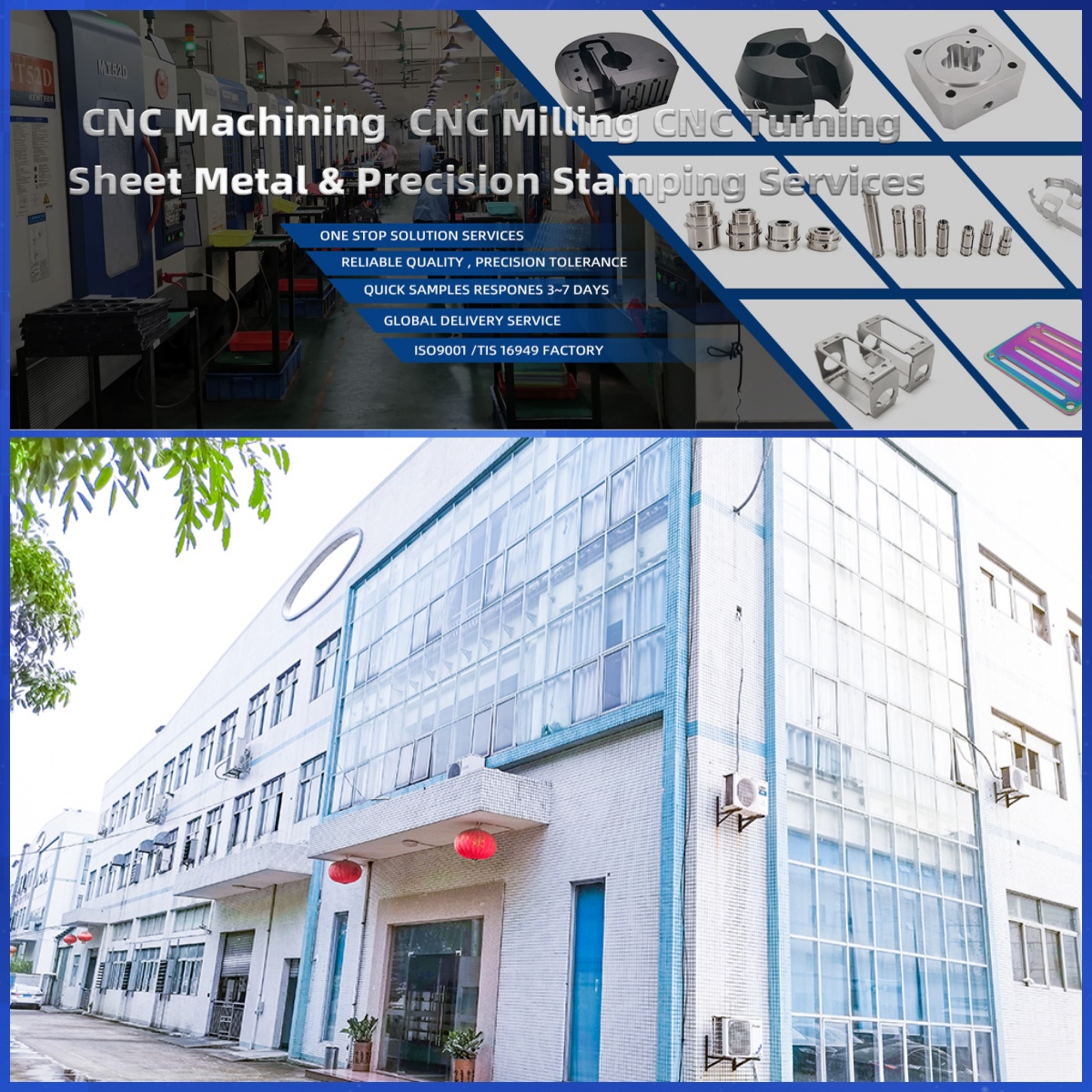
DongGuan YiTai Electronic Technologies Co.,Ltd
DongGuan YiTai Electronic Technologies Co.,Ltd is a manufacturing service provider located in Dongguan, China.
YiTai specialized in CNC turning machining and sheet metal fabrication mainly. As a member of Hung Mou Group, we focus on the overseas marketing development. And based on our parent company’s manufacturing capability and resources, YiTai also expended machining services such as die casting, injection molding, aluminum profile extrusion, 3D printing, which are committed to providing customers with one-stop purchasing services and experience.
CNC MACHINING , CNC MILLING , CNC TURNING , SHEETMETAL , FASTENER , OTHERS




Drilling vs Reaming vs Boring: A Complete Guide to Three Hole-Making Processes in CNC Machining
Complete Guide to Brass Insert Nuts: Types, Functions, and Key Applications in CNC Precision Machining
Related Article